Watering
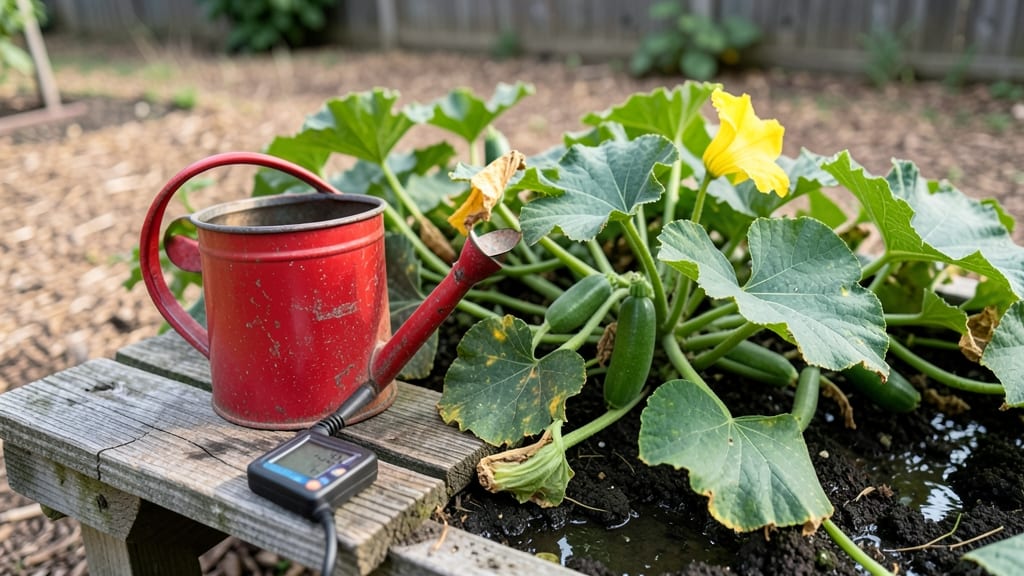
Overwatering squash plants turns your garden into a swamp, and I’ve seen it ruin entire harvests—until I learned these simple fixes that actually work. 🌱 The first sign is usually yellowing leaves that feel mushy when you touch them, followed by that dreaded foul smell from soggy roots.
Most gardeners overcorrect by watering less, but the real fix starts with soil and drainage.
Squash roots need air almost as much as water, so the solution begins with amending your soil. Mix in 2-3 inches of compost or coarse sand to improve drainage, then consider raised beds if your yard stays soggy after rain.
I also add a 4-inch layer of straw mulch—it keeps moisture steady without suffocating roots, and it blocks weeds that compete for water. This combo saved my zucchini patch last summer.
Once you’ve adjusted the soil, watch for wilting despite wet soil—that’s your cue to cut back. Water only when the top 1-2 inches of soil feel dry, and always water deeply but infrequently.
Within 2-3 weeks, you’ll see new growth as roots recover, and those once-slimy leaves will firm up. The key is consistency; squash plants bounce back faster than you’d expect once they’re not drowning.
This works for both bush and vining squash, whether you’re growing in ground or containers. The same principles apply to pumpkins and gourds too—just scale up the mulch and soil prep. Now let’s get those plants back on track before the next downpour.
Root Rot’s Silent Triggers
Overwatering squash plants is like giving them a suffocating hug—too much moisture cuts off oxygen, inviting root rot and other fungal infections. But why does this happen?
The issue often stems from a mix of human habits, soil conditions, and plant biology. Let’s break down the real culprits behind soggy soil and struggling squash.
Squash plants thrive in well-draining soil, but when water pools around roots, it creates the perfect storm for rot. Here’s why drainage fails:
- Clay-heavy soil: Clay particles pack tightly, trapping water like a sponge that won’t release. Even after rain, excess moisture lingers, starving roots of oxygen.
- Compacted soil: Foot traffic, heavy machinery, or poor tilling compresses soil, reducing pore space for water to escape. Roots suffocate in anaerobic (oxygen-deprived) conditions.
- Raised beds without amendments: If your raised bed is filled with pure topsoil or lacks perlite, sand, or compost, water drains too slowly, mimicking a swamp.
Pro tip: Test your soil’s drainage by filling a jar with soil and water, then timing how long it takes to drain. If it sits soggy after 2 hours, amend with organic matter like coconut coir or coarse sand.
Squash plants need consistent moisture, but consistent doesn’t mean daily. Common watering mistakes include:
- Ignoring weather forecasts: Watering on rainy days or after heavy dew doubles moisture levels, overwhelming roots.
- Using the "set it and forget it" method: Drip irrigation or sprinklers left running for hours can turn soil into a waterlogged mess.
- Watering at the wrong times: Morning watering is ideal—it allows foliage to dry by evening, reducing fungal risks. Nighttime watering keeps leaves damp, inviting Phytophthora (a root-rot fungus).
Pro tip: Stick your finger 1–2 inches into the soil. If it’s damp, wait. If it’s dry, water deeply but only until the top 6 inches are moist. Squash roots need depth, not surface puddles.
Squash in pots or small containers are especially vulnerable because:
- Limited root space: Roots outgrow the container, circling and compacting soil, which traps water.
- No escape routes: Unlike in-ground plants, potted squash can’t spread roots to seek drier soil layers.
- Cheap pots without drainage holes: Plastic or ceramic pots without holes act like bathtubs, holding water against roots.
Pro tip: Use fabric grow bags or containers with multiple drainage holes. Elevate pots on saucers filled with gravel to prevent water from pooling at the bottom.
Overwatering doesn’t just drown roots—it invites fungal pathogens like Pythium and Fusarium. Here’s how they exploit soggy conditions:
- Spores thrive in moisture: Fungal spores float in water, landing on roots and germinating when soil stays wet for >48 hours.
- Weakened plant defenses: Waterlogged roots can’t absorb nutrients, making squash more susceptible to infections.
- Mulch gone wrong: Thick organic mulch (like straw) can suffocate soil if piled too high, trapping humidity against the stem.
Pro tip: Space mulch 2–3 inches away from the stem and use straw or wood chips (not plastic) to allow airflow. If you suspect fungus, apply copper fungicide as a preventive measure.
Most of these issues are fixable with simple adjustments—drainage tweaks, smarter watering, or better containers. The key is observing your squash’s soil and leaves: yellowing foliage, wilting despite damp soil, or a foul odor are red flags. Act fast, and your plants can bounce back!
Quick Fixes for Waterlogged Squash
Now that you’ve identified the signs of overwatering—yellowing leaves, mushy stems, or foul-smelling soil—it’s time to act fast. The good news? With the right steps, you can nurse your squash plants back to health and prevent future disasters.
Below, we’ll map common causes to their solutions, from adjusting your watering habits to saving roots already in trouble.
---
Cause: Heavy, infrequent watering creates waterlogged soil, suffocating roots. Fix: - Step 1: Drain the Excess 🔥 If your soil feels soggy or water pools on the surface, stop watering immediately. Let the top 2–3 inches dry out before touching the plants again. - Step 2: Improve Drainage 🍳 Amend the soil with organic matter (compost, coconut coir, or perlite) to help water drain faster. For containers, ensure pots have drainage holes and elevate them slightly. - Step 3: Water Deeply but Less Often 👨🍳 Switch to a drip irrigation system or a soaker hose to deliver water slowly at the base. Aim for 1–1.5 inches per week, splitting it into 2–3 sessions (e.g., every other day for 20–30 minutes).
Prevention Tip: 💡 Use a moisture meter or the "finger test"—stick your index finger 1–2 inches into the soil. If it’s damp, wait before watering again.
---
Cause: Clay or dense soil traps moisture, preventing roots from breathing. Fix: - Step 1: Loosen the Soil 🔪 Gently aerate the top 6 inches of soil around the plant’s base with a fork or trowel. Avoid disturbing roots too deeply. - Step 2: Add Amendments 🥘 Mix in compost, sand, or peat moss to improve texture. For raised beds, blend these into the soil before planting. - Step 3: Mulch to Regulate Moisture ⏰ Apply a 2–3 inch layer of straw or wood chips around the base (keep it 2 inches away from stems). Mulch slows evaporation and keeps soil evenly moist.
Prevention Tip: 🌡️ Test your soil’s drainage before planting. Fill a jar with soil and water, then time how long it takes to drain. Ideal: Water drains in 1–4 hours.
---
Cause: Fungal/bacterial root rot from prolonged soggy conditions. Fix: - Step 1: Trim the Damage 🪒 Carefully remove the plant and prune away black, mushy roots with sterilized scissors. Healthy roots are firm and white. - Step 2: Disinfect the Soil ✨ Replace the top 4–6 inches of soil with sterile potting mix or fresh garden soil. If repotting, sanitize containers with a 10% bleach solution (rinse well). - Step 3: Repot or Replant 🌱 Place the plant in well-draining soil and water lightly only after the roots show signs of regrowth (new white tips). Avoid watering for 3–5 days to let roots adjust.
Prevention Tip: 🎯 Rotate crops—never plant squash in the same spot year after year. Rotate with beans, tomatoes, or herbs to reduce soil-borne pathogens.
---
Cause: Excessive rainfall overwhelms even the best drainage. Fix: - Step 1: Create Barriers 🛡️ Use temporary row covers or clear plastic sheets to shield plants during heavy downpours. Prop them up to avoid direct contact. - Step 2: Channel Water Away 🚰 Install French drains or dig shallow trenches around the garden to redirect excess water. For containers, move them to a covered porch or garage during storms. - Step 3: Monitor Soil Saturation 📊 After rain, check soil moisture daily. If it’s still damp 24+ hours later, hold off on additional watering.
Prevention Tip: 💡 Plant squash on mounds or hills to improve drainage naturally. This also helps prevent fungal diseases like powdery mildew.
--- Final Reminder: Overwatering is reversible, but speed matters. The sooner you adjust, the better your squash plants’ chances of bouncing back. Keep an eye on their progress—healthy leaves and sturdy vines are your best indicators!
Frequently asked questions
How can I tell if my squash plants are overwatered vs. underwatered?
Check the soil first—overwatered squash have soggy, foul-smelling soil and yellow leaves that feel mushy. Underwatered plants show crispy brown edges on leaves and dry, cracked soil. A quick test: poke your finger 1–2 inches deep—if it’s damp but leaves wilt, you’re overwatering. If dry, it’s thirsty.
Can I save a squash plant with root rot?
Yes, but act fast! Prune away black, mushy roots, repot in sterile, well-draining soil, and avoid watering for 3–5 days to let roots recover. For severe cases, start fresh with healthy seedlings and amend soil with compost to prevent recurrence.
What’s the best mulch for squash to prevent overwatering?
Use straw or wood chips—they regulate moisture without suffocating roots. Keep mulch 2–3 inches thick and 2 inches away from stems to allow airflow. Avoid plastic mulch, which traps heat and moisture. This combo keeps soil evenly moist without drowning roots.
Why do my container-grown squash plants wilt even when the soil looks wet?
Containers dry out faster and trap water if drainage is poor. Ensure pots have multiple holes and elevate them on saucers with gravel. Water deeply but only when the top 1–2 inches of soil are dry. Fabric grow bags also help by allowing excess water to evaporate.
How often should I water squash plants in hot vs. cool weather?
In hot weather, aim for 1–1.5 inches per week (split into 2–3 sessions), while cool weather needs only 0.5–1 inch weekly. Always water early morning to reduce fungal risks. Use a moisture meter or finger test to avoid guesswork.