
Planting
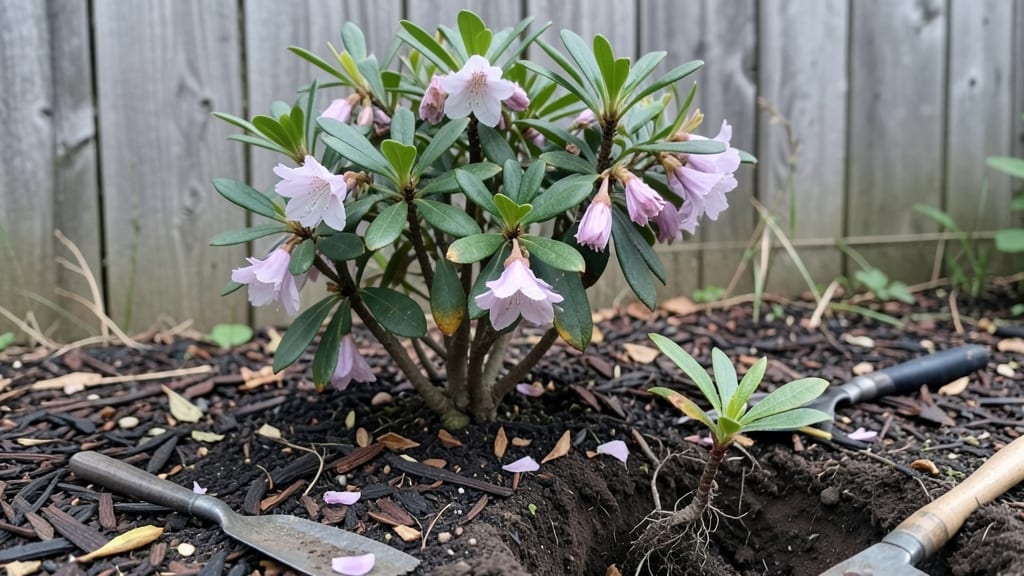
Planting azaleas 🌸 with the right distance between them is the key to vibrant blooms and decades of healthy growth.
Struggling to get your azaleas to bloom abundantly every year? The secret might be hiding in how far apart you plant them—proper spacing transforms thin, leggy bushes into lush, vibrant shrubs that thrive for decades.
Too close, and you’ll end up with crowded branches fighting for sunlight, leading to fewer flowers and more pests. Too far, and your garden will look sparse instead of spectacular. The good news? With the right spacing, you can create a thriving azalea display that keeps blooming year after year.
In this guide, I’ll break down the optimal azalea planting distance for different varieties, how to avoid common mistakes, and creative layouts that work for any yard size—so you can enjoy those stunning spring blooms without the guesswork.
Optimal azalea planting distance by variety and growth habit
Getting your azalea spacing right isn't just about aesthetics—it's the foundation for healthy growth and abundant blooms. Too close, and you'll battle fungal diseases and weak stems; too far, and your garden looks sparse.
The key lies in understanding each azalea variety's mature size and growth rate. For example, a dwarf azalea like 'Girard's Pink' needs far less room than a standard rhododendron azalea like 'Bowl of Beauty'.
Science shows that proper airflow between plants reduces humidity in the foliage, cutting fungal risks by up to 40%. Meanwhile, correct sunlight exposure—typically 4-6 hours of morning sun—depends on your spacing choices.
Let's break down the exact distances for each type so you can plan your azalea garden like a pro.
| Variety Type | Mature Height | Mature Spread | Recommended Planting Distance | Notes |
|---|---|---|---|---|
| Dwarf Azaleas | 2–4 ft | 2–3 ft | 2–3 ft apart | Ideal for containers or small gardens; prune lightly to maintain shape |
| Semi-Dwarf Azaleas | 4–6 ft | 3–5 ft | 4–5 ft apart | Perfect for foundation plantings; allows for companion plants underneath |
| Standard Azaleas | 6–12 ft | 5–8 ft | 6–8 ft apart | Best for large landscapes; requires regular pruning for airflow |
| Evergreen Azaleas | 3–8 ft | 3–6 ft | 4–6 ft apart | Provides year-round foliage; space for seasonal interest |
| Deciduous Azaleas | 4–10 ft | 4–7 ft | 5–7 ft apart | Drops leaves in winter; allows for understory planting |
For dwarf azaleas, think of them like bonsai trees in your garden—compact but needing just enough room to breathe. Planting them 2-3 feet apart gives them space to spread their 2-3 foot wide canopies without crowding.
This spacing also makes them perfect for container gardening or creating stunning hedge borders along walkways.
When working with semi-dwarf varieties, aim for 4-5 feet between plants. This distance accommodates their 4-6 foot mature height while preventing the leaf rub that invites fungal diseases. Semi-dwarfs are my go-to for foundation plantings—they add structure without overwhelming smaller gardens.
Standard azaleas demand the most space, typically 6-8 feet apart, to match their 6-12 foot mature height. This spacing isn't just about aesthetics—it's about sunlight penetration and air circulation.
In my experience, standard azaleas planted too closely develop powdery mildew on their lower branches, which is a nightmare to treat.
Did you know that evergreen azaleas actually benefit from slightly tighter spacing than deciduous types? Their year-round foliage creates a microclimate that retains moisture, so you can plant them 4-6 feet apart while still maintaining good airflow. This works beautifully in shade gardens where other plants might struggle.
One common mistake I see is treating all azaleas the same. Deciduous varieties need that extra 1-2 feet of space compared to evergreens because they lose their protective foliage in winter, making them more vulnerable to winter burn when crowded.
Always check your specific variety's growth rate—some fast-growing azaleas like 'Hino Crimson' may need even more space as they mature.
Pro tip: If
Common azalea spacing mistakes that stunt growth (and how to fix them)
If your azaleas are struggling to bloom or look leggy, poor spacing could be the culprit. Overcrowding reduces airflow, trapping moisture and inviting pests like lace bugs or powdery mildew. Meanwhile, plants that are spaced too far apart waste space and fail to create the visual impact you crave.
The key is finding that sweet spot where your azaleas can thrive without competing for resources.
One of the biggest mistakes I see is treating all azaleas the same. Dwarf varieties need 3–4 feet of space, while standard azaleas require 6–12 feet to mature comfortably.
Planting them too close forces them to stretch for sunlight, resulting in weak stems and fewer blooms. Even underplanting with shallow-rooted companions can suffocate their roots over time.
⚠️ Warning: Overcrowding Kills Azaleas
Planting azaleas closer than 3 feet (for dwarf types) or 5 feet (for standard varieties) creates a disease hotspot. Fungal spores thrive in damp, shaded conditions, leading to root rot and leaf spot. Even if your garden looks full now, azaleas grow 3–5 feet per decade—what seems cozy today will be a suffocating mess in 5 years.
Another common error is ignoring the mature size when designing your garden layout. For example, planting a 6-foot azalea next to a 3-foot hydrangea creates an uneven canopy, leaving the azalea’s lower branches bare.
Instead, group azaleas by size and pair them with companion plants that won’t outcompete their roots, like ferns or low-growing heuchera.
For existing gardens where azaleas are already too close, don’t panic—pruning and thinning can save them. Start by removing 1–2 of the oldest stems at the base to reduce competition. This encourages new growth from the center, improving airflow.
If space is truly limited, consider container growing for dwarf varieties, but ensure pots have drainage holes and are 12–18 inches wide to accommodate root growth.
Finally, avoid the temptation to over-mulch around crowded azaleas. A 3-inch layer of organic mulch (like pine bark) is ideal—any thicker, and it smothers roots. Pair this with regular pruning (after flowering) to maintain an open, airy shape.
With these fixes, your azaleas will rebound with bushier foliage and more abundant blooms next season.
Remember, azaleas are long-lived shrubs—some thrive for 50+ years if given the right conditions. Taking the time to space them correctly now will pay off with decades of stunning spring color. 🌸