Pruning
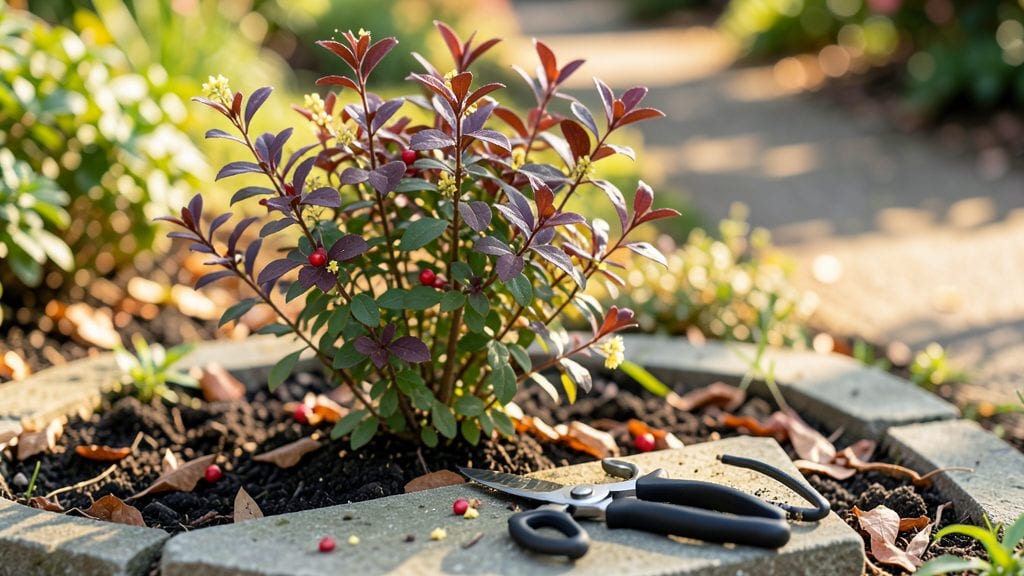
Late winter is the perfect time to prune barberry plants—when the ground is workable but before new growth starts. ✨ I’ve learned that skipping this step means leggy branches and fewer berries, but with the right cuts, your plant will stay compact, productive, and disease-free all season long.
The tools you’ll need are simple: sharp pruning shears, gloves, and maybe a small saw for thicker stems. Focus on removing dead wood first, then thin out crowded branches to improve airflow—this is where most gardeners go wrong by pruning too late or too aggressively.
A little patience here pays off in lush, vibrant foliage by summer.
After shaping, your barberry will reward you with glossy new leaves and a bushier form within weeks. The key is to avoid cutting into old wood unless rejuvenating a neglected plant, and always sterilize your tools between cuts to prevent fungal spread. This method keeps my plants thriving for years.
Works for both ornamental varieties and berry-producing types, though timing shifts slightly for different climates. Let’s get those shears ready—your barberry’s best growth starts with the right trim.
📚 In This Guide
- What you need
- Instructions
- Tips and common mistakes
- Wrapping up and next steps
What you need
- ● Pruning shears – Bypass pruners (sharp, clean, and sterilized to prevent disease spread). Choose a pair with ergonomic handles for comfort.
- ● Loppers – For thicker branches (up to 1.5 inches in diameter). Opt for bypass loppers with a long handle for leverage.
- ● Hand pruners (felco or anvil type) – For smaller stems and deadheading. Keep them sharp and sanitized with rubbing alcohol.
- ● Garden gloves – Heavy-duty, cut-resistant (thorns on barberry can be sharp!). Choose nitrile-coated for grip and durability.
- ● Disinfectant solution – 70% isopropyl alcohol or a 10% bleach solution (1 part bleach to 9 parts water) to sterilize tools between cuts.
- ● Heavy-duty trash bags – For collecting pruned debris (barberry can be invasive—dispose of clippings properly or burn them).
- ○ Pruning saw (optional) – For thick, woody branches (2+ inches). A bow saw or pruning saw with a curved blade works best.
- ● Ladder or step stool – If your barberry is tall or dense (ensure it’s stable and safe to use).
- ● Garden twine or zip ties – To secure branches if you’re doing structural pruning.
- ● Hose or spray bottle – To rinse tools after disinfecting or clean up sap.
- ● Labeling tags – If you’re propagating cuttings, mark them with plant tags.
- ● Safety glasses – Protect your eyes from debris or sap splashes.
Step-by-Step guide to pruning barberry for healthy growth
Here’s how I keep my barberries thriving with simple, seasonal cuts that boost density and prevent disease.
✂️ Step 1: Prune in Late Winter or Early Spring for Structure
Wait until after the last frost but before new growth begins—typically February to March in most climates. This timing lets you shape the plant while it’s dormant, reducing stress. I start by removing any dead, damaged, or crossing branches at the base with clean, sharp pruners.
Look for branches that rub against each other or grow inward—they’ll crowd the center and invite pests. Cut these back to the main stem or a healthy outward-facing bud. Aim to open up the center of the plant for better airflow, which cuts down on fungal issues like powdery mildew.
✂️ Step 2: Lightly Thin in Mid-Summer for Airflow and Shape
Around July or August, give your barberry a light trim to maintain its shape and encourage bushiness. Focus on branches that are growing too long or leggy, cutting them back by about one-third to stimulate new side shoots. I avoid heavy pruning now—just enough to keep the plant balanced and open.
This mid-season trim also removes any flower stalks that have already bloomed, redirecting the plant’s energy toward next year’s growth. Watch for any branches with yellowing leaves or signs of disease—remove those immediately to prevent spread. A quick spray of neem oil afterward can help protect fresh cuts.
✂️ Step 3: Clean Up Fall Debris to Prevent Winter Disease
After the first hard frost, but before December, do a final cleanup. Rake up all fallen leaves and debris from around the base—barberries are prone to fungal issues if moisture lingers. Use your pruners to trim back any weak or spindly growth that didn’t thrive during the season.
This is also the time to sterilize your tools with rubbing alcohol to prevent carrying pathogens between cuts. If your barberry has berries that haven’t been eaten by wildlife, leave them—they’ll provide winter interest and food for birds. Just make sure the plant itself is free of dead wood or diseased branches.
⏰ Step 4: Monitor and Adjust Year-Round
Throughout the growing season, keep an eye out for branches that are growing too aggressively or blocking sunlight from the center. A quick trim with hand pruners can redirect energy where you want it. I also pinch back the tips of new growth in early summer to encourage a fuller, bushier shape.
If your barberry starts looking leggy or sparse, it might need more sunlight or water. Adjust your care routine accordingly—barberries thrive in full sun to partial shade and well-drained soil. A little maintenance now keeps pruning easy and effective for years to come.
Tips & tricks for perfect barberry plant pruning
Here's what nobody tells you about keeping your barberries looking their best year-round.
Timing Secret: The February to March window for Step 1 is crucial because it gives your barberry time to heal before new growth begins. I've learned the hard way that pruning too early can stimulate growth that gets damaged by late frosts, while waiting too long means you're cutting back healthy new shoots. Check your local frost dates—this is the single most important factor for successful pruning.
Tool Preparation: Before you start Step 1, sterilize your pruners with rubbing alcohol. I use a small spray bottle of 70% isopropyl alcohol to wipe down blades between cuts, especially when removing diseased branches in Step 3. Clean tools prevent spreading fungal spores and bacterial infections between cuts. Don't skip this—it's the difference between a healthy plant and one struggling with infections.
Visual Cues for Pruning: When deciding what to cut in Step 2, look for branches that are growing at angles less than 45 degrees from the main stem—these are your candidates for removal. Healthy buds should be facing outward, not inward. I also watch for branches with more than 3-4 growth cycles (the little rings you can see where the branch grew last year), as these are often the oldest and least productive. This visual approach helps you make decisions quickly while working.
Seasonal Maintenance: For Step 4, I've found that regular monitoring pays off big time. Set a reminder for every 4-6 weeks during growing season to do a quick check. Look for new growth that's blocking sunlight from reaching the center—this is your cue to do a light pinch back. The key is to maintain that open center we created in Step 1. A well-maintained barberry will reward you with denser growth and fewer disease issues.
Pro Tips for Barberry Plant Pruning
- Here's what nobody tells you about keeping your barberries looking their best year-round.
- Timing Secret: The February to March window for Step 1 is crucial because it gives your barberry time to heal before new growth begins.
- Tool Preparation: Before you start Step 1, sterilize your pruners with rubbing alcohol.
Frequently asked questions
Got questions about keeping your barberry plants looking their best? Here are some of the most common queries—plus quick, practical answers to help you prune like a pro!
When is the best time to prune barberry plants?
The ideal time to prune barberry is late winter or early spring (just before new growth starts) to encourage healthy, bushy growth. You can also do a light trim in summer to shape the plant, but avoid heavy cuts then—it may stress the shrub. Pro tip: Never prune in fall, as it can leave the plant vulnerable to winter damage.
How much can I trim back a barberry plant?
For most barberry varieties, you can safely remove up to one-third of the plant’s growth in a single pruning session. Avoid cutting into old wood (woody stems) unless rejuvenating an overgrown shrub—this can harm the plant. Focus on:
- Dead or diseased branches (cut to the base)
- Crossing or rubbing branches (remove entirely)
- Overly leggy stems (trim back to a healthy bud or side branch)
Will pruning help prevent barberry diseases like rust?
Pruning is key to disease control—it improves airflow, reducing humidity that fuels fungal issues like cedar-apple rust. Remove all infected stems (burn or dispose of them, don’t compost!) and sanitize your tools with rubbing alcohol between cuts. Bonus: Prune in dry weather to minimize spore spread.
Can I prune barberry plants in containers differently?
Container-grown barberries follow the same rules but with extra attention to size. Since they’re root-bound, prune more aggressively (up to 30%) to encourage compact growth. Check for:
- Roots circling the pot (trim gently if repotting)
- Leggy growth from lack of light (prune to promote bushiness)
- Deadheading spent flowers to redirect energy to foliage
What should I do if my barberry looks stressed after pruning?
Don’t panic! Mild stress (wilting, yellowing leaves) is normal, but over-pruning or wrong timing can cause bigger issues. Revive your plant with:
- A deep watering (1–2 inches of soil)
- Light mulch around the base (to retain moisture)
- Avoid fertilizing until new growth appears (wait 4–6 weeks)
Wrapping up and next steps
Mastering barberry plant pruning is your ticket to lush, healthy bushes that thrive year-round! 🌿 Whether you’re trimming for shape, encouraging growth, or preventing disease, the key is consistency and timing.
Now that you’re armed with the right tools and techniques, get out there and give your barberry the care it deserves—your garden will thank you!
Ready to take it further? Monitor your plant’s progress after each trim and adjust your approach as needed. Happy pruning!