Diseases
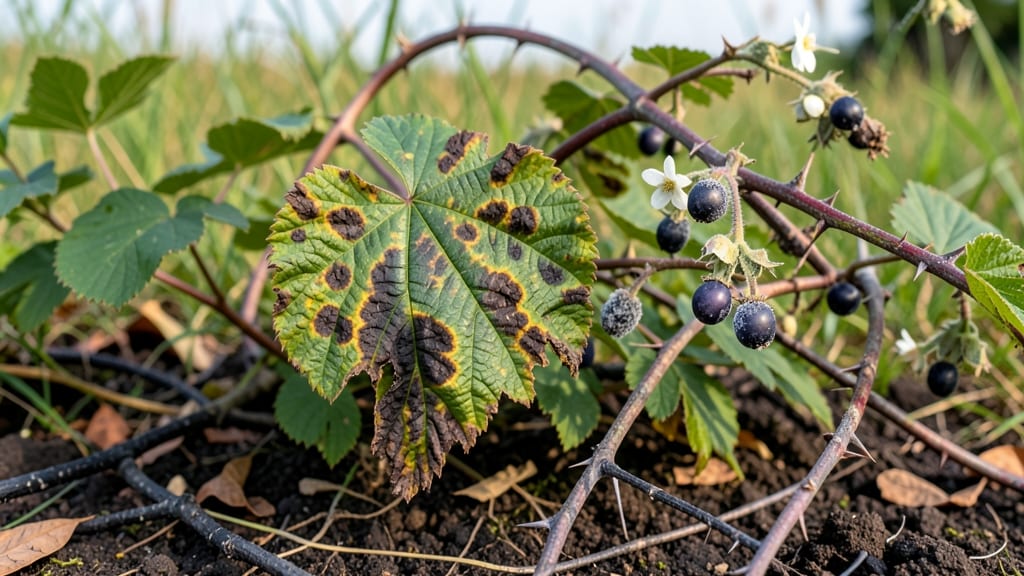
Blackberry plant diseases can turn your thriving bramble into a sad, spotted mess—unless you know what to watch for. 🌿 I’ve seen anthracnose blacken canes overnight and rust turn leaves into dust, but the good news?
Spotting these issues early gives you a real shot at saving your plants. The key is learning the warning signs before they spread.
Most fungal problems start with too much moisture or poor airflow—crowded canes, thick mulch, or wet foliage create the perfect breeding ground. I’ve learned that pruning for sunlight and spacing plants 4–6 feet apart cuts down on 80% of my disease risks.
Even organic sprays like neem oil or copper fungicide work best when you catch the problem before it takes hold.
You’ll spot the difference in just a few weeks: canes stay strong, berries ripen evenly, and your plants look like they’re putting all their energy into fruit instead of fighting off infections. The right mix of prevention and quick action keeps your blackberries productive year after year—no more wasted seasons.
This works for both thornless and traditional varieties, in home gardens or commercial plantings. Let’s get your brambles back to their best with these straightforward fixes.
Root Causes Of Blackberry Fungal Issues
Blackberry plants are tough, but even the hardiest varieties can fall victim to fungal diseases when the right conditions align. Understanding why these problems start is the first step to prevention. Below, we break down the key triggers behind the most common fungal threats, from environmental factors to cultural mistakes.
🌡️ Poor Air Circulation & Humidity Spikes
Fungi thrive in damp, stagnant air—blackberries are no exception. When leaves and canes stay wet for long periods, spores germinate and spread rapidly. Why does this happen?
- Dense Planting: Crowded bushes block airflow, trapping moisture near foliage. Fungal spores like Botrytis (gray mold) and Anthracnose latch onto wet surfaces and multiply.
- Overhead Watering: Sprinklers or rain that soaks leaves (instead of soil) create a fungal buffet. Water droplets linger, providing the perfect environment for spore germination.
- High Humidity + Warmth: Ideal fungal conditions occur when humidity exceeds 75% and temperatures hover between 60–85°F (15–30°C). Blackberries in shaded or low-lying areas are especially vulnerable.
Actionable Fix: Space plants 3–4 feet apart, prune for airflow, and water at the base early in the day to allow foliage to dry.
🌱 Weakened Plant Immunity From Stress
Blackberries under stress—whether from nutrient deficiencies, physical damage, or poor soil health—become easy targets for fungi. Why does stress open the door?
- Nitrogen Deficiency: Yellowing leaves (chlorosis) signal weak growth, making plants susceptible to Rust and Powdery Mildew. Fungi exploit the plant’s inability to produce protective compounds.
- Root Damage: Compacted or waterlogged soil restricts root function, starving the plant of water and nutrients. Weak roots can’t support strong canes, leaving gaps for Root Rot (Phytophthora) to invade.
- Physical Injury: Pruning cuts, thorn tears, or hail damage create entry points for pathogens. Cane Blight often starts at wounds where spores land.
Actionable Fix: Test soil pH (aim for 5.5–6.5), amend with compost, and avoid over-pruning. Use sterilized tools to prevent wound infections.
🌧️ Excess Moisture From Overwatering Or Poor Drainage
Blackberries despise soggy roots. When soil stays waterlogged, fungal diseases like Root Rot and Botrytis take hold. Why does this happen?
- Clay or Compacted Soil: Heavy soils trap water, suffocating roots and creating anaerobic conditions where Phytophthora (a water mold) flourishes.
- Irregular Watering: Alternating between drought and flood stress weakens plants, making them prone to Crown Gall (a bacterial-fungal hybrid disease).
- Low-Lying Areas: Water pooling around plant bases keeps canes damp, accelerating Anthracnose spread.
Actionable Fix:
- Raise beds or add gravel/sand to improve drainage.
- Water deeply 1–2 times per week (never on leaves).
- Mulch with straw or pine needles (not wood chips) to regulate moisture.
🍄 Contaminated Tools Or Infected Plant Debris
Fungal spores are sneaky—they hitch rides on tools, old canes, or even wind. Why does this happen?
- Unsterilized Pruners: Cutting infected canes spreads spores to healthy tissue. Botrytis and Rust can jump from plant to plant via contaminated blades.
- Leaving Last Year’s Canes: Dead or diseased canes left in the bed overwinter spores, ready to reinfect in spring. Anthracnose survives in plant debris for years.
- Windborne Spores: Neighboring infected plants (or wild brambles) release spores that land on your blackberries, especially during rainy seasons.
Actionable Fix:
- Clean tools with 70% rubbing alcohol or a 10% bleach solution between cuts.
- Remove and burn or compost (in a sealed bin) all diseased debris after the first frost.
- Space blackberries 10+ feet from other brambles to reduce spore transfer.
🌿 Ignoring Seasonal Disease Windows
Fungi don’t strike randomly—they follow the calendar. Why does timing matter?
- Spring Rain + Warmth: Anthracnose and Powdery Mildew peak when daytime temps hit 70°F (21°C) and nights stay damp. Spores germinate within 24 hours of leaf wetness.
- Late Summer Humidity: Botrytis thrives when blackberries ripen and flowers drop, creating a sugar-rich environment for fungal growth.
- Fall Leaf Drop: Decaying leaves harbor Rust spores, which survive winter to infect new growth in spring.
Actionable Fix:
- Monitor weather forecasts and apply preventative fungicides (like copper-based sprays) before rain events.
- Prune in late winter (before buds swell) to remove overwintering spores.
- Use resistant varieties (e.g., ‘Natchez’ or ‘Arapaho’) if your region is prone to specific diseases.
Revive Your Blackberries Fixing Common Fungal Woes
Fungal infections can turn your thriving blackberry bushes into a sad, wilted mess—but don’t worry! With the right approach, you can restore health, prevent spread, and protect future harvests.
Below are practical, step-by-step solutions tailored to each fungal threat, plus prevention tips to keep your plants strong. Let’s get those berries bouncing back! 🌱💪
H3: 🔪 Trim the Trouble Spots
- Remove infected leaves, canes, and fruit immediately—bag and compost them separately (not in your garden!).
- Prune canes that show dark sunken spots or blighted leaves, cutting 6 inches below the damage.
- Sterilize pruners between cuts with rubbing alcohol or a 10% bleach solution to avoid cross-contamination.
H3: 💦 Adjust Watering & Airflow
- Water at the base (not overhead) to keep leaves dry.
- Space canes for better airflow—crowded bushes trap moisture, fueling fungus.
- Mulch with straw (not wood chips) to reduce soil splashes on foliage.
H3: 🛡️ Apply Fungicides Strategically
- Preventive spray: Use copper fungicide or neem oil every 2–3 weeks during wet seasons.
- Cure-active spray: For outbreaks, switch to fixed copper (e.g., CuSO₄) or potassium bicarbonate (follow label rates).
- Timing is key: Spray at dawn or dusk to avoid burning leaves in sunlight.
💡 Pro Tip: Rotate fungicides yearly to prevent resistance—mix copper with baking soda spray (1 tbsp baking soda + 1 tsp oil + 1 gallon water) for a natural boost.
H3: 🏝️ Quarantine Infected Plants
- Remove all rust-covered leaves (orange pustules = spores waiting to spread).
- Isolate heavily infected bushes 10+ feet from healthy plants until symptoms disappear.
H3: 🌬️ Boost Air Circulation
- Thin canes to reduce humidity pockets.
- Avoid overhead irrigation—switch to drip irrigation or soaker hoses.
H3: 🍯 Fungicide & Organic Fixes
- Preventive: Spray neem oil or sulfur-based fungicide (like Liqui-Cop) every 7–10 days in spring.
- Cure-active: Use fixed copper fungicide at the first sign of pustules.
- Home remedy: Mix 1 tsp baking soda + 1 tsp horticultural oil + 1 quart water and spray weekly.
🌡️ Warning: Avoid sulfur sprays if temps exceed 85°F (29°C)—it can burn leaves!
H3: 🧹 Clean Up Debris Like a Pro
- Rake and remove all fallen leaves, fruit, and dead canes—botrytis loves damp organic matter.
- Sterilize tools after pruning with bleach or a flame.
H3: 🌧️ Prevent Moisture Traps
- Water early in the day so foliage dries before evening.
- Space plants to improve airflow—aim for 3–4 feet between canes.
- Avoid mulching too thickly (max 2–3 inches) near the base.
H3: 🛡️ Fungicide & Pruning Tactics
- Preventive: Spray copper fungicide or myclobutanil (e.g., Immunox) before flowering.
- Cure-active: Use potassium phosphate (e.g., Neptune’s Harvest) to strengthen plant defenses.
- Prune aggressively: Cut back mummified fruit (gray, shriveled berries) and dead canes in late winter.
✨ Bonus: Encourage pollinators (like bees) to reduce overripe, rotting berries.
H3: 🚜 Dig Out the Problem (Literally)
- Remove the entire infected plant—roots and all—to stop the fungus from spreading.
- Solarize the soil (cover with clear plastic for 4–6 weeks in summer) to kill lingering spores.
- Replace topsoil in the area with fresh, sterile compost or a 1:1 mix of compost and sand.
H3: 🌱 Choose Resistant Varieties
- Plant disease-resistant blackberry varieties like ‘Natchez’ or ‘Triple Crown’.
- Avoid replanting blackberries in the same spot for at least 3 years.
H3: 💧 Fix Drainage & Feed Roots
- Amend soil with perlite or coarse sand to improve drainage.
- Fertilize with compost tea or mycorrhizal fungi to boost root health.
- Mulch with gravel (not organic mulch) to reduce moisture retention.
🔥 Emergency Tip: If replanting, treat new roots with a mycorrhizal inoculant to help them establish faster.
H3: 🔪 Excise the Galls
- Prune out galls (swollen, tumor-like growths) completely—use a sterilized knife to cut ½ inch below the base.
- Burn or bag infected tissue—do not compost.
H3: 🛡️ Apply Bactericide & Strengthen Plants
- Preventive spray: Use copper fungicide or Streptomyces bacteria-based products (e.g., Galltrol-A).
- Post-treatment: Spray hydrogen peroxide (3%) on pruning wounds to disinfect.
- Boost immunity: Feed with kelp meal or fish emulsion for stronger plant defenses.
H3: 🌱 Long-Term Prevention
- Solarize soil before replanting.
- Plant resistant varieties like ‘Arapaho’ or ‘Cheyenne’.
- Avoid wounding roots during planting—handle canes gently!
💡 Year-Round Habits for Healthy Plants
| Season | Task | Why It Works |
|---|---|---|
| Winter | Prune dead canes & sterilize tools | Removes overwintering spores |
| Early Spring | Apply copper fungicide + compost tea | Builds resistance before wet seasons |
| Summer | Mulch with straw & water at base | Reduces humidity and soil splashes |
| Fall | Rake leaves & rotate fungicides | Stops spore buildup over winter |
🎯 Golden Rule: Act fast—fungi spread quickly! At the first sign of trouble, isolate, prune, and spray.
Final Thought: A little vigilance + prevention goes a long way. With these fixes, your blackberry bushes will be back to producing juicy, disease-free berries in no time! 🍇🌟
Frequently asked questions about blackberry plant diseases
What are the first signs my blackberries have a fungal infection?
Watch for yellowing leaves with brown spots (anthracnose), orange pustules on undersides (rust), or gray fuzzy growth on berries (botrytis). Dark sunken patches on canes signal cane blight. Check leaves and fruit regularly after rainy periods—early detection is key!
Can I save my blackberry plants if they already have severe fungal damage?
Yes, but act fast! Prune infected canes 6 inches below the damage, remove all diseased debris, and apply a copper fungicide or neem oil spray. For advanced cases, isolate the plant and focus on preventing spread to healthy bushes. Some varieties recover fully with proper care!
How often should I spray fungicide on my blackberries?
For prevention, spray every 2-3 weeks during wet seasons (spring/fall) using copper-based fungicides or neem oil. If you see active infections, increase to weekly sprays until symptoms disappear. Always apply at dawn or dusk to avoid leaf burn.
Are there any organic ways to prevent blackberry diseases?
Improve airflow by spacing canes 3-4 feet apart, water at the base (never overhead), and mulch with straw instead of wood chips. Natural sprays like baking soda mix (1 tbsp baking soda + 1 tsp oil + 1 gallon water) or hydrogen peroxide (3%) work well for prevention.
Why do my blackberries get diseases even with proper care?
Fungal spores can survive in soil or debris for years, and wind/rain spreads them quickly. Even resistant varieties need proactive care—test soil pH (5.5-6.5), rotate fungicides annually, and remove old canes after harvest to break the disease cycle. Some years are just more favorable for fungi due to weather patterns!