Pruning
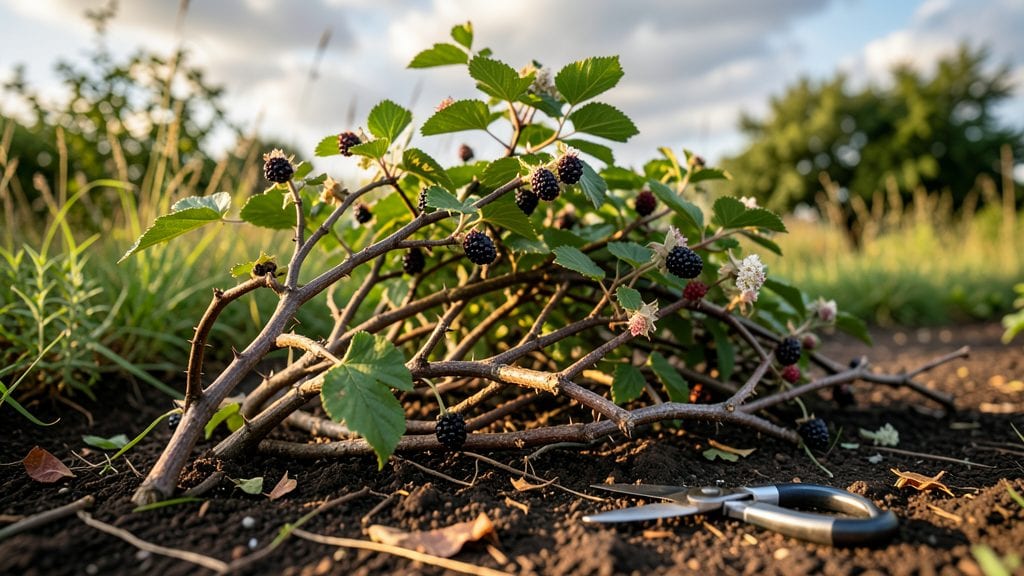
Pruning blackberry plants in late winter transforms tangled thorns into a foolproof berry-producing machine. ✨ I’ve spent years wrestling with my own overgrown bushes—until I learned the simple rules that double fruit production while keeping the plant healthy.
The key is timing: dormant-season pruning reshapes the plant for summer growth, while summer pruning controls size and boosts next year’s crop.
You’ll need just three tools: sharp pruning shears, loppers for thicker canes, and gloves (trust me, the thorns are vicious). Identify last year’s fruiting canes (floricanes) and this year’s new growth (primocanes)—cutting the right ones makes all the difference.
Most mistakes come from pruning at the wrong time or removing too much growth, so we’ll focus on what to keep, not just what to cut.
By summer’s end, your bushes will be neat, productive, and easier to harvest than ever before. The berries grow larger, the plant stays compact, and you’ll spend less time fighting thorns.
This method works for both trailing and erect varieties, so whether you’ve got a fence row or a small backyard patch, you’ll get results.
Ready to turn your blackberry patch from a tangled mess into a high-yielding powerhouse? The first cut is the hardest—but once you see the difference, you’ll never go back to guesswork. Let’s get those shears sharp and those canes trimmed!
📚 In This Guide
- What you need
- Instructions
- Tips and common mistakes
- Wrapping up and next steps
What you need
- ● Sharp pruning shears – Bypass pruners (for clean cuts on smaller canes) or loppers (for thicker canes, 1.5"–2" cutting capacity). Sterilize with rubbing alcohol between cuts to prevent disease.
- ● Pruning saw – A curved-tooth handsaw (for canes thicker than 2") to avoid splintering.
- ● Gloves – Heavy-duty gardening gloves (thorn-resistant, like those with Kevlar or leather palms) to protect your hands.
- ● Disposable pruning bags – 1–2 large bags (10–20 gallon capacity) for collecting pruned canes and debris.
- ● Rake or leaf blower – To clear away pruned canes and debris from the base of the plant.
- ● Hose or spray bottle – For rinsing tools and cleaning sap off blades mid-pruning.
- ● Markers or flags – Colored stakes or tape to label canes for future reference (e.g., "keep" vs. "remove").
- ● Safety glasses – If working near your face or in windy conditions to avoid debris.
- ● Choose a dry, sunny day to prune—wet canes are harder to handle and can spread disease.
- ● Have a clear plan for your blackberry type (floricanes vs. primocanes) to avoid over-pruning.
- ● Check local pruning guidelines—some regions recommend pruning in late winter/early spring (before new growth), while others prefer summer.
Step-by-step instructions for pruning blackberry bushes
Here's my go-to method for pruning blackberries—it cuts down on thorns, boosts fruit production, and keeps your bushes healthy.
✂️ Step 1: Identify and Remove Dead or Diseased Canes
Start by examining your blackberry bushes for canes that are brown, brittle, or showing signs of disease like mold or spots. These are dead or dying and won't produce fruit. I grab a pair of sharp pruning shears and make clean cuts about ¼ inch above a healthy bud or branch to encourage new growth.
If you're unsure whether a cane is dead, scratch the bark with your fingernail. If it's green underneath, it's still alive. If it's brown, it's time to cut it out. This step is critical—removing dead canes prevents disease from spreading to healthy parts of the plant.
✂️ Step 2: Prune Last Year’s Fruit Canes
Blackberries produce fruit on second-year canes, which are the ones that grew last year. After harvesting, these canes will turn brown and die back. In late winter or early spring, before new growth starts, cut these old canes down to the ground. I like to use a clean, sharp pruner to avoid tearing the bark.
Don’t worry about missing a few—even if you leave some behind, the plant will still produce fruit, just not as abundantly. The key is to remove as many as possible to make room for this year’s canes, which will grow vigorously and produce next year’s berries.
✂️ Step 3: Thin Out Overcrowded Canes
Blackberries thrive when they have space to grow. If your bushes are too dense, the canes compete for sunlight, water, and nutrients, leading to smaller berries. Aim to leave about 6-8 healthy canes per plant. I start by counting the canes and then remove the weakest or thinnest ones at the base.
Here’s the thing—thinning canes might seem harsh, but it pays off. The remaining canes will grow stronger, produce more berries, and be easier to manage. Plus, fewer canes mean fewer thorns to deal with when you’re harvesting or working around the plant.
✂️ Step 4: Shape the Bush for Better Airflow
After removing dead, old, and overcrowded canes, step back and look at the shape of your bush. Blackberries need good airflow to prevent fungal diseases like botrytis. I like to prune the outer edges of the bush to create an open, vase-like shape. This means cutting back any canes that are growing inward or crossing over each other.
Use your pruners to trim back any canes that are rubbing against each other or growing in a way that blocks sunlight from reaching the center of the bush. A well-shaped bush not only looks better but also produces more fruit and stays healthier overall.
⏰ Step 5: Clean Up and Sanitize Your Tools
Once you’ve finished pruning, don’t just toss your tools aside. Clean them with rubbing alcohol or a bleach solution to kill any bacteria or fungi that might be lingering on the blades. I always wipe down my pruners with a paper towel soaked in rubbing alcohol before storing them.
Next, gather up all the pruned canes and dispose of them properly. If you notice any signs of disease on the canes, bag them up and throw them in the trash—don’t compost them. This prevents the disease from spreading to other parts of your garden. A little cleanup goes a long way in keeping your blackberries thriving.
Tips & tricks for perfect blackberry plant pruning
A few strategic cuts can transform your blackberry bushes from thorny nightmares to productive powerhouses. Here's how to make your pruning session work smarter, not harder.
The Right Tools Make All the Difference: Invest in a good pair of bypass pruners—they make clean cuts that heal faster than the jagged cuts from cheap shears. I also keep a small hand saw on hand for any thick, stubborn canes that need cutting. Sharp tools prevent tearing, which can introduce disease.
Timing is Everything: Late winter or early spring, just before new growth starts, is the ideal time to prune. This gives your blackberries the entire growing season to recover and produce fruit. If you miss this window, you can still prune in summer after harvest, but you'll sacrifice some of the plant's vigor for the next season.
Label Your Cuttings: If you're unsure which canes are fruit-bearing (second-year) versus new growth, try labeling a few with small flags or tape before cutting. This helps you visualize how the bush will look after pruning. I've found that taking a quick photo before and after pruning also helps track progress over the seasons.
Don't Forget the Base: When thinning canes in Step 3, always cut at the base of the plant rather than leaving stubs. This prevents regrowth from the base and keeps your bush tidy. I like to use a small trowel to scrape away any remaining bark or debris from the cuts, which helps prevent disease.
Pro Tips for Blackberry Plant Pruning
- A few strategic cuts can transform your blackberry bushes from thorny nightmares to productive powerhouses.
- The Right Tools Make All the Difference: Invest in a good pair of bypass pruners—they make clean cuts that heal faster than the jagged cuts from cheap shears.
- Timing is Everything: Late winter or early spring, just before new growth starts, is the ideal time to prune.
Frequently asked questions
Got questions about pruning your blackberry plants? You’re not alone! Here are some of the most common concerns—and their simple solutions—to keep your bushes thriving and berry production booming.
When is the best time to prune blackberry plants?
The ideal time depends on your blackberry type. For floricanes (summer-bearing varieties), prune in late winter or early spring before new growth starts. For primocanes (fall-bearing varieties), prune in early spring to remove dead canes and shape the plant. Avoid pruning in fall—it can leave cuts vulnerable to disease.
How much should I cut back my blackberry bushes?
For summer-bearing varieties, cut back old canes (floricanes) to the ground after harvest—they won’t produce berries again. Keep 3-5 of the strongest new canes (primocanes) for next year’s crop. Fall-bearing varieties need a gentler touch: prune only dead or weak canes in early spring, leaving the rest to fruit.
What if I prune at the wrong time?
Pruning too late (like in summer) can stress the plant and invite pests/diseases. If you’ve already pruned at the wrong time, don’t panic! Just focus on removing damaged or diseased canes immediately and adjust your schedule for next year. Over time, your plant will bounce back with proper care.
Can I prune blackberries in cold climates?
Yes, but time it right! In cold regions, prune after the last frost (late winter/early spring) to avoid frost damage to fresh cuts. If your area gets heavy snow, wait until the ground thaws. Mulch heavily in winter to protect roots—this helps the plant recover faster after pruning.
What if my blackberries aren’t fruiting after pruning?
Several factors could be at play: lack of sunlight (thin out dense foliage), poor soil (test pH and add compost), or over-pruning (leave enough canes to support growth). Also, ensure your variety matches your climate—some types need specific conditions to thrive.
Still stumped? Drop your specific situation in the comments—we’re happy to help troubleshoot!
Wrapping up and next steps
Pruning your blackberry plants might seem daunting at first, but with the right tools, timing, and techniques, you’ll unlock healthier growth, bigger berries, and fewer thorns—plus, it’s easier than you think! 🌱 Whether you’re tackling primocanes or floricanes, remember that patience and consistency are key.
Now that you’re armed with expert tips, there’s only one logical next step: grab those shears and give your bushes the care they deserve. Your future harvests will thank you!