Planting
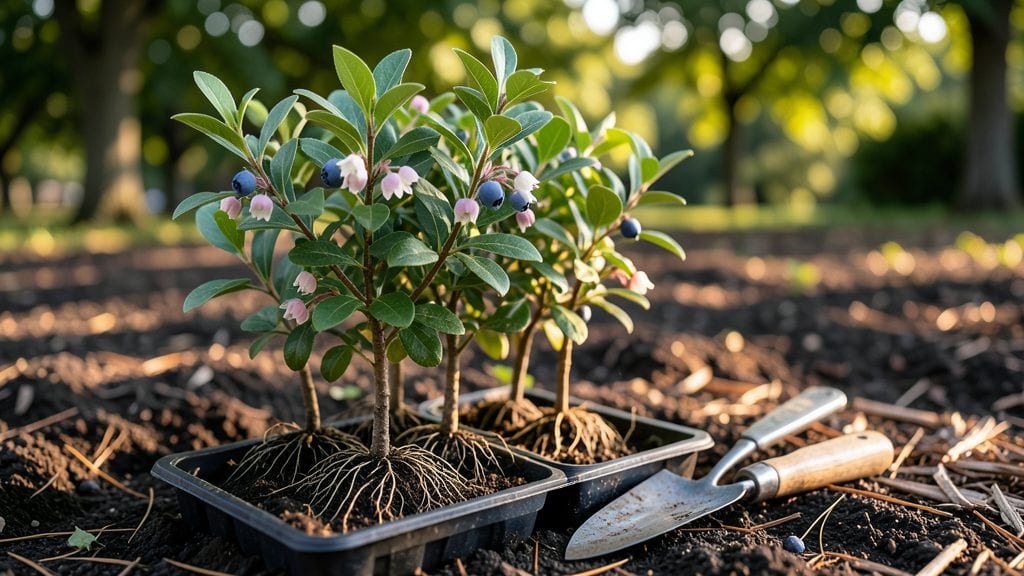
Mastering these blueberry planting tips isn’t just about dropping a bush in the soil—it’s about crafting the ideal acidic sanctuary for juicy, bountiful berries. I’ve learned the hard way that skipping soil prep or picking the wrong variety means years of disappointment instead of buckets of fresh fruit by summer.
The secret starts with soil pH, sunlight, and choosing bushes that match your climate zone.
First, test your soil—blueberries demand acidity between 4.5 and 5.5, and most garden soil is way too alkaline. Amend with sulfur or peat moss before planting, and pick a sunny spot with at least 6 hours of direct light daily.
Northern varieties like ‘Bluecrop’ handle colder winters, while southern types like ‘Southern Highbush’ stay productive year-round. Space bushes 4 to 6 feet apart—crowding leads to disease and poor yields.
📚 In This Guide
- What you need
- Instructions
- Tips and common mistakes
- Wrapping up and next steps
What you need
- ● Blueberry plants: 2–5 mature bushes (choose varieties like Rabbiteye, Southern Highbush, or Northern Highbush based on your climate zone).
- ● Well-draining soil: Acidic (pH 4.5–5.5), rich in organic matter (test soil pH before planting!).
- ● Compost or peat moss: 3–5 gallons per plant to amend soil.
- ● Mulch: 2–3 inches of pine bark, wood chips, or pine needles (keeps soil acidic and moist).
- ● Fertilizer: Acid-loving plant fertilizer (e.g., Osmocote or Miracle-Gro for Azaleas/Rhododendrons).
- ● Pruners: Sharp, sterilized bypass pruners (for shaping and harvesting).
- ● Garden gloves: Heavy-duty to protect hands from thorns.
- ● Watering can or hose: With a gentle spray nozzle for deep watering.
- ○ Stakes or trellis (optional but helpful): For support if plants grow tall or in windy areas.
- ● Soil pH test kit: Ensures your soil stays in the ideal acidic range.
- ● Drip irrigation system: Automates watering for consistent moisture.
- ● Bird netting: Protects ripe berries from hungry feathered friends!
- ● Slow-release fertilizer tablets: For a steady nutrient boost.
- ● Blueberry plant food: Specialized blends like Espoma Blueberry Tone.
Step-by-step instructions for planting blueberries
Here’s the method I’ve used to establish thriving blueberry bushes that produce fruit for decades.
Choose the Right Variety and Planting Site
Blueberries thrive in acidic soil with pH between 4.5 and 5.5. If your soil tests higher, amend it with sulfur or peat moss before planting. Southern highbush varieties like ‘Southern Belle’ or ‘Premier’ tolerate warmer climates, while rabbiteye types such as ‘Tifblue’ handle heat and humidity better. Plant in full sun—at least 6-8 hours of direct light daily—to maximize fruit production.
Select a location with well-draining soil to prevent root rot. Avoid low spots where water pools after rain. If your yard has heavy clay, mix in 2-3 inches of organic matter like compost or pine bark fines to improve drainage. I always plant my bushes 3-5 feet apart in rows spaced 8-10 feet apart to allow for air circulation and future maintenance.
Prepare the Planting Hole and Soil
Dig a hole twice as wide as the root ball but no deeper than 6 inches. This encourages roots to spread horizontally rather than settling too deeply. Loosen the soil at the bottom of the hole with a garden fork to remove compaction. If your soil isn’t naturally acidic, mix 1 part peat moss or pine bark fines into the backfill soil to create a slightly acidic growing medium around the roots.
Remove the blueberry plant from its container and gently tease apart any circling roots. Place the plant in the hole so the top of the root ball sits level with the surrounding soil—burying the stem too deeply can cause rot. Backfill with the amended soil, pressing lightly to eliminate air pockets. Water deeply to settle the soil and eliminate gaps.
Mulch and Water for Establishment
Spread 3-4 inches of pine bark mulch or wood chips around the base of the plant, keeping it 6 inches away from the stem to prevent rot. Mulch helps retain moisture, regulate soil temperature, and slowly acidify the soil over time. Avoid using fresh wood chips, as they can draw nitrogen from the soil and stunt growth.
Water deeply once a week during the first growing season, providing 1-2 inches of water per week. Check moisture by sticking your finger 2 inches into the soil—it should feel slightly damp but not soggy. Blueberries are shallow-rooted, so consistent moisture is critical, especially during drought or hot spells. Avoid overhead watering, which can spread fungal diseases like botrytis.
Prune and Fertilize for Long-Term Health
In the first year, focus on establishing strong root growth rather than fruit production. Prune only to remove dead, diseased, or crossing branches in late winter or early spring. Use clean, sharp pruners to make cuts just outside the branch collar. Avoid heavy pruning in the first year, as it stresses young plants.
Fertilize lightly in early spring with an acid-loving plant fertilizer (look for one with high nitrogen and low phosphorus). Follow the package rates, but halve the recommended dose for the first year. Over-fertilizing can lead to excessive leafy growth at the expense of fruit production. Monitor soil pH annually and adjust with sulfur or aluminum sulfate if it rises above 5.5.
Protect and Maintain for Year-Round Harvests
Blueberries are vulnerable to birds and wildlife, so install bird netting over the bushes once fruit begins to ripen. I use fine mesh netting supported by stakes to keep foraging animals at bay without harming the plants. Harvest berries when they’re fully blue and slightly soft to the touch—they won’t ripen further once picked.
In late winter, prune again to remove old wood (branches over 3-4 years old) and shape the bush for better airflow. Thin out crowded branches to reduce disease risk and improve fruit quality. With proper care, your blueberry bushes will reward you with years of abundant harvests and minimal maintenance once established.
Tips & tricks for perfect blueberry planting
These insider secrets will help you avoid common pitfalls and ensure your blueberry bushes thrive for decades.
Soil pH Precision: Testing your soil pH before planting is non-negotiable. I use a simple test kit to confirm the pH is between 4.5 and 5.5—blueberries are notoriously particular about this. If your soil tests higher, don't just sprinkle sulfur and hope for the best. Mix it thoroughly into the planting hole's backfill soil at a rate of 1 pound per 100 square feet. This targeted approach creates the perfect acidic environment right where the roots will grow.
Root Ball Preparation: When removing your blueberry plant from its container, resist the urge to rush. Gently tease apart any circling roots with your fingers—this encourages outward root growth rather than a tangled mass. I also recommend soaking the root ball in water for 10-15 minutes before planting to ensure it's fully hydrated. This simple step helps reduce transplant shock and gives your bushes a stronger start.
Mulching Technique: The 3-4 inches of pine bark mulch you'll apply isn't just for decoration—it's a crucial part of blueberry care. Spread it in a donut shape, keeping it 6 inches away from the stem to prevent rot. I've found that pine bark mulch works best because it slowly releases acidity as it breaks down, helping maintain that critical pH range. Refresh the mulch annually to maintain its effectiveness and insulation properties.
Watering Strategy: Those 6-8 hours of daily sunlight mean your blueberries will need consistent moisture, especially during their first growing season. The key is deep watering—aim for 1-2 inches of water per week, delivered all at once rather than frequent shallow waterings. I check soil moisture by sticking my finger 2 inches deep; if it's dry at that depth, it's time to water. This method encourages deep root growth, which is essential for establishing healthy bushes.
Pro Tips for Blueberry Planting Tips
- These insider secrets will help you avoid common pitfalls and ensure your blueberry bushes thrive for decades.
- Soil pH Precision: Testing your soil pH before planting is non-negotiable.
- Root Ball Preparation: When removing your blueberry plant from its container, resist the urge to rush.
Frequently asked questions
Got questions about growing juicy, bountiful blueberries? You’re not alone! Here are answers to the most common queries from gardeners just like you—whether you're a beginner or looking to refine your technique.
When is the best time to plant blueberry bushes?
Plant blueberry bushes in early spring (just as new growth begins) or late fall (4-6 weeks before the first frost). Avoid planting in extreme heat or cold—roots need time to establish without stress. For container-grown bushes, you can plant year-round in mild climates, but spring is ideal for most regions.
How long does it take for blueberry bushes to produce fruit?
Patience is key! Most blueberry bushes take 2-3 years to bear fruit after planting. Dwarf varieties may fruit sooner (1-2 years), while standard bushes can take up to 4 years. Keep bushes well-cared-for—proper watering, mulching, and soil acidity (pH 4.5-5.5) speed up fruiting.
Can I grow blueberries in containers or small spaces?
Dwarf or semi-dwarf varieties (like ‘Top Hat’ or ‘Peach Sorbet’) thrive in containers as small as 15-20 gallons. Use a well-draining potting mix with peat moss or pine bark to maintain acidity. Place containers in full sun (6+ hours/day) and water consistently—containers dry out faster than garden beds.
Why aren’t my blueberry bushes fruiting, even after years of growth?
Several factors could be at play:
- Poor soil pH: Test your soil—blueberries need acidic soil (pH 4.5-5.5). Amend with sulfur or peat moss if needed.
- Insufficient sunlight: Bushes need 6+ hours of direct sun daily. Shady spots reduce flowering.
- Lack of pollinators: While some varieties are self-pollinating, bees help boost yields. Plant near flowering companions (like lavender) to attract them.
- Over-fertilizing: Too much nitrogen = leafy growth, fewer berries. Use a low-nitrogen, high-potassium fertilizer (like 10-10-10) in early spring.
Do blueberry bushes need winter protection?
It depends on your climate! In USDA Zones 3-5, mulch bushes with 4-6 inches of straw or leaves after the ground freezes to insulate roots. For young or tender varieties, wrap the crown with burlap or use a frost blanket. In warmer zones (6+), winter protection isn’t usually needed—just reduce watering slightly.
Wrapping up and next steps
Planting blueberries is a rewarding journey that combines patience, care, and a little know-how. 🌱 From selecting the right soil and variety to mastering pruning and pest control, each step ensures your bushes thrive and produce sweet, juicy berries for years to come.
With these tips, you’re well on your way to enjoying a year-round harvest—whether it’s fresh fruit, jams, or even homemade treats!
Now that you’re armed with expert advice, it’s time to roll up your sleeves and get planting! Start small, stay consistent with maintenance, and watch your blueberry bushes flourish. Happy gardening—your future harvests are waiting! 🍇✨