Diseases
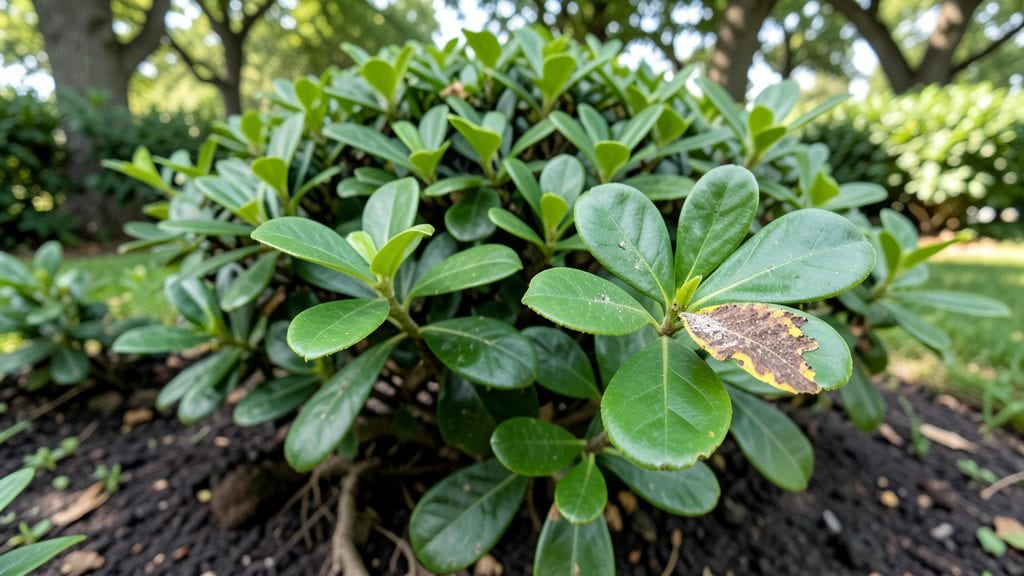
Boxwood plant diseases can turn your neatly trimmed hedges into a sad, brown mess—unless you catch them early. I’ve spent years battling fungal foes like box blight and root rot, and I’ll show you how to spot the warning signs before they spread.
The key is knowing what to look for: yellowing leaves, black spots, or wilting branches that just won’t bounce back.
Most of these diseases start with poor air circulation, overwatering, or stressed plants. I learned the hard way that boxwoods hate soggy soil—even in humid summers. The good news? Once you identify the problem, you can rescue your plants with the right fungicide, pruning, and care.
We’re talking 3 simple steps to revive your shrubs and keep them thriving for years.
You’ll learn to treat everything from powdery mildew to boxwood blight without losing your sanity. The secret is acting fast—pruning infected branches, improving drainage, and applying fungicide at the first sign of trouble. By the end, your boxwoods will be dense, green, and disease-free, looking better than ever.
Whether you’re dealing with a single plant or a whole hedge, these methods work for any size garden. Let’s get your boxwoods back to their best—and keep them that way all season long.
Root Causes Behind Boxwood Ailments
Boxwood plants are prized for their lush, evergreen foliage, but they’re also susceptible to a range of fungal diseases that thrive under specific conditions. Understanding why these diseases take hold is the first step to prevention and treatment.
Below, we break down the key culprits—from environmental factors to plant stress—that create the perfect storm for fungal infections.
Fungal pathogens like Cylindrocladium (boxwood blight) and Volutella (leaf spot) love moisture.
When boxwoods sit in soggy soil, their roots suffocate, weakening the plant’s defenses. Why it happens: - Excessive watering or heavy rainfall keeps the soil perpetually damp, creating ideal conditions for fungal spores to germinate. - Compacted or clay-heavy soil prevents proper drainage, trapping water at the roots. - Poor air circulation around the base of the plant (from mulch piled too high or dense foliage) traps humidity, accelerating spore growth.
Actionable fix: Ensure well-draining soil with a mix of sand or perlite, and water only when the top 1–2 inches of soil are dry. Elevate plants with raised beds if your soil is naturally waterlogged.
Boxwood diseases often spread via windborne spores or contaminated tools/soil. Why it happens:
- Previous infections leave behind dormant spores in mulch, soil, or fallen leaves, ready to reinfect when conditions are right.
- Infected plant debris (pruned clippings, dead leaves) acts as a reservoir for pathogens like Botrytis (gray mold).
- Wind or splashing water (from rain or irrigation) carries spores to healthy plants, especially in dense boxwood hedges.
Actionable fix: Remove and dispose of infected plant material (don’t compost it!). Sterilize pruners with 70% isopropyl alcohol between cuts, and avoid overhead watering.
Boxwoods thrive in USDA Zones 5–8, but extreme heat, cold snaps, or rapid temperature shifts weaken their immunity. Why it happens:
- Heat stress (above 90°F) causes wilting, making plants more vulnerable to fungal entry points like leaf wounds.
- Late spring frosts or early fall freezes damage new growth, creating entry points for Alternaria (another leaf spot culprit).
- Winter desiccation (dry, windy conditions) stresses plants, leaving them susceptible to Phyllosticta (another fungal leaf spot).
Actionable fix: Mulch around the base (2–3 inches deep) to regulate soil temperature, and water deeply during heatwaves. Choose boxwood varieties like ‘Green Velvet’ (more cold-hardy) if you’re in marginal zones.
Imbalanced soil chemistry—whether from lack of nutrients or excess salts—compromises boxwood health. Why it happens:
- Nitrogen deficiency (yellowing leaves) weakens cell walls, making them easier targets for fungal invasion.
- Over-fertilization (especially with high salt content) burns roots, reducing the plant’s ability to fight off pathogens like Septoria.
- pH imbalances (too acidic or alkaline) hinder nutrient uptake, stressing the plant.
Actionable fix: Test soil pH (ideal range: 6.0–7.0) and amend with compost or lime as needed. Use a balanced, slow-release fertilizer (10-10-10) in early spring, and avoid fertilizing in fall.
Insects like boxwood leafminers, mites, or scale damage leaves and stems, creating open wounds where fungi can enter. Why it happens:
- Leafminers (larvae tunneling in leaves) weaken foliage, making it prone to Cylindrocladium.
- Scale insects excrete honeydew, fostering sooty mold (Capnodium), which blocks sunlight and stresses the plant.
- Spider mites cause stippling (tiny dots) on leaves, reducing photosynthesis and lowering resistance.
Actionable fix: Monitor plants for pests and treat early with neem oil or insecticidal soap. Prune heavily infested branches to improve airflow.
Tightly packed boxwoods or hedges with no airflow create a fungal paradise. Why it happens:
- Stagnant air under dense foliage traps moisture, promoting Botrytis or Volutella.
- Old, unpruned growth retains dead leaves and branches where spores hide.
- Shearing too late in the season (after summer) stresses plants, leaving them vulnerable to fall infections.
Actionable fix: Prune in early spring (before new growth) to improve airflow, and thin out hedges to 1/3 of their size every 1–2 years. Avoid "topping" (cutting back to stubs), which invites disease.
Young boxwoods or those recovering from transplant shock are far more susceptible to diseases. Why it happens:
- Transplant shock disrupts root systems, reducing water/nutrient uptake and weakening defenses.
- Root-bound plants (grown in small pots too long) struggle to establish, making them prime targets for Phytophthora (root rot).
- Seedlings or cuttings lack the resilience of mature plants, especially against Septoria or Alternaria.
Actionable fix: Acclimate new plants gradually (harden off for 1–2 weeks before planting) and avoid transplanting during heatwaves. Choose container-grown boxwoods (like ‘Winter Gem’) for better root health.
Quick Fixes for Boxwood Ailments
When your boxwood plants show signs of distress, acting fast can mean the difference between a full recovery and losing them. Below are practical, step-by-step solutions tailored to the most common fungal diseases, along with prevention tips to keep your greenery thriving. Let’s tackle these issues head-on!
🍳 Remove Infected Leaves Immediately Start by pruning away all leaves with dark brown or black spots—don’t compost them! Instead, bag and discard them in the trash to prevent spores from lingering. Use sterilized pruners (wipe with rubbing alcohol between cuts) to avoid cross-contamination.
👨🍳 Apply Fungicide Spray the remaining foliage with a copper-based fungicide (like copper hydroxide) or a neem oil solution (1 tbsp neem oil + 1 tsp mild soap per quart of water). Reapply every 7–10 days until new growth appears. For severe cases, a systemic fungicide (e.g., propiconazole) may be needed.
🌡️ Improve Airflow & Light Fungal spores thrive in damp, shaded conditions. Thin out overcrowded plants and ensure they get at least 6 hours of sunlight daily. Water at the base (not overhead) and avoid late-day watering to let leaves dry quickly.
🔪 Prune Aggressively (But Safely) Remove all infected stems and leaves, even if they’re only slightly discolored. Burn or trash them—do not compost. Sterilize your tools after each cut to prevent spreading spores to healthy plants.
⏰ Schedule a Fungicide Spray Use a fungicide labeled for boxwood blight, such as chlorothalonil or azoxystrobin. Apply it every 7–14 days for at least 4–6 weeks, even after symptoms disappear. Follow label instructions carefully!
✨ Quarantine & Clean Up Isolate infected plants until they’re fully recovered (no new lesions for 30 days). Remove and destroy all plant debris from the area, and sterilize garden tools with a 10% bleach solution (1 part bleach to 9 parts water).
💡 Dig Up & Inspect Gently remove the plant from the soil and trim away mushy, blackened roots with clean shears. Healthy roots should be firm and light tan. If more than 50% of roots are rotten, the plant may not survive—consider replanting a new one.
🌱 Repot in Fresh Soil If roots are salvageable, repot in sterile potting mix (avoid garden soil, which may harbor pathogens). Add perlite or sand to improve drainage. Water lightly for the first week to avoid shocking the plant.
🎯 Prevent Future Rot
- Raise beds to improve drainage if your garden stays soggy.
- Avoid overwatering—stick your finger in the soil; water only if the top 1–2 inches are dry.
- Mulch lightly (1–2 inches) to retain moisture without suffocating roots.
💡 Choose Resistant Varieties Opt for boxwood cultivars bred for disease resistance, like:
- ‘Green Velvet’ (resistant to boxwood blight)
- ‘Winter Gem’ (tolerates cold and diseases better)
- ‘Dwarf English’ (compact and hardy)
🌡️ Monitor & Act Early
- Inspect plants weekly for unusual spots, wilting, or discoloration.
- Test soil pH (ideal range: 6.0–7.0 for boxwoods). Acidic soil (below 5.5) weakens plants.
- Rotate fungicides if you use them frequently to prevent resistance.
🔥 Sanitize Everything
- Tools: Wipe pruners with rubbing alcohol or bleach water between uses.
- Containers: Clean pots with a 10% bleach solution before reuse.
- Gloves & Clothing: Change or wash after handling infected plants.
If your boxwoods are severely infected (e.g., blight spreading rapidly, extensive root rot), don’t hesitate to consult a local arborist or extension service. They can recommend stronger treatments or confirm if the plant is beyond saving.
Remember: The key to healthy boxwoods is vigilance + quick action. With these fixes, your shrubs can bounce back—and stay disease-free for years! 🌿✨
Frequently asked questions about boxwood plant diseases
What are the first signs of boxwood blight?
Look for small, dark brown or black spots with yellow halos on leaves—these appear first on lower branches. Within weeks, the spots expand and leaves turn brown, eventually falling off. Unlike other diseases, boxwood blight often starts in humid weather and spreads rapidly.
Can I save a boxwood plant with root rot?
It depends on how severe the damage is. If less than 50% of roots are affected, you can trim the rotten roots, repot in fresh, well-draining soil, and reduce watering. If over half the roots are mushy and black, the plant may not recover—replace it with a disease-resistant variety like ‘Green Velvet.’
Why does my boxwood keep getting leaf spot diseases?
Overhead watering, poor airflow, or old mulch harboring spores are usually to blame. Thin out dense hedges, water at the base, and remove fallen leaves. Also, sterilize pruners between cuts to prevent spreading pathogens like Volutella or Alternaria.
Are chemical fungicides safe for boxwoods?
Yes, but choose copper-based or systemic fungicides (like chlorothalonil) labeled for boxwoods. Always follow label instructions—overuse can harm beneficial microbes. For organic options, neem oil or baking soda spray (1 tsp baking soda + 1 quart water + a drop of soap) works for mild cases.
How do I prevent boxwood diseases in new plants?
Start with disease-resistant varieties, harden off container-grown plants before transplanting, and avoid planting in low-lying areas. Mulch lightly (1–2 inches) and water deeply but infrequently—never let soil stay soggy. Inspect new plants weekly for early signs of stress.