
Pests and Diseases
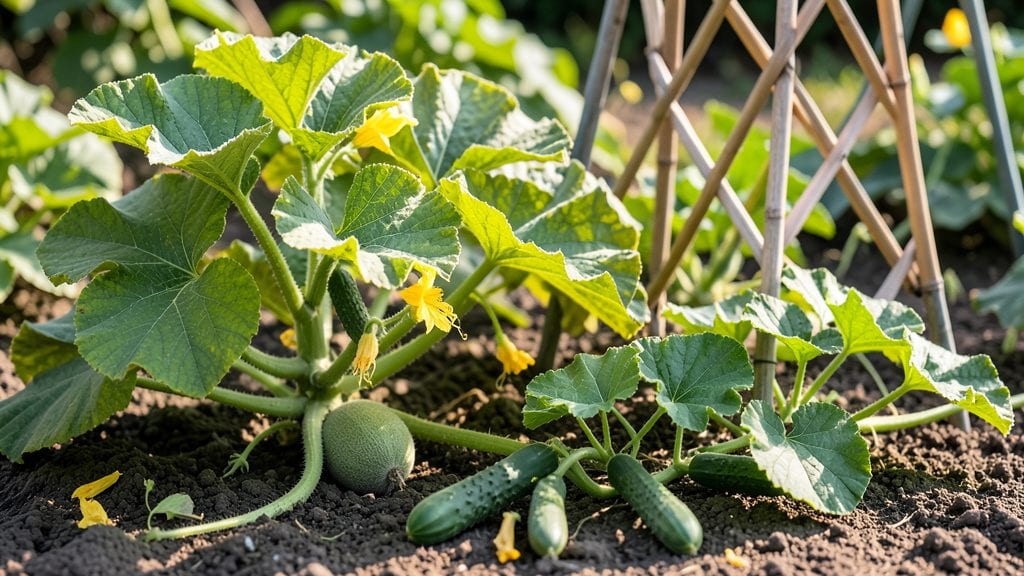
Yes, cantaloupe and cucumbers can be planted together because they share similar growing conditions and benefit from each other’s shade and pest deterrence. However, they require ample space, strong trellising, and consistent moisture to prevent competition for nutrients and reduce disease risk.
Cantaloupe and cucumbers actually make great garden partners because they grow well in the same warm-season conditions—both thrive in full sun and well-draining soil. The cucumber vines create natural shade that keeps cantaloupe roots cooler, which is especially helpful in hot climates.
Plus, cucumbers act as a living barrier against pests like cucumber beetles, which also target cantaloupe. 🌱 However, their sprawling growth habits mean you’ll need to give them plenty of room to stretch out or use a sturdy trellis to keep them organized.
One key consideration is their nutrient needs. While they share similar requirements, cantaloupe is heavier on nitrogen early in the season, while cucumbers prefer a balanced feed. This is why proper spacing—at least 6–8 feet apart—is critical to avoid competition.
If your garden space is limited, consider planting them in separate rows with a 3-foot buffer between them to maintain airflow and reduce disease spread.
💡 In This Article
- Why Cantaloupe and Cucumbers Thrive as Companion Plants
- Best Practices for Planting Cantaloupe with Cucumbers
Why cantaloupe and cucumbers thrive as companion plants
The botanical synergy between cantaloupe and cucumbers starts with their shared preference for warm, sunny conditions and well-draining soil. Here's what's actually happening: cucumber vines create a natural canopy that shields cantaloupe vines from intense afternoon sun, reducing heat stress on their shallow roots.
This is especially valuable in regions where summer temperatures exceed 90°F, as cantaloupe plants can suffer from sunburn on their leaves and fruit when exposed to direct sunlight for prolonged periods. 🔥
Cucumbers also act as natural pest deterrents. Both plants face threats from cucumber beetles, which transmit bacterial wilt—a fatal disease for cantaloupe. When planted together, the dense cucumber foliage disrupts beetle movement patterns, making it harder for them to locate cantaloupe plants.
Additionally, cucumbers release volatile organic compounds that mask cantaloupe's scent, confusing pests that rely on chemical cues to find hosts. Their root systems, which typically grow to depths of 12-18 inches, also share nutrients efficiently without competing aggressively.
Water requirements align perfectly between these companions. Both plants need consistent moisture, particularly during flowering and fruiting stages, but they share a similar tolerance for 1-2 inches of water per week. The cucumber vines help maintain soil humidity by reducing evaporation through their broad leaf canopy.
This shared moisture need creates a microclimate where both plants thrive without the gardener needing to monitor watering schedules separately. The sprawling growth habits of both plants actually complement each other in garden layout planning.
However, this partnership requires careful management of their growth patterns. Cantaloupe vines spread 6-8 feet wide while cucumbers can extend 10-12 feet if left unchecked. Without proper spacing or trellising, their competing canopies create ideal conditions for fungal diseases like powdery mildew by reducing airflow.
The key factor is maintaining vertical growth through sturdy trellises or cages, which elevates the foliage and allows sunlight to penetrate to the lower leaves where disease often starts.
Consider this real-world example: In a 10x10 foot garden bed, you could place cantaloupe plants along one edge with cucumbers trained vertically on a trellis in the center.
The cantaloupe would benefit from the shade provided by the cucumber vines during peak afternoon sun, while the cucumbers gain protection from ground-dwelling pests that might target their developing fruits. This layout maximizes space utilization while maintaining the companion planting benefits. 💫
What most people don't realize is how their flowering cycles actually complement each other. Cantaloupe flowers open in the morning and close by afternoon, while cucumbers produce flowers throughout the day. This staggered blooming pattern extends the pollination window, increasing the likelihood of fruit set for both plants.
Bees and other pollinators find continuous nectar sources in the garden, which boosts overall productivity of both crops.
The science behind their nutrient sharing involves mycorrhizal fungi in the soil. Both plants form symbiotic relationships with these beneficial fungi, which extend their root systems and improve nutrient uptake.
When planted together, they create a more efficient network for accessing water and minerals like potassium and phosphorus—critical for cantaloupe fruit development and cucumber vine growth. This natural nutrient exchange reduces the need for synthetic fertilizers while maintaining healthy growth patterns. ✨