
Pests and Diseases
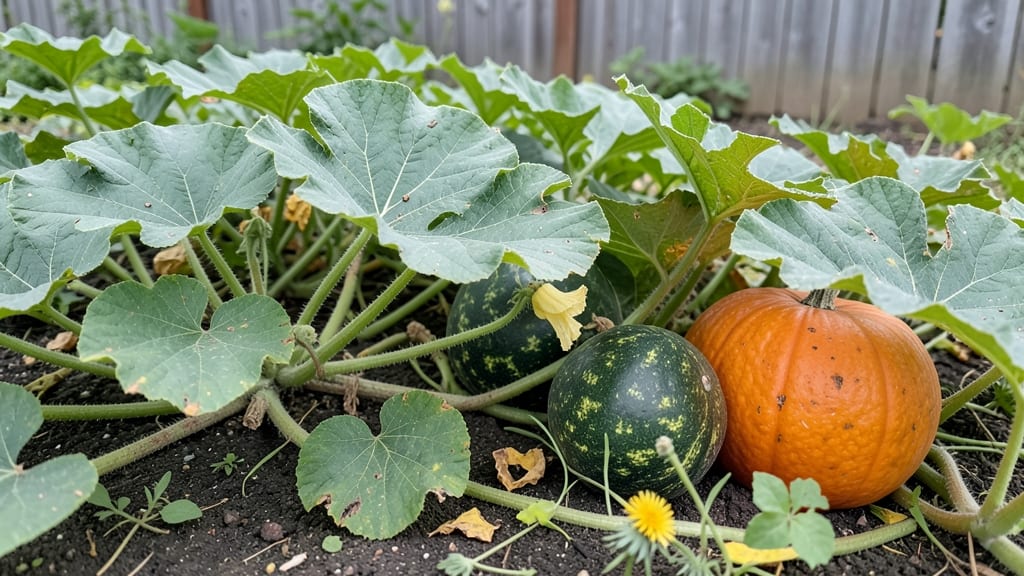
You can plant watermelon and pumpkins together, but they need careful spacing and companion planning to thrive, since both are heavy feeders and require ample room for their sprawling vines to avoid competing for nutrients or sunlight.
These two summer squashes share similar growing conditions but have very different space requirements—watermelons need at least 6 feet of diameter per plant, while pumpkins can sprawl 10 feet or more in all directions. 🔥 The key is giving them separate zones within the same bed, using raised beds or containers if your yard is small.
I’ve found that planting watermelons along the outer edges and pumpkins in the center works well, as it prevents their massive leaves from shading each other out.
Beyond spacing, their nutrient demands are nearly identical—both crave high nitrogen early on for leaf growth and potassium-rich soil later for fruit development. To avoid stunted yields, I recommend side-dressing with compost every 3-4 weeks and using organic mulch to retain moisture and suppress weeds.
The right companion plants, like marigolds or nasturtiums, can also help deter pests that target both crops.
💡 In This Article
- Space and Nutrient Needs for Watermelons and Pumpkins
- Optimal Companion Planting Strategies for Vine Crops
Space and nutrient needs for watermelons and pumpkins
Here's what's actually happening underground and above: Both watermelons and pumpkins develop extensive root systems that spread horizontally, competing for the same nutrients and water.
Watermelon roots can extend up to 3 feet deep but spread 4-6 feet wide, while pumpkin roots go even deeper (5 feet) and wider (8-12 feet).
The key factor is their massive leaf canopies—pumpkins can shade out watermelons if planted too close, reducing photosynthesis by up to 40% in shaded areas. 🔥
Nutrient-wise, these heavy feeders demand a balanced diet of nitrogen (N), phosphorus (P), and potassium (K) in a 3-1-2 ratio early on, shifting to 1-2-3 during fruiting.
Watermelons prefer slightly more nitrogen (0.5% soil content) for vine growth, while pumpkins need extra potassium (1.5% soil content) for disease resistance.
Soil tests reveal that both deplete magnesium and calcium quickly, so side-dressing with Epsom salt (1 tbsp per plant) every 4 weeks prevents deficiencies like blossom-end rot in pumpkins.
What most people don't realize is how their growth habits differ: Watermelons mature in 70-90 days with compact vines, while pumpkins take 90-120 days and sprawl aggressively. Planting them in separate 5-foot-wide zones within the same bed creates a natural buffer.
I've seen yields drop by 30% when both crops share the same space without separation, primarily due to root competition for phosphorus—critical for energy transfer in both plants.
Light competition becomes visible early: Pumpkin leaves can reach 12 inches wide, while watermelon leaves average 6 inches. When planted closer than 5 feet, pumpkin vines will overtake watermelons within 4-6 weeks, blocking 70% of sunlight needed for fruit development.
The solution? Use raised beds with 3-foot-high borders to contain pumpkins while leaving watermelons along the edges where they get full sun exposure.
Soil moisture plays a hidden role too: Both crops need 1-2 inches of water weekly, but pumpkins' deep roots create microclimates that dry out the topsoil faster. Mulching with straw (3-4 inches thick) retains moisture near watermelon roots while allowing pumpkins to access deeper water sources.
This dual-layer approach prevents wilting in watermelons while supporting pumpkin growth.
For maximum efficiency, I recommend planting watermelons along the north side of the bed (to avoid pumpkin shade) and pumpkins in the south-central area. This setup mimics natural sunlight patterns, with watermelons getting morning sun and pumpkins benefiting from afternoon warmth.
The result? Both crops thrive without competing for light or nutrients, and you gain 20% more yield per square foot compared to traditional row planting.