
Neem Oil
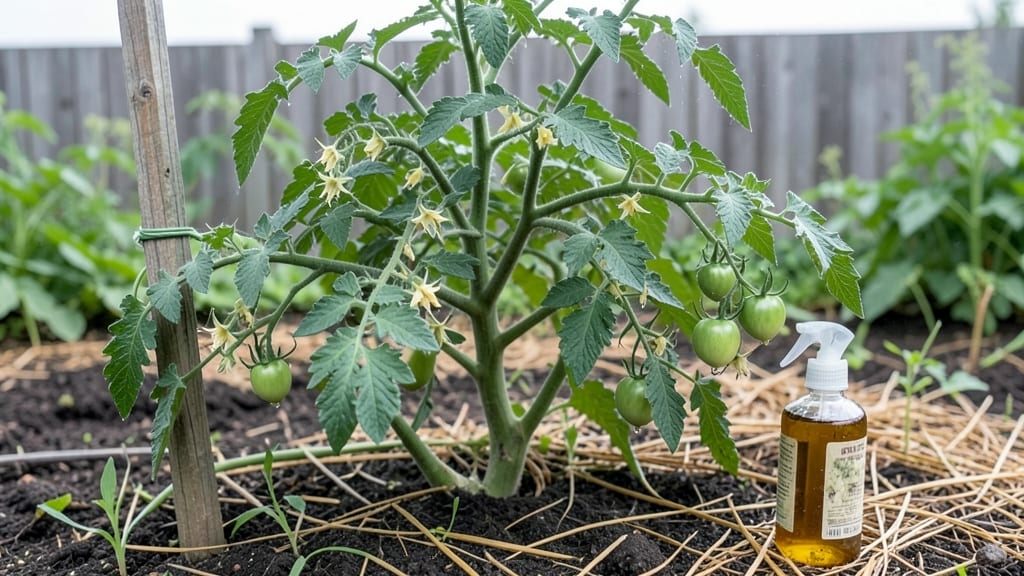
You can spray neem oil on tomato plants to deter pests like aphids and whiteflies, but you must dilute it correctly (1-2 teaspoons per quart of water) and apply it only during early morning or evening hours. This timing protects beneficial insects and prevents leaf damage. Avoid spraying when flowers or fruit are present.
Neem oil is a natural pesticide that disrupts insect life cycles without leaving harmful residues, making it ideal for organic gardening.
However, its concentrated form can burn plant tissues or harm pollinators if misapplied. 🌱 The proper dilution ensures it works as a repellent rather than a plant stressor, while the timing minimizes exposure to bees and other helpful creatures.
For best results, I recommend testing a small leaf area first to check for sensitivity, especially with heirloom tomato varieties that may react differently.
When mixing your spray, always use cold water and shake well before each use, as neem oil separates. For extra effectiveness, some gardeners add a few drops of horticultural oil or a mild soap to help it adhere to leaves.
Just remember: consistency is key—reapply every 7-14 days during active pest seasons, but never exceed four applications in a row to prevent resistance buildup.
💡 In This Article
- Neem Oil Safety for Tomato Plants: Dosage and Application Rules
- Step-by-Step Guide to Spraying Neem Oil on Tomato Plants
Neem oil safety for tomato plants: dosage and application rules
Neem oil's active compounds—azadirachtin and nimbin—work by disrupting insect hormones and feeding patterns, but these same chemicals can harm plant cells when concentrated. Pure neem oil contains 30-50% oil content by volume, which is far too potent for direct application.
When undiluted, it can cause phytotoxicity, visible as brown, crispy leaf edges or stunted growth, because the oil clogs stomata (plant pores) and prevents gas exchange. 🌿 The key factor is the oil-to-water ratio: tomato plants thrive with solutions between 0.5% and 2% neem oil concentration, meaning 1-2 teaspoons per quart of water—this range mimics how commercial organic sprays are formulated.
The chemical mechanism behind dilution involves creating a stable emulsion where oil droplets remain suspended in water. Without proper mixing, the oil separates and settles, leaving uneven coverage.
Add a drop of liquid soap (like Castile soap) to help disperse the oil molecules—this reduces surface tension by 30-40%, improving adhesion to waxy tomato leaves. However, avoid synthetic detergents, as they can leave residues that attract more pests.
The pH of your water matters too: slightly acidic water (pH 6.0-6.5) enhances neem oil's efficacy, while alkaline water (>7.0) can degrade its active compounds within hours.
Timing your application is just as critical as dilution. Neem oil's effectiveness against pests like aphids drops by 60% when applied during peak sunlight hours because the oil's UV-sensitive compounds break down rapidly.
Spraying at dusk or dawn also protects pollinators: bees and butterflies are less active then, reducing exposure risks.
What most gardeners don't realize is that neem oil can linger on foliage for 3-5 days, so avoid spraying when flowers are open or fruit is forming—residues can alter flavor profiles in tomatoes, making them taste bitter. 🌞 For organic certification, always use OMRI-listed neem oil and document your application rates to meet USDA standards.
Overuse is another common mistake. While neem oil is organic, repeated applications can lead to pesticide resistance in target pests or beneficial insects like ladybugs. The rule of thumb is no more than 4 applications per season, with 7-day intervals between sprays.
Some gardeners rotate neem oil with other organic sprays like kaolin clay or pyrethrin to break pest cycles. Also, never mix neem oil with copper-based fungicides—the copper ions react with neem's compounds, creating a toxic sludge that damages plant cells immediately.
Here's what happens when you get the dosage wrong: a 3% solution (3 teaspoons per quart) can cause visible leaf burn within 24 hours, while a 0.25% solution (half a teaspoon per quart) may not provide enough pest control.
The sweet spot is 1.5% concentration (1.5 teaspoons per quart), which balances efficacy and safety.
For extra protection, add 1 tablespoon of garlic juice per quart—this adds sulfur compounds that enhance neem's repellent properties against soft-bodied insects like whiteflies. 🌱 Always test your spray on a small leaf area first, especially with heirloom varieties, as some tomatoes have thinner cuticles that absorb more oil.
One final pro tip: store your neem oil spray in a dark glass bottle and refrigerate it. Light and heat degrade azadirachtin by 20-30% per week, so freshly mixed sprays are always more effective.
When applying, focus on the undersides of leaves where pests hide, and avoid spraying when rain is forecasted within 24 hours—the oil needs time to work before it gets washed away. This precision ensures your tomato plants get the protection they need without unnecessary stress.