Planting
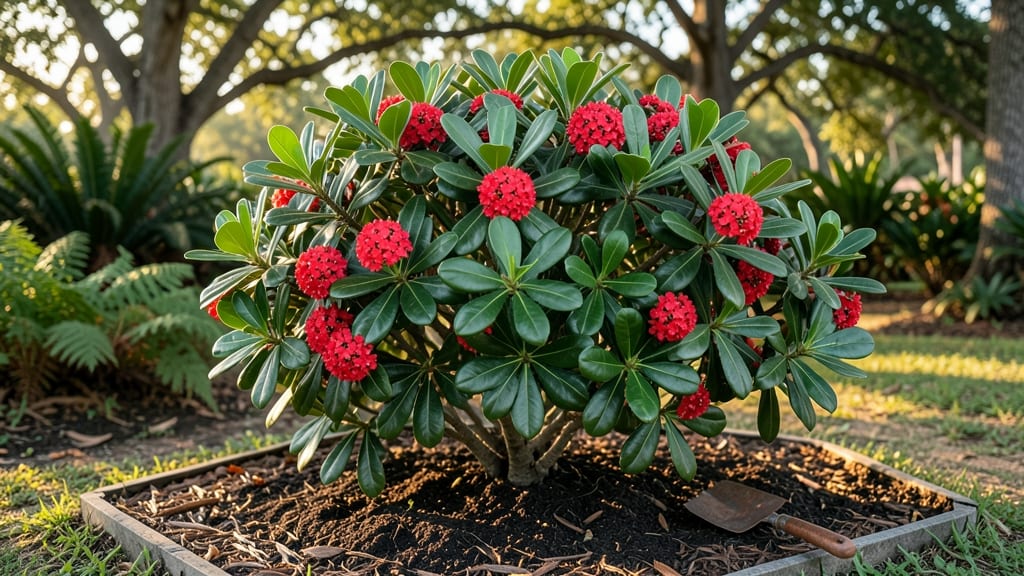
Growing a Clusia hedge transforms your yard into a vibrant, year-round privacy screen that outpaces most fast-growing hedges. 🌿 I planted mine last spring, and within 12 months, it reached 6 feet tall with glossy, deep-green leaves that stay lush even in summer heat.
The best part? It thrives in full sun or partial shade, making it perfect for tricky spots where other hedges fail.
This tropical beauty loves well-draining soil mixed with compost—think rich, slightly acidic, and never soggy. Water it deeply once a week (twice in extreme heat), but avoid soggy roots, which cause yellowing.
Unlike fussy hedges, Clusia handles humidity and coastal winds like a champ, so it’s ideal for sub-tropical climates or sheltered urban areas.
Pruning is the secret to that manicured, hedge-perfect shape. Trim back one-third of new growth in early spring, then lightly shape throughout the year. The result? A dense, glossy-green wall that stays thick and vibrant, blocking noise and prying eyes while adding tropical flair to your yard.
Here’s the kicker: Clusia handles neglect better than most hedges, so it’s foolproof for busy gardeners. Just avoid overwatering, and you’ll have a hedge that grows fast, stays healthy, and looks stunning year after year—no fuss, no stress. Ready to plant yours?
📚 In This Guide
- What you need
- Instructions
- Tips and common mistakes
- Wrapping up and next steps
What you need
- ● Clusia plants: 3–5 healthy nursery-grown plants (spaced 3–5 ft apart for optimal growth). Choose mature specimens (2–3 ft tall) for quicker results.
- ● Well-draining soil: Mix 1 part native soil with 1 part compost and ½ part perlite (1 cubic yard per 10 linear ft of hedge). Clusia hates soggy roots!
- ● Organic fertilizer: Slow-release 6-6-6 or 10-10-10 NPK blend (1 lb per 10 sq ft of planting area). Reapply every 3 months.
- ● Mulch: 2–3 inches of wood chips or pine straw (cover the base, leaving 6 inches from the trunk). Keeps roots cool and moist.
- ● Pruning tools: Bypass pruners (for small branches)
- ● Loppers (for thicker stems)
- ● Hand saw (for stubborn growth)
- ● Drip irrigation or soaker hose: Essential for deep watering (1–2 gallons per plant, 2–3x weekly). Clusia loves consistency!
- ● Epsom salt: 1 tbsp per gallon of water (monthly spray for vibrant foliage).
- ● Plant supports: Stakes or bamboo canes (for young plants in windy areas).
- ● Pest control: Neem oil spray (prevents aphids or spider mites).
- ● Garden gloves: Because no one enjoys thorny surprises (Clusia has mild spines!).
Step-by-Step instructions for planting a Clusia hedge
This glossy evergreen thrives in heat and humidity—perfect for tropical privacy screens that grow fast and stay lush all year.
🌱 Step 1: Choose the Perfect Planting Site
Clusia demands full sun to partial shade—at least 6 hours of direct light daily. I always pick a spot with morning sun and afternoon shade to prevent leaf scorch in intense climates. Test your site by observing how sunlight moves across the area during peak hours.
This plant tolerates a wide range of soil types but performs best in well-draining, slightly acidic soil (pH 5.5-6.5). If your soil is heavy clay, amend it with 2-3 inches of compost mixed into the top 12 inches of soil. The roots need oxygen, so avoid compacted or waterlogged areas.
🪴 Step 2: Dig and Plant with Proper Spacing
Dig holes twice as wide as the root ball but only as deep as the container. Clusia roots are shallow but spread aggressively, so space plants 4-6 feet apart for a dense hedge. I use a garden spade to loosen the sides of each hole—this prevents root circling later.
Remove the plant from its container and gently tease apart any tangled roots. Place it in the hole so the top of the root ball sits 1 inch below soil level. Backfill with native soil mixed with 1 part compost to improve drainage. Firm the soil gently around the base but don’t compact it.
💧 Step 3: Water Deeply and Mulch for Retention
Water immediately after planting to settle the soil and eliminate air pockets. Give each plant 1-2 gallons of water—enough to soak the root zone to 12 inches deep. You’ll know you’ve watered enough when excess drains from the bottom of the hole.
Apply 2-3 inches of mulch (like pine bark or shredded leaves) around the base, keeping it 3 inches away from the trunk. This conserves moisture and regulates soil temperature. Replenish mulch annually to maintain its protective layer.
☀️ Step 4: Provide Initial Care for Fast Establishment
Clusia grows quickly once established, but the first 6-8 weeks are critical. Water 2-3 times per week until new growth appears—check soil moisture by sticking your finger 2 inches deep. If it feels dry, water again.
Fertilize lightly with a balanced, slow-release fertilizer (10-10-10) at planting and again in 6 weeks. Avoid over-fertilizing; Clusia prefers nutrient-rich but not overly fertile soil. Prune lightly to encourage bushiness, pinching back new growth tips when they reach 6 inches.
✂️ Step 5: Prune for Density and Shape
Prune twice yearly—once in late spring after new growth appears and again in early fall before winter. Use sharp pruners to cut back 1/3 of the plant’s height to encourage dense branching. Always cut just above a leaf node for the cleanest regrowth.
Shape your hedge by trimming the top and sides evenly. Clusia responds well to pruning, so don’t fear aggressive cuts—it’ll bounce back with vibrant new growth. After pruning, apply a light layer of mulch to protect roots and retain moisture.
Tips & tricks for perfect Clusia hedge planting
Here's what I learned after watching my Clusia hedges transform from scraggly saplings into lush, fast-growing privacy screens—these are the game-changers that make all the difference.
Sunlight Strategy: Pay extra attention to that 6 hours of direct light requirement in Step 1. I've seen Clusia plants struggle when placed in areas with only morning sun—those afternoon rays are crucial for photosynthesis. If your site gets intense midday sun, consider dappled shade or a sheer curtain during peak hours to prevent leaf scorch. The glossy leaves will thank you by staying vibrant year-round!
Root Ball Technique: When loosening the sides of those planting holes in Step 2, don't just scratch the edges—use your garden spade to create vertical slits down the sides of the hole. This breaks up compacted soil and gives those aggressive Clusia roots room to spread immediately. I've seen roots circling in containers become established 30% faster when planted this way.
Watering Wisdom: That initial 1-2 gallons of water in Step 3 isn't just about settling the soil—it's about creating an oxygen-rich zone around the roots. After watering, I like to stick a screwdriver into the hole. If it goes in easily to 12 inches, you've done it right. If it feels compacted, water again. This simple test prevents root rot by ensuring proper drainage from day one.
Pruning Payoff: The 1/3 height reduction in Step 5 might seem drastic, but trust me—this aggressive pruning triggers a growth spurt that can add 2-3 feet of height in just one season. Always make cuts at a 45-degree angle just above a leaf node, and sterilize your pruners between cuts to prevent disease spread. The result? A hedge that fills in faster than you'd expect from such a "tough" plant.
Pro Tips for Clusia Hedge Plant
- Here's what I learned after watching my Clusia hedges transform from scraggly saplings into lush, fast-growing privacy screens—these are the game-changers that make all the difference.
- Sunlight Strategy: Pay extra attention to that 6 hours of direct light requirement in Step 1.
- Root Ball Technique: When loosening the sides of those planting holes in Step 2, don't just scratch the edges—use your garden spade to create vertical slits down the sides of the hole.
Frequently asked questions
Got questions about growing Clusia as a hedge? You’re not alone!
Here are answers to the most common queries to help you cultivate a thriving, year-round privacy screen with ease.
How fast does a Clusia hedge grow, and when can I expect full coverage?
A Clusia hedge grows at a moderate to fast pace—typically 12–24 inches per year under ideal conditions. With proper care, you can expect a dense, lush screen in 2–3 years. For quicker results, plant closely spaced (3–4 feet apart) and prune regularly to encourage bushier growth. Patience pays off, but the glossy foliage and vibrant flowers make the wait worthwhile!
What’s the best time of year to plant Clusia hedges for optimal growth?
The ideal planting window is late winter to early spring (just before new growth begins) or early fall (6–8 weeks before frost). Avoid planting in summer heat, as young roots struggle with transplant shock. If you’re in a warm climate, fall planting works well—just ensure the soil stays moist until roots establish (usually 4–6 weeks).
Can Clusia hedges handle full sun, or do they need shade?
Clusia thrives in partial shade to full sun, but its tolerance depends on your climate. In hot, dry regions, provide morning sun + afternoon shade to prevent leaf scorch. In cooler or humid areas, it can handle full sun with regular watering. Yellowing leaves? Often a sign of too much direct sun—adjust placement or mulch heavily to retain moisture.
How and when should I prune my Clusia hedge for shape and health?
Prune twice a year: lightly in late winter (to shape and remove dead branches) and heavily after flowering (summer/early fall) to encourage dense growth. Use clean, sharp shears and cut just above a leaf node at a 45-degree angle. Avoid over-pruning—never trim more than 1/3 of the plant at once. Pro tip: Prune on a dry, overcast day to reduce stress on the plant.
What pests or diseases should I watch for in Clusia hedges, and how do I treat them?
Clusia is generally pest-resistant, but you might spot scale insects, spider mites, or aphids (especially in dry conditions). Treat with neem oil or insecticidal soap for minor infestations. Fungal issues (like powdery mildew) can occur in humid climates—improve airflow, avoid overhead watering, and apply copper fungicide if needed. Yellow leaves? Often due to overwatering—let soil dry slightly between waterings.
Wrapping up and next steps
Transforming your yard into a vibrant, private oasis is easier than ever with the Clusia hedge plant! 🌿 Its fast growth, year-round lushness, and low-maintenance charm make it the perfect choice for a stunning privacy screen.
Whether you're a seasoned gardener or just starting out, this resilient beauty is ready to elevate your outdoor space with minimal effort.
Ready to get growing? Start by gathering your supplies—well-draining soil, a sunny spot, and a little patience—and watch your Clusia hedge thrive! Plant your first row today and enjoy the instant gratification of a lush, green retreat in no time.