
Planting
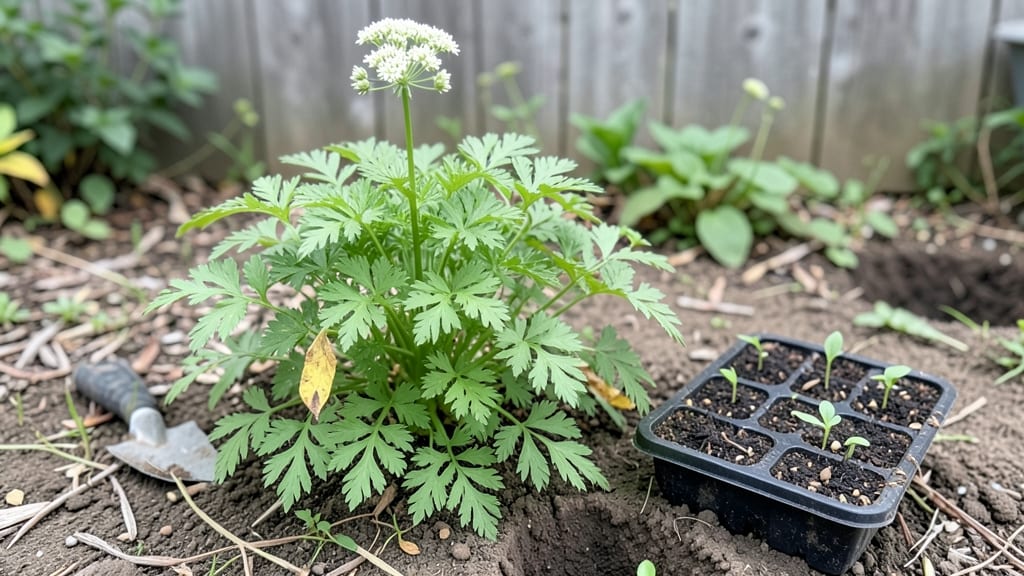
Here are some coriander planting tips to ensure fast germination—timing and soil warmth are everything, and I’ve learned the hard way when it bolts too soon. 🌱 The secret? usually in early spring or late summer, and keeping them consistently moist until those first leaves appear.
Most gardeners rush this step, but patience here pays off with lush, fragrant plants.
Once you’ve got the timing right, focus on light, loose soil mixed with compost and a shallow planting depth—just ¼ inch deep—to avoid smothering the tiny seeds. Space them 6 inches apart in full sun, and water gently but often, since coriander hates drying out.
Within 7-14 days, you’ll see those familiar feathery leaves, and with proper care, you’ll harvest enough for months of fresh cooking.
📚 In This Guide
- What you need
- Instructions
- Tips and common mistakes
- Wrapping up and next steps
What you need
- ● Coriander seeds: 1–2 tbsp (about 10–20g) for direct sowing or 1 packet (1g) for indoor starters.
- ● Seed trays or biodegradable pots: 2–4 (3–4" diameter) for starting seeds indoors.
- ● Potting mix: 1–2 bags (10–15L) of well-draining, seed-starting mix (or garden soil amended with compost).
- ○ Garden soil (optional for outdoor planting): Loamy, well-draining soil with a pH of 6.2–6.8.
- ● Watering can or spray bottle: For gentle hydration (avoid oversaturating seeds!).
- ○ Fertilizer (optional but recommended): Balanced liquid fertilizer (e.g., 10-10-10) for seedlings.
- ● Compost or worm castings (1 cup per plant) for organic nutrition.
- ● Gloves: A pair to protect your hands from prickly stems.
- ● Trowel or small shovel: For digging seed trays or transplanting seedlings.
- ● Plant labels: To track varieties (e.g., ‘Cilantro’ vs. ‘Chinese Coriander’).
- ○ Mulch (optional): Straw or shredded leaves to retain moisture and suppress weeds.
- ● Grow lights (indoor setup): LED lights (12–16 hours/day) if starting seeds before last frost.
- ● Sunlight: Full sun (6–8 hours daily) or partial shade in hot climates.
- ● Temperature: Ideal germination range: 60–75°F (15–24°C). Avoid planting if night temps drop below 50°F (10°C).
- ● Spacing: Stage Spacing Seedlings (trays) 1–2" apart Transplanted outdoors 6–12" apart in rows 12–18" apart
- ● Watering schedule: Keep soil consistently moist (not soggy) until germination (5–10 days). Reduce watering once established.
Step-by-Step guide to fast coriander germination and growth
Skip the slow-start struggles with these proven techniques for quick, vigorous coriander plants.
🌱 Step 1: Prepare the Soil for Optimal Germination
Start with well-draining potting mix—coriander hates soggy roots. I like to mix in a little perlite or sand (about 10%) to improve drainage. Fill your containers to within ½ inch of the rim and moisten until evenly damp but not wet. The soil should hold together when gently squeezed but not drip water.
Coriander seeds need consistent moisture to germinate, but they rot quickly if overwatered. I press the seeds lightly into the soil surface rather than burying them—they need light to sprout. Space the seeds about 1 inch apart in rows 2 inches apart if planting multiple seeds per container.
💧 Step 2: Create a Humidity Dome for Fast Sprouting
Cover the planted seeds with a clear plastic dome, glass cloche, or even a plastic bag secured with a rubber band. This traps warmth and humidity, which coriander seeds crave to germinate quickly. Place the container in a warm spot—70-75°F is ideal. You should see sprouts in just 5-7 days, sometimes even faster.
Check daily for condensation on the dome. If it’s foggy inside, you’re doing it right. Remove the cover immediately once you see the first sprouts—too much humidity after germination causes damping-off, a fungal disease that collapses seedlings overnight.
☀️ Step 3: Provide Bright, Indirect Light Immediately
Move seedlings to a bright spot with 6-8 hours of indirect sunlight as soon as they emerge. A south-facing window works, but direct midday sun can scorch tender leaves. If your light is dim, supplement with a grow light kept 4-6 inches above the plants for 12-14 hours daily.
Watch for leggy growth—thin, pale stems reaching toward the light. This means your seedlings need more intensity. Rotate the containers daily so all sides get even exposure. Strong seedlings will have dark green leaves and sturdy stems about ¼ inch thick.
🌿 Step 4: Thin and Fertilize for Bushy Growth
When seedlings reach 2 inches tall (about 2-3 weeks after planting), thin to the strongest plant per container. Use scissors to snip weaker stems at soil level—this prevents disturbing roots. Leave 3-4 inches between remaining plants for proper airflow.
Feed with a balanced liquid fertilizer (10-10-10) diluted to half strength. I apply it every 2-3 weeks during active growth. Over-fertilizing causes rapid leaf growth at the expense of flavor—keep it light. Water at the base, avoiding wet foliage to prevent mildew.
✂️ Step 5: Harvest Strategically for Continuous Production
Harvest the outer leaves when plants reach 6-8 inches tall—this encourages bushier growth. Pinch off flowers as soon as they appear to maintain leaf production. Coriander bolts (goes to seed) quickly in warm weather, so harvest frequently during its 3-4 week prime.
For seeds, let some plants flower and dry completely on the stalk. Shake dried seed heads into a paper bag for future planting. Store seeds in a cool, dark place—they stay viable for up to 2 years. With these tips, you’ll enjoy fresh coriander for months, not weeks.
Tips & tricks for perfect coriander germination
A few simple tricks will help you bypass the common germination struggles and get your coriander growing fast.
The Soil Moisture Secret: After pressing seeds into the soil in Step 1, give them a light mist with a spray bottle rather than watering from above. This keeps seeds consistently moist without disturbing them—coriander seeds need that steady moisture to germinate quickly within those 5-7 days. I find a spray bottle gives me better control than pouring water.
Temperature Matters: That 70-75°F range in Step 2 is crucial—it's the sweet spot for fast germination. If your home runs cooler, place the humidity dome near a sunny window or use a seedling heat mat set to 75°F. I've seen germination times drop from 10 days to just 4 days by using a heat mat during cooler months.
Light Strategy: For Step 3, if you're using artificial light, position the grow light slightly closer than the recommended 4-6 inches initially (try 3-4 inches). Once seedlings reach 1 inch tall, move it back to 6 inches. This gives them the intensity they need to develop sturdy stems without getting leggy. I rotate my containers every 8 hours to ensure even growth.
Fertilizer Timing: When you're ready to fertilize in Step 4, I recommend waiting until you see the second set of true leaves (about 3 weeks) rather than the 2-3 week guideline. This gives your seedlings a stronger root system to handle the nutrients. Always water thoroughly before applying fertilizer to prevent salt buildup in the soil.
Pro Tips for Coriander Planting Tips
- A few simple tricks will help you bypass the common germination struggles and get your coriander growing fast.
- The Soil Moisture Secret: After pressing seeds into the soil in Step 1, give them a light mist with a spray bottle rather than watering from above.
- Temperature Matters: That 70-75°F range in Step 2 is crucial—it's the sweet spot for fast germination.
Frequently asked questions
Got questions about growing coriander like a pro?
Here are answers to the most common ones—so you can troubleshoot, time your planting perfectly, and keep your herbs happy!
When is the best time to plant coriander?
Coriander thrives in cool weather—aim for spring or early fall (4–7 weeks before your first frost). Avoid summer heat, which can cause it to bolt (flower too fast). If you live in a warm climate, plant in shade or use a cool-season variety like 'Santo'.
Why isn’t my coriander germinating?
Coriander seeds are slow germinators (7–14 days) and need consistent moisture and warmth (60–75°F). If they’re not sprouting, try:
- Soaking seeds in warm water for 24 hours before planting.
- Planting shallowly (¼ inch deep)—they need light to germinate!
- Using a seedling heat mat for faster results.
How do I prevent coriander from bolting?
Bolting (premature flowering) happens when it gets too hot or stressed. To delay it:
- Harvest leaves frequently to encourage bushier growth.
- Use shade cloth (30–50%) in peak summer.
- Choose slow-bolting varieties like 'Calypso' or 'Cilantro Mango'.
- Avoid over-fertilizing with high-nitrogen feeds.
Can I grow coriander indoors?
Use a sunny windowsill (6+ hours of light) or a grow light (12–14 hours/day). A 6-inch pot with well-draining soil works—just keep soil moist and rotate the pot for even growth. Watch for pests like aphids and spray with neem oil if needed.
What can I plant with coriander to improve growth?
Coriander loves companion plants that deter pests and share similar needs:
Great Companions
Why?
Tomatoes
Repels aphids and spider mites.
Lettuce or spinach
Shares moisture needs; grows well in partial shade.
Marigolds
Deters pests naturally.
Avoid planting near
Parsley or fennel—they stunt coriander growth.
Pro tip: Interplant coriander with slower-growing herbs like basil for efficient space use!
Wrapping up and next steps
Growing coriander is a rewarding journey—whether you’re a seasoned gardener or just starting out! 🌱 With the right coriander planting tips, you’ll enjoy fast germination, lush foliage, and a bountiful harvest in no time.
Remember to prioritize well-draining soil, consistent moisture, and a sunny spot to keep your plants thriving.
Now that you’re armed with the knowledge, roll up your sleeves and get planting! 🌿 Start small with a few seeds, experiment with your growing conditions, and soon you’ll be harvesting fresh coriander for your favorite dishes. Happy gardening!