
Pruning
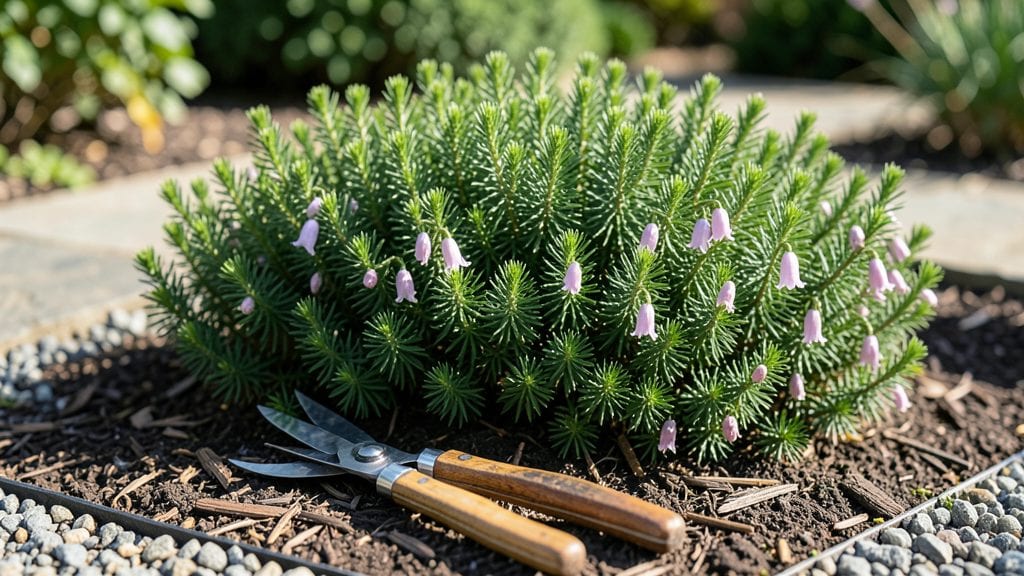
Cutting back heather plants turns a scraggly mess into a lush, flowering carpet. ✨ I’ve learned the hard way that timing and technique make all the difference—skimp on either, and you’ll end up with bare stems by next spring.
The key is working with the plant’s natural rhythm, not against it, and knowing when to snip for continuous blooms.
You’ll need sharp pruners, gloves (heather spines pack a punch), and a clear head for the three seasonal cuts: right after flowering, mid-summer, and a light touch in early spring.
Spring heathers bloom on old wood, while autumn varieties need different timing—get this wrong, and you’ll miss the show. Most people over-prune in spring, leaving no energy for summer blooms.
What you’ll end up with is a plant that flowers from late spring through fall, with vibrant purple, pink, or white blooms covering every inch. The foliage stays dense, the stems stay strong, and you’ll avoid the common mistake of shearing too hard—heather hates being hacked like a hedge.
Think of it as sculpting, not butchering.
This works for both evergreen and deciduous heathers, whether you’re shaping a border or letting them spill over a slope. The secret? Patience and precision. Start with one plant as a test, and by next year, your yard will look like a professional’s handiwork—without the professional’s price tag.
📚 In This Guide
- What you need
- Instructions
- Tips and common mistakes
- Wrapping up and next steps
What you need
- ○ Pruning shears or hedge clippers: Sharp, bypass-style shears (4-6" blades) for precision cuts. Optional: Larger long-handled loppers (for taller heather varieties).
- ● Gloves: Heavy-duty, garden-grade gloves (nitrile-coated for grip and protection from thorns/spines).
- ● Rake or stiff brush: To clear away debris and old growth before trimming.
- ● Garden twine or wire: For tying up larger branches if needed (e.g., for shaping).
- ● Garden hose or water spray bottle: To dampen heather slightly (reduces dust and makes cutting easier).
- ● Trash bags or compost bin: For disposing of pruned clippings (heather is compostable!).
- ● Knee pads or stool: For comfort during long sessions (especially for ground covers).
- ● Hand pruners with a ratchet mechanism: For larger, stubborn stems (reduces hand fatigue).
- ● Disinfectant spray (rubbing alcohol or bleach solution): To sterilize tools between cuts (prevents disease spread).
- ● String trimmer or edging shears: For neater edges along pathways or borders.
- ● Safety glasses: If working with very thorny varieties like Calluna vulgaris.
- ● Notebook & pencil: To jot down notes on bloom cycles or pruning schedules for future reference.
How to cut back heather plants for year-round blooms
Heathers thrive with strategic trims—here’s how to keep them flowering beautifully across seasons.
✂️ Step 1: Trim After First Spring Blooms (Late May-June)
Use sharp pruning shears to cut back one-third of the oldest growth right after the first flush of flowers fades. This encourages fresh, vibrant blooms later in the season. I always look for the oldest stems—they’ll be the longest and may have browned slightly at the base.
Make clean cuts just above a set of leaves or a healthy bud. Avoid cutting into bare wood, as heathers need foliage to photosynthesize. If you’re unsure, cut back to where you see green leaves emerging—this ensures you’re not removing too much growth.
✂️ Step 2: Light Pruning After Summer Flowers (Late July-August)
After the second bloom cycle, give your heather a gentle trim to shape it and remove any straggly or leggy growth. Focus on cutting back spent flower spikes and any stems that look tired or overgrown. This keeps the plant compact and encourages a third, often lighter, bloom cycle in fall.
I avoid heavy pruning here—just a light tidy-up. The goal is to maintain the plant’s natural shape while removing anything that might detract from its fullness. If your heather has a neat, rounded form, you’ll know you’ve done it right.
✂️ Step 3: Final Trim After Fall Blooms (October-November)
Once the final autumn flowers fade, trim back half of the oldest stems to ground level. This prepares the plant for winter and ensures a strong flush of new growth in spring. I like to cut back to where the stems are still green and firm—this signals the plant’s energy reserves are concentrated there.
Leave the rest of the plant intact, even if it looks a bit ragged. The remaining stems will protect the plant from harsh winter winds and snow. If you’re in a particularly cold climate, a light dusting of mulch around the base can provide extra insulation.
🌿 Step 4: Light Maintenance in Early Spring (March-April)
Before new growth appears, remove any dead or damaged stems at the base. This is more of a cleanup than a heavy trim—just a quick pass to clear out anything that won’t contribute to the plant’s health. You’ll notice new shoots emerging from the base, and these are your signal to hold off on pruning.
If your heather looks particularly overgrown, you can do a light shaping trim to encourage a fuller, bushier appearance. Just avoid cutting into old wood, as heathers don’t regenerate well from bare stems. A little patience here goes a long way—your plant will reward you with lush, continuous blooms.
Tips & tricks for perfect heather plant trimming
Mastering the art of heather pruning takes practice, but these insider tips will help you keep your plants thriving and blooming all year.
Tool Selection: Invest in a pair of sharp, bypass pruning shears for clean cuts that won't crush stems. I've learned the hard way that dull shears can damage plant tissue, making your heather more susceptible to disease. For larger heathers, consider a small hand pruner with a longer reach—this gives you better control over those back rows without straining your wrist. Always clean your tools with rubbing alcohol between plants to prevent cross-contamination.
Seasonal Timing Secret: The exact timing of your trims matters more than you might think. In Step 1, wait until the first spring blooms have completely faded—don't rush it! I've seen gardeners trim too early when flowers are still vibrant, which can actually reduce the plant's energy reserves. For Step 3, if you're in a colder climate, wait until after the first hard frost has passed to give your heather a final trim—this helps protect it from winter's harshest conditions.
Visual Cues for Pruning: When deciding what to trim, look for these visual signals: browned stems at the base indicate old growth ready for removal, while stems with green leaves or emerging buds should be preserved. In Step 2, focus on removing only the spent flower spikes—you'll notice these as the tall, leggy stems that have lost their blooms. The goal is to maintain that lush, rounded shape while encouraging new growth from the base.
Climate Considerations: Your local climate plays a huge role in successful heather pruning. In warmer regions, you might get a fourth, lighter bloom cycle in late fall—don't be tempted to trim these early! Let the plant complete its natural cycle. For colder climates, that light dusting of mulch around the base after your final trim can make all the difference in protecting your heather through winter. I've seen heathers survive winters just fine without mulch in milder areas, but in zones with regular freezes below 20°F, that extra protection goes a long way.
Pro Tips for Cutting Back Heather Plants
- Mastering the art of heather pruning takes practice, but these insider tips will help you keep your plants thriving and blooming all year.
- Tool Selection: Invest in a pair of sharp, bypass pruning shears for clean cuts that won't crush stems.
- Seasonal Timing Secret: The exact timing of your trims matters more than you might think.
Frequently asked questions
Got questions about trimming your heather plants? You’re not alone! Here are answers to the most common concerns—so you can keep your plants thriving with confidence.
When is the best time to cut back heather plants?
Heather plants bloom in late summer to fall, so the ideal time to trim is right after flowering (late September to November). For spring-flowering varieties, prune in early spring (March). Avoid cutting in winter—frost can damage tender new growth. Pro tip: If you miss the window, a light trim in early spring is better than none!
How much can I cut back without harming the plant?
Never remove more than one-third of the plant’s height in a single trim. For most heathers, this means cutting back to just above a set of healthy leaves (about ½ inch above). Over-pruning can expose the woody base, which may not regrow. Exception: Old, leggy plants can be cut back harder (even to the base) to rejuvenate, but do this gradually over 2–3 years.
What if my heather looks dead after cutting?
Don’t panic! Heather plants often look brown and crispy after a hard trim, but they’re usually alive. Water lightly if the soil is dry, and avoid fertilizing—heathers thrive in lean soil. New growth should emerge in 4–6 weeks. If no regrowth appears by spring, the plant may be too old (10+ years) and should be replaced.
Can I use the cuttings for propagation?
Take 4–6 inch cuttings from healthy stems after trimming, strip the lower leaves, and dip in rooting hormone. Plant in a mix of peat and perlite, keep moist (not soggy), and place in bright, indirect light. Roots should form in 6–8 weeks. Bonus: This is a great way to expand your heather collection for free!
What’s the difference between pruning calluna and erica heathers?
Calluna (ling heather): Prune harder (up to ⅔ of growth) after flowering—it tolerates aggressive trims.
Erica (bell heather): Prune lightly (just dead flowers) since it blooms on old wood. Over-trimming can reduce next year’s flowers. Key difference: Erica blooms in spring/early summer; calluna blooms later.
Wrapping up and next steps
Cutting back heather plants is a simple yet rewarding task that keeps your garden vibrant and thriving year-round! 🌿 By following the three seasonal trims—spring, summer, and fall—you’ll encourage lush growth, vibrant blooms, and a healthy plant structure.
Whether you’re a seasoned gardener or just starting out, consistent pruning is the key to long-term success.
Ready to give your heather plants the care they deserve? Grab your shears and get started today! For extra tips, check out our gardening resources or join a local plant community to share your progress. Happy pruning! ✂️🌸