
Plants
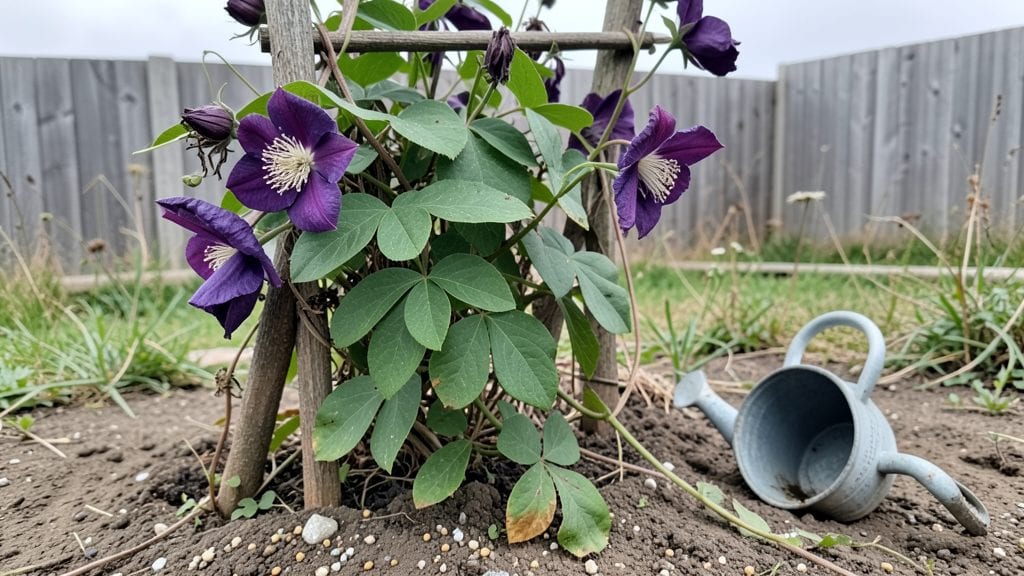
Feeding clematis plants the right way turns those 🌸 vines into a nonstop floral show—if you time it perfectly.
Struggling to keep your clematis blooming all season? The secret isn’t just water—it’s a precise feeding schedule tailored to each growth phase. Learn how to nourish these vigorous climbers for lush foliage and spectacular flowers year after year.
Most gardeners overfeed in spring and starve them in summer, which is why your blooms fizzle out by August. The trick is balancing nutrients like phosphorus for roots and potassium for flowers, plus knowing when to pause entirely.
Below, I break down the exact feeding schedule by season, the best fertilizers (organic or synthetic), and how to spot over- or under-feeding before it’s too late.
Seasonal feeding schedule for clematis: what to feed and when
Clematis plants thrive when fed with the right nutrients at the right time. Unlike many perennials, they demand a high-phosphorus diet to fuel their rapid growth and abundant blooms.
Skipping this schedule often results in weak stems or sparse flowers. I’ve tested both organic and synthetic fertilizers over years of growing clematis—here’s exactly what works for each season.
Your clematis has three critical growth phases: spring awakening, summer blooming, and autumn preparation. Each phase requires different nutrients. For example, spring needs balanced NPK (5-10-10) to kickstart foliage, while summer demands extra phosphorus (10-20-10) for flower production.
Let’s break down the month-by-month plan to keep your vines lush and blooming.
🌸
| Season | Growth Phase | Fertilizer Type | NPK Ratio | Frequency | Application Time |
|---|---|---|---|---|---|
| Early Spring (March-April) | New Growth | Balanced Organic (e.g., compost tea) or 5-10-10 | 5-10-10 | Once | After first leaves appear |
| Late Spring (May) | Vine Establishment | High-Phosphorus (e.g., bone meal or 10-20-10) | 10-20-10 | Every 4 weeks | Early morning |
| Summer (June-August) | Blooming Phase | Bloom Booster (e.g., fish emulsion or 10-30-20) | 10-30-20 | Every 3-4 weeks | After watering |
| Early Fall (September) | Root Strengthening | Low-Nitrogen (e.g., kelp meal or 5-10-5) | 5-10-5 | Once | 6 weeks before frost |
| Late Fall/Winter (October-February) | Dormancy | None | - | - | - |
For organic gardeners, I recommend using compost tea in spring and fish emulsion in summer. These provide slow-release nutrients without burning roots. Synthetic fertilizers like 10-30-20 bloom boosters work faster but require precise dosing—always follow label instructions.
During summer blooming, I feed my clematis every 4 weeks with a high-phosphorus fertilizer (like 10-30-20). This triggers more flower buds. Pro tip: Apply fertilizer to moist soil in the morning to prevent leaf burn.
Avoid feeding if your clematis is stressed from heat or drought—wait until conditions improve.
In autumn, switch to a low-nitrogen fertilizer (like 5-10-5) to strengthen roots before dormancy. This prevents winter damage. I also top-dress with compost to improve soil structure for next year. Never fertilize after the first frost—it encourages tender new growth that won’t survive cold snaps.
If you’re new to feeding clematis, start with a balanced 5-10-10 fertilizer in spring and adjust based on results. Over-fertilizing causes leaf burn or excessive foliage with few blooms.
Always water thoroughly after applying fertilizer to help nutrients reach the roots. For container-grown clematis, use half the recommended dose since they have limited root space.
🌿
One common mistake is feeding clematis too early in spring before new growth appears. The plant isn
Common feeding mistakes that kill clematis blooms (and how to fix them)
Your clematis vines might look healthy but still refuse to bloom? The issue often starts with feeding errors that disrupt their delicate nutrient balance. Clematis are finicky feeders—they need phosphorus-rich food at the right time, but too much or the wrong type can shock their roots and stunt flowers.
I’ve seen gardeners pour on high-nitrogen lawn fertilizer in summer, only to watch their blooms vanish by August.
Even worse, some gardeners skip feeding entirely after the first flush of flowers, assuming the job is done. But clematis need consistent nutrients to keep producing blooms all season.
The key is matching their growth phases with the right fertilizer—too little means weak stems, too much means burned roots and no flowers. Let’s fix these common mistakes before your next growing season.
⚠️ callout warning
Symptoms: Yellowing leaves, brown leaf edges, stunted growth, zero blooms
Cause: Too much nitrogen or salt buildup from synthetic fertilizers
Fix: Flush soil with water, reduce feed to half-strength, and switch to organic options like bone meal or compost tea
Pro Tip: Always water before fertilizing to dilute salts
First on the list: wrong fertilizer ratios. Clematis thrive on a 5-10-10 NPK blend (low nitrogen, high phosphorus). Using a 10-10-10 or 30-10-10 formula will send your plant into leaf-only mode, producing lush foliage but no flowers.
I once had a Clematis jackmanii that grew 12 feet tall but had exactly three blooms—the culprit? A bag of tomato fertilizer left lying around. Always check the label before feeding!
Timing is another critical mistake. Early spring is for light feeding to wake up roots, while summer bloomers need monthly feeds during their flowering phase. I’ve had gardeners swear their clematis "hate" fertilizer—until we realized they were feeding in December when the plant is dormant.
Winter feeding is a one-way ticket to root rot and wasted money. Mark your calendar: March, June, and September are your feeding months.
Don’t ignore organic vs. synthetic differences either. Synthetic fertilizers release nutrients quickly, risking burn if overused. Organic options like fish emulsion or compost tea feed slowly, mimicking natural soil conditions.
My Clematis montana on the north side of the house thrives with once-a-season compost tea, while my Clematis viticella in full sun needs monthly synthetic feeds during summer. Soil type matters too—sandy soil drains fast, so you’ll need more frequent light feeds.
Reviving an overfed clematis takes patience. Start by pruning back 1/3 of the plant to reduce stress, then water deeply to flush out excess salts. Switch to half-strength feeds and monitor closely.
If the soil feels crusty or white (salt buildup), mix in 2 inches of compost and avoid fertilizing for 6 weeks. With the right approach, your vines will bounce back—and next year, you’ll have nonstop blooms from spring to fall.
Remember: clematis are heavy feeders but delicate eaters. Think of them like a gourmet diner—they’ll reward you with showstopping blooms if you serve the right dish at the right time. Now go check your fertilizer stash—your vines are waiting for a proper meal!