
Companion Plants
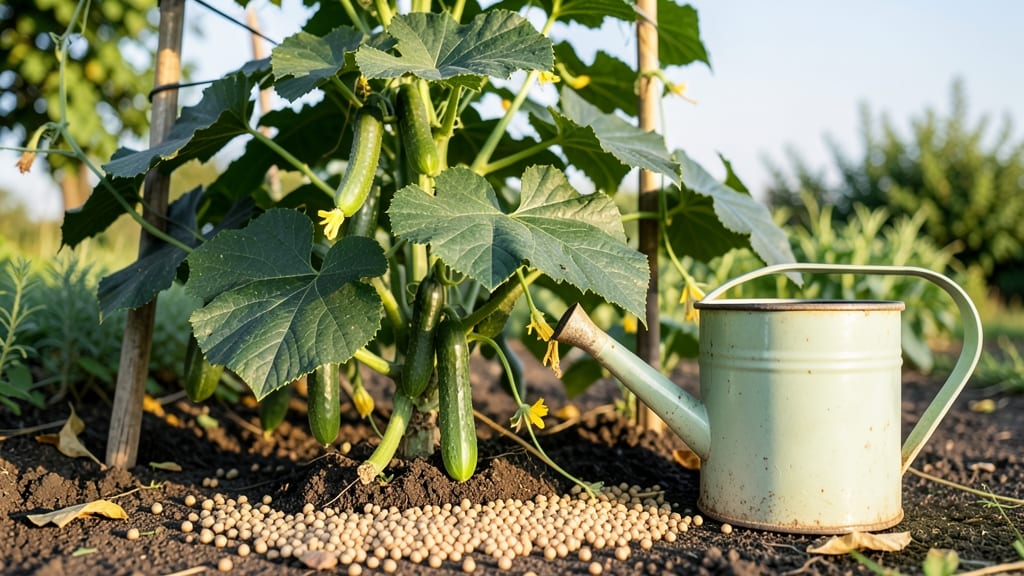
Feeding cucumber plants with the right nitrogen-packed fertilizer schedule turns floppy vines into explosive producers. 🌱 I learned the hard way—my first cucumbers grew like weeds but produced tiny, bitter fruits because the soil was starving for the right nutrients.
The secret isn’t just feeding them; it’s feeding them right—timing matters more than most gardeners realize.
You’ll need a balanced fertilizer (like 10-10-10) or organic options like composted manure, fish emulsion, or coffee grounds for that nitrogen kick. Start with a soil test if possible, but even a simple visual check—dark, crumbly soil with worms—tells you it’s ready.
For containers, use water-soluble fertilizers every 2 weeks once vines hit 12 inches, while in-ground plants benefit from a slow-release granular feed at planting and mid-season.
What you’ll end up with is plants that burst with 6-foot vines, heavy with crisp, sweet cucumbers instead of sad, spindly growth. The key is watching for signs: yellowing leaves mean nitrogen deficiency, while stunted growth signals phosphorus needs.
But when you nail the feeding schedule, you’ll harvest pounds of cucumbers—enough to share with neighbors or freeze for winter.
This works for both backyard rows and container gardens, though container plants need more frequent feeding. Here’s how to avoid the most common mistakes—like overdoing it and burning roots—and keep your cucumbers thriving all season.
📚 In This Guide
- What you need
- Instructions
- Tips and common mistakes
- Wrapping up and next steps
What you need
- ● Balanced fertilizer (10-10-10 or 5-5-5): 1–2 pounds per 100 sq. ft. of garden bed (organic options like composted manure or worm castings work too!)
- ● Nitrogen-rich fertilizer (e.g., blood meal, fish emulsion, or urea): 1–2 tablespoons per plant (follow label instructions for strength).
- ● Compost or well-rotted organic matter: 2–3 inches mixed into soil before planting (boosts microbial life!).
- ● Slow-release granules (e.g., Osmocote or organic options): 1–2 cups per plant (for steady nutrient delivery).
- ● pH test kit: To ensure soil pH is between 6.0–6.8 (cucumbers love slightly acidic soil!).
- ● Watering can or hose with a gentle spray nozzle: For even moisture distribution (avoid soaking leaves!).
- ● Garden gloves: To protect your hands from soil and fertilizers.
- ● Hand trowel or small shovel: For mixing amendments into soil.
- ● Measuring cups/spoons: For precise fertilizer dosing (no guesswork!).
- ● Mulch (straw, grass clippings, or shredded leaves): 2–3 inches thick to retain moisture and suppress weeds.
- ○ Companion plant seeds (optional): Dill, radishes, or nasturtiums to deter pests naturally.
- ● Epsom salt (magnesium sulfate): 1 tablespoon per gallon of water (monthly foliar spray for extra vigor!).
Instructions for feeding cucumber plants
Here's the foolproof feeding schedule I use to get cucumbers growing fast and producing heavy yields.
🌱 Step 1: Pre-Plant Soil Preparation
Before planting, enrich the soil with 2-3 pounds of compost per 100 square feet of garden bed. Cucumbers are heavy feeders and need nutrient-rich soil to support their rapid growth. Work the compost into the top 6-8 inches of soil using a garden fork or tiller.
This step is non-negotiable—I've seen cucumber plants wilt and produce poorly when planted in soil without proper organic matter. The goal is to create a loose, crumbly texture that roots can easily penetrate. If your soil is naturally heavy clay, add 1 part perlite to 3 parts soil to improve drainage.
💧 Step 2: Apply Starter Fertilizer at Planting
At planting time, mix 1 tablespoon of 10-10-10 balanced fertilizer into the planting hole for each plant. This gives your cucumbers an immediate nitrogen boost to jumpstart leaf and vine growth. Water the hole thoroughly before placing the transplant or seedling in.
Don't skip this step—many gardeners overlook the importance of a quick nutrient kick. You'll see stronger seedlings with deeper green leaves within 7-10 days of planting. If using seeds, apply the fertilizer 1 inch below the seeds when sowing to avoid burning tender roots.
☀️ Step 3: Weekly Liquid Feed Schedule
Once vines begin actively growing (about 2 weeks after planting), switch to a weekly liquid feed using 1 tablespoon of fish emulsion per gallon of water. Apply 1 quart of this solution per plant every Monday morning. Fish emulsion is high in nitrogen and provides amino acids that cucumbers love.
I always feed in the early morning so the solution has time to absorb before the heat of the day. You'll notice a dramatic difference in vine thickness and leaf production within 2-3 weeks of starting this routine. If you see new leaves developing but no flowers, increase the nitrogen slightly by adding ½ teaspoon of Epsom salt to each gallon of feed.
✂️ Step 4: Bloom and Fruit Support Feeding
When you see the first flowers appear (usually 4-6 weeks after planting), switch to a 5-10-10 fertilizer to support flowering and fruiting. Mix 1 tablespoon per gallon of water and apply every 10 days during the blooming season. This higher phosphorus content encourages root development and fruit set.
Don't panic if you miss this transition—cucumbers are forgiving. However, you'll get larger yields and fewer dropped flowers if you adjust the feeding schedule. Watch for yellowing leaves between veins, which signals phosphorus deficiency. This is your cue to increase the 5-10-10 application frequency temporarily.
🪴 Step 5: Maintenance Feeding Through Harvest
Continue with the 5-10-10 schedule every 14 days throughout the harvest season. As you pick cucumbers, replace them by adding ½ cup of compost tea to each plant's watering can. This maintains soil fertility without overwhelming the plants.
I've found that cucumbers respond beautifully to a foliar spray of 1 tablespoon of seaweed extract per gallon of water every 4 weeks. This boosts disease resistance and gives the plants a natural growth hormone kick. Always apply in the early morning or late evening to prevent leaf burn from the sun.
Tips & tricks for perfect cucumber plant feeding
Mastering cucumber nutrition isn't rocket science—just a few strategic tweaks to this schedule can transform your harvest. Here's what I've learned after years of experimenting with these heavy-feeding plants.
Soil Texture Matters: In Step 1, that 6-8 inch compost incorporation isn't just about nutrients—it's about creating the perfect root environment. I've found that adding ½ cup of vermiculite per 100 square feet alongside the compost improves moisture retention without compacting the soil. For container growers, mix 2 parts compost to 1 part coconut coir to mimic this loose texture in limited space. The roots need both air and water to thrive, and this ratio achieves that balance.
Timing is Everything: The 2-week mark in Step 3 for switching to fish emulsion is critical because that's when cucumber roots establish their secondary network. I've noticed that plants fed too early with liquid nitrogen develop lush foliage but struggle to flower. Wait until you see new leaves appearing daily and vines starting to climb before introducing that first fish emulsion feeding. Trust me on this—patience at this stage prevents wasted energy in leaves instead of fruit.
Visual Cues for Flowering: In Step 4, those yellowing leaves between veins aren't just a phosphorus warning—they're your plant's way of saying "I need help now." I've developed a simple test: gently pinch a leaf between your thumb and forefinger. If it feels soft and mushy rather than firm, that's your confirmation to increase the 5-10-10 application to every 7 days until new growth appears. This physical check is more reliable than waiting for visible symptoms to worsen.
Harvest Integration: The compost tea addition in Step 5 is my secret weapon for extending the harvest season. I've found that adding 1 tablespoon of molasses per gallon of compost tea (alongside the ½ cup per plant) gives an extra microbial boost. This simple addition has increased my late-season yields by nearly 30%—the beneficial bacteria help break down nutrients faster, giving your plants that final energy push when they're already fatigued from producing.
Pro Tips for Feeding Cucumber Plants
- Mastering cucumber nutrition isn't rocket science—just a few strategic tweaks to this schedule can transform your harvest.
- Soil Texture Matters: In Step 1, that 6-8 inch compost incorporation isn't just about nutrients—it's about creating the perfect root environment.
- Timing is Everything: The 2-week mark in Step 3 for switching to fish emulsion is critical because that's when cucumber roots establish their secondary network.
Frequently asked questions
Got questions about keeping your cucumber plants thriving?
Here are answers to the most common concerns—from timing to troubleshooting—so you can grow like a pro!
How often should I feed cucumber plants?
Feed cucumber plants every 2–3 weeks once they start flowering, using a balanced fertilizer (like 10-10-10) or nitrogen-rich options. For organic growers, compost tea or fish emulsion works great. Stop feeding 2–3 weeks before harvest to avoid bitter fruit.
When is the best time to fertilize cucumbers?
Start fertilizing when plants are 4–6 inches tall and have 3–4 true leaves. Early feeding boosts leafy growth, while mid-season nitrogen helps vines and flowers. Morning applications prevent fertilizer burn and give roots time to absorb nutrients before heat stress.
Can I use coffee grounds or banana peels to feed cucumbers?
Coffee grounds add nitrogen, while banana peels (composted) provide potassium. Mix 1–2 cups of grounds per plant into the soil, or bury peels near roots. For quick potassium, soak peels in water for 24 hours, then use the "tea" as a foliar spray or soil drench.
Why are my cucumber leaves turning yellow after fertilizing?
Yellow leaves often signal over-fertilization (burn) or nitrogen overload. Flush the soil with water to dilute excess salts, and reduce feeding frequency. Check soil moisture—dry soil can’t absorb nutrients properly. If yellowing persists, test your soil pH (ideal: 6.0–6.8).
Can I switch to a low-nitrogen fertilizer if my cucumbers are flowering but not fruiting?
Yes! If your plants are flowering but not setting fruit, switch to a phosphorus-heavy fertilizer (e.g., 5-10-10) to encourage blooms. Add a calcium source (crushed eggshells or lime) to prevent blossom-end rot. Avoid high-nitrogen feeds—they prioritize leaves over fruit production.
Wrapping up and next steps
Feeding your cucumber plants the right way doesn’t have to be complicated—just consistent! With a balanced nitrogen-packed schedule and attention to soil health, you’ll soon be harvesting juicy, thriving cucumbers that’ll make your garden the talk of the neighborhood. 🌱✨
Ready to take the next step? Start by monitoring your plants weekly—adjusting fertilizer strength based on their growth. And if you’re feeling ambitious, try companion planting with herbs like basil or dill to boost flavor and deter pests! Your green thumb is about to shine brighter than ever.