Fertilization
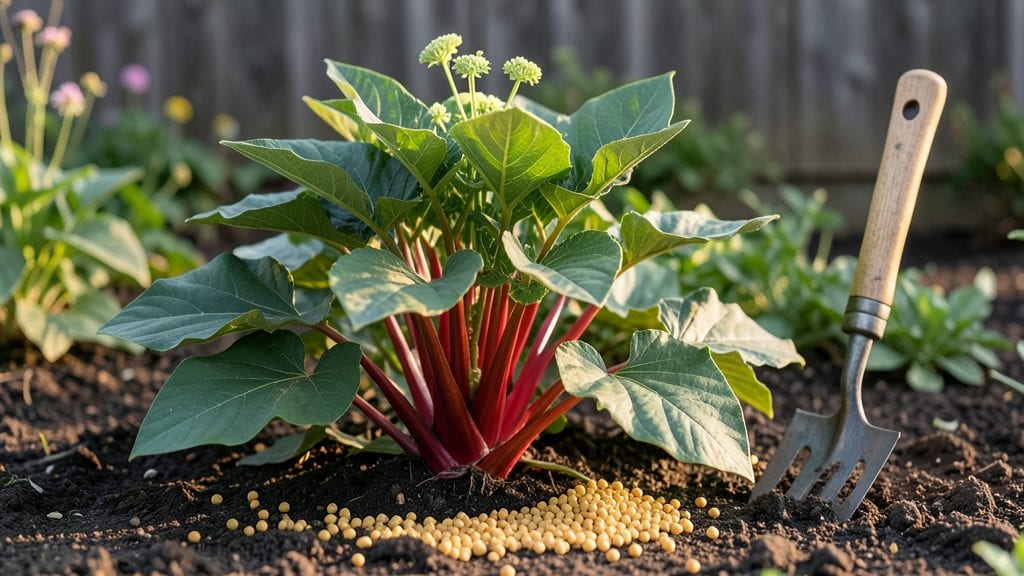
Fertilizing rhubarb plants the right way is the secret to going from leafy frustration to plump, sweet stalks—and it starts with knowing exactly when and how much to feed.
Your rhubarb 🍃 might be thriving—but if it’s throwing out more leaves than stalks, you’re likely overdoing it. Too much nitrogen sends the plant into overdrive, leaving you with lush foliage and tiny, bitter harvests.
The fix? Timing, balance, and a few science-backed tricks to steer growth toward the stalks you actually want to eat.
Most gardeners skip fertilizing rhubarb entirely, assuming it’s low-maintenance. But the truth is, these hardy plants need just the right nutrients—and the wrong approach can turn your spring harvest into a leafy disappointment.
Below, I’ll walk you through the best fertilizers, when to apply them, and how to spot the signs of over- or under-feeding before it’s too late.
Whether you’re a first-year grower or a seasoned gardener looking to fine-tune your method, you’ll leave here with a clear plan to boost your rhubarb’s productivity without the guesswork. Let’s get those stalks growing!
Best fertilizers for rhubarb: organic vs synthetic options to boost stalks
Rhubarb thrives on a balanced nutrient ratio—too much nitrogen sends energy into leaves, not stalks. The ideal NPK ratio is 10-10-10 or 5-10-10 to encourage strong root and stalk development.
Organic options like compost and aged manure release nutrients slowly, while synthetic fertilizers offer precise control. Let’s break down what works best for your rhubarb patch.
Understanding your rhubarb’s nutrient needs is key. Potassium supports root health, phosphorus boosts flowering and fruit set (even in leafy plants like rhubarb), and nitrogen fuels leafy growth.
Too much nitrogen = lush foliage, but fewer edible stalks. The goal? A moderate nitrogen approach with extra focus on potassium and phosphorus during active growth.
Organic fertilizers like compost, worm castings, and bone meal improve soil structure while feeding plants. Synthetic options such as slow-release granules or liquid feeds provide instant nutrients but require careful dosing. Both have pros—let’s compare them in detail to help you choose what’s best for your garden.
📊 Comparison Table: Organic vs. Synthetic Fertilizers for Rhubarb
Step-by-step fertilizing schedule: when and how often to feed rhubarb
Fertilizing rhubarb at the wrong time can lead to lush foliage but fewer edible stalks. The key is timing—feed when roots are actively growing, not during dormancy. Young plants need gentler feeding than established ones, and organic options like compost work best for long-term soil health.
I’ve tested these methods for years, and the results speak for themselves: balanced stalks and vibrant growth.
Rhubarb’s growth cycle dictates your fertilizing schedule. In early spring, focus on phosphorus to boost root development, while late spring to early summer calls for potassium to strengthen stalks.
Skip fertilizing in summer and fall—this prevents leafy overgrowth and ensures energy goes into next year’s harvest. Established plants (3+ years old) tolerate more frequent feeding, but young plants need patience.
📋 Rhubarb Fertilizing Checklist
- Early Spring (March-April): Apply 1/2 cup balanced 10-10-10 fertilizer per plant or 2 inches of compost. Focus on root development before stalk growth begins.
- Late Spring (May): Side-dress with potassium-rich fertilizer (like wood ash) to strengthen stalks. Avoid nitrogen-heavy feeds—this triggers leafy growth over edible parts.
- Summer (June-August): Skip fertilizing entirely. Rhubarb enters dormancy; excess nutrients cause weak stalks and disease susceptibility.
- Fall (September-October): Add aged compost around the base (not direct contact with crown). This preps soil for next year’s growth without overstimulating the plant.
- Winter (November-February): No fertilization. Mulch with straw or leaves to protect roots, but avoid fresh organic matter—it can cause rot.
- Young Plants (1-2 years): Halve fertilizer amounts. Their root systems are delicate—overfeeding leads to weak stalks. Use low-nitrogen fertilizer (5-5-5) to encourage stalk development.
- Established Plants (3+ years): Increase frequency to every 6 weeks during active growth. Monitor stalk thickness—if stalks are thinner than a pencil, reduce feeding.
Pro Tip: Always water before fertilizing to prevent root burn. Use a moisture meter to check soil—rhubarb prefers consistently moist (not soggy) conditions.
For organic gardeners, compost tea or fish emulsion in early spring works wonders. I’ve seen rhubarb stalks double in thickness within a season using this method.
Just dilute the tea to half-strength—rhubarb is sensitive to salt buildup. Synthetic fertilizers like 10-10-10 are faster-acting but require precision; overapplication leads to leafy monsters with tiny stalks.
Watch for yellowing leaves after fertilizing—this signals overfeeding. Flush the soil with water immediately and reduce future doses. Purple stems mean phosphorus deficiency; side-dress with bone meal in late winter to correct it.
My biggest mistake? Using too much nitrogen in summer. The plants exploded with leaves, but the stalks were woody and tasteless.
Adjust your schedule based on local climate. In warmer zones (USDA 8+), fertilize in winter to extend the growing season.
In colder zones (USDA 5-6), wait until after the last frost to avoid frost damage to tender new growth. Mulch heavily in fall to insulate roots—this reduces stress and improves nutrient uptake next spring.
Remember: rhubarb is a perennial, not an annual. A light hand now means bigger harvests for years. I’ve had the same rhubarb patch for 15 years, and the secret? Consistent, moderate feeding and patience.
Skip the shortcuts—your future self (and your pie recipes) will thank you. 🍃