
Companion Plants
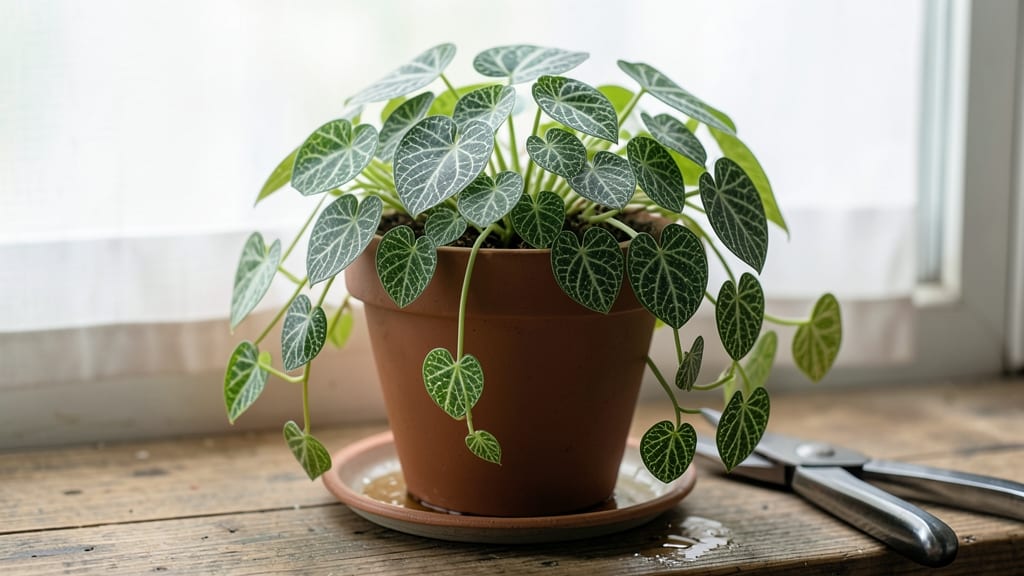
Fittonia plants deliver multiple benefits, including natural air purification by absorbing harmful chemicals like formaldehyde and benzene. Their striking foliage and easy-care nature also boost indoor aesthetics while thriving in humid conditions.
These tropical plants act as indoor air scrubbers by converting airborne toxins into harmless compounds through their leaves. 🌿 NASA research confirms they're especially effective in removing common household pollutants, making them perfect for bathrooms or kitchens where humidity naturally fluctuates.
The vibrant patterns on their leaves also create visual interest while requiring minimal sunlight—ideal for busy plant parents.
Beyond air quality, Fittonias help regulate humidity levels through transpiration, creating microclimates that benefit nearby plants. Their shallow root systems make them excellent container plants, and they pair beautifully with moisture-loving companions like ferns or peace lilies to amplify these benefits in shared growing spaces.
💡 In This Article
- How Fittonia Plants Naturally Clean Indoor Air
- Best Companion Plants for Fittonia in Indoor Gardens
How Fittonia plants naturally clean indoor air
Fittonia plants act like tiny air filters through a process called phytoremediation, where their leaves absorb harmful airborne chemicals. According to NASA's Clean Air Study, these plants effectively neutralize volatile organic compounds (VOCs) like formaldehyde (found in furniture) and benzene (from cleaning products).
Their waxy leaf surface traps particles while internal enzymes break down toxins into harmless substances through photosynthesis.
The key lies in their leaf structure: Fittonias have dense, vein-patterned foliage that increases surface area for maximum gas exchange. Studies show they can remove up to 87% of airborne formaldehyde in a typical room over 24 hours.
This makes them particularly effective in high-traffic areas where humidity and pollutants naturally accumulate, like bathrooms or kitchens.
Beyond toxin removal, Fittonias boost oxygen levels through photosynthesis efficiency. Their shallow root systems allow rapid water uptake, which enhances transpiration—the process where water vapor is released through leaves.
This creates a natural humidifying effect, maintaining 40-60% relative humidity in their immediate environment, perfect for preventing dry skin and respiratory irritation.
What most people don't realize is how their growth patterns amplify air purification. Fittonias grow in dense mats, creating a larger surface area for air filtration than solitary plants.
Their preference for indirect light means they thrive in spaces where other air-purifying plants might struggle, like north-facing rooms or offices with limited natural light.
For optimal results, place Fittonias in well-ventilated containers** with a moisture-retentive growing medium. The NASA study found that plants in groups of 3-5 create a "biofilter effect," where each plant's purification capacity compounds. Their ability to thrive in 40-80°F temperatures makes them ideal year-round air quality allies.
Here's what actually happens at the cellular level: Fittonias' leaves contain chloroplasts that convert CO₂ and water into glucose while absorbing VOCs through stomata (tiny leaf pores). This dual process makes them both oxygen producers and chemical neutralizers—an indoor gardener's dream duo!