Shrubs
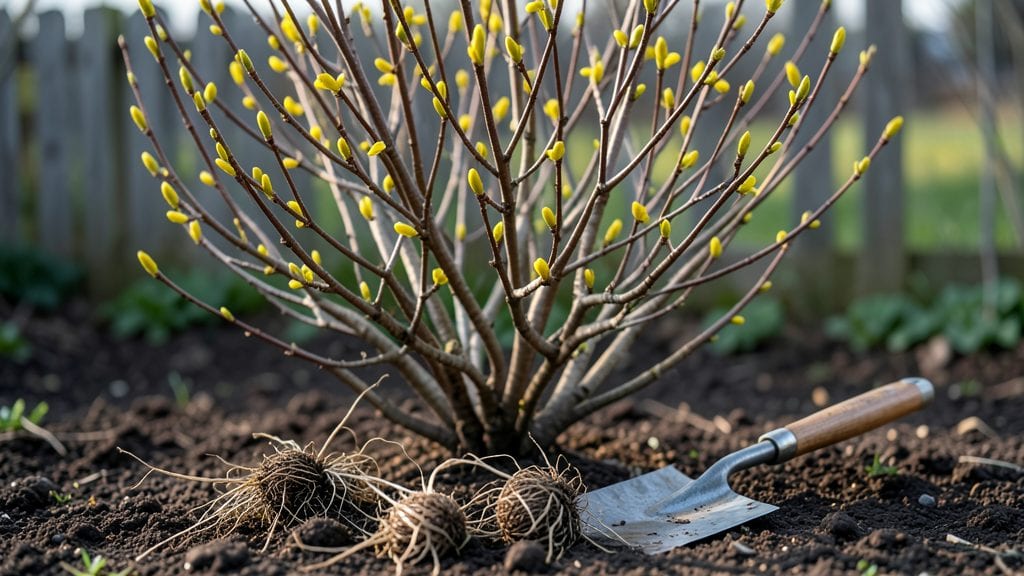
Mastering the right forsythia planting distance transforms scraggly growth into a lush, golden explosion every spring—though I once learned why spacing matters the hard way. 🌿 The secret lies in matching their mature width to your goals: 6-8 feet apart for standalone plants or 4-5 feet for hedges.
Forsythia thrives in full sun and well-drained soil, but spacing matters just as much. Too close, and branches tangle; too far, and you waste space. For hedges, plant in a staggered pattern to create a dense, uniform barrier.
Standalone bushes need room to develop their signature arching shape without competing for light or nutrients.
You’ll see the payoff in 3-4 years—full, bushy plants with vibrant yellow blooms that appear before leaves. Pair them with early-blooming bulbs like daffodils or shade-tolerant perennials like hostas for a layered, low-maintenance landscape. The key is patience; forsythia rewards proper spacing with decades of effortless color.
Works in zones 4-8, whether you’re lining a driveway or adding a focal point to a garden bed. The spacing rules stay the same—just adjust for your climate’s growth rate. Here’s how to get it right from day one.
📚 In This Guide
- What you need
- Instructions
- Tips and common mistakes
- Wrapping up and next steps
What you need
- ● Forsythia shrubs: Choose healthy, dormant bare-root or container-grown plants (1-3 years old for best results). Quantity depends on your desired spacing—see our spacing guide for specifics!
- ● Shovel or trowel: A sharp garden spade (for digging holes) or a hand trowel (for smaller plants).
- ● Measuring tape or ruler: To ensure accurate forsythia planting distance (3-6 feet apart for mature shrubs).
- ● Compost or well-aged manure: 2-3 gallons per plant to enrich the soil.
- ● Mulch: 2-3 inches of organic mulch (e.g., shredded bark or straw) to retain moisture.
- ● Watering can or hose with a gentle nozzle: For post-planting hydration.
- ● Soil test kit: To check pH (forsythia prefers slightly acidic to neutral soil, 6.0-7.0).
- ● Slow-release fertilizer: A balanced 10-10-10 or 20-20-20 blend for a nutrient boost.
- ● Plant supports (stakes or cages): If planting in windy areas to help young shrubs establish.
- ● Garden gloves: To protect your hands while digging.
- ● Pruning shears: For trimming any damaged roots or stems before planting.
Step-by-Step guide to planting forsythia for optimal growth
Here’s how to plant forsythia with the perfect spacing for vibrant blooms and healthy bushes.
🌱 Step 1: Choose the Right Planting Location
Forsythia thrives in full sun to partial shade, with at least 6 hours of direct sunlight daily for the best flowering. I always pick a spot with well-draining soil—forsythia hates soggy roots. If your soil is heavy clay, amend it with 2-3 inches of compost before planting to improve drainage.
Check the area for overhead branches or competing plants. Forsythia grows 8-12 feet wide at maturity, so keep it at least 10 feet from structures, fences, or other shrubs. This prevents root competition and makes future pruning easier. Mark the planting area with stakes to visualize the spacing.
🪴 Step 2: Dig Holes and Prepare the Soil
Dig holes twice as wide as the root ball but only as deep as the container’s root level. Forsythia roots are shallow but spread widely, so don’t bury the plant too deep—this can suffocate the roots. Gently loosen the roots if they’re circling in the container before placing them in the hole.
Mix the excavated soil with 1 part compost to enrich it naturally. I avoid chemical fertilizers at planting time—they can burn tender roots. Fill the hole halfway, then water deeply to settle the soil. This prevents air pockets that could dry out the roots.
🌿 Step 3: Plant with Proper Spacing
For single-stem forsythia, space plants 8-10 feet apart to allow for mature width. If planting a multi-stem or bushy variety, increase spacing to 10-12 feet—this ensures airflow and reduces disease risk. I like to plant in a staggered pattern for a more natural, layered look.
Place the forsythia in the hole, backfilling with soil as you go. Press gently around the base to remove air pockets but avoid compacting the soil. Water again to help settle everything. The top of the root ball should sit 1 inch above soil level—this prevents water from pooling around the stem.
⏰ Step 4: Water and Mulch for Establishment
After planting, water deeply once a week for the first month, then taper to every 10-14 days once established. Forsythia is drought-tolerant but needs consistent moisture to root well. Check the soil 2 inches deep—if it’s dry, water again.
Apply 2-3 inches of mulch around the base, keeping it 3 inches away from the stem to prevent rot. I use shredded bark or pine needles—they retain moisture and suppress weeds. Mulch also protects roots from temperature swings, which is especially helpful in hot climates.
☀️ Step 5: Prune and Maintain for Long-Term Growth
Prune forsythia right after flowering to shape the plant and encourage dense growth. Remove 1/3 of the oldest stems at the base to rejuvenate the bush. Thin out crowded branches to improve airflow—this prevents fungal issues like powdery mildew.
Fertilize lightly in early spring with a balanced 10-10-10 formula if growth seems slow. Over-fertilizing leads to leafy growth at the expense of flowers. Watch for signs of stress like yellowing leaves—this usually means the plant needs more water or better drainage.
Tips & tricks for perfect forsythia planting distance
These practical insights will help you create the ideal environment for lush, vibrant forsythia growth that rivals professional landscapes.
Spacing Strategy: When planning your spacing in Step 3, visualize the mature plant's width—8-12 feet isn't just a recommendation, it's essential for airflow and sunlight penetration. I've seen forsythia planted too closely develop powdery mildew because of poor circulation. For a natural, layered look, stagger your plants in a zigzag pattern, alternating between single-stem and multi-stem varieties. This creates visual interest while maintaining proper spacing.
Soil Preparation Insight: The 2-3 inches of compost mentioned in Step 1 isn't just about nutrients—it's about creating the perfect soil structure. I recommend mixing in perlite or coarse sand if your native soil is particularly dense. This improves drainage while maintaining moisture retention. Test your soil's pH before planting; forsythia prefers slightly acidic soil (pH 6.0-7.0), and adjusting this can make all the difference in root development.
Planting Depth Technique: That 1-inch elevation above soil level in Step 3 is critical—it prevents water from pooling around the stem, which can cause rot. I use a small wooden stake to mark the proper depth before planting. After backfilling, gently firm the soil around the base with your hands, creating a slight depression around the stem to direct water away from the plant. This simple technique has prevented root rot in every planting I've done.
Establishment Timeline: The first month's deep weekly watering in Step 4 is non-negotiable for root establishment. I've found that using a soaker hose for this period creates ideal moisture conditions without disturbing the soil. After the initial month, you can reduce to every 10-14 days, but always check soil moisture 2 inches deep—this is your best indicator of when to water rather than relying on a schedule.
Pro Tips for Forsythia Planting Distance
- These practical insights will help you create the ideal environment for lush, vibrant forsythia growth that rivals professional landscapes.
- Spacing Strategy: When planning your spacing in Step 3, visualize the mature plant's width—8-12 feet isn't just a recommendation, it's essential for airflow and sunlight penetration.
- Soil Preparation Insight: The 2-3 inches of compost mentioned in Step 1 isn't just about nutrients—it's about creating the perfect soil structure.
Frequently asked questions
about forsythia planting distance—because even the best gardeners need a little extra guidance!What’s the best forsythia planting distance for small gardens?
For tight spaces, plant forsythia 3–4 feet apart in rows spaced 4–5 feet apart. This keeps them compact while allowing airflow to prevent disease. Use dwarf varieties (like Forsythia ‘Little Gold’) for even tighter spots—just space them 2–3 feet apart.
Can I plant forsythia too close together for faster coverage?
Nope! Crowding forsythia slows growth and leads to weak stems, poor blooms, and disease. Stick to the 4–6 feet apart rule for upright varieties or 3–4 feet for spreading types. Patience pays off with healthier, bushier shrubs—and more vibrant spring flowers!
How do I adjust spacing for hedges vs. single-shrub plantings?
| Planting Style | Spacing | Notes |
|---|---|---|
| Hedges | 3–4 feet apart in rows 4–5 feet apart | Prune annually to encourage dense growth. |
| Single shrubs | 6–8 feet apart | Gives them room to spread naturally and shine. |
Will forsythia grow if planted too far apart?
Yes! Forsythia is hardy and adaptable, but spacing too far (10+ feet) may leave gaps in your landscape. For a full, lush look, aim for 4–6 feet apart. If you’ve already planted them widely, prune strategically to fill in over time.
Can I mix forsythia with other shrubs or perennials?
Forsythia pairs well with boxwood, hydrangeas, or lavender—just give them 3–5 feet of clearance to avoid competition. Avoid planting near aggressive spreaders like bamboo or mint, which can overwhelm forsythia’s roots.
Wrapping up and next steps
Planting forsythia with the right spacing—typically 3 to 6 feet apart—ensures vibrant blooms, strong growth, and easy maintenance. Remember, proper airflow and sunlight are key to preventing disease and maximizing beauty. 🌸
Now that you’re armed with the perfect planting distance, grab your gloves and get ready to transform your garden! Ready for the next step? Check soil pH, mulch well, and enjoy watching your forsythia thrive in no time.