Picking
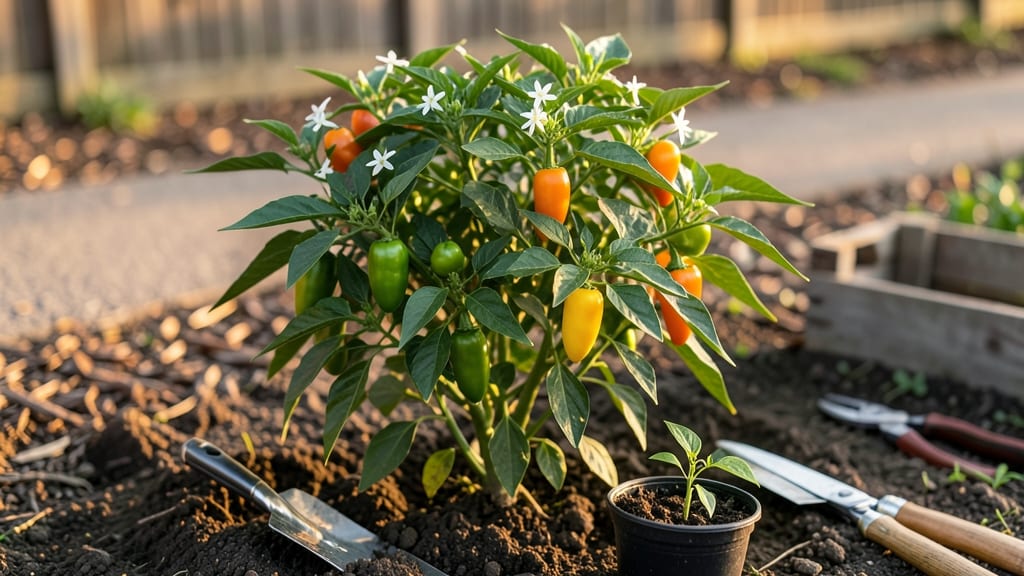
Planting habanero peppers from seed gives you the hottest, most flavorful harvests—if you nail the timing and conditions. I learned the hard way that these finicky plants demand perfect warmth, humidity, and sunlight from day one, or they’ll bolt before producing a single pepper.
The secret lies in starting them indoors 8-10 weeks before your last frost, then transplanting only after soil temperatures hit 70°F+—no shortcuts.
You’ll need well-draining potting mix (no garden soil), heat mats for seedlings, and a sunny windowsill or grow light to prevent leggy, weak plants. Habaneros hate cold feet—even a brief dip below 55°F stunts growth.
Most beginners overwater, drowning the seeds or shocking the roots, so stick your finger in the soil first: it should feel like a damp sponge, not a swamp.
By summer, your plants will reward you with bright orange-red peppers that pack 100,000-350,000 Scoville units—enough to turn a mild salsa into a firecracker. The key is consistent watering (never soggy soil) and balanced fertilizer (too much nitrogen = leafy monsters, no peppers).
Prune aggressively to boost fruit production, and watch for spider mites—they love habaneros’ dry heat.
This method works in zones 9-11 year-round, but in cooler climates, treat them as annuals. Container growers can use 5-gallon pots with proper drainage, while in-ground gardens need 18-24 inches of spacing to prevent overcrowding.
Patience pays off: a single plant can yield 50+ peppers if you avoid these early mistakes.
📚 In This Guide
- What you need
- Instructions
- Tips and common mistakes
- Wrapping up and next steps
What you need
- ● Habanero seeds: 3–5 seeds per plant (or 10–20 if starting multiple plants). Choose a variety like 'Carolina Reaper,' 'Red Savina,' or 'Orange Habanero' for extra heat!
- ● Containers or garden bed: Containers: 5–7 gallon pots with drainage holes (1 per plant). Use lightweight materials like fabric or plastic.
- ● Garden bed: Full sun (6+ hours/day) and well-draining soil (pH 6.0–7.0). Avoid waterlogged areas!
- ● Potting mix: 1 bag (1–2 cubic feet) of high-quality, sterile pepper-specific mix or a blend of 60% peat moss, 30% perlite, and 10% compost.
- ● Fertilizer: Balanced, water-soluble fertilizer (10-10-10 or 5-5-5) or organic options like fish emulsion or compost tea.
- ● Watering can or hose with a gentle spray nozzle: Habaneros hate soggy roots—water deeply but infrequently (1–1.5 inches per week).
- ● Pruning shears or scissors: Sterilized, sharp tools for trimming excess foliage or dead leaves.
- ○ Support (optional but helpful): Small stakes or cages (1–2 feet tall) to prevent sprawling in windy areas.
- ● Grow lights: For indoor starters or early-season seedlings (LED or fluorescent, 12–16 hours/day).
- ● Mulch: Straw or black plastic to retain moisture and suppress weeds.
- ● Pest control: Neem oil, insecticidal soap, or row covers to deter aphids or spider mites.
- ● pH test kit: Ensures soil stays in the ideal 6.0–7.0 range (habaneros are sensitive!).
- ● Heat mat: For indoor seed starting (70–80°F soil temp speeds up germination!).
- ● Last frost date: Wait until after the last frost in your zone (habaneros hate cold!).
- ● Warmth: Habaneros thrive in 75–90°F temperatures. If your climate dips below 60°F at night, consider container growing for mobility.
- ● Patience: Germination takes 15–30 days, and peppers take 90–120 days to mature.
Step-by-step instructions for growing habanero peppers
Here’s how to cultivate fiery habanero peppers from seed to harvest with precision.
Prepare Containers and Seed Starting Mix
Fill four 4-inch pots with a sterile seed-starting mix, ensuring it’s moist but not soggy. Habaneros thrive when roots have room to expand, so avoid overcrowding. I press the mix down lightly to eliminate air pockets—this prevents weak root development later. Use only the seed-starting mix; garden soil compacts and suffocates young seedlings.
Place each pot in a seed tray to catch excess water. The key here is consistency: the mix should hold together when squeezed but crumble easily. If it sticks to your fingers, it’s too wet. If it doesn’t hold, add a spray of water until it reaches the perfect balance. This ensures even moisture without drowning the seeds.
Sow Seeds at the Right Depth and Temperature
Plant two seeds per pot at a depth of ¼ inch, which is roughly the width of a dime. Sowing too deep delays germination because the seedling must push through extra soil, wasting its energy. Cover lightly with additional mix and mist the surface until evenly damp.
Habaneros germinate best at 75–85°F, so place the pots on a seedling heat mat or in a warm spot. Without warmth, germination can take 3–4 weeks instead of the usual 10–14 days. I’ve seen seeds sprout in as few as 7 days when conditions are ideal—watch for the first green shoots breaking through the soil.
Provide Bright Light Immediately After Germination
Once seedlings emerge, move them under grow lights or to a south-facing window where they receive 14–16 hours of light daily. Habaneros grow leggy and weak without enough light, stretching toward any available source. You’ll notice this as thin stems with leaves spaced far apart—this is a red flag.
Keep the lights 2–4 inches above the seedlings and adjust as they grow. Without proper light, seedlings become etiolated, meaning they develop long, weak stems that struggle to support fruit later. Strong seedlings have thick stems, deep green leaves, and compact spacing between nodes. Rotate the pots daily to prevent leaning.
Thin Seedlings and Harden Off Before Transplanting
When seedlings develop 2–3 true leaves, thin to the strongest one per pot by snipping the weaker stem at soil level. This reduces competition and gives the remaining plant room to grow. Avoid pulling seedlings—it disturbs the roots of the one you’re keeping.
Two weeks before your last frost date, begin hardening off by placing the pots outside in a sheltered spot for 1–2 hours the first day. Gradually increase outdoor time over 10–14 days, exposing them to full sun and wind. Habaneros are tropical and sensitive to cold—if transplanted too soon, they’ll shock easily, causing leaves to yellow or drop. Watch for wilting or leaf drop as signs they’re not ready.
Transplant and Maintain for a Spicy Harvest
Transplant to the garden after all danger of frost has passed and soil temperatures reach 70°F. Space plants 18–24 inches apart to allow airflow, which prevents fungal diseases like powdery mildew. Habaneros need full sun (6–8 hours daily) and well-draining soil—amend with compost if your soil is heavy.
Water at the base 1–2 inches deep when the top 1–2 inches of soil feel dry. Overwatering causes blossom-end rot, while underwatering stresses the plant. You’ll know you’re doing it right when the soil stays consistently moist but never soggy. Fertilize every 4–6 weeks with a balanced organic fertilizer to encourage robust growth and fruit production.
Tips & tricks for growing fiery habanero peppers
A few strategic adjustments can transform your habanero pepper cultivation from challenging to consistently rewarding. These insights draw from years of growing these fiery beauties and troubleshooting common pitfalls.
Germination Temperature Precision: While the ideal range is 75–85°F, I’ve found that maintaining the upper end of this spectrum—closer to 85°F—significantly reduces germination time from 10–14 days to as few as 7 days. Use a seedling heat mat set to 85°F for consistent results. If your home environment fluctuates, consider placing pots on a heating pad with a thermostat to maintain this precise temperature. The energy invested here pays off dramatically in faster, more reliable sprouting.
Lighting Strategy Beyond Basic Requirements: The 14–16 hours of daily light specified is non-negotiable, but the quality matters just as much. For optimal growth, supplement natural light with full-spectrum LED grow lights that mimic sunlight’s spectrum. Position these lights 2–4 inches above seedlings and adjust as they grow—closer when small, farther as they mature. I’ve noticed that seedlings under these lights develop thicker stems and darker green leaves within just 10 days compared to those under basic fluorescent lighting.
Harden-Off Gradually with Environmental Cues: During the 10–14 day hardening-off period, pay attention to weather forecasts. If a warm spell is predicted, you can accelerate the process by increasing outdoor exposure time slightly on those days. Conversely, if cooler temperatures are expected, extend the indoor period. Watch for subtle signs of stress like leaf curling or slight wilting—these indicate the plant isn’t quite ready for longer outdoor exposure. This adaptive approach prevents the shock that often leads to yellowing leaves or stunted growth.
Soil Temperature Matters More Than You Think: The instructions mention transplanting when soil reaches 70°F, but I’ve found that waiting until 75°F yields stronger, more resilient plants. Use a soil thermometer to monitor temperatures, especially in early spring or fall when ground temperatures can fluctuate dramatically. Warmer soil promotes faster root establishment and reduces transplant shock. This small adjustment can mean the difference between plants that thrive and those that struggle for weeks to recover.
Pro Tips for Habanero Pepper Planting
- A few strategic adjustments can transform your habanero pepper cultivation from challenging to consistently rewarding.
- Germination Temperature Precision: While the ideal range is 75–85°F, I’ve found that maintaining the upper end of this spectrum—closer to 85°F—significantly reduces germination time from 10–14 days to as few as 7 days.
- Lighting Strategy Beyond Basic Requirements: The 14–16 hours of daily light specified is non-negotiable, but the quality matters just as much.
Frequently asked questions
Got questions about growing habanero peppers?
You’re not alone—this fiery plant can be tricky for beginners! Here are answers to the most common questions to help you grow bold, spicy success.
When is the best time to plant habanero seeds?
Habaneros thrive in warm soil (at least 70°F/21°C). Start seeds indoors 8–10 weeks before your last frost (typically March–April in most climates). Transplant seedlings outdoors only after all frost risk has passed, usually 2–3 weeks after the last expected frost—or wait until late May/June in cooler zones.
How long does it take for habanero peppers to mature?
From seed to harvest, habaneros take 90–120 days to ripen. If you’re starting from seed, count on 3–4 months before your first spicy payoff! Patience pays off—green peppers won’t reach their full heat potential until fully ripe (orange/red).
What’s the ideal temperature for growing habaneros?
Habaneros love heat—ideal daytime temps are 75–90°F (24–32°C). They’ll bolt (flower prematurely) if stressed by cold snaps (<50°F/10°C). Use row covers or black plastic mulch to protect young plants. In hot climates, provide afternoon shade to prevent sunscald.
Why aren’t my habanero plants producing peppers?
Common culprits include:
- Not enough heat: Habaneros need consistent warmth (day + night). If temps dip below 60°F (15°C), they’ll focus on leaves, not fruit.
- Over-fertilizing with nitrogen: Too much green growth = fewer peppers. Switch to a low-N, high-P fertilizer (like 5-10-10) when buds form.
- Lack of pollination: Hand-pollinate with a brush if bees are scarce.
- Stress: Check for pests (aphids, spider mites) or underwatering.
Can I grow habaneros in containers, and what size pot do I need?
Habaneros do well in containers with at least 5-gallon pots (bigger = more peppers). Use a well-draining potting mix and place pots in full sun. Add a time-release fertilizer every 4–6 weeks. Just ensure pots have drainage holes to prevent root rot.
Wrapping up and next steps
Growing habanero peppers is a rewarding journey that brings bold flavors and fiery excitement to your garden! 🌶️ With the right soil, sunlight, and care, you’ll soon be harvesting peppers that pack a punch—perfect for salsas, hot sauces, or spicy dishes.
Whether you’re a seasoned gardener or a curious beginner, every seed planted today is a step toward a harvest full of potential.
Ready to take the next step? Start with just one plant—experiment with varieties, refine your techniques, and soon, you’ll be sharing your spicy creations with friends (and maybe even a little cautionary advice!). Happy planting! 🌱