Picking
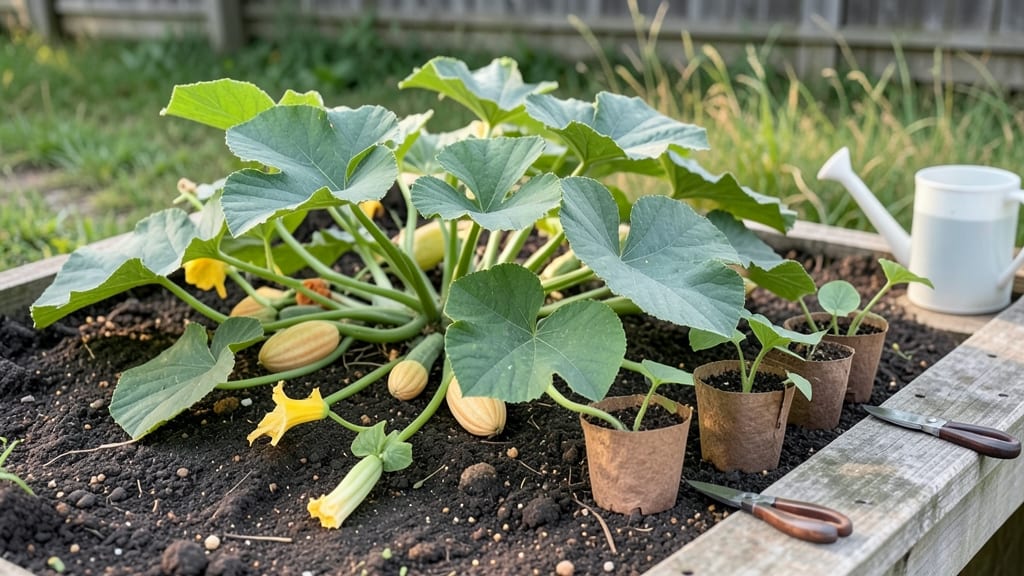
To plant honeynut squash successfully, you'll need soil warmed to 60°F+, full sun exposure, and well-draining soil with a pH of 6.0–7.0. Plant seeds 2–3 inches deep, spacing them 3–4 feet apart, then thin seedlings to 2 feet for healthy growth. Start indoors 2–4 weeks before the last frost or sow directly after frost risk has passed.
Honeynut squash thrives when planted in well-prepared soil that retains moisture without becoming waterlogged. 🌱 The 60°F+ soil temperature ensures quick germination, while full sun exposure (at least 6–8 hours daily) maximizes vine growth and fruit production.
I’ve found that adding compost before planting boosts nutrient availability, especially since honeynut squash is a heavy feeder. If your soil is too acidic or alkaline, a simple amendment like lime or sulfur can adjust the pH to the ideal range of 6.0–7.0 for optimal root development.
Timing is everything—direct sowing too early can stunt growth, while waiting too long risks reduced yields. For cooler climates, starting seeds indoors gives them a head start, while warmer regions can plant directly once nighttime temperatures stay above 55°F.
Pro tip: mulch around plants to retain soil moisture and suppress weeds, which is especially helpful during the squash’s rapid growth phase.
💡 In This Article
- Optimal Conditions for Honeynut Squash Germination
- Step-by-Step Guide to Direct Sowing vs Indoor Starts
Optimal conditions for honeynut squash germination
Honeynut squash seeds need precise conditions to germinate efficiently. The 60°F+ soil temperature triggers enzymatic activity in the seed, breaking dormancy and activating root growth. At temperatures below 55°F, germination slows dramatically—sometimes taking 2-3 weeks instead of the usual 5-7 days.
This is because cold soil disrupts the seed's metabolic processes, particularly the production of alpha-amylase, an enzyme that converts starches into sugars for energy. 🌱
The squash's shallow root system (1-2 inches deep initially) makes it sensitive to moisture fluctuations. Too much water can cause seed rot, while too little leads to desiccation.
Maintaining 1 inch of consistent moisture in the topsoil is critical—think of it like keeping a damp sponge, not a soaking one. The ideal soil moisture triggers the seed's radicle (primary root) to emerge first, followed by the shoot within 3-5 days under perfect conditions.
Sunlight requirements go beyond just "full sun." Honeynut squash vines need 6-8 hours of direct sunlight daily to perform photosynthesis efficiently, but the real magic happens during the first 2-3 weeks after germination. During this phase, seedlings develop chlorophyll at a rapid pace, which is essential for their early growth.
Shade during this window can lead to etiolation—those leggy, weak stems you see in overcrowded seedlings. 💡
Soil pH plays a hidden but crucial role in nutrient uptake. The 6.0-7.0 pH range ensures optimal availability of phosphorus (for root development) and potassium (for vine strength).
At pH levels below 6.0, aluminum and manganese become toxic, stunting root growth, while above 7.0, calcium and iron deficiencies can occur. This is why a simple soil test before planting can save you from poor germination rates or weak plants later on.
Frost sensitivity is another critical factor. Honeynut squash seedlings can't tolerate temperatures below 50°F for extended periods. The plant's cuticle layer (its natural protective coating) isn't fully developed until the vines are 4-6 inches tall.
This makes young plants particularly vulnerable to cold damage, which appears as yellowing leaves or mushy stems. In cooler climates, using row covers or planting in black plastic mulch can raise soil temperatures by 5-10°F, creating a microclimate that protects seedlings.
Heat stress becomes a concern when daytime temperatures exceed 90°F. While mature plants can handle this, seedlings may experience heat shock, where their metabolic processes become overwhelmed. This often manifests as wilting even with adequate water.
The solution? Provide afternoon shade during extreme heat waves and maintain even moisture levels—never letting the soil dry out completely. 🌡️
What most gardeners don't realize is how vine growth patterns correlate with these conditions. Under ideal germination conditions, vines can spread 2-3 feet per week once established, but this growth rate slows dramatically if any of these factors are off.
The key is creating that perfect balance: warm soil, consistent moisture, and gradual exposure to sunlight to harden those young plants before they face the elements. This careful nurturing pays off with robust vines that produce 3-5 pounds of honeynut squash per plant in a single season.