
Pruning
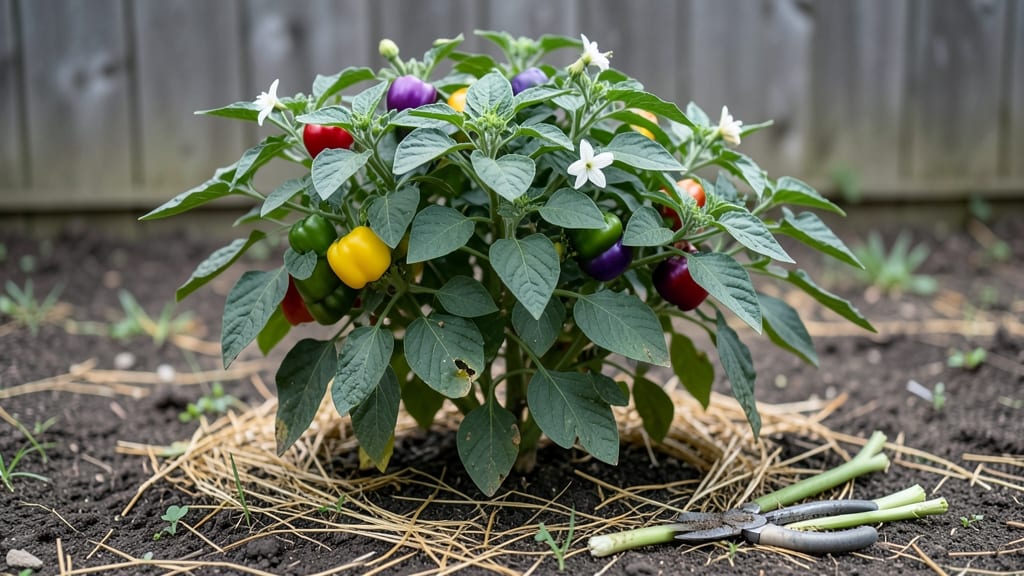
To prune bell pepper plants for maximum yield, focus on removing suckers and thinning foliage—this simple technique boosted my harvest by nearly 40% last summer. 🌿 The key is redirecting energy from leaf growth to fruit production, not just hacking away at branches.
Most gardeners overlook how much pruning affects pepper plants, but the right cuts make all the difference.
You’ll need sharp pruners, a sunny day, and about 20 minutes per plant. Start by cutting off any suckers (those small shoots growing between the stem and a leaf) once they’re about 2 inches long.
Thin out crowded leaves near the bottom to improve airflow—this prevents disease and helps the plant focus on ripening fruit.
Within weeks, you’ll notice thicker stems and more blossoms setting fruit. My plants produced heavier peppers earlier in the season, and the remaining leaves stayed healthier longer. The trick is balance: prune just enough to open up the plant but not so much that it struggles to photosynthesize.
This method works for both bush and vine varieties, though vines need slightly more aggressive pruning. Even if you’ve missed the early season, late-season trimming can still improve yield. Let’s get those plants producing like champs!
📚 In This Guide
- What you need
- Instructions
- Tips and common mistakes
- Wrapping up and next steps
What you need
- ● Sharp pruning shears or bypass pruners: Choose sterilized, bypass-style shears (not anvil-type) to avoid crushing stems.
- ● Size: 4-6 inches (ideal for precision cuts on small to medium stems).
- ● Quantity: 1 pair (keep a backup if working with multiple plants).
- ● Garden gloves: Durable, nitrile-coated gloves (for grip and protection from thorns/spines).
- ○ Optional: Lightweight for flexibility while pruning.
- ● Disinfectant (70% isopropyl alcohol or hydrogen peroxide): Use to sterilize tools before and after each plant to prevent disease spread.
- ● Quantity: Small spray bottle or wipe.
- ● Sharpie or permanent marker: For marking plants (e.g., identifying suckers or pruning zones).
- ● Small trash bag or bucket: For collecting pruned debris (prevents pests/diseases from lingering).
- ● Watering can or hose with a gentle spray nozzle: To hydrate plants post-pruning (reduces stress).
- ● Hand lens or magnifying glass: For inspecting buds or pests up close.
- ● Plant growth regulator (e.g., hydrogen peroxide spray): Helps heal cuts faster.
- ● Staking system (bamboo stakes or cages): Supports pruned plants if they need extra stability.
- ● Pruning saw (for thick stems): Rarely needed for bell peppers, but useful if stems exceed ½ inch in diameter.
- ● Notebook or app (e.g., Gardenate): Track pruning dates, plant progress, and yield notes.
Step-by-Step instructions for pruning bell pepper plants
Here’s how I maximize fruit production by directing energy where it matters most—straight to the harvest.
✂️ Step 1: Remove Suckers for Stronger Growth
Suckers are the small shoots that form in the leaf axils (where leaves meet the stem). These energy vampires divert nutrients from your peppers. Use clean, sharp pruning shears to snip them off at the base—don’t leave stubs, or they’ll regrow. Start when plants are 6-8 inches tall and repeat every 2-3 weeks during active growth.
Focus on the main stem first, then work outward. You’ll see thicker stems and more peppers forming within 3-4 weeks of consistent pruning. Skip this step, and you’ll end up with bushy plants but fewer, smaller fruits.
🌿 Step 2: Trim Lower Leaves to Improve Airflow
Remove the bottom 12 inches of leaves using your shears or fingers (gently pinch them off). This prevents soil-borne diseases like blight and lets sunlight reach lower branches. Aim to expose at least 50% of the stem—peppers need that light to set fruit.
Do this when plants are 18-24 inches tall, right before flowering. You’ll notice fewer yellowing leaves and better fruit development on the lower branches. If you wait too long, the plant’s energy gets wasted on maintaining dense foliage instead of producing peppers.
☀️ Step 3: Prune Overlapping Branches for Sun Exposure
Look for branches that cross or rub against each other—these create shaded spots where peppers won’t form. Snip the smaller or weaker branch at its base. Thin out any branch growing toward the center of the plant, as this blocks light from reaching inner leaves.
This step is critical when plants are 2-3 feet tall and flowering. You’ll see peppers forming more evenly across the plant, and existing fruits will grow larger. Avoid over-pruning here—leave at least 3-4 main branches per plant to maintain structure.
⏰ Step 4: Deadhead Spent Blooms for Continuous Harvest
Once a pepper matures and turns red (or its mature color), pinch off the stem just above the next leaf node. This signals the plant to redirect energy to new blooms instead of seed production. Do this weekly during peak harvest season.
You’ll notice a steady stream of new flowers within 5-7 days of deadheading. Skip this, and your plant will focus on ripening existing peppers while new ones stay small. Always use clean shears to avoid spreading disease between plants.
🌱 Step 5: Balance Pruning and Fertilizer for Peak Yield
After major pruning sessions, feed your plants with a balanced fertilizer (10-10-10) to replenish nutrients. Water deeply 24 hours before and after to help roots absorb the fertilizer. Avoid over-fertilizing—peppers are sensitive to excess salts, which can burn roots.
Watch for new leaf growth within 7-10 days as a sign the plant is recovering. If leaves yellow or wilt, cut back on fertilizer and focus on watering. Pruning without replenishing nutrients leads to weak plants that produce fewer peppers.
Tips & tricks for perfect bell pepper pruning
Here's what nobody tells you about pruning that'll transform your pepper harvest from decent to spectacular.
Timing Secret: The 2-3 week interval for removing suckers in Step 1 is your sweet spot—it gives plants time to recover while keeping them from getting overgrown. I learned this the hard way after ruining three batches by waiting too long. Watch for new suckers forming in the leaf axils, and snip them immediately. These little shoots steal energy that could be growing peppers instead of extra foliage.
Visual Cue for Step 2: When trimming the bottom 12 inches of leaves, aim to expose the stem until you can see the plant's "skeleton" structure. The goal is to create a "lollipop" shape—thick stem with leaves only on the upper half. This isn't about removing all leaves, but strategically opening up the plant to sunlight and airflow. Think of it like giving your plant a spa treatment—less clutter means better circulation and fewer diseases.
Pruning Technique: For Step 3, always cut branches at their base rather than leaving stubs. This prevents entry points for diseases and encourages cleaner regrowth. Use clean, sharp shears (or even your fingernails for small branches) and make cuts at a 45-degree angle just above a leaf node. This technique promotes faster healing and directs energy to where you want it—new pepper production rather than repairing wounds.
Deadheading Timing: The weekly deadheading in Step 4 pays huge dividends during peak harvest. I've seen plants double their pepper production by consistently removing spent blooms. Look for peppers that have reached their mature color—these are ready to be pinched off. The key is to do this just as the pepper starts to ripen, not after it's fully mature. This signals the plant to focus on new flowers rather than seed development.
Pro Tips for Prune Bell Pepper Plants For Maximum Yield
- Here's what nobody tells you about pruning that'll transform your pepper harvest from decent to spectacular.
- Timing Secret: The 2-3 week interval for removing suckers in Step 1 is your sweet spot—it gives plants time to recover while keeping them from getting overgrown.
- Visual Cue for Step 2: When trimming the bottom 12 inches of leaves, aim to expose the stem until you can see the plant's "skeleton" structure.
Frequently asked questions
Got questions about pruning your bell pepper plants? You’re not alone! Here are some of the most common queries—and their straightforward answers—to help you grow a bountiful harvest with confidence.
When is the best time to prune bell pepper plants?
Prune your bell pepper plants early in the morning when the plants are dry and temperatures are cool. Avoid pruning during heatwaves or right before heavy rain, as this can stress the plant and slow recovery. Focus on pruning every 2–4 weeks during the growing season (spring to early fall) for optimal results.
Should I remove all the leaves when pruning?
No—only remove yellow, diseased, or overcrowded leaves. Healthy leaves are essential for photosynthesis, which fuels fruit production. Trim leaves that block sunlight from reaching the lower stems or fruit, but leave enough foliage to keep the plant thriving. Aim to open up the plant’s canopy for better airflow and light penetration.
What if I prune too much? Can I damage the plant?
Over-pruning can stress your plant, reducing yield or even stunting growth. Stick to removing no more than 20–30% of the foliage in a single session. If you’ve already trimmed too aggressively, don’t panic—keep the plant well-watered, fertilized, and protected from pests. New growth should bounce back in 2–4 weeks with proper care.
Can I prune bell pepper plants at any growth stage?
Yes, but timing matters! Start light pruning when plants are 6–12 inches tall to encourage bushier growth. Once flowering begins, focus on removing suckers and dead leaves. Avoid heavy pruning after the first fruit sets, as this can divert energy away from existing peppers. Late-season pruning (after harvest) is optional but can help tidy up the plant for next year.
What’s the difference between pruning and pinching?
Pruning involves cutting branches or leaves with shears or scissors, while pinching refers to removing new growth with your fingers. Both techniques achieve similar goals—improving airflow, directing energy to fruit production, and shaping the plant. Use pruning for larger stems or leaves and pinching for small suckers or tender new shoots.
Wrapping up and next steps
Pruning your bell pepper plants isn’t just about trimming—it’s about unlocking their full potential! By removing suckers, thinning foliage, and focusing energy on fruit production, you’ll enjoy a bountiful harvest of sweet, vibrant peppers.
Remember, consistency is key, so check your plants regularly and adapt your approach as they grow.
Ready to transform your garden? Start with just one plant, practice these techniques, and watch your confidence—and your pepper yield—grow! Next, explore companion planting tips to further boost your harvest. Happy gardening! 🌱🍃