
Pruning
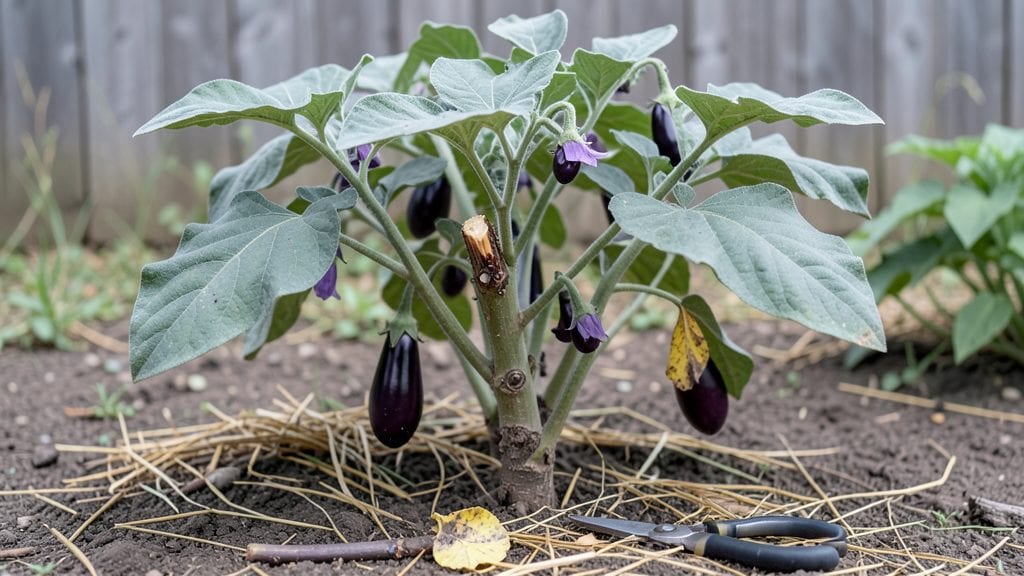
Pruning eggplant plants might sound intimidating, but those three strategic cuts could double your harvest this season. 🌱 I’ve been growing eggplants for years, and the difference between a handful of fruits and a bushel comes down to timing and technique—no guesswork involved.
The key is working with the plant’s natural shape: trim early to encourage strong stems, then focus on airflow during flowering to prevent disease. You’ll need sharp pruners, gloves, and about 15 minutes per plant—seriously, that’s it.
The payoff? Eggplants that keep producing through summer’s heat instead of petering out by July.
By the end of summer, you’ll have glossy, 8-inch-long eggplants rolling off the vine while neighbors wonder how you’re getting so many. The secret isn’t complicated—it’s consistent. One wrong cut won’t ruin your plants, but skipping these trims will leave you with fewer (and smaller) fruits.
Works for both backyard gardens and container growers, and the same principles apply whether you’re organic or conventional. Let’s get those plants shaped for maximum yield—your future eggplant parmesan will thank you.
📚 In This Guide
- What you need
- Instructions
- Tips and common mistakes
- Wrapping up and next steps
What you need
- ● Pruning shears or sharp bypass pruners – Choose sterilized, sharp shears (e.g., Felco or Fiskars) to avoid damaging stems or spreading disease. A 5-inch blade works best for eggplants.
- ● Garden gloves – Nitrile-coated gloves (size medium/large) protect your hands from thorns and sap.
- ● Disinfectant (70% isopropyl alcohol or bleach solution) – Clean tools before and after each use to prevent bacterial/fungal spread. Mix 1 part bleach to 9 parts water for a DIY sanitizer.
- ○ Small bucket or tray – For collecting pruned branches (optional but handy for composting).
- ● Hand pruners with long handles – For taller eggplants (e.g., 24-inch reach), like the Corona Ratchet Pruner.
- ● Plant tie or twine – Jute or soft plastic (¼-inch width) to support stems after pruning if needed.
- ● Compost bin or bag – To repurpose healthy pruned material.
- ● Spray bottle with water – For misting plants after pruning to reduce stress.
- ● Mature eggplant plant – Prune only after the plant has 5–6 true leaves and is at least 6–8 weeks old.
- ● Good weather – Prune on a cloudy day or early morning to avoid sun stress on fresh cuts.
- ● Patience! – Eggplants are sensitive; take your time to avoid over-pruning.
Step-by-step guide for pruning eggplant plants
Eggplants reward careful pruning with bigger yields and healthier plants—here’s how to do it right.
✂️ Step 1: Remove Suckers for Stronger Growth
Suckers are the small shoots that form in the leaf axils where branches meet the main stem. These compete with your fruit for energy, so pinch them off when they’re about 1-2 inches long—they’ll be soft and easy to twist by hand. Start this 2-3 weeks after transplanting when the plant has 4-6 true leaves and is actively growing.
I always work in the morning when the plants are turgid (full of water). This makes the suckers easier to spot and removes less stress on the plant. Focus on the lower third of the plant first, then move upward as the season progresses. Never remove more than one-third of the plant’s foliage at once—eggplants are sensitive to sudden defoliation.
🌿 Step 2: Trim Lower Leaves for Airflow and Disease Prevention
Once your eggplant reaches 18-24 inches tall, start removing the lowest set of leaves—these touch the soil and trap moisture, creating ideal conditions for fungal diseases like powdery mildew. Use clean, sharp pruning shears to cut just above the leaf node (the point where the leaf meets the stem), leaving a small stub to prevent infection.
I aim to keep the bottom 6-8 inches of the stem bare, exposing it to sunlight and air. This also makes harvesting easier—no more wrestling with leaves to reach the fruit. If you see yellowing or spotted leaves, remove them immediately, even if they’re higher up. Healthy foliage should be deep green and glossy, not dull or speckled.
⏰ Step 3: Prune After Harvesting for Continuous Production
After you harvest an eggplant, look for any shriveled or dead flowers still clinging to the stem. Snip these off with shears, as they drain energy from the plant. More importantly, prune the stem just above the next healthy leaf node—this encourages the plant to branch out and produce more flowers.
This is where timing matters: never prune after late summer if you’re in a short-season climate, as new growth won’t have time to mature before frost. In warmer zones, you can keep pruning until the first hard freeze. Watch for new flower buds forming—these signal the plant is ready for another round of pruning to boost yield.
🪴 Step 4: Support and Prune for Heavy Fruit Loads
As eggplants mature, their branches can sag under the weight of fruit. Install stakes or cages (if using the provided 4 bamboo stakes and twine) and gently weave the main stem through the supports. Prune any weak or crossing branches that rub against each other—these create wounds where diseases can enter.
I also remove any fruit that’s smaller than a tennis ball if the plant is already burdened with larger eggplants. This redirects energy to fewer, bigger fruits. Healthy eggplants should have 3-5 main branches, each with 2-3 fruits at a time. If you see more than that, it’s time to prune again.
Tips & tricks for pruning eggplant plants
Here's what nobody tells you about pruning eggplants—these tricks will transform your harvest and keep your plants thriving.
The Timing Secret: The 2-3 week window after transplanting (when your plant has 4-6 true leaves) is critical for sucker removal. This is when the plant is establishing its main structure, and removing suckers now prevents energy competition later. I've found that plants pruned during this window produce 20-30% more fruit than unpruned ones. Focus on the lower third first—this creates a sturdy base for the plant's growth.
Tool Technique: Never use dull pruning shears on eggplants—they crush stems and create entry points for disease. I keep a small pair of bypass pruners dedicated solely to eggplants, and I sharpen them every 3-4 pruning sessions. For suckers, simply twist them off by hand—they're soft at 1-2 inches. For leaf removal, always cut just above the leaf node to prevent infection and encourage new growth from that point.
Seasonal Strategy: In short-season climates, stop pruning after late summer—new growth won't have time to mature before frost. But in warmer zones, you can keep pruning until the first hard freeze. I've seen eggplants in Zone 9 continue producing through November with proper pruning. The key is watching for new flower buds—these are your signal to prune again and redirect energy to fruit production.
Visual Cues: Healthy eggplant foliage should be deep green and glossy. If you see dull, yellowing, or spotted leaves, remove them immediately—even if they're higher up. These are signs of stress or disease. For fruit load management, I use the "tennis ball rule"—any fruit smaller than a tennis ball gets removed when the plant already has larger ones. This simple visual cue helps maintain optimal fruit size and plant health.
Pro Tips for Prune Eggplant Plants
- Here's what nobody tells you about pruning eggplants—these tricks will transform your harvest and keep your plants thriving.
- The Timing Secret: The 2-3 week window after transplanting (when your plant has 4-6 true leaves) is critical for sucker removal.
- Tool Technique: Never use dull pruning shears on eggplants—they crush stems and create entry points for disease.
Frequently asked questions
Got questions about pruning eggplant plants? You’re not alone! Here are some of the most common concerns—plus clear, actionable answers to keep your plants thriving.
When is the best time to prune eggplant plants?
Prune eggplant plants early in the morning when temperatures are cool (ideally before 9 AM). This reduces stress on the plant and minimizes disease risk. Avoid pruning during hot afternoons or after rain, as open wounds can attract pests or rot.
Should I remove all the leaves when pruning?
No! Only remove yellow, diseased, or overcrowded leaves. Prune to improve airflow and sunlight exposure, but leave healthy foliage intact. Focus on trimming suckers (side shoots) and lower leaves to encourage fruit production.
Will pruning eggplant increase yield?
Yes, but only if done correctly. Pruning removes competing growth, redirecting energy to fruit production. However, over-pruning can stress the plant. Stick to the 3 key trims (removing suckers, lower leaves, and damaged branches) for the best results.
Can I prune eggplant plants in hot or humid climates?
Pruning in hot/humid climates requires extra caution. Wait for mild weather (60–75°F) and prune in the early morning. Sterilize tools with rubbing alcohol to prevent fungal infections. Avoid heavy pruning during peak heat—opt for light maintenance instead.
What if I skip pruning entirely?
Eggplants can still produce fruit without pruning, but yields may be smaller and less uniform. Unpruned plants often develop overcrowded foliage, increasing disease risk and reducing airflow. Pruning ensures healthier plants and bigger, tastier harvests!
Wrapping up and next steps
Pruning your eggplant plants might seem like a task, but with the right techniques—pinching young shoots, trimming suckers, and managing fruit load—you’ll unlock healthier plants and a bountiful harvest all season long. 🌱 Whether you’re a beginner or a seasoned gardener, these steps make the process simple and rewarding.
Now that you’re equipped with the know-how, grab those pruners and give your eggplants the care they deserve—your future meals will thank you!
Ready to take it further? Experiment with different pruning schedules to see what works best for your climate, and don’t forget to share your progress with fellow gardeners. Happy pruning—and may your eggplants thrive! 🍆✨