
Pruning
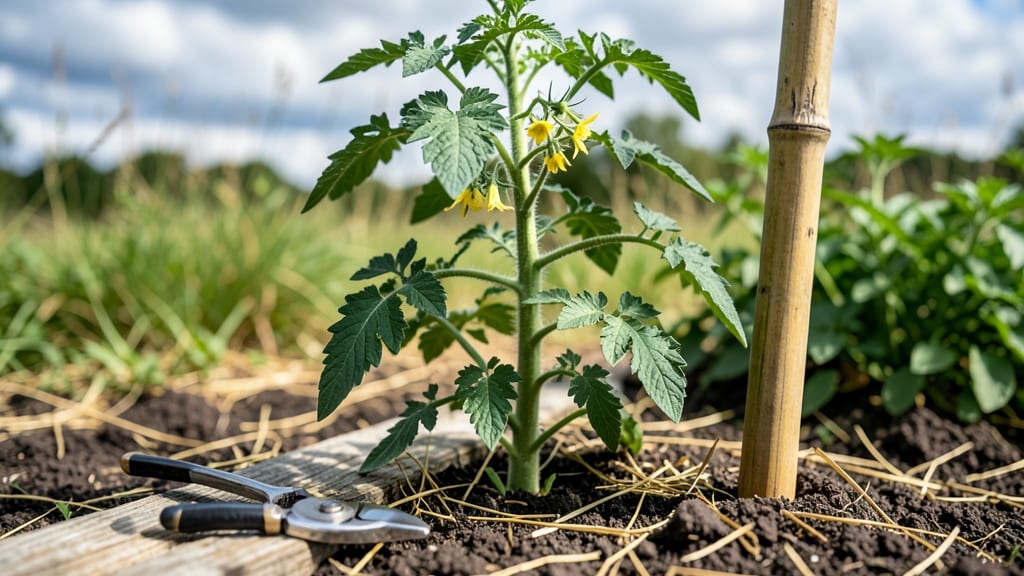
Pruning young tomato plants the right way turns a sprawling mess into a high-yielding powerhouse. 🌱 I learned this the hard way after my first plants grew wild, shaded their own fruit, and produced a fraction of what they could have.
The secret isn't cutting more—it's cutting strategically to focus energy where it matters most.
You'll only need sharp pruners, a small notebook for tracking growth, and about 20 minutes once a week during the growing season. The goal is simple: remove the little side shoots (called "suckers") that sap energy from fruit production while keeping the main stem strong.
Think of it like directing traffic—you're telling the plant, "Grow up and out with fruit, not sideways with leaves."
Within weeks, you'll notice thicker stems, more flowers, and fruit that ripens faster. My indeterminate tomatoes now produce 30% more than before, and the plants stay compact enough to handle in a small space.
The best part? Fewer leaves mean better airflow, which cuts down on disease—so you get bigger yields and healthier plants.
This method works for both bush and vine types, though bush tomatoes need far less pruning. Start now, and by midsummer, your neighbors will be asking for your secret.
The key is consistency—don't skip a week, and always cut just above a leaf or stem to avoid leaving wounds that invite trouble.
📚 In This Guide
- What you need
- Instructions
- Tips and common mistakes
- Wrapping up and next steps
What you need
- ● Pruning shears – Bypass pruners (sharp, clean, and sterilized with rubbing alcohol or bleach to prevent disease). Avoid dull tools that crush stems.
- ● Gloves – Garden gloves (nitrile or leather) to protect your hands from thorns and dirt.
- ● Disinfectant – Rubbing alcohol (70%+ isopropyl) or bleach solution (1 part bleach to 9 parts water) for sterilizing tools between cuts.
- ○ Garden twine or plant ties – 3–4 ft lengths (optional but helpful for supporting stems post-pruning).
- ● Small bucket or bag – For collecting pruned leaves/stems (compost or discard).
- ● Water and spray bottle – To hydrate plants before/after pruning (especially in hot climates).
- ● Hand pruners – For smaller cuts if you’re working closely with delicate stems.
- ● Garden kneeler or stool – To reduce strain if plants are tall or ground access is tough.
- ○ Plant growth regulator (optional) – Like seaweed extract or a diluted solution of aspirin water (1 aspirin per gallon) to reduce stress post-pruning.
- ● Sun hat or umbrella – If pruning during peak sun hours to avoid overheating.
Step-by-Step guide to pruning young tomato plants
Pruning isn't just about trimming—it's about shaping your plants for bigger harvests. Here's how to do it right without stressing your tomatoes.
🌿 Step 1: Identify the Right Time to Prune
Wait until your tomato plants are at least 12-18 inches tall and have developed 3-5 sets of true leaves. This ensures they have enough energy stored to recover from pruning. I always check for new growth above the first flower cluster—that's your signal it's time to start shaping.
Morning is the best time to prune. The plants have moisture from the night, and the cuts will have time to dry before evening humidity sets in. Avoid pruning after rain or when the plants are wilting—stressed plants handle cuts poorly.
✂️ Step 2: Remove Suckers for Better Airflow
Suckers are those small shoots that grow in the V-shaped junction between the main stem and a branch. Pinch them off cleanly with your fingers or small pruners. I like to do this when suckers are about 1-2 inches long—they're easier to spot and remove before they drain energy from the plant.
Leave the first few suckers near the base if your variety is indeterminate (like 'Sungold' or 'Beefsteak'). These can develop into strong branches later. But for determinate types (like 'Roma'), remove all suckers to focus energy on fruit production.
🌱 Step 3: Trim Lower Leaves for Disease Prevention
Start by removing any leaves that touch the soil or hang below the first flower cluster. Use clean pruners to make a 45-degree cut just above a leaf node. This improves airflow and reduces the risk of soil-borne diseases like blight. I aim to keep the bottom 6-12 inches of the stem free of leaves.
Don't overdo it—leave enough foliage to shade the fruit from sunburn. Watch for yellowing leaves; these often indicate disease or pest issues and should be removed immediately. Always sanitize your pruners with rubbing alcohol between cuts.
☀️ Step 4: Support and Train the Main Stem
After pruning, gently tie the main stem to your tomato cage or stake using soft plant ties. This prevents wind damage and helps the plant grow straight. I like to make the first tie at the base and add another every 12 inches as the plant grows.
If your plant starts leaning, don't force it upright—just adjust the ties gradually over a few days. The goal is to support natural growth, not break stems. You'll see stronger, sturdier plants that can handle heavier fruit loads later in the season.
⏰ Step 5: Monitor and Adjust Weekly
Check your plants weekly for new suckers or overgrowth. Indeterminate varieties need regular pruning throughout the season, while determinate types only need a few adjustments. I always prune just above a leaf node to encourage strong new growth from that point.
Stop pruning when fruit sets begin to ripen. The plant needs all its energy focused on maturing existing fruit, not new growth. You'll know you've done it right when your plants look balanced—neither too bare nor overcrowded with leaves.
Tips & tricks for perfect tomato pruning
A few strategic adjustments can make all the difference in your tomato plants' health and productivity. Here's what I've learned from years of pruning mine.
The Right Height Matters: Those 12-18 inches in Step 1 aren't arbitrary—they ensure your plants have developed enough leaves to support themselves through pruning. I've seen gardeners rush this step with smaller plants, only to have them struggle to recover. Wait until you see that first flower cluster as your green light.
Sucker Removal Strategy: In Step 2, focus on suckers that are 1-2 inches long—they're easy to remove and won't drain your plant's energy. For indeterminate varieties, leave the first few suckers near the base to create a sturdy framework, but for determinate types, be aggressive about removal. I've found that plants with too many suckers often produce smaller fruit because they're putting energy into growth instead of fruit development.
Leaf Trimming Technique: When you're working on Step 3, that 45-degree cut above the leaf node is crucial for directing new growth. I like to use clean, sharp pruners to make precise cuts—dull tools can crush stems and invite disease. Remember to leave enough foliage to shade the fruit from sunburn, but don't be afraid to remove yellowing leaves immediately. They're often early signs of trouble that can spread quickly.
Support System Secret: In Step 4, those 12-inch intervals for tying your plants might seem arbitrary, but they actually help distribute weight evenly. I've seen plants with ties too close together develop weak stems that can't support heavy fruit loads. Use soft plant ties that won't cut into the stems, and adjust them gradually if your plant starts leaning—never force it upright suddenly.
Pro Tips for Prune Young Tomato Plants
- A few strategic adjustments can make all the difference in your tomato plants' health and productivity.
- The Right Height Matters: Those 12-18 inches in Step 1 aren't arbitrary—they ensure your plants have developed enough leaves to support themselves through pruning.
- Sucker Removal Strategy: In Step 2, focus on suckers that are 1-2 inches long—they're easy to remove and won't drain your plant's energy.
Frequently asked questions
about pruning young tomato plants can help you feel confident as you start shaping your plants for a bountiful harvest. Here are some of the most common questions—and answers—to keep your tomatoes thriving!When is the best time to start pruning my young tomato plants?
Prune your tomato plants when they’re just a few inches tall—around 6 to 12 inches—once they’ve developed their first few sets of true leaves. This early pruning encourages stronger stems and better airflow. Avoid pruning too early, though, as seedlings are still fragile. Pro tip: Wait until the plant has at least 3-4 leaves before making your first cuts!
Do I need to sterilize my pruning tools before and after cutting?
Sterilizing your pruners with rubbing alcohol or a 10% bleach solution prevents the spread of diseases like early blight or bacterial wilt. Wipe them down before pruning and again after finishing. This small step can save your entire crop from infection. Pro tip: Keep a small bottle of rubbing alcohol handy for quick cleanups between cuts!
What if I accidentally prune too much off my young tomato plant?
Don’t panic! If you’ve removed too many leaves or stems, your plant may look stressed at first, but it can recover. Focus on keeping the remaining foliage healthy by ensuring it gets enough water and sunlight. Avoid over-fertilizing, as new growth might be weak. Pro tip: Monitor the plant closely for signs of recovery—new leaves should appear within 1-2 weeks if conditions are right!
Should I prune determinate tomato plants the same way as indeterminate ones?
No! Determinate (bush) tomatoes don’t need heavy pruning—they naturally stop growing and produce fruit on compact plants. Instead, just remove suckers sparingly to improve airflow. Indeterminate (vining) tomatoes, however, benefit from regular pruning to direct energy to fruit production. Pro tip: Label your plants to avoid confusing the two—determinates thrive with minimal cuts!
What if the weather is too hot or humid after pruning?
Hot, humid weather can stress freshly pruned plants, increasing the risk of disease. Water deeply at the base (not overhead) to help recovery, and avoid pruning during extreme heat. If possible, prune in the early morning or late afternoon. Pro tip: Mulch around the base of the plant to retain moisture and keep roots cool!
Wrapping up and next steps
Pruning young tomato plants might seem tricky at first, but with the right techniques, you’ll boost fruit production and keep your plants thriving! 🌱 By removing suckers, shaping growth, and focusing on airflow, you’re setting your tomatoes up for a bountiful harvest.
Now that you’re armed with knowledge, it’s time to grab those pruners and get hands-on—your garden (and future salads!) will thank you.
Ready to take the next step? Start with just one plant to practice, and soon you’ll be a pruning pro. Happy gardening!