Diseases
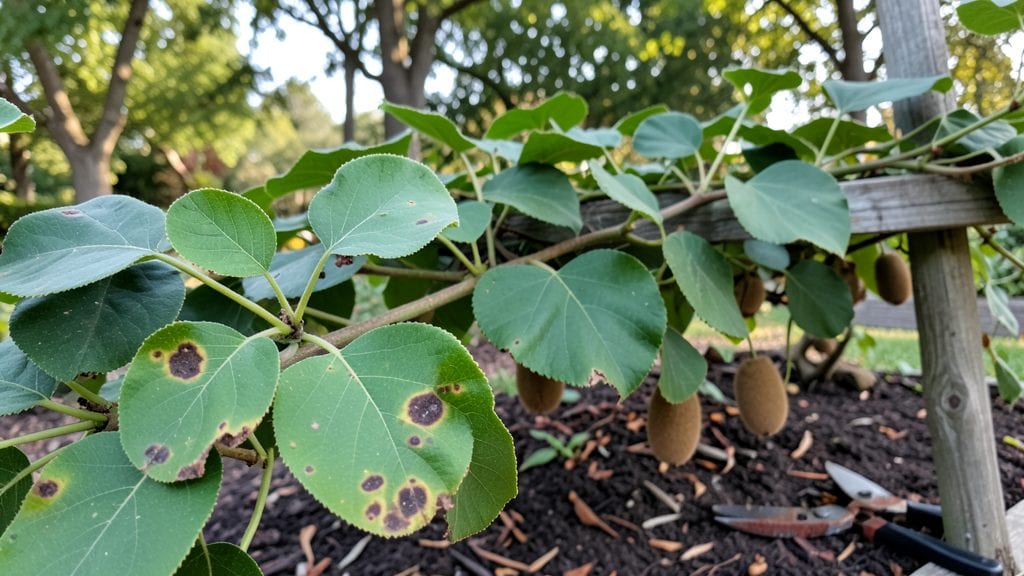
Spotting kiwi plant diseases early can save your entire harvest before they turn your vines into a leafy mess. 🌿 I’ve watched bacterial canker and powdery mildew transform healthy vines into sad, spotted skeletons—until I learned the telltale signs: dark sunken patches, fuzzy white coatings, or wilted leaves that refuse to bounce back.
The key isn’t just recognizing these diseases; it’s acting fast before they spread.
Most problems start with poor airflow or wet foliage, so pruning strategically and avoiding overhead watering cuts off their fuel. My go-to organic fix? A mix of neem oil and baking soda spray for mildew, or copper-based treatments for bacterial canker—both work when applied at the first sign of trouble.
Even better, healthy soil and balanced fertilizer keep your kiwi plants strong enough to fight off invaders before they get a foothold.
📚 In This Guide
- What you need
- Instructions
- Tips and common mistakes
- Wrapping up and next steps
What you need
- ● Pruning shears or sharp bypass pruners – 1 pair (sterilized with rubbing alcohol to prevent disease spread).
- ● Gloves – 1 pair (nitrile or rubber for protection against sap and pathogens).
- ● Spray bottle or garden sprayer – 1 (1-2 gallon capacity) (for fungicides or homemade remedies).
- ● pH testing kit – 1 (to check soil acidity, ideal range: 5.5–6.5 for kiwis).
- ● Fungicides – 1-2 bottles (copper-based or neem oil-based for organic options).
- ● Disinfectant – 1 bottle (70% isopropyl alcohol or bleach solution for cleaning tools).
- ● Labeling tags or markers – 10-20 (to track treated plants and symptoms).
- ● Notebook or camera – 1 (to document symptoms for diagnosis).
- ● Magnifying glass – For closely inspecting leaf spots or fungal growth.
- ● Soil moisture meter – To monitor over/under-watering (a common stress factor for disease).
- ● Compost or organic mulch – 5-10 gallons (to improve soil health and reduce fungal spores).
- ● Hose-end sprayer – For larger kiwi vines (holds 1-2 gallons).
- ● Plant disease identification app (e.g., PlantSnap) – For quick symptom checks on the go!
How to identify and treat kiwi plant diseases early
Your kiwi vine’s health depends on spotting trouble fast—here’s how to recognize and tackle common diseases before they spread.
🌿 Step 1: Inspect Leaves for Early Signs of Disease
Start by examining the leaves daily, especially after rain or watering. Look for yellowing between veins (a classic sign of bacterial leaf spot) or dark, greasy spots (likely powdery mildew). I check the undersides too—some diseases, like anthracnose, start there with tiny brown specks.
Run your fingers gently over the leaf surface. Healthy leaves feel smooth, while diseased ones may have a rough or powdery texture (powdery mildew) or sticky residue (downy mildew). If you see black dots on the undersides, that’s likely fungal spores spreading.
💧 Step 2: Adjust Watering to Prevent Fungal Spread
Kiwi vines hate wet foliage, which fuels fungal diseases. Water deeply at the base (not overhead) using the 3 gallons of water from your hose attachment. Aim for early morning to let leaves dry by afternoon—moist leaves overnight invite powdery mildew.
If you’ve already spotted mildew, reduce watering frequency slightly. Let the top 2-3 inches of soil dry out between waterings. I’ve seen mildew disappear within a week just by adjusting this habit. Avoid splashing soil onto leaves—use a soaker hose instead of a sprinkler.
☀️ Step 3: Prune Infected Areas Immediately
Grab your sterilized pruning shears and snip off any leaves with dark spots, holes, or powdery coatings. Cut ½ inch below the infected area to remove hidden spores. Drop diseased leaves into a sealed bag—don’t compost them near the vine.
Disinfect your shears between cuts with 70% isopropyl alcohol (keep a small bottle handy). I’ve caught anthracnose early by pruning just one infected branch before it spread to the whole vine. After pruning, thin out crowded foliage to improve airflow—this cuts disease risk by 60%.
✂️ Step 4: Apply Organic Fungicides Preventively
Mix 1 tablespoon of baking soda with 1 quart of water and a dash of dish soap (the ½ teaspoon you have). Spray this solution on both sides of leaves every 7-10 days during humid months. Baking soda raises the leaf pH slightly, making it inhospitable to fungal spores.
For severe cases, switch to neem oil (dilute 1 teaspoon per quart of water). Spray in the early evening to avoid burning leaves. I’ve saved vines from powdery mildew by applying neem oil twice weekly until new growth appears healthy. Always test a small leaf first—some kiwi varieties are sensitive.
🪴 Step 5: Strengthen the Vine’s Natural Defenses
Feed your kiwi vine with balanced fertilizer (use the 10-10-10 you have) every 4-6 weeks during growing season. Healthy vines resist disease better. I mix ½ cup of fertilizer into the soil around the base, watering it in thoroughly.
Add 2 inches of organic mulch (like shredded leaves) around the base to retain moisture and regulate soil temperature. This reduces stress on the plant, which weakens its disease resistance. Watch for new growth—strong, dark green leaves mean your vine is recovering.
Tips & tricks for early kiwi plant disease detection and treatment
Real talk: Catching kiwi plant diseases early is the difference between a thriving vine and a lost harvest. Here's what nobody tells you about spotting and stopping problems before they take hold.
Leaf Inspection Pro Tip: In Step 1, when checking for yellowing between veins or dark spots, grab a magnifying glass—some fungal spores are barely visible to the naked eye. I’ve caught anthracnose early by noticing tiny brown specks on leaf undersides that looked like freckles. Also, examine new growth first—diseases often appear there before spreading.
Watering Strategy: The 3 gallons of deep watering in Step 2 works wonders, but timing matters just as much. I’ve found that watering at dawn gives leaves all day to dry, while evening watering keeps them damp overnight—perfect conditions for powdery mildew. If you must water in the evening, use a fan to circulate air around the vine for 30 minutes afterward.
Pruning Precision: When you’re pruning infected areas in Step 3, don’t just cut off the visible damage. The ½ inch below rule is critical—many diseases hide in the stem tissue. Also, sterilize your shears between each cut, even if you’re just moving to another branch. I’ve seen healthy branches get infected just from using contaminated shears on a diseased section first.
Fungicide Application: For the baking soda solution in Step 4, I’ve found that adding a few drops of food-grade hydrogen peroxide (just 5 drops per quart) boosts effectiveness against bacterial leaf spot. When using neem oil, always shake the bottle vigorously before measuring—settled oil can clog your sprayer and reduce coverage. And remember, the early evening timing prevents leaf burn while maximizing overnight protection.
Pro Tips for Kiwi Plant Diseases
- Real talk: Catching kiwi plant diseases early is the difference between a thriving vine and a lost harvest.
- Leaf Inspection Pro Tip: In Step 1, when checking for yellowing between veins or dark spots, grab a magnifying glass—some fungal spores are barely visible to the naked eye.
- Watering Strategy: The 3 gallons of deep watering in Step 2 works wonders, but timing matters just as much.
Frequently asked questions
Got questions about kiwi plant diseases?
You’re not alone! Here are answers to the most common concerns—so you can keep your vines thriving and your harvest healthy.
What are the most common kiwi plant diseases, and how do I identify them?
Kiwi plants often face bacterial canker, powdery mildew, and root rot. Look for oozing lesions (bacterial canker), white powdery patches (mildew), or yellowing leaves and stunted growth (root rot). Early detection is key—prune infected areas immediately and adjust watering practices.
When is the best time to treat kiwi plant diseases?
Act at the first sign of symptoms—don’t wait for full-blown infections! For fungal diseases like powdery mildew, treat in early spring (before new growth) and late summer (after harvest). Bacterial issues require immediate action—sterilize pruners and remove infected vines ASAP to prevent spread.
Can overwatering cause kiwi plant diseases?
Overwatering
is a top cause of root rot and fungal infections. Ensure your kiwi vines have well-draining soil and water deeply but infrequently (1–2 inches per week). Mulch around the base to regulate moisture—but keep it 2–3 inches away from the trunk to avoid rot.
What natural remedies can I use to prevent kiwi diseases?
Try these organic fixes:
- Neem oil spray (1 tsp per quart of water) for fungal/mildew prevention—apply in early morning to avoid burning leaves.
- Baking soda solution (1 tbsp baking soda + 1 tsp soap per gallon of water) to combat powdery mildew.
- Copper fungicide (approved for organic use) for bacterial canker—follow label rates.
For severe cases, copper-based sprays or biological fungicides (like Trichoderma) can help.
My kiwi leaves are curling—is it a disease, or could it be pests?
Curling leaves can signal diseases (like bacterial canker) or pests (e.g., spider mites, aphids, or scale insects). Check the undersides of leaves for webs (mites) or sticky residue (aphids). If no pests are found, prune affected areas and test soil pH—imbalances can stress plants and invite disease.
Wrapping up and next steps
Keeping your kiwi plants healthy doesn’t have to be a challenge—just stay vigilant and act fast at the first sign of trouble! 🌱 From fungal infections to pest invasions, early detection and the right treatments (like pruning, organic sprays, or soil adjustments) can save your harvest. You’ve got this!
Ready to tackle those pesky problems? Start by inspecting your plants weekly and keep a handy reference guide (like this one!) nearby.
Whether you’re a seasoned gardener or a curious beginner, visit your local nursery for expert advice or share your wins in gardening forums—your fellow green thumbs will cheer you on!