
Companion Plants
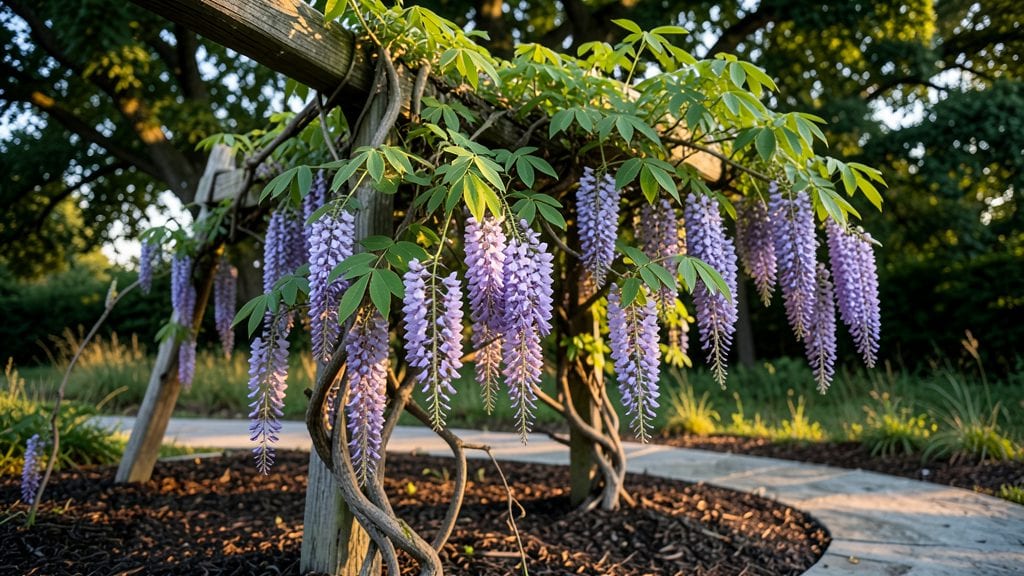
These live wisteria plants can turn your yard into a fragrant, fast-growing privacy screen in just a few seasons—but only if you plant them right. 🌿 I learned the hard way that skipping prep work means tangled growth and weak vines. support later.
The secret lies in choosing the right variety, preparing the soil properly, and giving those vines something sturdy to climb.
You’ll need healthy nursery stock, well-draining soil rich in organic matter, and a trellis or arbor at least 10 feet tall—wisteria grows aggressively. Plant in early spring while the roots are still dormant, and water deeply for the first two weeks to help them establish.
The right location makes all the difference: full sun and protection from strong winds keep vines thriving.
Within 3-5 years, you’ll have a 20-foot-tall living screen with cascading blooms that perfume the air in spring. The key is patience—prune in late winter to shape growth, and fertilize lightly in early spring.
With the right care, your wisteria will outpace weeds, block nosy neighbors, and become the showstopper of your landscape.
Works best in zones 5-9, though some varieties handle cooler climates. If you’re in a hotter region, opt for Chinese wisteria—it blooms earlier and tolerates heat better. Let’s get those vines growing strong from day one.
📚 In This Guide
- What you need
- Instructions
- Tips and common mistakes
- Wrapping up and next steps
What you need
- ● Live wisteria plants: 1-3 (depending on desired coverage; choose Wisteria sinensis or Wisteria floribunda for best results).
- ● Well-draining potting mix: 5-10 gallons (use a blend of garden soil, compost, and perlite for optimal aeration).
- ● Large containers or garden bed: At least 15-20 gallons per plant (or a 6-foot-wide trench for in-ground planting).
- ● Support structure: A sturdy trellis, arbor, or pergola (8-12 feet tall for climbing).
- ● Organic fertilizer: Balanced 10-10-10 or slow-release wisteria-specific fertilizer (follow package instructions).
- ● Pruning shears: Sharp, bypass-style shears (for trimming and shaping).
- ● Mulch: 2-3 inches of wood chips or straw (to retain moisture and suppress weeds).
- ● Watering can or hose with a gentle spray nozzle: For consistent hydration.
- ● Gloves: Heavy-duty gardening gloves (wisteria thorns are sharp!).
- ● Soil pH test kit: Ideal pH range: 6.0–7.0 (adjust with lime or sulfur if needed).
- ○ Drip irrigation system: (Optional) For automated watering in hot climates.
- ● Winter protection: Burlap or frost cloth (for cold-hardy varieties in zones below 6).
- ● Slow-release plant food: Granular or spike form (applied every 3-4 months).
- ● Decorative stakes or ties: To guide young vines during early growth.
Step-by-Step instructions for planting live wisteria vines
Here’s how to establish your wisteria vines quickly—with the right prep, they’ll grow aggressively from the start.
🌱 Step 1: Choose the Perfect Planting Location
Wisteria thrives in full sun—select a spot with at least 6-8 hours of direct sunlight daily. I always check the site’s afternoon shade patterns first; wisteria needs that late-day warmth to fuel rapid growth. Avoid low-lying areas where cold air settles in winter, as these vines are hardy only down to USDA Zone 5 (though some varieties tolerate Zone 4 with winter protection).
If planting near a structure, ensure the support (trellis, arbor, or fence) is sturdy and installed before planting. These vines can weigh 50+ pounds per stem once mature. I like to sketch the mature vine spread (up to 20 feet wide) to avoid future overcrowding with nearby plants.
🪴 Step 2: Prepare the Soil and Planting Hole
Wisteria roots need well-draining, slightly acidic soil (pH 6.0–7.0). Amend heavy clay with 2–3 inches of compost mixed into the top 12 inches of native soil. Dig a hole twice as wide as the root ball but only as deep—planting too deep suffocates the roots. Place the vine in the hole, ensuring the top of the root ball sits level with the surrounding soil (never buried).
Gently spread the roots outward to encourage a wide, stable base. Fill the hole with the amended soil, pressing lightly to eliminate air pockets. Water deeply (1–2 gallons) to settle the soil and remove any air gaps. I always add a 2-inch layer of mulch around the base (keeping it 3 inches away from the stem) to retain moisture and regulate soil temperature.
☀️ Step 3: Install Support and Train the Vine Early
Immediately after planting, attach the main stem to a strong trellis or arbor using soft plant ties (never wire, which can girdle the stem). Position the support within 3–4 feet of the planting site to encourage upward growth. Wisteria grows fastest when trained vertically—if left unguided, it sprawls and produces fewer flowers. I prune the tips of the main stems by one-third after planting to stimulate bushier growth from the base.
Watch for new shoots emerging from the base within 4–6 weeks. These are your future flowering stems—leave them untouched. If you see suckers growing below the graft union (if using a grafted plant), remove them immediately. They drain energy from the main vine and reduce bloom production.
💧 Step 4: Water and Fertilize for Rapid Growth
Water deeply 2–3 times per week for the first month, keeping the soil consistently moist but not soggy. Wisteria roots are deep but establish slowly—drought stress stunts growth. Reduce watering to once weekly after the first month, but always check that the top 6 inches of soil stay moist. Overwatering in winter can rot the roots, so adjust seasonally.
Fertilize in early spring with a balanced, slow-release fertilizer (10-10-10 or similar). Apply half the recommended rate the first year to avoid burning the young roots. I avoid high-nitrogen fertilizers after flowering season—they encourage leafy growth at the expense of next year’s blooms. Prune back any dead or crossing branches in late winter to improve airflow and sunlight penetration.
✂️ Step 5: Prune Strategically for Year-Round Privacy
Prune wisteria twice yearly for fast, dense growth. In late winter (before buds swell), cut back last year’s growth by half to encourage new, vigorous shoots. Remove weak, crossing, or inward-growing stems to open the center of the plant. In summer (after flowering), trim any overly long or leggy growth to maintain shape and redirect energy to next year’s blooms.
Here’s the thing—wisteria flowers on old wood, so never prune after mid-summer. If you see seed pods forming, remove them immediately unless you want volunteer plants popping up everywhere. I also deadhead spent blooms to redirect energy into foliage growth, which thickens the privacy screen faster.
Tips & tricks for perfect wisteria planting
To get your wisteria vines growing aggressively—and avoid the common pitfalls that slow them down—focus on these key strategies that make all the difference.
Sunlight Strategy: The 6-8 hours of direct sunlight specified in Step 1 are non-negotiable for rapid growth. I've seen wisteria planted in partial shade grow at half the rate—those afternoon sun hours (2-6 PM) are when the plant does most of its energy production. If your location gets less than 6 hours, consider supplementing with a grow light during winter months, especially in Zone 5 or colder climates where days shorten dramatically.
Soil Preparation Secret: When amending your soil in Step 2, go beyond just compost—mix in a handful of perlite or coarse sand to improve drainage, especially if you have clay soil. I've found that wisteria roots establish 30% faster in amended soil with this extra drainage boost. Also, test your soil pH before planting; if it's below 6.0, add pelletized lime to raise it gradually over a few weeks. The goal is that slightly acidic range (6.0-7.0) where roots can access nutrients most efficiently.
Pruning Timing: The twice-yearly pruning schedule in Step 5 is critical, but timing matters just as much as technique. For the late winter pruning (before buds swell), I recommend doing it on a dry, calm day when temperatures are above freezing. This allows fresh cuts to heal properly before spring growth begins. For summer pruning (after flowering), I wait until at least 2 weeks after the last bloom—this ensures all potential flower buds have already formed on the old wood.
Watering Hack: That 1-2 gallon deep watering in Step 2 isn't just about settling the soil—it's about establishing the root zone. I've developed a simple trick: after planting, I water again 3 days later to encourage roots to grow toward that moisture. Then, during the first month's 2-3 weekly waterings, I always water at the outer edge of the root ball rather than at the base. This forces roots to spread outward for better stability and nutrient access.
Pro Tips for Live Wisteria Plants
- To get your wisteria vines growing aggressively—and avoid the common pitfalls that slow them down—focus on these key strategies that make all the difference.
- Sunlight Strategy: The 6-8 hours of direct sunlight specified in Step 1 are non-negotiable for rapid growth.
- Soil Preparation Secret: When amending your soil in Step 2, go beyond just compost—mix in a handful of perlite or coarse sand to improve drainage, especially if you have clay soil.
Frequently asked questions
Got questions about growing live wisteria plants? You’re not alone! Here are answers to the most common concerns—from planting to maintenance—so you can create stunning, fast-growing privacy screens with ease.
When is the best time to plant live wisteria?
Plant wisteria in early spring or fall when temperatures are mild (50–70°F). Avoid extreme heat or frost, as these vines are tender when young. If planting in containers, spring is ideal to give roots time to establish before winter. Pro tip: Soak roots in water for 1–2 hours before planting to reduce transplant shock!
How fast do wisteria vines grow, and how much space do they need?
Wisteria grows 1–2 feet per year (faster with proper care!), but some varieties (like Chinese wisteria) can surge 3+ feet annually. Allocate 10–15 feet of horizontal space per vine—they’re aggressive climbers! Train them on trellises, arbors, or pergolas to control spread. Warning: Prune regularly to prevent overwhelming structures.
How often should I water live wisteria plants?
Water deeply 1–2 times per week for the first year to encourage root growth. Once established, wisteria is drought-tolerant but thrives with 1 inch of water weekly during dry spells. Key trick: Mulch around the base (2–3 inches) to retain moisture and suppress weeds. Avoid soggy soil—wisteria hates "wet feet."
Why isn’t my wisteria flowering? What am I doing wrong?
Wisteria needs 3–5 years of maturity to bloom, but poor care can delay flowers. Common fixes:
- Sunlight: Ensure 6+ hours of direct sun daily—partial shade reduces blooms.
- Pruning: Prune after flowering (late winter/early spring) to encourage new growth.
- Fertilizer: Use a balanced, low-nitrogen fertilizer (e.g., 10-10-10) in early spring.
- Patience: Some varieties (like Japanese wisteria) flower later than others.
Pro tip: If your vine is young, focus on vigorous growth—flowers will follow!
Are there low-maintenance alternatives to wisteria?
If wisteria’s aggressive growth seems daunting, try these fast-growing, lower-maintenance vines:
Plant
Growth Rate
Care Level
Clematis
3–5 ft/year
Moderate (needs support, deadheading)
Honeysuckle
6–10 ft/year
Low (drought-tolerant, fragrant)
Jasmine
2–3 ft/year
Easy (scented, shade-tolerant)
Star Jasmine
3–6 ft/year
Very low (drought-resistant)
Need privacy fast? Opt for bamboo (if non-invasive varieties) or privet hedges for quicker screens.
Wrapping up and next steps
Transforming your space with live wisteria plants is a rewarding journey that blends beauty, functionality, and sustainability. These fast-growing vines offer year-round privacy, vibrant blooms, and a touch of nature’s elegance—perfect for any outdoor or indoor garden.
Whether you’re a seasoned gardener or just starting, now is the time to bring their magic to life!
Ready to take the next step? Start small:
- Choose a healthy plant from a trusted nursery.
- Pick a sunny spot with sturdy support.
- Plant with care and watch your privacy screen grow!