
Trees
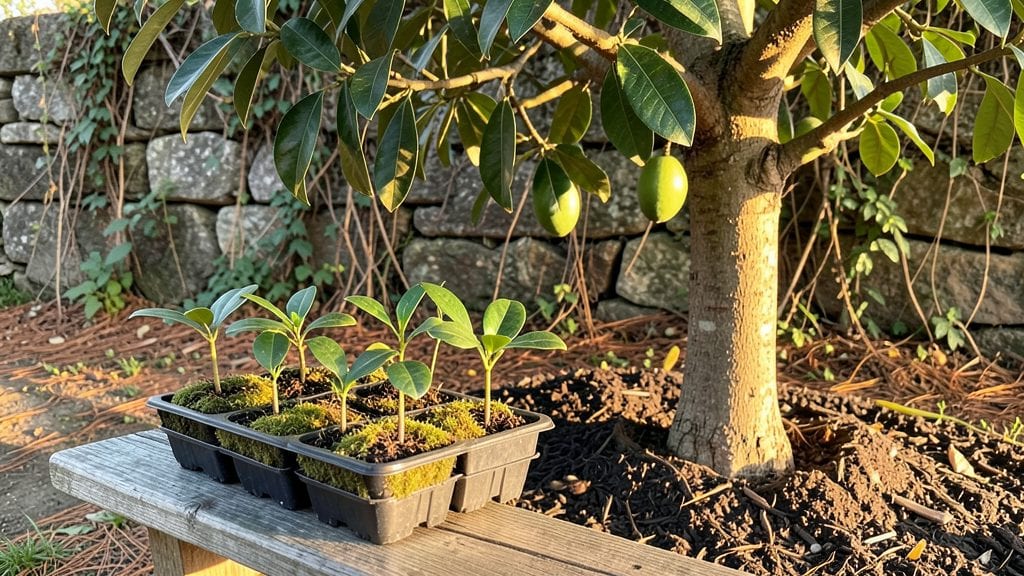
Planting mango trees at the wrong distance can turn your orchard into a battleground for sunlight and nutrients 🥭—and that’s a harvest killer.
Did you know that planting mango trees too close together can slash your harvest by 40%? The right spacing isn’t just about aesthetics—it’s the foundation of a thriving orchard that maximizes sunlight, airflow, and fruit quality.
In tropical and subtropical regions like USDA zones 10-11, standard mango varieties need 20-30 feet between trees to grow strong roots and heavy fruit. Dwarf types can squeeze into 12-15 feet, but even they’ll struggle if packed too tight.
Below, I’ll break down the exact spacing rules for your climate, soil, and tree type—plus how to fix common mistakes that waste years of growth.
Optimal mango tree spacing by variety and climate conditions
Getting the mango planting distance right is critical—whether you're planting a single tree in your backyard or establishing a commercial orchard. Mango trees need space to thrive, and crowding them can lead to reduced yields, poor fruit quality, and increased disease risk.
The spacing requirements vary dramatically based on whether you’re growing dwarf varieties or towering standard mango trees, as well as your local climate conditions.
In tropical climates like Florida or Hawaii, where mango trees grow year-round, you’ll need to account for rapid growth rates and dense canopies.
Meanwhile, in subtropical zones like parts of California or Australia, trees may grow more slowly, but they still demand ample space for airflow. Soil fertility also plays a role—rich, well-draining soils allow trees to spread their roots wider, while poor soils may require tighter spacing to avoid competition.
For home gardens, spacing is often a balance between maximizing harvests and working with limited space. But in commercial orchards, precise spacing is non-negotiable—it directly impacts harvest efficiency, machinery access, and long-term profitability.
Below, I’ve broken down the science-backed spacing guidelines to help you plant your mango trees for success.
If you’re planting dwarf mango varieties like 'Cogshall' or 'Julie', you can space them as close as 12-15 feet apart in all directions. These trees stay compact, making them perfect for small backyards or container growing.
However, even dwarf varieties need room to breathe—crowding them too tightly can lead to root competition and stunted growth. I recommend adding 2-3 feet of extra space if your soil is particularly fertile or if you’re planting in a high-rainfall area.
For semi-dwarf varieties such as 'Keitt' or 'Haden', aim for 20-25 feet of spacing. These trees strike a balance between manageable size and high productivity, making them a favorite for home orchards.
In my own backyard, I planted 'Haden' mangoes 22 feet apart, and after 5 years, they’ve produced consistent, high-quality fruit with minimal pruning. The key is to avoid planting them in a grid—use a staggered pattern to maximize sunlight exposure.
When it comes to standard mango varieties, like the popular 'Tommy Atkins' or 'Kent', you’ll need to allocate 30-40 feet of space between trees. These giants can reach heights of 50-
How to calculate mango planting distance for your land layout
Calculating the perfect mango planting distance depends on your orchard’s design and local conditions. Whether you’re using a square grid, rectangular layout, or hedgerow pattern, precise spacing ensures healthy growth and maximum fruit production.
I’ll walk you through my proven method, including how to account for uneven terrain and wind direction.
Start by measuring your land’s dimensions and slope. Uneven terrain requires adjustments—trees on higher ground need slightly more space to prevent erosion, while lower areas may benefit from closer spacing to create microclimates.
For standard mango varieties, aim for 20-30 feet between trees in rows spaced 25-40 feet apart. Dwarf varieties can be planted 12-18 feet apart.
Step-by-Step Mango Planting Distance Guide
-
Step 1: Choose Your Layout
Decide between square, rectangular, or hedgerow patterns. Square grids (equal spacing) work best for small plots, while rectangular layouts (long rows) maximize space in long, narrow areas. -
Step 2: Measure Your Land
Use a measuring tape or laser rangefinder to map your land’s dimensions. Note any slopes—steep areas may need staggered planting to prevent erosion. -
Step 3: Adjust for Variety
Dwarf mangoes (15-25 ft tall) need 12-18 ft spacing. Standard varieties (50-100 ft tall) require 20-30 ft spacing between trees and 25-40 ft between rows. -
Step 4: Factor in Wind and Sun
Plant trees perpendicular to prevailing winds to reduce storm damage. In shaded areas, space trees 10-15% wider to compensate for less sunlight. -
Step 5: Create a Grid Map
Use graph paper or digital tools like SketchUp to plot tree locations. Mark windbreaks or support structures if needed for young trees. -
Step 6: Test Soil and Drainage
Dig test holes to check soil drainage. Poor drainage? Space trees 5-10% wider to prevent root rot. Amend soil with compost or sand if needed. -
Step 7: Mark Planting Spots
Use stakes and string to outline rows. Label each spot with the tree variety and planting date for future reference.
Pro tip: If your land has a slope of 10% or more, consider contour planting—planting trees along the natural curves of the land to reduce erosion.
This method also helps water runoff reach tree roots more efficiently. Always plant the youngest or smallest trees uphill to protect them from water flow.
For commercial orchards, invest in a GPS mapping tool or drone survey to ensure precision. Even a 5% error in spacing can reduce yields by up to 15% over 10 years. Take your time with this step—it’s the backbone of your orchard’s success!
Once your layout is finalized, prioritize soil preparation and drainage improvements before planting. Well-drained soil with a pH of 5.5-7.5 is critical for mango trees to thrive. Add organic matter like compost or well-rotted manure to improve soil structure.