Diseases
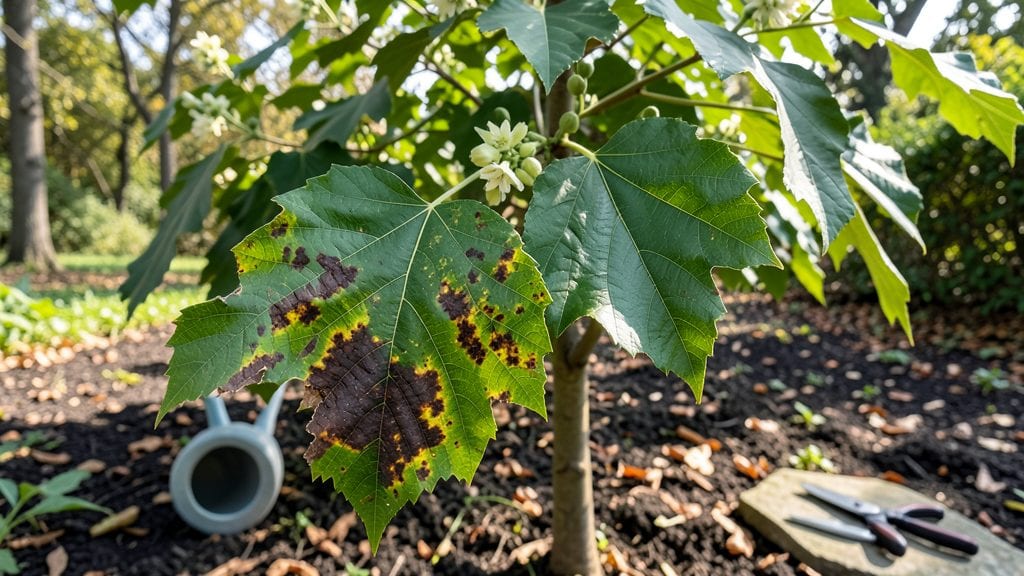
Mulberry plants fighting fungal diseases can still thrive—you just need to spot the warning signs early. 🌿 I’ve seen powdery white spots on leaves turn into full-blown infections if ignored, and I’ll show you how to stop that in its tracks before it spreads.
The key is knowing what to look for: dark patches, weird growths, or leaves that suddenly curl up like they’re hiding.
Most of these fungal foes love damp, shady conditions—so proper airflow and sunlight are your first line of defense. I’ll walk you through the seven most common diseases, from anthracnose to powdery mildew, and explain why they attack mulberries in the first place.
Think of it as a cheat sheet for diagnosing what’s wrong with your plant before it’s too late.
Once you identify the problem, the fixes are simple but effective: neem oil sprays, copper fungicides, or even homemade baking soda solutions for mildew. You’ll see your mulberry bounce back within a few weeks if you act fast—no more blackened berries or drooping branches ruining your harvest.
This works for both backyard trees and container-grown mulberries, so whether you’ve got one plant or a whole grove, these steps will save your leaves—and your patience. Let’s get those plants healthy again.
Root Causes of Mulberry Ailments
Understanding why mulberry plants fall prey to diseases starts with recognizing the perfect storm of environmental, biological, and human factors that create the ideal conditions for fungal invaders. Unlike some hardy plants, mulberries thrive in specific conditions—but when those conditions shift, so does their susceptibility.
Here’s a breakdown of the key culprits and the science behind their attacks.
Fungi love humidity, warmth, and stagnant moisture—basically, a mulberry plant’s worst nightmare. When these conditions align, fungal spores explode in activity.
- Excessive Moisture 💦: Mulberries hate "wet feet." Overwatering, poor drainage, or heavy rainfall creates a soggy soil environment, where fungal spores like Botryosphaeria (causing dieback) or Colletotrichum (anthracnose) germinate and spread like wildfire. Think of it as a fungal spa—too much water = party time for pathogens.
- High Humidity & Poor Airflow 🌬️: Fungal spores hitchhike on humid air. If your mulberry grove is crowded or shaded with little airflow, spores linger longer, increasing infection rates. Pro tip: 💡 Prune strategically to improve circulation and reduce humidity pockets near the canopy.
- Temperature Swings ❄️☀️: Sudden temperature shifts (like cold snaps followed by warm spells) stress the plant, weakening its defenses. Fungi like Phomopsis (a common mulberry blight) pounce on stressed tissue, exploiting the plant’s vulnerability.
Healthy soil = healthy mulberry. But when soil chemistry goes haywire, diseases move in like squatters.
- Compacted or Waterlogged Soil 🏗️: Compacted soil stifles roots, reducing oxygen uptake and trapping excess moisture. This creates the perfect breeding ground for root-rotting fungi like Armillaria (honey fungus). Action step: 🔥 Loosen soil annually with organic matter (compost or mulch) to improve drainage.
- Nutrient Deficiencies 🍽️: A mulberry starved of potassium (K) or phosphorus (P) becomes a weakling, struggling to produce strong cell walls. Fungi like Cercospora (leaf spot) target these weak spots with ease. Fix it: 🌡️ Conduct a soil test and amend with balanced fertilizer (e.g., 10-10-10 NPK).
- Toxic Soil pH 🧪: Mulberries prefer slightly acidic to neutral soil (pH 6.0–7.0).
If your soil is too acidic (pH <5.5) or alkaline (pH >7.5), it disrupts beneficial microbes and weakens the plant’s immune response. Solution: 🎯 Use lime to raise pH or sulfur to lower it, based on test results.
Fungi don’t work alone—sometimes they team up with pests to take down mulberries faster.
- Insect Damage as Entry Points 🐜: Chewing insects (like mulberry pyralid moths or scale insects) create open wounds on leaves and bark.
Fungi like Venturia (a mulberry leaf blight) slip in through these gaps, causing secondary infections. Prevent it: 🔪 Use neem oil or horticultural oil to deter pests before they strike.
- Contaminated Tools & Pruning Wounds ⚔️: Dirty pruning shears can transfer fungal spores from infected branches to healthy ones.
If you cut a branch and leave a jagged wound, fungi like Fusarium (a vascular wilt pathogen) infiltrate the plant’s vascular system. Rule of thumb: ✨ Sterilize tools with 70% isopropyl alcohol between cuts and seal pruning wounds with pruning paint.
- Dormant Spore Banks in Soil 🏺: Some fungi (like Rhizoctonia, which causes damping-off in seedlings) linger in the soil for years as dormant spores.
When conditions are right (warm, wet), they reactivate and attack new mulberry growth. Break the cycle: 🌱 Practice crop rotation and avoid planting mulberries in the same spot for 3–4 years.
Even the best-intentioned gardener can accidentally invite fungal trouble.
- Overhead Watering 💦🌧️: Splashing water onto leaves spreads spores like a fungal game of telephone. Instead of soaking the soil, use drip irrigation or soaker hoses to keep foliage dry.
- Ignoring Sanitation 🧹: Leaving fallen leaves, infected fruit, or dead branches on the ground is like rolling out a welcome mat for fungi. These debris piles harbor spores and reinfect healthy plants. Quick fix: 🔥 Remove and dispose of (not compost!) infected plant material promptly.
- Stress from Improper Pruning ⏰✂️: Heavy pruning during active growth periods (spring/summer) stresses the plant, making it susceptible to infections. Timing matters: 🌿 Prune in late winter/early spring (dormant season) to minimize stress.
Key Takeaway: Mulberry diseases thrive when conditions are just right—too much moisture, poor airflow, weak plants, or human errors. By controlling these factors, you can starve out fungi before they throw a party in your grove. Stay vigilant, and your mulberries will stay strong and disease-free!
Quick Fixes for Mulberry Plant Troubles
Now that you’ve identified the issue plaguing your mulberry plants, it’s time to roll up your sleeves and get them back to thriving! Below are practical, step-by-step solutions tailored to each common fungal disease, along with prevention tips to keep your plants healthy long-term.
Think of this as your mulberry plant’s emergency first aid kit—simple, effective, and easy to follow.
**🔥 Cause: Fungal spores thriving in wet, humid conditions 🍳 Fix It Fast: 1. Remove infected leaves and branches 🔪—Cut them off at the base and dispose of them in the trash (not compost). This stops the spores from spreading.
- Apply a fungicide 🛡️—Use a copper-based fungicide (like Bordeaux mixture) or a neem oil solution (2 tbsp neem oil + 1 tsp mild soap per gallon of water). Spray both the top and bottom of leaves every 7–10 days until new growth appears.
- Improve airflow 🌬️—Thin out dense foliage and prune branches to allow sunlight and air to circulate. Avoid overhead watering.
💡 Prevention Pro Tips:
- Water in the morning so leaves dry quickly.
- Space plants 6–8 feet apart to reduce humidity buildup.
- Clean pruners with rubbing alcohol between cuts to avoid cross-contamination.
🔥 Cause: White fungal growth on leaves (like dust) 🍳 Fix It Fast:
- Wipe off mildew 🧼—Use a soft cloth or sponge dipped in mild soapy water (1 tsp dish soap + 1 quart water) to gently scrub infected leaves.
- Spray with baking soda solution 🍞—Mix 1 tsp baking soda + 1 tbsp horticultural oil + 1 quart water, then spray every 5–7 days until the mildew disappears.
- Boost plant resilience 🌱—Apply a compost tea or fish emulsion to strengthen the plant’s natural defenses.
💡 Prevention Pro Tips:
- Avoid overhead watering—Use a drip irrigation system or water at the base.
- Plant mulberries in full sun (6+ hours/day) to reduce humidity.
- Rotate fungicides to prevent resistance—alternate between neem oil, sulfur, and potassium bicarbonate.
🔥 Cause: Overwatering + poor drainage = soggy, dying roots 🍳 Fix It Fast:
- Stop watering immediately 🚰—Let the soil dry out completely before watering again.
- Improve drainage 🏗️—Amend the soil with perlite, sand, or compost to loosen it. If in a pot, add drainage holes if missing.
- Repot if needed 🌿—If roots are mushy and black, trim the rotten parts with sterilized scissors, then repot in fresh, well-draining soil.
- Apply a fungicide 🛡️—Use mycorrhizal fungi or Trichoderma harzianum (a beneficial soil fungus) to outcompete the bad guys.
💡 Prevention Pro Tips:
- Water only when the top 2 inches of soil are dry—stick your finger in to check!
- Avoid planting in low-lying areas where water pools.
- Use raised beds or containers if your garden has heavy clay soil.
🔥 Cause: Orange pustules on leaves (spores spread by wind/rain) 🍳 Fix It Fast:
- Remove and destroy infected leaves 🗑️—Burn or trash them do not compost.
- Spray with copper fungicide 🛡️—Apply copper sulfate or copper hydroxide every 10–14 days until new growth is rust-free.
- Isolate the plant 🏝️—Keep it away from other mulberries or susceptible plants (like grapes or roses) to prevent spread.
💡 Prevention Pro Tips:
- Prune for airflow—Remove crowded branches to reduce humidity.
- Apply a preventative spray in early spring (before spores spread).
- Plant resistant varieties if possible (e.g., some hybrid mulberries are less prone to rust).
🔥 Cause: Water splashing on leaves spreads bacteria 🍳 Fix It Fast:
- Prune infected areas ⚔️—Cut off only the most severe spots (bacteria can’t be cured, so focus on containment).
- Spray with copper or streptomycin 💊—Use a copper fungicide or streptomycin antibiotic spray (follow label instructions).
- Sterilize tools 🧼—Wipe pruners with rubbing alcohol between cuts.
💡 Prevention Pro Tips:
- Water at the base, never overhead 💦.
- Remove fallen leaves to reduce bacterial buildup.
- Rotate copper-based sprays with fixed copper or mancozeb to avoid resistance.
No matter the disease, these universal tips will help your mulberry bounce back:
- Feed with compost or balanced fertilizer (10-10-10) in spring.
- Mulch around the base (2–3 inches of wood chips) to regulate soil moisture.
- Monitor regularly—Check leaves weekly for early signs of trouble.
✨ Final Thought: Most mulberry diseases are preventable with good hygiene and smart watering. Once you’ve treated the issue, consistency is key**—stick with your prevention plan to keep your plants happy and healthy! 🌿💪
Frequently asked questions about mulberry plant diseases
What are the first signs my mulberry tree might have a fungal disease?
Look for yellowing leaves, dark spots with fuzzy edges, or white powdery coatings on foliage. Early symptoms often appear on older leaves first—check the undersides too, where spores love to hide. Catching these signs early lets you treat the issue before it spreads.
Can I use household items like baking soda to treat mulberry diseases?
A baking soda spray (1 tsp baking soda + 1 tbsp horticultural oil + 1 quart water) works wonders against powdery mildew and early-stage fungal infections. Just spray it on dry leaves in the morning for best results. For severe cases, combine it with a copper fungicide.
How do I know if my mulberry plant has root rot or just needs more water?
Root rot causes wilting leaves even when soil is wet, yellowing foliage, and a foul smell from the roots. Stick your finger in the soil—if it's soggy for more than 2 days after watering, that's your warning sign. Healthy mulberries should have slightly dry topsoil between waterings.
Will pruning help prevent mulberry diseases?
Yes! Pruning improves airflow and removes infected branches before spores spread. Always use sterilized tools (wipe with rubbing alcohol) and prune in late winter when the plant is dormant. Remove any dead or crossing branches first—they're disease magnets.
Can I save a mulberry tree that's already heavily infected?
It depends on the disease. For fungal issues like anthracnose or rust, aggressive pruning and fungicide treatments can often revive the plant. If it's bacterial blight or advanced root rot, the tree may need removal to protect nearby plants. Always quarantine infected specimens immediately.