Diseases
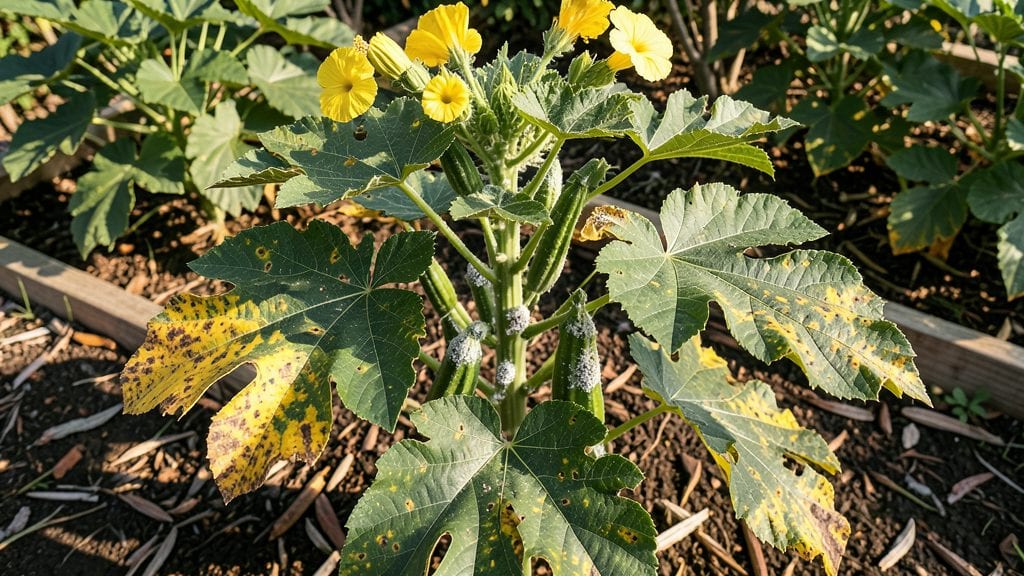
Okra plant diseases can turn your thriving garden into a fungal battleground faster than you think. 🌱 I’ve lost entire crops to creeping spots and wilting leaves, but I’ve also learned how to spot trouble early and stop it before it spreads.
The key is recognizing the five most destructive fungal threats—each with its own telltale signs and treatment.
Most fungal diseases thrive in warm, humid conditions, which is why okra—loved in Southern gardens—gets hit harder than other crops. Poor airflow, overwatering, or old plant debris give these pathogens the perfect foothold.
The good news? Organic sprays like neem oil or copper fungicide work wonders when you catch the problem early, and simple fixes like spacing plants properly can prevent outbreaks entirely.
By the time you see blackened stems or yellowing leaves, it’s often too late for quick fixes. But with the right knowledge, you’ll spot early warning signs—like tiny brown speckles on leaves or powdery white residue—and act before your plants collapse.
The goal isn’t just to save what’s left; it’s to protect your next harvest.
This guide covers the five worst offenders, from charcoal rot to powdery mildew, with step-by-step solutions tailored to home gardens. Whether you’re in the Deep South or a hotter climate zone, these strategies will keep your okra standing strong all season long.
Root Causes Of Okra Decline
Okra plants may seem resilient, but they’re not immune to the sneaky pathogens, environmental stressors, or cultural mistakes that trigger diseases. Understanding why these issues arise is half the battle—because once you know the culprit, you can outsmart it.
Below, we break down the key reasons okra plants fall victim to fungal threats, from soil-born villains to weather-related weak spots.
Fungi thrive in moist, warm environments, and okra’s tropical roots make it a prime target. Here’s why:
- Overhead irrigation: Water droplets linger on leaves, creating the perfect fungal buffet. Phytophthora blight and powdery mildew exploit this by spreading via splashing water.
- Poor air circulation: Dense plantings or crowded rows trap humidity. Fungi like Colletotrichum (causing anthracnose) spread faster when spores can’t dry out.
- Nighttime dew: Okra’s love for heat means it’s often grown in regions with heavy morning dew. Fungal spores germinate in these conditions, infecting plants before the sun evaporates the moisture.
💡 Pro Tip: Use drip irrigation or soaker hoses to keep foliage dry, and space plants 18–24 inches apart for airflow.
Okra is a heat-lover, but sudden temperature shifts or prolonged stress weaken its defenses, making it vulnerable:
- Heatwaves without rain: Drought stress reduces chlorophyll, turning leaves yellow and making plants more susceptible to Alternaria leaf spot.
- Cold snaps: Okra hates temps below 50°F (10°C). Chilled plants develop water-soaked lesions, entry points for Fusarium wilt.
- Flooding: Waterlogged soil cuts off oxygen, causing root rot (often from Pythium or Phytophthora). Roots suffocate, and fungi move in.
🌡️ Key Insight: Okra needs consistent warmth (75–90°F / 24–32°C) and well-draining soil. Mulch with straw to regulate soil temp and prevent flooding.
A hungry or imbalanced soil is a disease magnet. Okra needs specific nutrients to stay strong:
| Nutrient Deficiency | How It Weakens Okra | Fungal Risk |
|---|---|---|
| Nitrogen (N) | Yellowing leaves (chlorosis) reduce photosynthesis, starving the plant. | Powdery mildew (lacks energy to fight off spores). |
| Phosphorus (P) | Stunted roots can’t absorb water/nutrients, leading to wilting. | Fusarium wilt (roots can’t fight invasion). |
| Potassium (K) | Weak cell walls make plants prone to osmotic stress. | Phytophthora root rot (cells burst easily). |
| Zinc (Zn) or Iron (Fe) | Interveinal chlorosis (yellow veins) signals poor enzyme function. | Anthracnose (weakened tissue can’t resist spores). |
💡 Pro Tip: Test soil before planting—aim for a pH of 6.0–6.8. Add compost or a balanced fertilizer (10-10-10) to prevent deficiencies.
Fungal spores hibernate in old plant matter and on garden tools. Here’s how they strike:
- Infected crop residues: Leaving last year’s okra stalks or fallen pods in the soil leaves Colletotrichum or Alternaria spores ready to reinfect.
- Reused tools: Pruners or shovels contaminated with Fusarium can transfer spores to healthy plants when cutting or transplanting.
- Windborne spores: Fungi like powdery mildew spread via air currents, especially in monoculture okra fields.
✨ Prevention Hack: Sterilize tools with 70% rubbing alcohol or a 10% bleach solution. Remove and compost (not reuse!) old okra debris.
Now that you know the why, the next step is how to stop it. Stay tuned for actionable fixes—because armed with science, you’ll keep your okra thriving! 🚀
How to solve it
Okra plants may seem tough, but fungal diseases can turn a thriving garden into a sad, wilted mess—fast. The good news? With the right approach, you can save your crop and keep your okra plants healthy.
Below are targeted solutions for each of the five most devastating fungal threats, along with prevention tips to stop them before they start. Let’s roll up our sleeves and get to work! 🌱🛡️
Cause: Colletotrichum spores thrive in humid, warm conditions, infecting leaves, stems, and pods. Fix It:
- 🔪 Remove infected foliage immediately – Snip off yellowing or dark-spotted leaves and dispose of them in the trash (not compost).
- 💦 Space plants for airflow – Okra needs 12–18 inches between plants to reduce humidity buildup.
- 🍯 Apply fungicide at first sign – Use copper-based sprays (like Bordeaux mixture) or neem oil (1 tsp per quart of water) every 7–10 days.
- 🌡️ Water at the base, not overhead – Wet leaves = fungal buffet. Use drip irrigation or water early in the day.
💡 Pro Tip: Rotate crops—don’t plant okra in the same spot next year—this breaks the fungal cycle.
Cause: Erysiphe or Leveillula fungi coat leaves in white, powdery patches, stunting growth. Fix It:
- 🧼 Scrub leaves with a baking soda spray (1 tsp baking soda + 1 tsp oil + 1 gallon water + a drop of dish soap). Spray both sides of leaves every 5–7 days.
- 🌿 Boost airflow – Prune crowded plants and avoid mulching too close to stems.
- 🛡️ Use reflective mulch – Lay white plastic sheeting around plants to reduce humidity and reflect sunlight (which powdery mildew hates).
- 🌱 Choose resistant varieties – Look for ‘Clemson Spineless’ or ‘Emerald’, which tolerate mildew better.
✨ Prevention Hack: Sulfur dust (applied at dusk) can prevent outbreaks before they start.
Cause:** Fusarium oxysporum clogs plant vascular tissue, causing yellowing, wilting, and death. Fix It:
- 🌱 Remove and destroy infected plants – Do not compost—burn or bag them to prevent spore spread.
- 🔄 Rotate crops aggressively – Wait 3–4 years before replanting okra or related plants (like eggplant) in the same spot.
- 💧 Avoid overwatering – Fusarium thrives in soggy soil. Use well-draining soil and water deeply but infrequently.
- 🌿 Plant resistant varieties – ‘Jumbo Green’ and ‘Perennial Okra’ show better resistance.
- 🌱 Boost soil health – Add compost and mycorrhizal fungi to strengthen plant defenses.
🎯 Long-Term Strategy: Test soil for pH balance (6.0–6.8)—Fusarium loves acidic soil.
Cause: Pseudomonas syringae creates water-soaked spots that turn brown and spread fast. Fix It:
- 🧼 Clean tools and hands – Sterilize pruners with rubbing alcohol between cuts.
- 💧 Water in the morning – Wet leaves stay damp too long, spreading bacteria. Avoid evening watering.
- 🛡️ Spray copper fungicide (like Cupric Hydroxide) every 10 days once symptoms appear.
- 🍄 Remove infected leaves immediately – Prevent spores from spreading to healthy growth.
- 🌱 Use row covers – Floating fabric row covers block bacteria while allowing light and air.
🔥 Emergency Move: If 50%+ of leaves are infected, pull the plant to save the rest.
Cause:** Sclerotium rolfsii forms white, cottony mats and hard black sclerotia (disease "seeds"). Fix It:
- 🛡️ Create a physical barrier – Lay plastic mulch or cardboard around plants to block sclerotia from soil contact.
- 🔥 Burn or bury infected plants – Do not compost—this fungus survives for years in soil.
- 🌱 Use raised beds with fresh soil – Avoid planting in infested garden areas for at least 1 year.
- 🍄 Apply botanical fungicides like Trichoderma harzianum** (a natural soil fungus that fights Sclerotium).
- 💧 Reduce nighttime watering – Southern blight loves moisture—water early in the day so soil dries by evening.
🌡️ Heat Trick: Mulch with straw, not wood chips—wood chips trap moisture, fueling the blight.
To keep fungal diseases at bay, follow this year-round routine:
- ✅ Rotate crops – Never plant okra in the same spot two years in a row.
- ✅ Sterilize tools – Wipe pruners with bleach or alcohol between uses.
- ✅ Improve drainage – Raise beds or amend soil with sand/compost if it’s clay-heavy.
- ✅ Monitor humidity – Use a hygrometer—keep it below 70% with proper spacing and airflow.
- ✅ Buy disease-free seeds – Check labels for fungus-resistant varieties.
- ✅ Test soil pH – Aim for 6.0–6.8—most fungi thrive in extreme pH.
Final Thought: Fungal diseases are manageable, not hopeless. Act fast, stay vigilant, and your okra plants will bounce back stronger** than ever! 🚀🌿
Frequently asked questions about okra plant diseases
How do I tell if my okra plants have a fungal infection vs. bacterial infection?
Fungal diseases often show up as powdery coatings (like mildew) or dark, circular spots with fuzzy edges. Bacterial infections usually create water-soaked lesions that turn brown/yellow and ooze when pressed. Check the undersides of leaves—fungi often start there, while bacteria spread faster on leaf surfaces.
Can I still harvest okra pods from plants showing early signs of disease?
Yes, but only if the pods themselves are healthy and the disease is limited to leaves or stems. Remove all infected foliage immediately, then dispose of it in the trash (not compost). Always harvest with clean hands and sterilized tools to prevent spreading spores. Never harvest from plants with Fusarium wilt—it’s contagious.
What’s the fastest way to stop powdery mildew on okra?
Mix a baking soda spray (1 tsp baking soda + 1 tsp oil + 1 gallon water + a drop of dish soap) and apply it to both sides of leaves every 5–7 days. For severe cases, use neem oil (1 tsp per quart of water) or a reflective mulch (like white plastic) to reduce humidity. Prune crowded plants to improve airflow immediately.
Why does my okra keep getting diseases even after treating it?
Persistent diseases usually mean fungal spores remain in the soil or environmental conditions (like high humidity) aren’t addressed. Rotate crops for 3–4 years, sterilize tools, and improve drainage. Test your soil pH—most fungi thrive in acidic or waterlogged conditions. Avoid overhead watering and space plants 18–24 inches apart.
Are there okra varieties that naturally resist fungal diseases?
Yes! Look for ‘Clemson Spineless’, ‘Emerald’, or ‘Jumbo Green’—these varieties show better resistance to powdery mildew, anthracnose, and Fusarium wilt. Always check seed packets for disease-resistant labels. Starting with healthy stock is half the battle!