
Watering
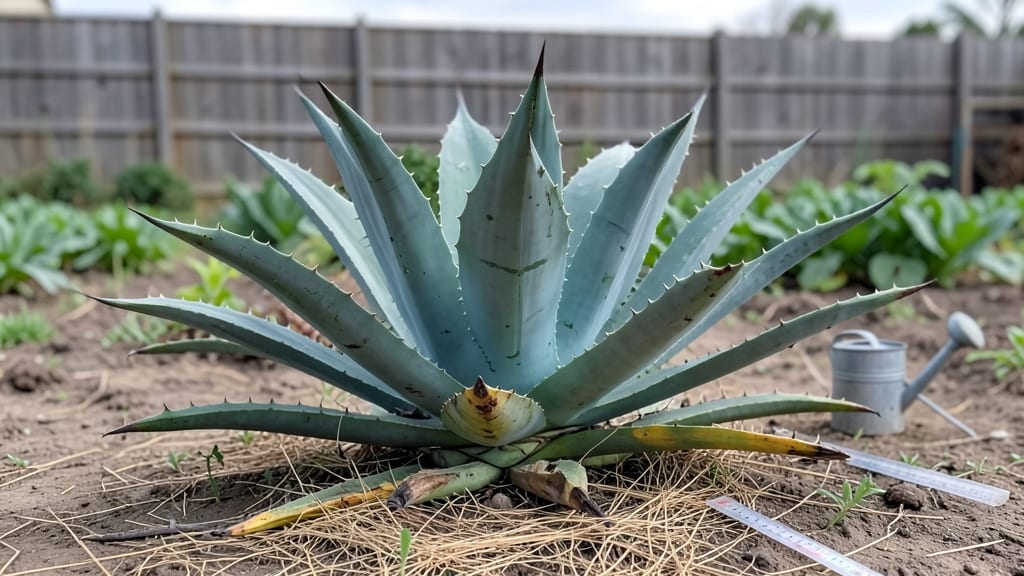
An agave plant with mushy leaves and yellowing tips is a clear sign of overwatering—something I've fixed more times than I'd like to admit. 🌱 The good news? Most agave plants bounce back with the right care, even when roots start rotting.
I've saved dozens by cutting out the damaged parts and letting the plant dry out completely before repotting in fresh, gritty soil.
The root of the problem (pun intended) is usually too much moisture combined with poor drainage. Agaves thrive on neglect—think of them as desert survivors, not tropical houseplants. They need soil that dries out between waterings and containers with drainage holes.
Once you've adjusted your watering schedule to "only when the soil is bone-dry," you'll see new growth within weeks.
What you'll end up with is a sturdy, healthy agave that looks like it belongs in a sunbaked landscape, not a soggy corner. The leaves will turn back to their signature blue-green, the rosette will tighten up, and you'll have the confidence to water less often.
For severe cases where the rot has spread too far, professional help might be needed—but most agaves respond beautifully to this simple rescue plan.
This method works for both indoor agaves and those growing in containers outdoors. The key is patience: agaves recover faster when you let them dry out completely between waterings. Once you've mastered this, you'll never overwater them again—and that's a promise.
Root Rot’s Silent Invitation
When your agave plant starts looking like a soggy pancake instead of a sturdy succulent, the culprit is almost always excessive moisture. Agaves are desert survivors—thriving in arid conditions where water is scarce—but when they’re overwatered, their roots suffocate, leading to a cascade of problems.
Let’s break down the real reasons this happens, so you can fix it before it’s too late.
Agaves store water in their leaves, not their roots, so they don’t need frequent watering—especially in humid climates or during cooler months. If you’re watering on a schedule (like every week) without checking soil moisture, you’re likely drowning your plant. Here’s why:
- Poor drainage: Agaves hate sitting in wet soil. If your pot lacks drainage holes or the soil retains too much moisture (like clay or peat-heavy mixes), water pools at the roots, creating anaerobic conditions.
- Ignoring the "soak-and-dry" rule: Agaves need time to dry out between waterings. If you water again before the top 2–3 inches of soil are bone-dry, you’re inviting root rot.
- Seasonal mistakes: Watering an agave the same way year-round is a recipe for disaster. In winter or rainy seasons, cut back dramatically—some agaves can go months without water.
Pro tip: 💡 Stick your finger 2 inches into the soil—if it’s damp, wait. If it’s dry, water deeply (until it runs out the drainage holes) and let it dry completely before the next watering.
Not all potting mixes are created equal. Agaves need fast-draining, gritty soil to mimic their natural rocky desert habitat. If you’re using regular garden soil, peat-based mixes, or anything without perlite/pumice, here’s what’s happening:
- Compacted soil: Heavy or clay-based soils don’t allow air or water to escape, trapping moisture around roots.
- Lack of aeration: Roots need oxygen. Dense soil suffocates them, making them vulnerable to fungal infections like Phytophthora.
- Organic matter overload: Too much compost or peat holds water like a sponge, keeping roots soggy for days.
Fix it: 🌡️ Swap your soil for a cactus/succulent mix (or DIY with 60% mineral grit, 30% potting soil, and 10% perlite). Add a handful of coarse sand or orchid bark to improve drainage.
Your agave’s container plays a huge role in how quickly it gets overwatered. Here’s how pots contribute to the problem:
| Issue | Why It’s Bad |
|---|---|
| Too-large pots | Extra soil stays damp longer, encouraging rot. Agaves should be root-bound—repot only when roots circle the bottom. |
| Terracotta vs. plastic | Plastic pots trap moisture; terracotta wicks water away. If you’re using plastic, you’ll need to water less frequently. |
| No drainage holes | Water has nowhere to go—roots sit in a swamp. Non-negotiable: Drill holes if needed. |
Action step: ✨ If your pot lacks drainage, elevate it on a saucer with pebbles or move it to a cache pot (a decorative outer pot with drainage).
Agaves are drought-loving, but high humidity or cool temperatures trick them into thinking it’s "wet season." Here’s how your climate might be sabotaging your plant:
- Humid air: In tropical or indoor environments (like bathrooms), moisture lingers in the air, slowing evaporation from the soil.
- Cool temperatures: Agaves grow slower in <60°F (15°C), so they don’t absorb water as quickly—leading to waterlogged roots.
- Rainy seasons: Outdoor agaves in monsoon climates need zero supplemental water until the ground dries.
Adjust for humidity: 🎯 If your home is humid, reduce watering by 50% and ensure airflow (a small fan near the plant helps). For outdoor agaves, move them to a sheltered, sunny spot during rain.
Revive Your Agave Now
Overwatering can turn your agave into a sad, mushy mess—but don’t give up! With the right steps, you can nurse it back to health (or at least salvage what’s left).
Below, we’ll tackle the most common causes of an overwatered agave and show you how to fix them, plus how to keep your plant thriving long-term.
If your agave’s roots are drowning, the first step is to stop watering immediately and let the soil dry out completely. Agaves are succulents—they store water in their leaves, not their roots—so soggy soil is their enemy.
How to fix it:
- 🔥 Remove the plant from its pot and gently shake off excess soil to inspect the roots.
- 👨🍳 Trim any black, mushy roots (healthy roots are firm and white). Use clean, sharp scissors or pruners.
- 🥘 Repot in fresh, well-draining soil—mix cactus or succulent soil with perlite or pumice (1:1 ratio) to improve drainage.
- ⏰ Let it dry for 3–5 days before watering again. Place it in a spot with bright, indirect light.
Prevention tip: 💡 Use a pot with drainage holes and a cache pot (a decorative outer pot with a tray underneath) to catch excess water.
If water pools at the bottom of the pot, your agave has no escape from overwatering. Even if you water lightly, compacted or water-retentive soil can suffocate roots.
How to fix it:
- 🔪 Drainage check: If your pot has no holes, repot immediately into one that does.
- 🍳 Soil refresh: Replace old soil with a fast-draining mix (try 60% mineral soil + 30% perlite + 10% coarse sand).
- 🌡️ Elevate the pot on pebbles or a grid to prevent water from sitting in the saucer.
Pro tip: ✨ Test your soil’s moisture by sticking your finger 1–2 inches deep—if it’s damp, wait before watering.
If your agave’s leaves are turning yellow, mushy, or collapsing, root rot may have spread. This is an emergency—delaying treatment can kill the plant.
How to fix it:
- 🔥 Assess the damage: If more than 50% of the roots are rotten, the plant may not survive. If it’s early-stage rot, proceed.
- 👨🍳 Prune affected leaves (but leave healthy ones—they’ll help the plant recover).
- 🥘 Treat with fungicide (optional): Spray a copper-based fungicide or hydrogen peroxide (3%) on the roots to prevent fungal growth.
- ⏰ Isolate the plant until it recovers to avoid spreading disease.
Prevention tip: 💡 Water only when the soil is completely dry—stick your finger in; if it’s moist, wait.
Overwatered agaves often get worse because they’re also not getting enough light, slowing their recovery. Weak light + too much water = recipe for rot.
How to fix it:
- 🌡️ Move to bright, indirect light (south or west-facing window is ideal).
- 🔪 If leaves are severely damaged, trim them to reduce stress on the plant.
- 🍳 Gradually reintroduce water—once the soil is dry, give it a light drink and monitor for improvement.
Pro tip: ✨ If you’re in a low-light space, consider a grow light for 6–8 hours a day.
Final Rescue Tip: 🎯 If your agave is beyond saving, don’t despair! Propagate healthy leaves or offsets to grow new plants. Snip a leaf, let it callous over for a few days, then plant it in dry soil—it’ll often root and grow into a new agave!
With these steps, your agave should bounce back in 2–4 weeks. Just remember: less water, more light, and fast-draining soil are the keys to keeping it happy. 🌵✨
Frequently asked questions
How do I know if my agave has root rot from overwatering?
Check for these signs: black, mushy roots (healthy roots are firm and white), yellowing or collapsing leaves, and a foul smell from the soil. If you gently tug on the plant and it slides out easily, the roots are likely rotting. Act fast—trim the bad roots and repot in dry, gritty soil.
Can I save an agave with 70% rotted roots?
It depends on how much healthy tissue remains. If the center leaves are still firm and green, you might salvage it by cutting out all rotten roots and treating with fungicide. However, if over 70% of roots are gone, propagation from healthy leaves or offsets is often more successful than trying to revive the main plant.
Why does my agave keep getting overwatered even when I water less?
This usually means your soil or pot isn't draining properly. Test your mix: press a handful—if it holds shape, it's too dense. Agaves need soil that crumbles easily. Also check your pot material: plastic traps moisture while terracotta wicks it away. Elevate pots on pebbles to prevent water pooling.
How often should I water an agave after recovery?
Once recovered, water only when the soil is completely dry—stick your finger 2-3 inches deep. In summer, this might be every 2-3 weeks; in winter, possibly monthly. Agaves store water in their leaves, so they'd rather go thirsty than soggy. Always use a pot with drainage holes.
Can I use hydrogen peroxide to treat my overwatered agave?
Yes! Mix 1 part 3% hydrogen peroxide with 4 parts water and use it to rinse the roots during repotting. This helps kill fungal spores causing rot. Let the roots air-dry for 24 hours before repotting in fresh, sterile soil to maximize effectiveness.