
Watering
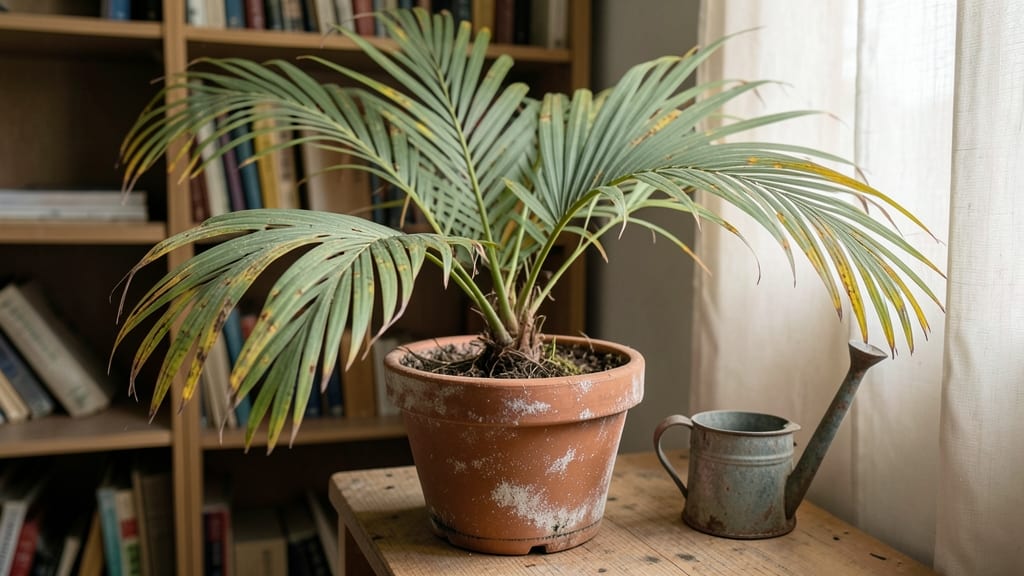
An overwatered palm plant can look like it’s drowning—yellowing fronds, mushy stems, and roots that smell like rot. 🌿 I’ve revived more palms than I’d like to admit, and the first step is always stopping the water.
Most people think palms love moisture, but they’re tropical plants that actually prefer their soil to dry out between drinks.
The damage starts when roots can’t breathe, turning brown and squishy. You’ll see fronds yellowing from the bottom up, and the soil may stay soggy for days. The good news?
With the right care, palms bounce back surprisingly fast. I’ve seen palms recover in as little as 4-6 weeks once you adjust their watering routine and improve drainage.
Start by letting the soil dry out completely between waterings—stick your finger an inch down, and if it’s damp, wait another day. Repot in fresh, well-draining mix if the roots are rotting, and trim any black or mushy fronds at the base.
The key is patience; a palm won’t thank you for rushing its recovery, but it will reward you with fresh, green growth.
This works for indoor palms in pots or outdoor palms in the ground, though container palms need more frequent checks. The biggest mistake? Going back to overwatering once the plant looks better. Think of it like weaning a plant off too much love—gradual adjustments win every time.
Root Causes Of Overwatering
When your palm plant starts looking more like a soggy sponge than a lush tropical beauty, the blame often falls on excessive moisture—but why does this happen in the first place?
Understanding the root causes helps you adjust your care routine before it’s too late. Here’s what’s likely going wrong:
Palms thrive in well-draining soil, but many gardeners unknowingly trap water around their roots. Here’s how it happens:
- Clay or compacted soil: Heavy soils hold water like a sponge, suffocating roots. Without air pockets, oxygen can’t reach the roots, leading to anaerobic conditions—a breeding ground for rot.
- Lack of gravel or perlite: Potting mixes without amendments (like sand, bark, or perlite) compact over time, reducing drainage. Even "palm-specific" mixes can fail if not refreshed.
- No drainage holes: Pots without exit points turn into water traps. Roots sit in stagnant moisture, accelerating decay.
💡 Pro Tip: Test your soil’s drainage by filling a pot with water—if it drains slower than 10 minutes, it’s too dense. Amend with orchid bark or pumice to improve airflow.
Even with good soil, how often you water matters. Palms are drought-tolerant once established, but many gardeners fall into these traps:
- Watering on a schedule: Assuming "every Tuesday" works ignores humidity, season, and pot size. Roots need time to dry between waterings—wait until the top 2–3 inches of soil are bone-dry before revisiting.
- Ignoring seasonal changes: Palms slow down in winter (dormancy) but still get watered like it’s summer. Reduce watering by 50% in cooler months to mimic their natural rhythm.
- Using ice cubes or misting: While trendy, these methods don’t hydrate roots—they create a damp surface that promotes fungal growth. Stick to deep, infrequent watering at the base.
⏰ Actionable Fix: Use a moisture meter or the "finger test" (insert your finger 2 inches deep—if dry, water; if damp, wait). Most palms prefer slightly dry soil over soggy conditions.
Not all pots are created equal. Your container’s material and size directly impact moisture levels:
- Terracotta pots: While porous, they dry out too quickly for palms, leading to inconsistent moisture. Roots can’t establish stability, causing stress.
- Plastic pots: Traps heat and moisture, creating a greenhouse effect that accelerates rot. Add a gravel layer at the bottom to improve airflow.
- Overly large pots: Extra soil stays damp for weeks, even if you water less frequently. Repot into a container just 1–2 inches larger than the root ball to match the palm’s needs.
🔥 Quick Test: If your palm’s pot feels heavier than the plant itself, it’s likely overpotted. Upgrade to a fiber or coconut coir pot for better balance.
Humidity, temperature, and airflow create an invisible watering equation. Get it wrong, and your palm drowns:
- High humidity + no airflow: In bathrooms or kitchens, moisture lingers, slowing evaporation. Use a fan or dehumidifier near the plant to mimic tropical breezes.
- Cold drafts: Palms in drafty windows or AC zones struggle to regulate moisture. Keep temps above 60°F (15°C) and avoid sudden temperature swings.
- No airflow in crowded spaces: Cramming palms with ferns or other moisture-loving plants creates a condensation trap. Space plants 12+ inches apart for better circulation.
🌡️ Science Note: Palms native to dry forests (like the Areca or Kentia) need 30–50% humidity. If your home is drier, use a pebble tray—not to add water, but to increase ambient moisture.
Not all palms drink the same. Some species (like the Majesty Palm) tolerate more moisture, while others (like the Pygmy Date Palm) nearly rot in dampness. Common mistakes:
- Treating all palms equally: Bismarckia nobilis (from Madagascar) hates wet feet, while Cocos nucifera (coconut palm) thrives in coastal humidity.
- Ignoring mature vs. young plants: Seedlings need consistent moisture; mature palms can go weeks without water. Adjust your routine as the plant grows.
- Assuming "tropical" = "thirsty": Many palms evolved in seasonally dry climates. Research your palm’s native habitat—if it’s from a savanna, it’s likely drought-tolerant.
📊 Species Cheat Sheet:
Palm Type
Water Needs
Red Flags
Areca Palm (Dypsis lutescens)
Let top 1–2" dry; water every 7–10 days
Yellow fronds, mushy stems
Parlor Palm (Chamaedorea elegans)
Keep soil lightly moist; mist leaves
Brown leaf tips (often from fluoride in water)
Ponytail Palm (Beaucarnea recurvata)
Drought-tolerant; water every 3–4 weeks
Soft, squishy base (overwatering)
Revive Your Palm’s Health Now
If your palm plant’s leaves are drooping, yellowing, or turning brown—don’t panic! Overwatering is often reversible with the right steps. Below, we’ll break down the most common causes of an overwatered palm and the practical fixes to bring it back to life.
Plus, we’ll share prevention tips to keep your palm thriving long-term.
Yellowing leaves are your palm’s way of saying, “I’m drowning!” Here’s how to turn things around:
- 🔥 Stop Watering Immediately Let the soil dry out completely before watering again. Stick your finger 2–3 inches into the soil—if it’s damp, wait.
- 🍳 Drain the Roots If the pot has no drainage holes, transfer your palm to a new container with holes. If repotting isn’t an option, make small holes in the bottom with a drill or knife.
- 👨🍳 Improve Soil Drainage Mix in perlite, sand, or orchid bark (20–30%) to loosen heavy soil. This helps excess water escape faster.
- ⏰ Gradually Resume Watering Once the soil is dry, water deeply but only when the top 1–2 inches feel dry. Palms prefer consistent moisture, not soggy conditions.
Browning edges or blackened fronds mean root rot may have set in. Act fast:
- 🔪 Trim the Damage Use sterilized scissors to cut off only the brown, mushy leaves. Healthy tissue is usually green inside—stop cutting when you hit firmness.
- 🌡️ Check for Root Rot Gently remove the plant from its pot and inspect the roots. Healthy roots are firm and white/tan; rotten roots are dark, mushy, and smell foul. Snip off the bad ones with pruning shears.
- 💡 Repot in Fresh Soil If rot is severe, rinse the remaining roots with water, then repot in a mix of cactus/succulent soil + perlite. Choose a pot just 1–2 inches larger than the root ball.
- ✨ Adjust Watering Habits Let the soil dry out completely between waterings. A moisture meter (or the “finger test”) works best—never guess!
Once your palm recovers, keep it happy with these pro tips:
- 📊 Use the Right Pot Terracotta pots dry out faster than plastic. If using plastic, add extra drainage material (like pebbles) at the bottom.
- 🥗 Water in the Morning Watering early allows excess moisture to evaporate during the day, reducing rot risk.
- 🌡️ Monitor Humidity & Temperature Palms love 60–80% humidity. In dry climates, mist leaves occasionally or use a pebble tray. Keep them away from drafts or AC vents.
- 🎯 Fertilize Lightly (When Needed) Overwatered palms don’t need fertilizer until they recover. Once stable, use a balanced palm fertilizer (like 8-8-8) every 2–3 months in spring/summer.
Remember: Palms are resilient! With adjusted care, most recover within 4–8 weeks. If your plant is completely limp or smells foul, root rot may be too advanced—consider propagating healthy offsets if possible.
Frequently asked questions
How do I tell if my palm plant is overwatered vs. underwatered?
Check the soil first—stick your finger 2 inches deep. If it’s damp, it’s likely overwatered. Look for yellowing fronds starting at the bottom, mushy stems, or roots that smell foul. Underwatered palms have crispy brown edges and dry soil pulling away from the pot. The key difference? Overwatered palms feel heavy and soggy, while underwatered ones feel light and parched.
Can I save a palm with root rot?
Yes, but act fast! Remove the plant from its pot and trim away all mushy, dark roots with sterilized shears. Repot in fresh, fast-draining soil (like a mix of cactus soil and perlite) and let it dry out completely before watering again. If over 50% of the roots are rotten, recovery may take 8+ weeks. Keep the soil dry and avoid fertilizing until new growth appears.
Why does my palm keep getting overwatered even when I stop?
This usually means your pot or soil isn’t draining properly. Test your setup: Fill the pot with water—if it drains slower than 10 minutes, your mix is too dense. Switch to a container with drainage holes and amend the soil with 20% perlite or orchid bark. Also, check for condensation on the pot’s sides—plastic traps moisture, while terracotta helps evaporate excess water faster.
Is it safe to use tap water on my overwatered palm?
Tap water can worsen issues if it contains chlorine or fluoride, which build up in soggy soil. Let tap water sit 24 hours before using, or use filtered/rainwater. For severely overwatered palms, flush the soil with distilled water to remove salts. Avoid ice cubes or misting—they create surface moisture that promotes fungal growth while roots stay waterlogged.
How long does it take for a palm to recover from overwatering?
Most palms show improvement in 4-6 weeks with proper care, but severe cases may take 2-3 months. Focus on drying the soil completely between waterings and trimming dead fronds. New growth signals recovery—don’t rush fertilizing! Wait until you see 2-3 inches of healthy green fronds before resuming regular feeding. Patience is key—palms heal from the roots up.