
Watering
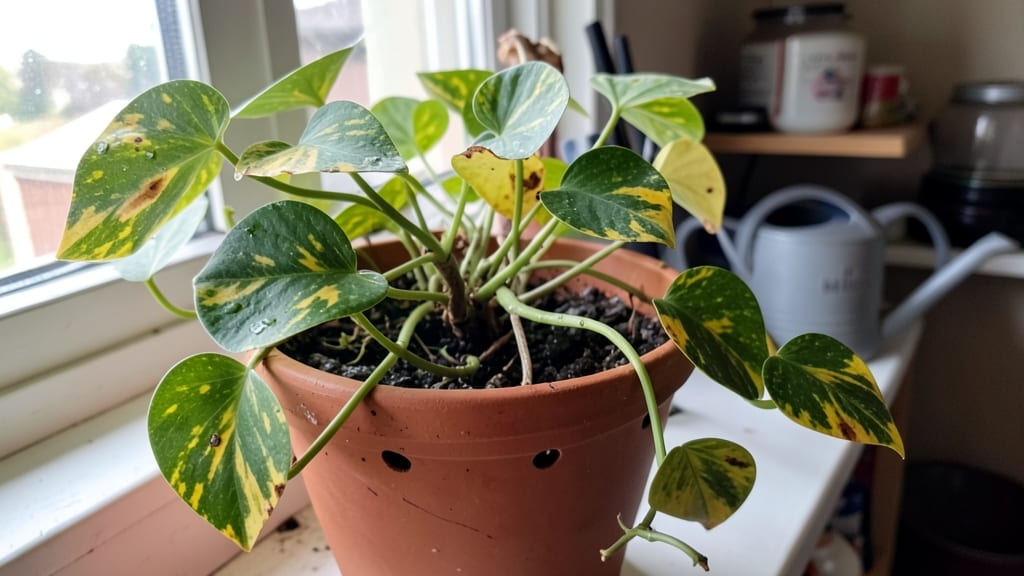
This drooping, overwatered pothos plant is begging for help—and it’s not too late to save it. 🌱 I’ve nursed back more soggy-leafed plants than I’d like to admit, and this root rescue trick works faster than you’d expect.
The moment you notice limp stems or brown patches, the clock starts ticking, but with the right approach, you’ll see fresh green growth in just days.
Here’s the thing—overwatering doesn’t just happen. It’s usually a mix of too-frequent watering, poor drainage, or a pot that’s too small. My pothos thrives in a 5-inch pot with drainage holes, and I only water when the top inch of soil feels dry.
The fix starts with stopping the water, letting the roots breathe, and giving them a chance to recover before they rot completely.
Within a week, you’ll trim away the worst damage, repot in fresh, airy soil, and watch those yellow leaves fall away as new ones push through.
The key is patience—don’t rush the recovery, and soon your pothos will be back to its shockingly lush self, climbing and thriving like nothing ever happened.
This works for any pothos, whether it’s a single plant or a trailing jungle. The same principles apply to other tropicals too—just adjust the watering schedule to match your home’s humidity. Let’s get those roots healthy again.
Root Causes Of Overwatering
When your pothos plant starts showing signs of distress—like yellowing leaves, mushy stems, or drooping foliage—it’s often a cry for help from its roots. Overwatering disrupts the delicate balance of oxygen, nutrients, and moisture that roots need to thrive.
Let’s break down the key reasons this happens, so you can avoid repeating the same mistakes.
Pothos plants are tropical vines, but they hate soggy feet. Without proper drainage, excess water pools at the bottom of the pot, suffocating the roots. Here’s why this is a problem:
- Compacted soil: Heavy or clay-based potting mixes retain moisture for too long, preventing oxygen from reaching the roots. Pothos roots need aeration—like a sponge that can both absorb and release water.
- No drainage holes: Pots without holes act like a water trap. Even "self-watering" pots can drown roots if not monitored closely.
- Root-bound plants: When roots fill the pot completely, they struggle to spread out, increasing the risk of waterlogging in small spaces.
Pro Tip: 💡 Use a mix of 60% potting soil, 20% perlite, and 20% orchid bark to improve airflow. If repotting, choose a container with drainage holes and a cache pot (a decorative outer pot with a saucer) to catch excess water.
Watering on a schedule—rather than checking soil moisture—is a fast track to overwatering. Pothos plants are drought-tolerant but not flood-tolerant. Here’s how inconsistent watering backfires:
- Overzealous watering: Giving your plant a drink every few days (even if the soil isn’t dry) forces roots to sit in anaerobic conditions, where they can’t process oxygen.
- Ignoring humidity changes: High humidity slows evaporation, keeping soil wet longer. If you water as usual without adjusting, roots suffocate.
- Using ice cubes or cold water: Shocking roots with chilly water stresses them, reducing their ability to absorb nutrients efficiently.
Pro Tip: 🌡️ Stick your finger 1-2 inches into the soil—if it’s dry, water; if it’s damp, wait. In humid climates, reduce watering to every 10-14 days.
The container your pothos lives in plays a bigger role than you might think. Here’s how the wrong pot sabotages root health:
| Pot Issue | Why It Causes Overwatering |
|---|---|
| Too small | Roots grow faster than the pot, leading to root circling (roots strangle themselves). This restricts water flow and traps moisture. |
| Terracotta without drainage | While terracotta wicks moisture, it doesn’t replace drainage holes. Without them, water evaporates upward, leaving roots waterlogged at the bottom. |
| Plastic pots | Plastic doesn’t breathe, so excess water lingers. Roots in plastic pots are 3x more likely to rot because they can’t "breathe" like in porous materials. |
Pro Tip: ✨ Choose pots 10-20% larger than the root ball and upgrade to fabric pots (like grow bags) for better airflow if repotting.
Pothos plants slow down in winter and speed up in spring/summer—but many gardeners don’t adjust their watering habits. Here’s how seasons throw off the balance:
- Winter dormancy: Cooler temps and lower light mean reduced transpiration (water loss through leaves). Watering as usual keeps soil soggy for weeks.
- Summer heatwaves: While you might think to water more, overwatering in heat can actually burn roots by diluting essential nutrients too quickly.
- Artificial lighting: Grow lights increase evaporation, tricking you into thinking the plant needs more water when it might just need better airflow.
Pro Tip: ⏰ Adjust watering by season:
- Spring/Fall: Every 5-7 days
- Summer: Every 3-5 days (check soil daily)
- Winter: Every 14-21 days
Revive Your Pothos Plant Now
If your pothos plant is looking sad with yellow leaves and droopy vines, don’t panic—it’s likely just overwatered. The good news? With the right steps, you can nurse it back to health and prevent future watering woes.
Below, we break down the fixes based on the root cause (literally!) and share easy, actionable tips to save your leafy friend.
Before diving into fixes, you need to assess the damage. Overwatering often leads to root rot, which can be fatal if ignored. Here’s how to diagnose it:
- Gently remove the plant from its pot and shake off excess soil.
- Inspect the roots: - Healthy roots are firm, white, or light tan. - Rotten roots are mushy, brown, or black and may smell foul.
- Trim the bad roots with clean, sterilized scissors (cut away any dark, squishy sections). Leave the healthy roots intact.
> 💡 Pro Tip: If more than half the roots are rotten, your pothos may need a more aggressive recovery plan—like repotting in fresh soil.
Once you’ve trimmed the damaged roots, it’s time to revive them by removing excess moisture:
- Rinse the roots under lukewarm water to wash away old soil and bacteria.
- Pat them dry with a clean paper towel or let them air-dry for 10–15 minutes.
- Let the plant rest for 1–2 days in a dry, shaded spot. This helps prevent further rot and allows any remaining moisture to evaporate.
> ⏰ Time-Saver: If you’re in a hurry, place the plant in a well-ventilated area (like a bathroom with the fan on) to speed up drying.
Now that the roots are dry and trimmed, it’s time to give your pothos a fresh start in the right conditions:
- Choose a pot with drainage holes (if it doesn’t have them, drill a few).
- Use a lightweight, fast-draining potting mix—like a blend of cactus/succulent mix + perlite or orchid bark (50/50 ratio). Avoid heavy garden soil, which holds too much moisture.
- Repot carefully: - Place a layer of fresh soil in the bottom of the pot. - Position the plant so the roots spread evenly. - Fill in with more soil, but don’t pack it down—leave a little air space around the roots.
- Water lightly only if the soil feels completely dry. Aim for just enough to moisten the top inch—no soggy bottoms!
> 🌡️ Climate Check: If you live in a humid area, add a handful of sand or coconut coir to the mix to improve airflow.
Prevention is key! Overwatering usually happens because of poor watering habits or environmental factors. Here’s how to fix it:
| Problem | Solution | Prevention Tip |
|---|---|---|
| Watering on a schedule | Only water when the top 1–2 inches of soil are dry. Stick your finger in! | 📅 Use the "finger test"—check soil moisture before watering. |
| No drainage holes | Repot in a container with holes or add a layer of gravel at the bottom. | ✅ Always use pots with drainage—no exceptions! |
| Overly humid environment | Move to a bright, indirect spot with better airflow (e.g., near a window with a fan). | 🌬️ Improve airflow—pothos love gentle breezes! |
| Using the wrong soil | Switch to a well-aerated mix (like a cactus blend with perlite). | 🌱 Mix in amendments—add orchid bark or vermiculite for extra drainage. |
> 🔥 Quick Fix: If your pothos is severely stressed, skip watering for a week and let it recover in bright, indirect light.
Once your pothos is repotted and roots are healing, it’s time to boost its recovery:
- Place it in bright, indirect light (e.g., near an east or north-facing window). Avoid direct sun, which can stress weak plants.
- Fertilize lightly after 2–3 weeks with a balanced, diluted liquid fertilizer (half-strength).
Over-fertilizing can burn roots! 3. Prune yellow or damaged leaves to redirect energy to new growth. Use clean scissors and cut just above a leaf node.
> 💡 Growth Hack: If your pothos has lost most of its leaves, propagate the healthy stems in water while the main plant recovers. You might get lucky and grow a new plant!
If your pothos:
- Has no green leaves left (mostly brown or black).
- Smells rotten or moldy even after trimming.
- Won’t wake up after 2–3 weeks of care.
…it may be too far gone to save. But don’t lose hope—take a cutting and try propagating it! Many overwatered pothos can still sprout new life.
With these steps, your pothos should bounce back in 2–4 weeks, showing fresh green growth and perky vines. The key is patience and proper care—no more soggy soil, just happy, thriving leaves! 🌿✨
Frequently asked questions
What do yellow leaves on my pothos actually mean?
Yellow leaves usually signal overwatering, but they can also mean underwatering or nutrient deficiency. Check the soil first—if it's damp, you're overwatering. If dry, the plant needs moisture. Look for other signs too: mushy stems = overwatering; crispy edges = underwatering.
Can I save my pothos if the stems feel mushy?
Yes, but act fast! Mushy stems mean root rot is spreading. Trim away the damaged stems with clean scissors, then repot in fresh, well-draining soil. Let the roots dry out for 1-2 days before watering again. With proper care, new growth should appear within 2-3 weeks.
How often should I water my pothos after recovery?
Once recovered, water only when the top 1-2 inches of soil are completely dry. In summer, this might be every 5-7 days. In winter, stretch it to every 10-14 days. Always check with your finger—don't rely on a schedule!
What's the best soil mix to prevent future overwatering?
Use a blend of 60% potting soil, 20% perlite, and 20% orchid bark. This creates air pockets that prevent waterlogging. For extra insurance, add a handful of activated charcoal to reduce bacteria growth in soggy soil.
Will my pothos grow back if I've lost most of its leaves?
Even if 90% of the leaves are gone, healthy roots can produce new growth. Prune all damaged foliage, repot in fresh soil, and place in bright, indirect light. Within weeks, you'll see fresh leaves emerging from the stems.