
Watering
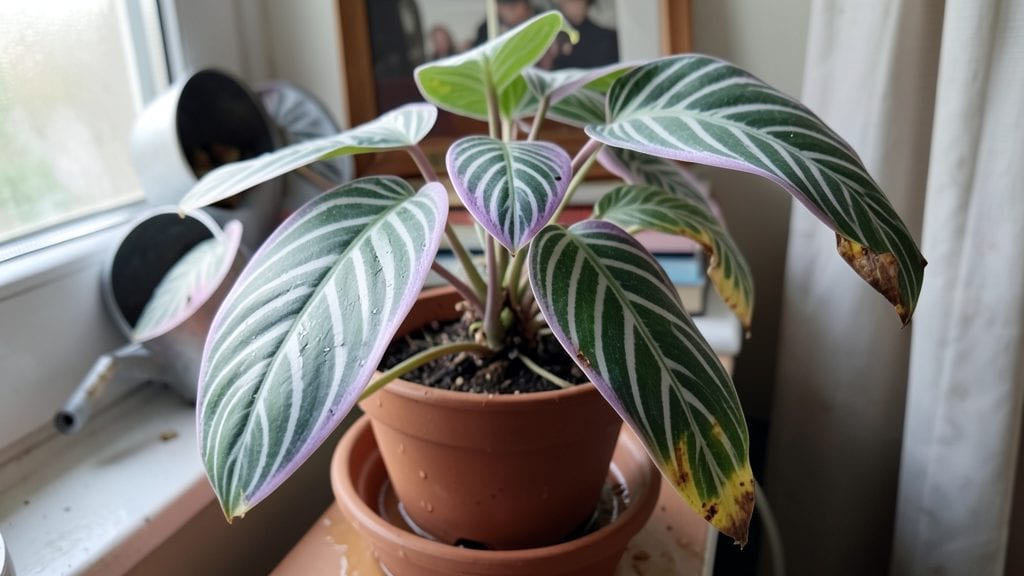
Your zebra plant’s yellowing leaves and droopy stems aren’t just a phase—they’re screaming for help. 🌱 I’ve nursed more overwatered zebra plants back to life than I’d like to admit, and the first step is always the same: stop guessing and check the soil.
That simple finger test tells you everything you need to know about whether you’re drowning your plant’s roots.
The real villain here is root rot, which thrives in soggy soil and chokes off oxygen. Zebra plants (Aphelandra squarrosa) need well-draining soil and water only when the top 2 inches feel bone-dry.
Most people water on a schedule instead of checking moisture, and that’s how you end up with a sad, wilting houseplant. The good news? Once you catch it early, you can revive it with the right care.
By the time you’re done, your plant will bounce back with those signature velvety purple leaves and start growing new foliage within 3-4 weeks. The key is adjusting your watering routine, improving drainage, and giving the roots a chance to recover.
Trust me, your zebra plant can make a full comeback—if you act now instead of waiting.
This fix works for both potted zebra plants and those growing in 6-inch containers, whether you’re dealing with a single leaf issue or full-blown wilting. The same principles apply if your plant is in a humid bathroom or dry living room—just adjust how often you check that soil moisture.
Let’s get those roots breathing again.
The Hidden Triggers Behind Wet Roots
Your zebra plant (Aphelandra squarrosa) might be sending out desperate signals—yellowing leaves, drooping stems, or even blackened roots—without you realizing it’s drowning in kindness. Overwatering isn’t just about adding too much water; it’s a chain reaction of environmental and care-related factors that turn your plant’s roots into a soggy mess.
Let’s break down the real culprits behind this common but preventable issue.
This is the most obvious (and most common) cause: giving your zebra plant more water than its roots can handle. Zebra plants are tropical but not swamp-dwelling—they prefer moist, well-draining soil, not a permanent puddle. Here’s why overwatering happens:
- Ignoring the soil’s thirst meter: Sticking your finger 1–2 inches into the soil is the gold standard. If it feels damp, wait. If it’s bone-dry, it’s likely been neglected—but if it’s soggy, you’ve overdone it. Pro tip: Use a moisture meter for precision, especially in humid climates where soil stays wet longer.
- Watering on a schedule: Many plant owners water every 7 days, rain or shine. But zebra plants thrive on inconsistency. Their natural habitat has dry seasons! Aim for watering only when the top 1–2 inches of soil are dry—usually every 7–10 days in spring/summer, and even less in fall/winter.
- Using the wrong pot: Terracotta pots dry out faster, but plastic traps moisture. If your plant is in a plastic container without drainage holes, water sits at the bottom, suffocating roots. Fix: Switch to terracotta or add a layer of perlite or orchid bark to improve drainage.
A pot without drainage holes is like a bathtub for your plant—water has nowhere to go. But even with holes, compacted or clay-heavy soil can act like a sponge, holding onto moisture for weeks. Here’s how drainage fails:
- Clay or garden soil: These soils repel water at first but then clump tightly, trapping air and water. Zebra plants need soil that breathes. Solution: Mix in 30–50% perlite, pumice, or coconut coir to create air pockets.
- No gravel at the bottom: Some gardeners swear by a layer of pebbles or rocks in the pot’s base, but this can actually trap moisture if the soil sits directly above it without gaps. Better fix: Use a well-draining mix (like 50% peat moss, 30% perlite, 20% orchid bark) and ensure the pot has holes.
- Trapped water in saucers: Leaving standing water in the saucer under the pot turns the base into a root rot factory. Even if the pot drains, excess water seeps back up. Action step: Always empty saucers 30 minutes after watering.
Zebra plants love humidity (60–80% is ideal), but too much moisture in the air combines with overwatering to create a deadly cocktail. Here’s how climate plays a role:
- High humidity + poor airflow: In steamy bathrooms or kitchens, water evaporates slowly from the soil. If you’re watering on a schedule without checking moisture, roots stay waterlogged. Fix: Increase airflow with a small fan (set to low speed) or move the plant to a less humid spot.
- Cold temperatures: Below 60°F (15°C), zebra plants metabolize slower and can’t process excess water efficiently. This is why overwatering in winter is a common killer. Adjust: Reduce watering to every 10–14 days in cooler months.
- Sudden climate shifts: Moving your plant from a dry room to a humid bathroom (or vice versa) without adjusting watering can shock the roots. Tip: Monitor soil moisture closely for the first 2 weeks after relocating.
When roots outgrow their pot, they become crowded and stressed, making them more susceptible to rot when overwatered. Here’s how it happens:
- No repotting for years: Zebra plants grow slowly but can outgrow a 6-inch pot in 2–3 years. Crowded roots compete for oxygen and nutrients, so they’re weaker and more prone to rot when overwatered. Signs: Roots circling the pot’s edge or poking out of drainage holes.
- Using the same soil mix: Over time, soil compacts and loses structure, reducing drainage. Repotting with fresh, airy mix revives root health.
- Shock from sudden repotting: If you repot a stressed plant without adjusting watering, the roots may rot faster as they adjust. Best practice: Water lightly after repotting and wait until the top inch of soil dries out before the next watering.
Now that you know the real reasons your zebra plant’s roots are drowning, the next step is diagnosing the damage and reviving it. Stay tuned for our soil check trick to assess root health without killing your plant!
Revive Your Drowning Zebra Plant
Now that you know the signs of an overwatered zebra plant (and why it’s happening), it’s time to roll up your sleeves and bring it back to life! The good news?
With the right steps, you can rescue your leafy friend before it’s too late. Below, we’ll break down cause-specific fixes—plus prevention tips to keep your zebra plant thriving long-term.
Cause: Waterlogged soil suffocates roots, starving the plant of oxygen. Solution:
- 🔥 Stop Watering Immediately Let the soil dry out completely—this is critical. No more water until the top 1–2 inches feel dry to the touch (stick your finger in; if it’s damp, wait longer).
- 🍳 Drain the Excess Water - Place your plant in a sink or shallow tray and gently tip it to one side.
Let gravity drain excess water from the pot. - If the pot has no drainage holes, repot immediately into a container with holes (terracotta or ceramic works best).
- 👨🍳 Refresh the Soil (If Needed) If the soil smells sour or feels compacted, it’s time for a partial soil swap:
- Remove the plant carefully (gently pull it out or slide it from the pot).
- Trim any black, mushy roots with sterilized scissors (healthy roots are firm and white).
- Repot in well-draining mix: Combine 50% potting soil, 30% perlite, and 20% orchid bark or coco coir.
- ⏰ Monitor Recovery
- Place the plant in bright, indirect light (no direct sun yet—it’s stressed!).
- Wait 7–10 days before watering again. Then, water only when the top 2 inches of soil are bone-dry.
💡 Pro Tip: If your plant is severely droopy, try root pruning—snip off 1/3 of the longest leaves to redirect energy to root recovery.
Cause: Prolonged soggy soil breeds harmful bacteria/fungi, rotting roots. Solution:
- 🔪 Trim the Damage
- Remove the plant from its pot and rinse the roots gently under lukewarm water to dislodge old soil.
- Use sterilized scissors to cut away all black, soft, or foul-smelling roots. Keep only firm, white roots.
- 🌡️ Disinfect the Pot
- Wash the old pot with 1 part hydrogen peroxide to 10 parts water (or a 10% bleach solution, then rinse well).
- Let it dry completely in the sun before repotting.
- ✨ Repot in Fungal-Free Soil
- Use a fresh, sterile potting mix (avoid garden soil—it’s often contaminated).
- Add 1 tbsp of cinnamon or sulfur powder to the soil to prevent fungal regrowth.
- 🎯 Adjust Watering Habits
- Water only every 2–3 weeks (or when soil is completely dry).
- Use a moisture meter or the finger test to avoid guesswork.
💡 Pro Tip: If root rot is severe, try propagating healthy cuttings—some stems may still root in water or fresh soil!
Once your zebra plant is on the mend, break these bad habits to keep it happy:
- ❌ Don’t water on a schedule. Instead, check soil moisture—stick your finger in or use a moisture meter.
- ✅ Use the right pot. Terracotta or pots with drainage holes are non-negotiable.
- ✅ Improve drainage. Add a 2-inch layer of pebbles or charcoal at the bottom of the pot before soil.
- ✅ Choose the right soil. A chunky, airy mix (like cactus/succulent blend) prevents compaction.
- 🌡️ Watch the weather. Water less in humid months or if your home has poor airflow.
💡 Pro Tip: Place a saucer under the pot to catch excess water—but empty it after 10 minutes to avoid root sitting.
Your zebra plant may take 4–6 weeks to fully recover, but with patience and these fixes, it’ll bounce back with bold stripes and perky leaves. Stay consistent, and soon you’ll have a thriving, drought-tolerant beauty! 🌿✨
Frequently asked questions
How do I know if my zebra plant is overwatered?
Check for these key signs: yellowing leaves (especially lower ones), mushy black stems, wilting despite wet soil, or roots that smell foul or look slimy. If the soil stays damp for more than 3 days after watering, you're likely overdoing it. The finger test is your best tool—stick your finger 1-2 inches deep; if it feels soggy, hold off on watering.
Can I save a zebra plant with root rot?
Yes, but act fast! First, remove the plant from its pot and trim away all black, mushy roots with sterilized scissors. Repot in fresh, well-draining soil with perlite, and water only when the top 2 inches are completely dry. For severe cases, consider propagating healthy stems in water or fresh soil while the roots recover.
Why does my zebra plant need so much less water than other houseplants?
Zebra plants (Aphelandra squarrosa) store water in their stems and prefer drier conditions than moisture-loving plants. Their tropical origins include seasonal dry periods, so they thrive on inconsistent watering. Most houseplants need water when the top inch is dry, but zebras need the top 2 inches bone-dry before their next drink.
What's the best pot material for preventing overwatering?
Terracotta pots are ideal—they dry out faster than plastic and allow roots to breathe. Look for containers with drainage holes, and add a 2-inch layer of pebbles or charcoal at the bottom to improve airflow. If using plastic, monitor soil moisture more frequently, as these pots trap moisture longer.
How long does it take for an overwatered zebra plant to recover?
With proper care, you'll typically see improvement in 3-4 weeks, though severe cases may take up to 6 weeks. Focus on keeping soil dry, providing bright indirect light, and avoiding stress. New growth with vibrant stripes usually appears within 4-6 weeks of consistent recovery care.