Watering
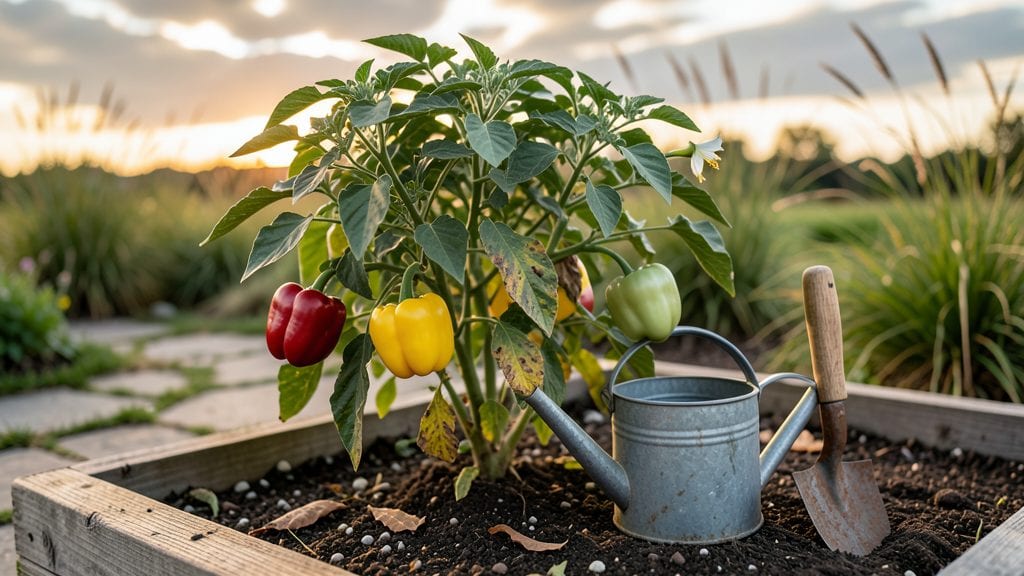
Overwatering pepper plants turns their leaves yellow and mushy in days—something I learned the hard way after drowning my jalapeños last summer. The problem starts when roots suffocate from too much moisture, cutting off oxygen and inviting rot.
You’ll know it’s happening when the soil smells sour or leaves feel limp even when dry.
First, stop watering entirely for 3-5 days to let the roots recover. Then, check your pots—if they lack drainage holes, switch to containers with them or add a layer of gravel at the bottom.
Peppers hate soggy feet, so wait until the top 1-2 inches of soil are bone-dry before watering again. A moisture meter helps, but sticking your finger in works too.
Long-term, adjust your routine: water deeply but only once a week (more in heatwaves) and use well-draining soil mixed with perlite or coconut coir. Mulch helps too—it keeps roots cool and evens out moisture swings.
Within 10-14 days, you’ll see new growth pushing through, and those wilted leaves will start to crisp up.
This fix works for bell peppers, jalapeños, and even chili plants—just scale the watering to your pot size. The key is balance: peppers need consistent moisture, but not a swamp. Once you’ve reset their rhythm, they’ll bounce back stronger than ever.
Why it happens
Overwatering pepper plants is a classic case of "too much of a good thing"—and it’s easier to do than you might think. 🌧️🌱 Understanding why this happens can help you adjust your watering habits before it’s too late.
Let’s break down the most common reasons your peppers might be drowning in their own pot.
🌡️ Poor Drainage Systems
Pepper plants hate soggy roots, yet many gardeners unknowingly create the perfect swamp conditions. Without proper drainage, excess water pools at the bottom of the pot or in the soil, suffocating roots and blocking oxygen. This can happen due to:
- Clay or compacted soil: Dense soils retain moisture like a sponge, preventing water from escaping. If your soil feels heavy when dry or forms hard clumps, it’s likely the culprit.
- Pots without drainage holes: Even "self-watering" containers can trap water if they lack exit points. Always check the bottom of your pots—no holes mean no escape for excess water.
- Improper pot materials: While terracotta is porous and allows evaporation, plastic or glazed pots trap moisture longer. If you’re using these, you’ll need to monitor watering more closely.
Actionable fix: Amend heavy soil with perlite, vermiculite, or coconut coir (20-30%) to improve aeration. If repotting, choose containers with drainage holes and elevate them on saucers to catch runoff.
📅 Ignoring Weather And Season
Watering on a schedule—without considering the weather—is a surefire way to overdo it. Pepper plants’ needs fluctuate based on:
- Rainfall: A sudden downpour can leave soil saturated for days. If you watered yesterday and it rained today, your plants are already getting a drink.
- Humidity levels: High humidity (common in summer or greenhouses) slows evaporation, so soil stays wet longer. In these conditions, peppers may only need water every 7–10 days.
- Temperature swings: Cool nights or cloudy days reduce transpiration (the plant’s natural water release process), meaning they absorb less water.
Actionable fix: Use the finger test: Stick your index finger 1–2 inches into the soil. If it’s damp, wait. Pair this with a soil moisture meter for accuracy, especially in unpredictable climates.
🌱 Overestimating Root Development
Young pepper seedlings have delicate, shallow roots that can’t handle excess water. As they mature, their root systems expand—but many gardeners don’t adjust their watering habits accordingly. Here’s why this backfires:
- Seedlings in small pots: Tiny root balls saturate quickly, leading to rot. If your starter plants are in 2–3 inch pots, they may only need water every 2–3 days.
- Transplant shock: Moving peppers to larger containers disrupts their root structure temporarily. Overwatering during this phase can drown them before they recover.
- Slow-growing varieties: Some peppers (like Capsicum annuum varieties) develop roots more gradually. If you’re watering based on size rather than soil conditions, you might be overdoing it.
Actionable fix: Gradually increase water volume as plants grow, but never exceed the soil’s absorption capacity. For mature peppers, aim for 1–1.5 gallons per plant per week, adjusting for climate.
💧 Misjudging "Self-Watering" Tools
Automatic watering systems—like drip irrigation, soaker hoses, or smart pots—are designed to supplement your efforts, not replace them entirely. Common mistakes include:
- Running systems on timers without monitoring: A set schedule (e.g., 10 minutes daily) can lead to accumulation, especially in clay soils.
- Overfilling reservoirs: Self-watering containers rely on a balance of water and air. If the reservoir is too full, roots suffocate.
- Ignoring evaporation rates: In hot, dry conditions, plants drink more, but the system may not adjust automatically.
Actionable fix: Pair automated systems with manual checks. For drip irrigation, space emitters 12–18 inches apart and adjust flow rates based on soil type. In self-watering pots, fill reservoirs only halfway and empty them if they haven’t drained in 3–4 days.
🌿 Confusing Thirst With Stress
Pepper plants don’t always wilt from overwatering—they might be reacting to other issues that trick you into thinking they need more H₂O. Common red herrings:
- Fungal diseases (e.g., Phytophthora): Yellowing leaves or mushy stems can mimic overwatering but are often caused by poor air circulation or contaminated soil.
- Nutrient deficiencies: Lack of nitrogen or magnesium can cause wilting, but the soil may actually be too dry. Test your soil’s pH and nutrient levels annually.
- Pest damage (e.g., aphids, spider mites): These sap-suckers stress plants, making them appear dehydrated when they’re not.
Actionable fix: Before watering, inspect leaves for pests or discoloration. If the problem persists after adjusting moisture, consider a soil test kit or consult a local extension service.
Fixing Overwatered Pepper Plants
Overwatering your pepper plants can feel like a slow-motion disaster—soggy soil, yellowing leaves, and a plant that’s clearly begging for help. But don’t panic! With the right steps, you can nurse your peppers back to health and even prevent future mishaps.
Below, we’ll break down practical fixes based on the root causes of overwatering, plus pro tips to keep your plants thriving.
The first rule of fixing overwatered peppers? Cut off the water supply right away. Keep the soil damp but not soggy—pepper plants prefer their roots to dry out slightly between waterings. If the soil feels like a sponge or smells musty, your plant is still in distress.
- Test the soil: Stick your finger 1-2 inches deep. If it’s wet, wait. If it’s bone-dry, you’ve been underwatering (but that’s a different problem!).
- Avoid watering until the top inch feels dry. This might mean going 3-5 days without water, especially in humid climates.
Poor drainage is often the real culprit behind overwatering. If water pools in the pot or garden bed, roots suffocate and rot. Here’s how to drainage-proof your peppers:
🏡 For Potted Peppers:
- Repot if needed: If your container lacks drainage holes, transfer your plant to a pot with holes (or drill them yourself).
Use a well-draining potting mix (like a blend of peat, perlite, and compost). - Raise the pot: Place it on feet or a saucer to prevent water from sitting at the bottom. - Use a moisture meter: These cheap tools tell you exactly when to water—no guesswork!
🌿 For Garden-Bed Peppers:
- Amend the soil: Mix in sand, perlite, or coconut coir to loosen heavy clay soil.
- Create a "hill" for plants: Pepper plants love elevated roots.
Mound soil around the base to encourage better drainage. - Mulch properly: Use straw or wood chips (not plastic mulch) to keep moisture even but not suffocating.
If roots are already damaged, they need air and time to recover. Follow these steps to restore root health:
- Trim the damage (if severe):
- Gently remove the plant from its pot and inspect the roots.
- Snip off any black, mushy, or slimy roots with clean scissors.
- Replant in fresh, dry potting mix and hold off on watering for 3-5 days.
- Boost with fungicide (if moldy):
- If you see white, fuzzy mold (root rot), spray the roots and soil with a copper fungicide or hydrogen peroxide (3%) before replanting.
- Fertilize lightly (but wisely):
- Wait 1-2 weeks before fertilizing again. Once roots recover, use a balanced, water-soluble fertilizer (like 10-10-10) to help regrowth.
Once your peppers are back on track, lock in these habits to avoid future waterlogging:
- 📅 Water on a schedule: Pepper plants need 1-1.5 inches of water per week, but adjust for rain or heat. Morning watering is best—it gives foliage time to dry. - 🌡️ Check humidity levels: If your area is super humid, water less often.
Use a hygrometer to monitor levels. - 🌱 Choose the right pot size: Too-small pots dry out fast; too-large ones stay wet forever. Size up by 1-2 inches per year of growth. - 🔍 Watch the leaves: Yellow lower leaves? Usually overwatering. Crispy edges? Underwatering. Drooping? Could be either—check the soil! - 💧 Use the "finger test" always: Before watering, stick your finger in the soil.
If it’s dry 1 inch down, it’s time.
With proper care, pepper plants can bounce back in 1-3 weeks. Watch for: ✅ New green leaves (sign of recovery) ✅ Firmer stems (no more flopping) ✅ Healthy root growth (if you replanted)
If your plant still looks sad after 3 weeks, it might need more drastic help (like a new transplant), but don’t give up—peppers are tough! 🌶️💪
Frequently asked questions about pepper plant watering
How often should I water pepper plants to avoid overwatering?
Pepper plants need water 1-1.5 inches per week, but adjust based on climate. In hot weather, water every 2-3 days, while cooler seasons may only need weekly watering. Always check soil moisture—wait until the top 1-2 inches are dry before watering again.
What are the first signs my pepper plants are overwatered?
Watch for yellowing leaves, especially on the lower stems, and mushy stems that feel soft when pressed. The soil may smell sour or look waterlogged. Drooping leaves that don’t perk up after watering are another red flag. Act fast—stop watering immediately!
Can I save a pepper plant with root rot from overwatering?
Yes, but act quickly! Gently remove the plant, trim any black/mushy roots, and replant in fresh, dry soil. Hold off on watering for 3-5 days to let roots recover. For severe cases, add a copper fungicide to prevent further rot. With proper care, peppers often bounce back in 2-3 weeks.
Why do my pepper plants wilt even when the soil is wet?
Wilted leaves in wet soil usually mean root suffocation from poor drainage or compacted soil. Pepper roots need air—if they’re drowning, they can’t absorb water properly. Check your pots for drainage holes and amend heavy soil with perlite or sand. Elevate pots slightly to improve airflow.
Is it better to underwater or overwater pepper plants?
Neither! Peppers prefer consistent moisture—not soggy soil, not bone-dry dirt. Underwatering causes crispy edges, while overwatering leads to root rot. The key is balance: water deeply when the top 1 inch of soil feels dry, and always use well-draining soil. A moisture meter helps avoid guesswork.