Diseases
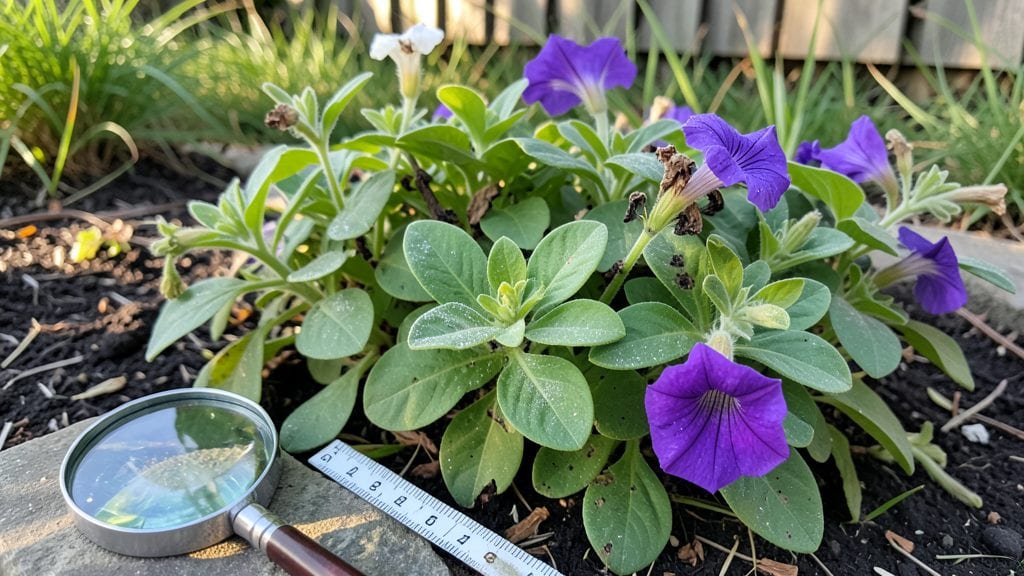
Noticing the first signs of petunia plant diseases can turn your vibrant blooms into a battle—here’s how to stop those black spots before they take over. Those fungal diseases turn vibrant blooms into a sad, spotted mess faster than you can say "summer garden."
I've battled every one of these stubborn foes in my own beds, and the key to saving your plants isn't expensive sprays—it's catching the problem early and cutting off its food supply.
The right mix of spacing, watering, and cleanup keeps 90% of these issues from taking root in the first place.
Powdery mildew, leaf spots, and bacterial wilt all start with the same weak spots: crowded plants, wet foliage, and old debris. My worst outbreaks happened when I ignored the first few yellow leaves or let afternoon watering soak the stems.
The good news? Most of these diseases respond to simple fixes—neem oil sprays for powdery mildew, copper fungicide for spots, and pruning out infected stems before they spread. Even my blackest thumb can turn things around with these targeted moves.
By the time you finish reading, you'll spot these diseases before they ruin your season and know exactly which treatment to grab. We're talking plants that stay lush and blooming instead of wilting into a sad, spotted shadow of themselves.
The secret weapon? A little prevention and acting the moment you see those first suspicious marks. Let's get those petunias back to their showstopping best.
Works for container petunias, hanging baskets, or in-ground beds—just adjust your watering schedule and cleanup routine to match where you're growing. The same principles apply whether you're dealing with a single infected plant or a whole bed under siege. Here's how to reclaim your garden's star performers.
Root Causes Behind Petunia Woes
Petunias are vibrant, low-maintenance favorites—but when diseases strike, they often do so because of avoidable environmental or care-related triggers. Understanding why these issues arise helps you prevent them before they spread. Below, we break down the core culprits behind petunia plant diseases, from fungal infections to physiological disorders.
Petunias thrive on consistent moisture, but too much water creates the perfect breeding ground for fungi like Botrytis (gray mold) and Phytophthora (root rot). Here’s why it happens:
- Waterlogged soil cuts off oxygen to roots, weakening the plant’s defenses.
Fungi then latch onto stressed tissue. - Poor drainage (common in clay pots or compacted garden soil) traps excess moisture at the roots, accelerating rot. - Fungal spores in damp soil or overhead watering splash onto leaves, infecting petunias through wounds or stomata (leaf pores).
Actionable fix: Use well-draining soil mixes (add perlite or sand) and water at the base (never overhead). Ensure pots have drainage holes, and avoid soggy conditions.
Petunias love humidity—but high moisture + warm temps (60–80°F) create a fungal paradise. Diseases like powdery mildew (Erysiphe) and leaf spot (Alternaria) thrive here because:
- Spores float in the air and land on leaves, germinating when surfaces stay wet for 6+ hours.
- Poor airflow (crowded plants or dense foliage) traps humidity, giving fungi a foothold.
- Stressed plants (from heat, drought, or nutrient deficiency) have weaker cell walls, making them easier targets.
Actionable fix: Space plants 12–18 inches apart for airflow, water early in the day (so leaves dry by evening), and prune crowded growth. Use fungicidal sprays (neem oil or copper-based) preventatively in humid climates.
Petunias are heat-tolerant but sudden temperature swings or extreme heat/cold weaken their immune response. Diseases exploit this:
- Cold nights (below 50°F) slow metabolism, making plants vulnerable to gray mold (Botrytis cinerea).
- Heat stress (above 90°F) causes sunscald (leaf browning) and opens stomata, letting fungi enter.
- Transplant shock (from sudden moves or poor acclimation) stresses roots, inviting root rot (Pythium).
Actionable fix: Harden off seedlings gradually, mulch to regulate soil temp, and avoid nighttime watering in cold climates. Choose heat-tolerant varieties (like Petunia × hybrida) for hot regions.
Insects like aphids, spider mites, and thrips don’t just feed—they damage plant tissue, creating entry points for fungi and bacteria. Here’s how:
- Aphids inject toxins, causing yellowing and stunted growth, which stresses the plant.
- Spider mites puncture cells, leading to silvering or bronzing—ideal spots for powdery mildew.
- Thrips scar leaves with feeding wounds, inviting bacterial spot (Xanthomonas).
Actionable fix: Inspect leaves weekly (especially undersides), and blast off pests with water. Use insecticidal soap or neem oil at the first sign of infestation.
Too little phosphorus or potassium weakens petunias, making them susceptible to diseases. Overdoing nitrogen (lush growth but weak stems) also backfires:
- Low phosphorus (slow blooming) reduces root strength, increasing root rot risk.
- Low potassium (brown leaf edges) weakens cell membranes, letting fungi invade.
- Excess nitrogen promotes soft, succulent growth—a buffet for gray mold and leaf spot.
Actionable fix: Use a balanced fertilizer (10-10-10) and side-dress with compost for micronutrients. Avoid heavy nitrogen in humid conditions.
Fungal spores linger on pruners, gloves, and garden tools, spreading disease from one plant to another. Even old compost or reused soil can harbor pathogens like:
- Verticillium wilt (soil-borne fungus that clogs xylem vessels).
- Fusarium (root rot that survives in dormant spores for years).
Actionable fix: Sterilize tools with rubbing alcohol between plants. Solarize soil (cover with clear plastic for 4–6 weeks in summer) to kill pathogens. Rotate crops—don’t plant petunias in the same spot yearly.
💡 Pro Tip: Most petunia diseases start with stress. Healthy plants resist infections better—so prioritize airflow, sunlight (6+ hours/day), and balanced care to keep fungi at bay!
Quick Fixes for Petunia Problems
Now that you’ve identified the issue plaguing your petunias, it’s time to roll up your sleeves and get them back to their vibrant best!
Each disease requires a slightly different approach, but the good news is that most solutions are simple, cost-effective, and involve a mix of removal, prevention, and care. Let’s tackle these fungal foes head-on with practical, step-by-step fixes.
Cause: Fungal spores thrive in humid, crowded conditions. Fix:
- 🧼 Remove infected leaves immediately—snip them off with clean scissors and dispose of them in the trash (not compost).
- 💦 Spray with a homemade remedy: Mix 1 tsp baking soda + 1 tbsp vegetable oil + 1 quart water in a spray bottle. Apply to both sides of leaves in the morning to avoid burning. Reapply every 5–7 days until the issue clears.
- 🌬️ Improve airflow: Space plants 12–18 inches apart and avoid overhead watering. Water at the base in the early morning so foliage dries quickly.
- 🌞 Boost sunlight: Powdery mildew loves shade. If possible, move petunias to a sunnier spot (6+ hours of direct light).
💡 Pro Tip: For severe cases, use a fungicide like neem oil (1 tsp per quart of water) or a copper-based spray (follow label instructions). Always test on a small leaf first!
Cause: Alternaria solani fungus spreads via infected debris and splashing water. Fix:
- 🗑️ Remove and destroy all infected leaves and stems—burn them if possible to prevent spore spread.
- 🚿 Water wisely: Water only at the base and avoid wetting leaves. Use a soaker hose or drip irrigation to keep foliage dry.
- 🌱 Rotate planting spots: If you grew petunias (or tomatoes, peppers, or eggplants—common hosts) in the same spot last year, move them 10+ feet away this season.
- 🍄 Apply fungicide preventatively: Spray with copper fungicide or chlorothalonil (like Daconil) every 7–10 days during humid weather.
🔥 Emergency Move: If blight spreads rapidly, prune back severely infected plants to encourage new, healthy growth.
Cause: Overwatering or poor drainage suffocates roots with fungus (Phytophthora or Pythium). Fix:
- 💧 Stop watering immediately—let the soil dry out completely before watering again.
- 🪴 Repot if needed: If the plant is in a container, remove it, inspect the roots, and trim any black, mushy roots with sterilized scissors. Repot in fresh, well-draining soil (mix in perlite or sand).
- 🚿 Improve drainage: Add a 1-inch layer of gravel at the bottom of pots or ensure garden beds have slope for water runoff.
- 💊 Treat with hydrogen peroxide: Soak roots in a 3% hydrogen peroxide solution (1 part peroxide to 4 parts water) for 10 minutes before repotting to kill fungus.
- 🌿 Adjust watering: Water only when the top inch of soil is dry, and use pots with drainage holes.
✨ Revival Tip: After repotting, fertilize lightly with a balanced, water-soluble fertilizer (like 10-10-10) to help roots recover.
Cause: Botrytis cinerea thrives in damp, shaded conditions and attacks flowers and stems. Fix:
- ✂️ Prune aggressively: Cut off all infected flowers, buds, and stems—even if only a small spot is gray and fuzzy. Sterilize your pruners with rubbing alcohol between cuts.
- 🌬️ Increase airflow: Thin out crowded plants and remove nearby weeds that trap moisture.
- 🌞 Move to sunlight: Botrytis loves shade—relocate petunias to a brighter spot (even partial sun helps).
- 🍄 Spray with baking soda or fungicide: Use the baking soda spray (from powdery mildew section) or a fungicide like Myclobutanil (as directed).
- 🚫 Avoid overhead watering: Water at the base only and never water in the evening.
🎯 Prevention Hack: After pruning, sterilize your tools and disinfect the area with a 10% bleach solution (1 part bleach to 9 parts water) to kill lingering spores.
Cause: Soil-borne fungus (Verticillium or Fusarium) clogs xylem vessels, causing sudden wilting. Fix:
- 🗑️ Remove infected plants immediately—there’s no cure, and the fungus persists in soil.
- 🌱 Replace with resistant varieties: If wilt recurs, switch to petunia varieties labeled "Verticillium-resistant" (e.g., some hybrid types).
- 🌿 Rotate crops: Avoid planting tomatoes, peppers, or eggplants (common hosts) in the same spot for 3–4 years.
- 🔥 Solarize the soil (for garden beds): Cover the area with clear plastic sheeting for 4–6 weeks in hot sun to kill fungus.
- 💧 Water deeply but less often: Stress from drought can weaken plants—keep soil consistently moist (not soggy).
💪 Long-Term Defense: Plant marigolds or garlic nearby—they’re natural fungicides that repel soil-borne pathogens.
Want to keep your petunias thriving?
Follow these year-round habits: - 🌿 Choose healthy starts: Buy disease-free petunia seedlings from reputable nurseries. - 🌱 Space plants properly: Crowding = humidity = fungus heaven. - 💧 Water at the base: Never wet leaves or flowers. - 🧹 Clean up debris: Remove fallen leaves and spent blooms weekly. - 🌞 Provide sunlight: Most petunias need 6+ hours of sun to stay strong. - 🍄 Monitor regularly: Check undersides of leaves and new growth every 3–4 days. - 🧴 Rotate fungicides: If you use chemical treatments, switch types every few weeks to prevent resistance.
🔥 Remember: The key to beating petunia diseases is early action. The moment you spot signs—prune, spray, and adjust care—before the fungus takes over. With these fixes, your petunias will bounce back faster than you think! 🌸
Frequently asked questions about petunia plant diseases
How do I tell if my petunia has powdery mildew vs. leaf spot?
Powdery mildew appears as a white, powdery coating on leaves, while leaf spot shows up as dark brown or black spots with yellow halos. Check the undersides of leaves—powdery mildew often starts there, while leaf spots may have target-like patterns. Mildew spreads faster in dry conditions, while spots thrive in wet weather.
Can I save a petunia plant with root rot?
You might! First, remove the plant from its pot, trim all black, mushy roots, and repot in fresh, sterile soil with perlite. Water only when the top inch of soil is dry, and avoid soggy conditions. If roots are mostly healthy, the plant can recover with proper care. If over 50% of roots are rotted, it’s best to replace it.
Why does my petunia keep getting gray mold even after treatment?
Gray mold (Botrytis) spreads through infected plant debris or overhead watering. If it keeps returning, check for these issues: crowded plants (space them 12–18 inches apart), wet foliage (water at the base), and old flowers or leaves (remove them weekly). Sterilize pruners between cuts to avoid spreading spores.
Are there petunia varieties that resist diseases better?
Yes! Look for hybrid varieties labeled "disease-resistant" or "mildew-resistant", like Petunia × hybrida types. These are bred to handle powdery mildew, leaf spot, and gray mold better. Also, grandiflora types (larger flowers) tend to be hardier than multiflora (smaller flowers).
How often should I spray fungicide on my petunias?
For prevention, spray every 7–14 days during humid weather or after rain. If treating an active infection, follow the product’s instructions—usually every 5–7 days until symptoms clear. Rotate between neem oil, copper fungicide, and baking soda sprays to avoid resistance. Always spray in the early morning so leaves dry quickly.