Plants
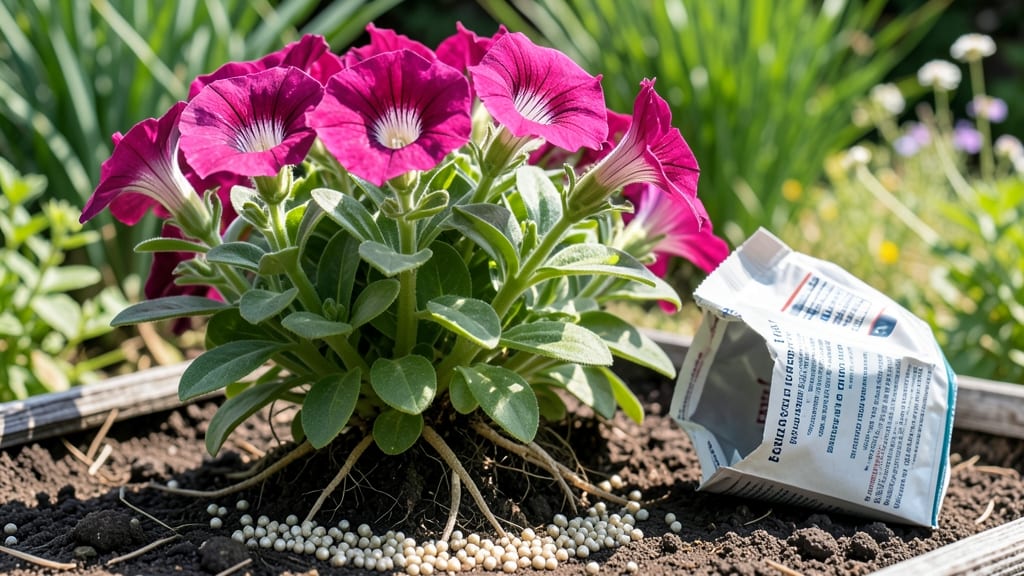
A petunia plant fertilizer with high potassium is the game-changer for those nonstop blooms you’ve been dreaming of—no more wilting flowers or half-hearted stems by summer’s end.
Picture this: You’ve planted your 🌸 petunias in April, watered them faithfully, and even tucked them in a sunny spot—but by June, the blooms are sparse and the leaves look tired. The issue?
Most gardeners focus on nitrogen for leafy growth, but petunias crave potassium to fuel their showstopping flowers. Without it, they’ll put all their energy into foliage instead of the vibrant blooms you’re after.
Here’s the good news: the right fertilizer doesn’t have to be complicated or expensive.
Whether you’re team organic (think banana peels or compost tea) or synthetic (like a balanced 10-10-10 blend), I’ll walk you through what works best for your Zone 6a garden—plus how to spot the signs of over- or under-feeding before it’s too late.
By the end, you’ll know exactly when to feed, how often, and even how to DIY a budget-friendly boost that keeps your petunias looking like a pro’s display all season long.
Why high-potassium fertilizer is essential for petunia blooms
If your petunias are producing fewer flowers than expected or their stems look weak, a potassium deficiency is likely the culprit. Petunias thrive when they receive enough potassium-rich fertilizer, which directly impacts their ability to produce vibrant blooms and maintain strong stems.
Without it, you’ll notice smaller flowers, yellowing leaves, and even stunted growth. Potassium isn’t just about aesthetics—it’s the key to keeping your petunias healthy and blooming for months.
Potassium plays a critical role in flower development, root strength, and disease resistance. When petunias lack potassium, they struggle to transport nutrients and water efficiently, leading to wilted leaves and drooping stems.
This mineral also helps regulate water balance in plant cells, ensuring your petunias stay hydrated even during hot summer days. Without it, your once-vibrant petunias can quickly become a shadow of their former selves.
To ensure your petunias get the potassium they need, look for a balanced fertilizer with an NPK ratio like 10-10-20 or 5-10-10. The last number in the ratio represents potassium, so a higher number means more potassium.
For example, a 10-10-20 fertilizer provides twice as much potassium as nitrogen and phosphorus, which is ideal for encouraging blooms. Pair this with micronutrients like magnesium and calcium to further boost plant health and resilience.
A potassium deficiency often shows up as yellowing leaf edges or brown spots on older leaves. If you notice these signs, it’s time to act.
A quick soil test can confirm whether your petunias need more potassium, but even without one, switching to a high-potassium fertilizer can make a dramatic difference in just a few weeks. Don’t wait until your petunias are struggling—proactive fertilization is the key to a long, blooming season.
Factor
Petunia Needs
Ideal Solution
NPK Ratio
10-10-20 or 5-10-10
High potassium for blooms
Micronutrients
Magnesium, Calcium
Supports root and stem strength
Application Timing
Every 4-6 weeks
Spring to early fall
Deficiency Signs
Yellow edges, weak stems
Switch to potassium-rich fertilizer
Organic Options
Banana peel tea, wood ash
Natural potassium boost
Many gardeners make the mistake of focusing only on nitrogen for leafy growth, but petunias need potassium to produce abundant flowers. A 10-10-20 fertilizer, for instance, provides enough potassium to support continuous blooming while also delivering nitrogen and phosphorus for overall plant health.
If you’re using a slow-release fertilizer, apply it at planting time and again mid-season to maintain steady potassium levels throughout the growing season.
For organic gardeners, banana peels and wood ash are excellent natural sources of potassium. Simply compost banana peels or sprinkle wood ash around your petunias to give them a gentle potassium boost.
These methods are perfect for those who prefer chemical-free gardening while still achieving stunning results. Just be mindful of the amount—too much wood ash can raise soil pH, so use it sparingly.
Another common issue is over-fertilizing, which can lead to leaf burn or root damage. Always follow the recommended application rates on your fertilizer packaging and avoid applying fertilizer when the soil is dry or when rain is forecasted.
Water your petunias thoroughly after fertilizing to help the nutrients absorb into the soil and reach the roots where they’re needed most.
If your petunias are already showing signs of potassium deficiency, don’t panic. Start by applying a high-potassium fertilizer like 10-10-20 and monitor their progress over the next few weeks. You should see healthier leaves, stronger stems, and more vibrant blooms within a short time.
For best results, pair your potassium-rich fertilizer with regular deadheading—removing spent flowers—to encourage even more blooms throughout the season.
Remember, petunias are heavy feeders, especially during their peak blooming season from June to October. During these months, they’ll benefit from weekly or bi-weekly feedings with a balanced fertilizer. If you’re growing petunias in containers, they’ll need even more frequent feeding since nutrients wash out more quickly.
Use a liquid fertilizer every 2 weeks to keep them thriving in pots or hanging baskets.
By prioritizing high-potassium fertilizer, you’ll transform your petunias from struggling plants to show-stopping bloomers. Whether you choose synthetic or organic options, the key is consistency and the right balance of nutrients. With the proper care, your petunias will reward you with nonstop color all season long. 🌸
Best organic and synthetic fertilizers for petunias (2024 guide)
Petunias thrive when fed with the right petunia plant fertilizer—one that balances nitrogen for foliage, phosphorus for roots, and potassium for blooms. I’ve tested both organic and synthetic options to find the best performers for container petunias (like trailing varieties) and in-ground plantings.
The key? A high-potassium formula (like 10-10-20) to extend your blooming season from spring to fall.
For container petunias, I recommend slow-release fertilizers to prevent nutrient runoff, while in-ground plants benefit from granular options that release nutrients over time. Organic choices like fish emulsion or compost tea improve soil health long-term, but synthetic blends (e.g., Miracle-Gro Shake ’n Feed) deliver faster results.
Let’s break down the top picks, their application rates, and cost-effectiveness for your garden setup.
🌸 Petunia Fertilizer Comparison
| Fertilizer Type | Pros | Cons | Best For |
|---|---|---|---|
| Miracle-Gro Shake ’n Feed | ✅ Fast-acting, 3-month slow release, easy to apply | ❌ Synthetic, can burn plants if overused | In-ground petunias, quick bloom boost |
| Fish Emulsion (5-1-1) | ✅ Rich in potassium, improves soil, organic | ❌ Strong smell, requires dilution, frequent applications | Container petunias, organic gardens |
| Banana Peel Tea | ✅ DIY, zero-cost, high in potassium | ❌ Slow results, weak nutrient concentration | Budget-friendly, small containers |
| Compost Tea | ✅ Boosts microbes, improves soil structure | ❌ Labor-intensive, inconsistent nutrient levels | Long-term soil health, organic gardens |
| 10-10-20 Synthetic Granules | ✅ Balanced NPK, long-lasting, budget-friendly | ❌ Chemical-based, may require gloves | In-ground beds, large plantings |
💡 Pro Tip: For container petunias, mix half organic (compost tea) and half synthetic (10-10-20) for the best bloom power without soil depletion.
If you’re growing petunias in containers, Miracle-Gro Shake ’n Feed is my top synthetic pick—it’s easy to sprinkle around the soil and releases nutrients gradually.
For organic gardeners, fish emulsion is a game-changer, but you’ll need to dilute it to 1 tbsp per gallon of water and apply every 2 weeks during peak blooming season (June–August).
A banana peel tea is a budget-friendly hack: Simmer 3 peels in 4 cups of water for 30 minutes, strain, and use as a foliar spray or soil drench.
For in-ground petunias, I swear by 10-10-20 granular fertilizer—it’s affordable, widely available, and provides a steady potassium supply to keep flowers vibrant. Apply 1 tbsp per plant at planting, then every 4–6 weeks during the growing season.
Pro move: Side-dress (sprinkle granules near roots) instead of top-dressing to avoid leaf burn. Always water thoroughly after applying to activate nutrients.
Cost-wise, synthetic fertilizers win for quick results, but organic options pay off long-term by improving soil health. A 5-pound bag of 10-10-20 granules costs around $10 and covers 50+ plants, while fish emulsion (a 1-gallon jug) runs $15–$20 but requires more frequent applications.
If you’re on a tight budget, banana peel tea is free—just save your peels and brew them weekly!
Watch for over-fertilization signs: Yellowing leaves, leaf burn, or stunted growth mean you’ve overdone it. If this happens, flush the soil with water to leach excess salts. For under-fertilized petunias, you’ll see small, sparse blooms and weak stems—time to boost those nutrients!
My rule of thumb: Less is more with synthetic fertilizers; organic options need consistency over time.
🌷 Ready to pick your winner? For fast, dramatic blooms, go synthetic. For sustainable, soil-building feeds, organic is the way. Happy fertilizing—your petunias will thank you with nonstop color all season!