Fertilization
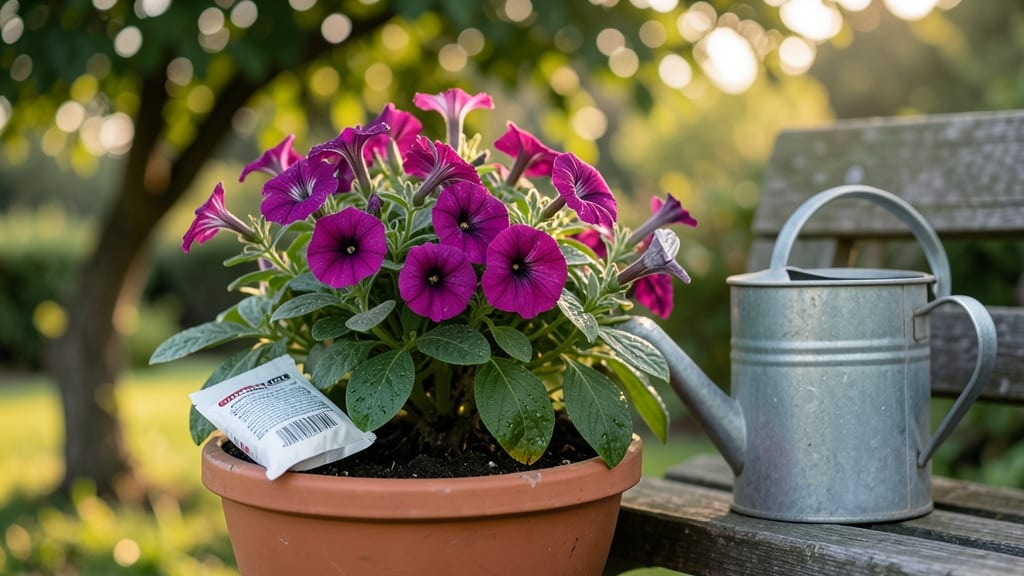
My petunia plant food game changed after I realized they weren’t just flowers—they were hungry little powerhouses craving the right nutrients. 🌸 The secret to those jaw-dropping blooms isn’t luck; it’s feeding them what they actually need, especially phosphorus for roots and flowers, not just nitrogen for leaves.
Start with a balanced fertilizer like 10-10-10 at planting, then switch to a high-phosphorus formula (like 5-10-15) once buds form. Liquid feeds every 2 weeks keep them thriving, but slow-release pellets cut the guesswork—just toss a handful in the soil and forget it for months.
For organic gardeners, compost tea or crushed banana peels (yes, really) give a potassium boost without the chemical burn.
You’ll know you’re nailing it when petunias explode with color from spring to frost, their blooms so dense they look like living carpets. Too much fertilizer? Yellow leaves or crispy edges. Too little? Leggy stems and sparse flowers. The goal is steady, vibrant growth—not a chemical burnout.
This works for container petunias, hanging baskets, or garden beds—just adjust the feeding amounts for smaller pots. Let’s get those plants blooming like they’re in a floral parade, not struggling through a drought.
📚 In This Guide
- What you need
- Instructions
- Tips and common mistakes
- Wrapping up and next steps
What you need
- ● Balanced liquid fertilizer (10-10-10 or 20-20-20 NPK ratio) – 1-2 tbsp per gallon of water (for commercial options like Miracle-Gro or Fox Farm Big Bloom).
- ● Slow-release granular fertilizer (14-14-14 or 10-10-10) – 1 cup per 10 sq ft of garden bed (e.g., Osmocote or Jobe’s Bloom & Grow).
- ● Compost or well-aged manure – 1-2 inches mixed into soil (for organic matter and micronutrients).
- ● Watering can or hose with a gentle spray nozzle (to avoid damaging delicate petunia foliage).
- ○ Gloves (optional but recommended) – Protects hands when handling granular fertilizers or compost.
- ● Banana peels (dried and crushed) – Rich in potassium for blooms (save peels for 1-2 weeks to dry).
- ● Eggshells (crushed) – Calcium source for strong stems (bake shells at 200°F for 10 mins to sterilize).
- ● Coffee grounds (used and cooled) – Adds nitrogen and acidity (mix ½ cup per plant).
- ● Wood ash (from untreated wood) – Potassium boost (sprinkle lightly, avoid overuse).
- ● Measuring cups/spoons – For precise fertilizer doses.
- ● Garden trowel or fork – To mix granules into soil.
- ○ pH test kit (optional) – Petunias thrive in 6.0-7.0 pH (adjust with lime or sulfur if needed).
- ○ Label maker (optional) – Mark containers if storing homemade mixes.
How to feed petunias for stunning, long-lasting blooms
Here's my foolproof method for keeping petunias flowering like crazy all season—no guesswork, just vibrant color.
🌿 Step 1: Choose the Right Fertilizer for Petunias
Petunias are heavy feeders, so I always reach for a balanced liquid fertilizer with equal parts nitrogen, phosphorus, and potassium (like a 10-10-10 or 20-20-20 formula). The key is phosphorus—it's what triggers those bold, continuous blooms. Avoid slow-release granules for container petunias; they can burn roots in pots.
I dilute the fertilizer to half-strength for the first feeding. Petunias are sensitive to over-fertilizing, especially in hot weather. Always read the label for dilution instructions—some brands need to be cut even further for container plants. This is the moment that matters: getting the ratio right prevents leafy growth at the expense of flowers.
💧 Step 2: Feed During Active Growth and Blooming
Start fertilizing petunias when they show their first true leaves—about 3-4 weeks after planting. I feed every 7-10 days during the growing season (spring through fall), but cut back to every 2-3 weeks in extreme heat. The goal is to provide nutrients without shocking the plant.
Water thoroughly before applying fertilizer. This ensures even distribution and prevents root burn. I use a watering can with a fine rose attachment to gently apply the diluted fertilizer solution to the soil—not the leaves. Watch for dark green leaves and abundant buds as your signal that the feeding is working. If you see yellowing leaves, you're overdoing it.
☀️ Step 3: Boost Blooms with Phosphorus-Rich Feedings
Every 4th feeding, I switch to a high-phosphorus fertilizer (like a 5-10-5 or 7-9-5 blend) to encourage more flowers. Phosphorus is the secret weapon for petunias—it supports root development and triggers blooming. I mix this into the soil water during the morning hours when plants are actively taking up moisture.
Real talk: petunias will tell you what they need. If flowers start fading quickly or buds drop before opening, they're crying out for phosphorus. I also add a handful of bone meal to the soil at planting time for a slow-release phosphorus boost. This is the difference between a few weeks of color and months of nonstop blooms.
✂️ Step 4: Deadhead and Maintain for Continuous Color
Deadheading spent blooms every 3-5 days keeps petunias producing flowers instead of going to seed. I pinch off faded blooms with my fingers or use clean scissors, cutting just above the next set of leaves. This encourages new buds to form at the base of the plant, not just at the tips.
After deadheading, I give the plants a light feeding with a half-strength solution. The combination of removing spent blooms and fresh nutrients triggers a second flush of flowers within 7-10 days. I've seen petunias in containers continue blooming like this for 4-5 months with this simple routine.
🌱 Step 5: Adjust Feeding for Seasonal Changes
As temperatures drop below 50°F in fall, I taper off fertilizing. Petunias go semi-dormant in cooler weather, and feeding too late can encourage tender new growth that won't survive frost. I give one final light feeding in early fall to strengthen the plant for next season.
In spring, I resume feeding when new growth appears. The first sign is fresh leaves emerging from the base of the plant. I always start with half-strength fertilizer after winter dormancy to avoid shocking the plant. This seasonal adjustment keeps petunias thriving year after year with minimal effort.
Tips & tricks for petunia plant food
Here's how to turn your petunias into nonstop blooming superstars with these simple but game-changing strategies.
The Phosphorus Power Play: That 4th feeding with high-phosphorus fertilizer isn't just a suggestion—it's where the magic happens. I've seen petunias go from sporadic blooms to continuous color just by switching to a 5-10-5 blend every fourth time. The key is timing: apply this phosphorus boost during morning hours when roots are most active. Think of it as giving your plants a caffeine shot for their blooming potential.
Deadheading Discipline: Those 3-5 days between deadheadings might seem frequent, but it's what keeps petunias flowering like crazy. When you remove spent blooms, you're telling the plant to redirect its energy to new buds instead of seed production. I use clean scissors for precision, cutting just above the next set of leaves—this encourages branching and more flowers at the base rather than just at the tips.
Seasonal Feeding Wisdom: That 50°F temperature isn't just arbitrary—it's when petunias start their natural slowdown. When temps drop below this mark, reduce feedings dramatically. I give just one final light feeding in early fall to strengthen roots for next season. In spring, wait for those fresh leaves at the base before resuming, and always start with half-strength fertilizer to avoid shocking dormant roots.
Watering Before Fertilizing: This isn't just good practice—it's essential. When you water first, you create a protective barrier between fertilizer salts and tender roots. I use a watering can with a fine rose attachment to gently saturate the soil without disturbing the plants. This simple step prevents root burn and ensures even nutrient distribution throughout the root zone.
Pro Tips for Petunia Plant Food
- Here's how to turn your petunias into nonstop blooming superstars with these simple but game-changing strategies.
- The Phosphorus Power Play: That 4th feeding with high-phosphorus fertilizer isn't just a suggestion—it's where the magic happens.
- Deadheading Discipline: Those 3-5 days between deadheadings might seem frequent, but it's what keeps petunias flowering like crazy.
Frequently asked questions
Got questions about feeding your petunias for show-stopping blooms?
You’re in the right place! Here are answers to the most common concerns—from timing to troubleshooting—so your petunias stay lush and colorful all season.
How often should I fertilize petunias for the best results?
Feed petunias every 2–4 weeks during the growing season (spring to fall) with a balanced liquid fertilizer (like 10-10-10 or 20-20-20). For slow-release granules, apply once at planting and again mid-season. Over-fertilizing can burn roots, so always water thoroughly before and after application. Pro tip: Cut back on feeding in late summer to encourage blooms until frost.
Can I use homemade or organic petunia plant food instead of synthetic fertilizers?
Try compost tea, fish emulsion, or a balanced organic fertilizer (like 5-5-5). For a DIY boost, mix 1 tablespoon of Epsom salt per gallon of water monthly to prevent magnesium deficiency (yellow leaves). However, organic options may require more frequent applications—monitor your plants closely!
Why are my petunia leaves turning yellow or brown after fertilizing?
Yellowing leaves often signal over-fertilization or root burn. Flush the soil with water for 10–15 minutes to leach excess salts, then reduce fertilizer strength by half. Brown edges? You might be underwatering—petunias need consistent moisture, especially after feeding. If the problem persists, test your soil’s pH (ideal: 6.0–7.0) or switch to a low-salt fertilizer.
Should I fertilize petunias in hot or cold weather?
Skip fertilizing when temps drop below 50°F or rise above 90°F. Petunias go dormant in cold and stress in extreme heat, making them vulnerable to fertilizer burn. Wait until spring (after last frost) or early fall (before hard frosts) for best results. In summer, water deeply in the early morning to protect roots and reduce evaporation.
What’s the difference between bloom boosters and general petunia fertilizer?
Bloom boosters
(like high-phosphorus fertilizers, e.g., 5-10-5 or 7-9-5) encourage flowers, while balanced fertilizers (e.g., 10-10-10) support overall growth. For petunias, use a bloom booster every 4–6 weeks and a balanced feed every 2–3 weeks. Pro tip: Deadhead spent blooms weekly to redirect energy to new flowers—this maximizes your fertilizer’s impact!
Wrapping up and next steps
Choosing the right petunia plant food is your secret weapon for a garden bursting with color! Whether you opt for organic compost, balanced synthetic fertilizers, or homemade liquid feeds, the key is consistency—feed your petunias regularly to fuel their blooms and keep pests at bay. 🌸
Now that you’re armed with the best food for petunias, it’s time to roll up your sleeves and give your plants the love they deserve. Start with a small batch, observe how your petunias respond, and adjust as needed. Happy gardening—your vibrant blooms will thank you!