Trees
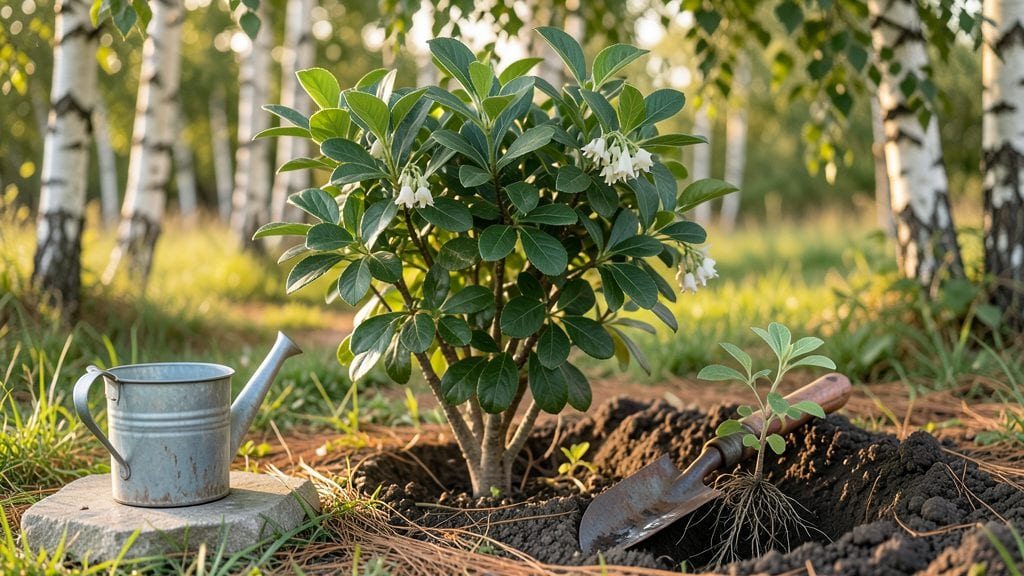
Planting blueberry trees in acidic soil transforms your yard into a berry-producing powerhouse—imagine fresh, sweet berries from June through August. 🌿 I learned the hard way that regular garden soil won’t cut it; these finicky trees demand pH levels between 4.5 and 5.5, or they’ll withhold their bounty.
The payoff? A bush that keeps giving for decades with minimal fuss once established.
Start with the right spot: full sun, well-draining soil, and protection from harsh winds. Bare-root trees are cost-effective and easier to plant in early spring, while container-grown options let you plant year-round. Amend your soil with peat moss or sulfur to lower the pH if needed—test kits make this simple.
Spacing matters too: give each tree 5 to 6 feet apart for dwarf varieties, or 8 to 10 feet for standard bushes.
After planting, water deeply to settle the roots, then mulch with pine needles or shredded bark to maintain acidity and retain moisture. Keep the soil consistently damp (not soggy) for the first year, and avoid fertilizers with lime.
With patience, your trees will reward you with vibrant green foliage and clusters of blueberries by their third season—no grocery store prices required.
Whether you’re in Zone 4 or 9, blueberries thrive in cool summers and mild winters. Just avoid planting in heavy clay or alkaline soils without amendments. The key is consistency: stick to the soil prep, and your bushes will produce year after year with almost no effort.
Ready to turn your yard into a berry patch?
📚 In This Guide
- What you need
- Instructions
- Tips and common mistakes
- Wrapping up and next steps
What you need
- ● Blueberry plants (1-3 plants per person, depending on desired yield): Choose northern highbush (zones 4-7), southern highbush (zones 7-9), or lowbush (zones 3-5) varieties based on your climate.
- ● Opt for bare-root (spring) or container-grown (spring/fall) plants.
- ● Acid-loving soil amendments: Peat moss or pine bark fines (5-10 lbs per plant)
- ● Sulfur (1-2 lbs per 100 sq ft, if soil pH is above 5.5)
- ○ Composted pine needles or oak leaves (optional, 2-3 inches as mulch)
- ● Organic mulch: Pine straw or wood chips (2-3 inches, avoid cedar—it’s toxic!)
- ● Fertilizer: Acid-forming fertilizer (e.g., 10-10-10 or 8-3-9 with sulfur-coated urea, 1 lb per 100 sq ft)
- ● Iron chelate (for chlorosis-prone soils, 1 oz per gallon of water)
- ● Hand trowel or transplant spade (for digging small holes)
- ● Garden shovel (for amending soil)
- ● Pruning shears (sterilized with rubbing alcohol)
- ● Garden hose with spray nozzle (for watering)
- ● pH test kit (digital or liquid, must read 4.5–5.5 for blueberries!)
- ● Measuring tape or ruler (to space plants 4–6 ft apart)
- ● Gloves (nitrile or leather for protection)
- ● Drip irrigation kit (for consistent moisture)
- ● Bird netting (to protect ripening berries)
- ● Epsom salt (magnesium sulfate, 1 tbsp per gallon of water for chlorotic leaves)
- ● Blueberry-specific fungicide (e.g., copper fungicide for mummy berry prevention)
- ● Soil moisture meter (to monitor root zone hydration)
Step-by-step instructions for planting blueberry trees
Here's how to plant four thriving blueberry trees that'll reward you with berries for decades.
🌱 Step 1: Prepare the Planting Site with Acidic Soil
Blueberries demand acidic soil (pH 4.5-5.5)—regular garden soil won't cut it. Test your soil first with a kit; if it's too alkaline, amend with peat moss or sulfur (follow package rates). Choose a spot with partial sun (4-6 hours daily)—too much sun scorches leaves, but too little reduces fruit production.
Dig holes twice as wide as the root ball but only as deep. Loosen the soil at the bottom with your hands—compacted soil strangles roots. I always mix the native soil with half peat moss in the hole to ensure proper acidity right where roots will grow. Space holes 6-10 feet apart for dwarf varieties or 15-20 feet for standard trees.
🪴 Step 2: Plant Bare-Root Trees Correctly
If planting bare-root trees, soak the roots in lukewarm water for 2-3 hours before handling. Position the tree so the top of the root flare sits 2-3 inches above soil level—burying the flare suffocates the plant. Spread roots gently outward (don't bend them) and fill the hole with your amended soil mixture.
Press firmly around the base to eliminate air pockets, but don't compact the soil. The root ball should settle naturally as you add soil. Water immediately with 5 gallons per tree to help soil settle. You'll see the soil level drop slightly—this is normal. Mulch with 3 inches of pine needles or bark (never wood chips) to maintain acidity and retain moisture.
☀️ Step 3: Water and Fertilize for First-Year Growth
Keep soil evenly moist but never soggy for the first 6-8 weeks. Water deeply 2-3 times per week until new growth appears, then reduce to 1 inch per week. Overwatering causes root rot, but underwatering stresses young trees. You'll know moisture is right when the top 2 inches of soil feel slightly damp.
Wait 6-8 weeks after planting before fertilizing. Use an acid-loving plant fertilizer (like cottonseed meal) at half-strength in early spring. Avoid high-nitrogen fertilizers—they encourage leafy growth at the expense of fruit. Prune only to remove dead branches; let the tree focus on establishing roots first.
⏰ Step 4: Maintain Soil pH and Mulch Yearly
Test soil pH annually in late winter. If readings climb above 5.5, amend with sulfur or aluminum sulfate following package instructions. Replenish mulch in early spring with 2-3 inches of fresh pine needles—they slowly release acidity as they decompose. Never let mulch touch the tree trunk; keep a 2-inch gap to prevent rot.
Blueberries need cross-pollination, so plant at least two compatible varieties. Watch for white flowers in spring—this signals healthy trees. If flowers appear but no berries form, your soil may need more phosphorus or you might have missed the pollination window. Patience is key—trees typically bear fruit in 2-3 years.
Tips & tricks for planting blueberry trees
These pro tips will help you avoid common pitfalls and set your blueberry trees up for decades of success.
Soil Testing is Non-Negotiable: Don't skip the pH test—blueberries are finicky about acidity! If your soil tests above 5.5, you'll need to amend with sulfur or peat moss. I've seen gardeners assume their soil is fine only to have stunted trees with no berries. Test again after amending to confirm you've reached that ideal 4.5-5.5 range.
Root Soaking Secret: That 2-3 hour lukewarm water soak for bare-root trees isn't just about hydration—it's about waking up the roots. I've found that soaking in water with a root stimulator (like seaweed extract) gives an extra boost. Just don't over-soak, or you'll risk waterlogging the roots before they even hit the ground.
Planting Depth Matters: Positioning the root flare 2-3 inches above soil level is critical. I learned this the hard way when my first attempt buried the flare completely—my tree struggled for years. Use a small stake to mark the correct depth before planting. After watering, you'll see the soil settle naturally, which is why we don't compact it during planting.
Mulch Like a Pro: That 3-inch layer of pine needles isn't just for looks—it's a slow-release acidity booster. Refresh it every spring and avoid wood chips (they raise pH over time). I also create a 2-inch gap between mulch and trunk to prevent rot, which is an easy mistake to make when eager to cover the soil.
Pro Tips for Planting Blueberry Trees
- These pro tips will help you avoid common pitfalls and set your blueberry trees up for decades of success.
- Soil Testing is Non-Negotiable: Don't skip the pH test—blueberries are finicky about acidity!
- Root Soaking Secret: That 2-3 hour lukewarm water soak for bare-root trees isn't just about hydration—it's about waking up the roots.
Frequently asked questions
Got questions about planting blueberry trees? You’re not alone!
Here are answers to the most common concerns—from soil prep to troubleshooting—so you can grow thriving bushes with confidence.
When is the best time to plant blueberry trees?
Plant in early spring (just as new growth starts) or fall (4-6 weeks before your first frost). Avoid extreme heat or cold—roots need time to establish without stress. Northern climates lean toward spring, while milder zones (like Zones 7-9) can handle fall planting. Pro tip: Bare-root trees plant best in spring; container-grown bushes adapt year-round!
How do I know if my soil is acidic enough for blueberries?
Blueberries thrive in soil with a pH of 4.5–5.5. Test your soil with a home kit or send a sample to a local extension office. If it’s too alkaline, amend with sulfur (sprinkle and water) or peat moss. Warning: Over-acidifying can harm plants—aim for gradual adjustments!
Can I grow blueberries in containers? What’s the best setup?
Use a large pot (15+ gallons) with drainage holes, filled with acidic potting mix (like a 50/50 blend of peat moss and pine bark). Dwarf varieties (e.g., ‘Top Hat’ or ‘Peach Sorbet’) work best. Key tip: Add slow-release fertilizer (like cottonseed meal) and repot every 2–3 years.
Why aren’t my blueberry bushes fruiting? Troubleshooting guide.
Common culprits:
- Improper pollination: Plant two compatible varieties (e.g., ‘Duke’ + ‘Bluecrop’). Bees handle the rest!
- Young trees: Wait 2–3 years for maturity (patience pays off!).
- Nutrient deficiency: Yellow leaves? Add iron or magnesium (Epsom salt spray).
- Frost damage: Late spring frosts can kill blossoms. Cover bushes if frost is forecasted.
What’s a low-maintenance alternative to traditional blueberry bushes?
Try blueberry shrubs with semi-dwarf roots (like ‘Sunshine Blue’ or ‘Pink Lemonade’). They’re disease-resistant, produce earlier, and need less pruning. For zero-fuss options, consider blueberry ground covers (e.g., ‘Peach Sorbet’)—they spread slowly and thrive in containers. Bonus: These varieties often yield fruit in their first year!
Wrapping up and next steps
Planting blueberry trees is a rewarding journey that leads to delicious, homegrown fruit—if you give them the right conditions! 🌱 Remember, these acid-loving plants thrive in well-draining, acidic soil, the right sunlight, and consistent care.
With patience and the right techniques, you’ll enjoy year-round harvests and a thriving garden that’s the envy of the neighborhood.
Now that you’re armed with the soil secrets and step-by-step guidance, it’s time to roll up your sleeves and get planting! Start by testing your soil pH and prepping your site—your future blueberry bushes will thank you. Happy gardening! 🍇