Propagation
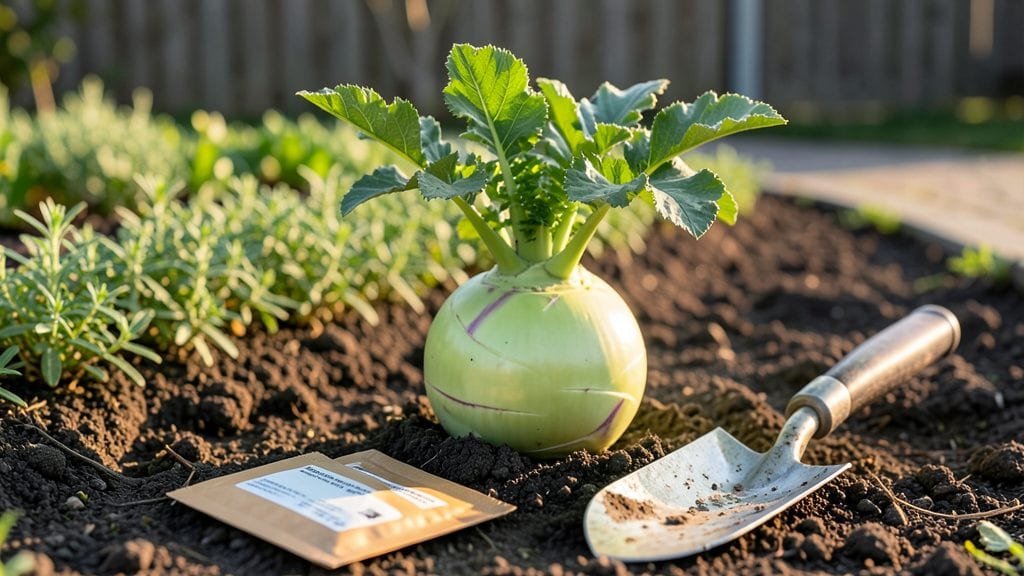
Planting kohlrabi seeds gives you crisp, nutritious harvests in just 30 days—faster than most vegetables, and with half the fuss of starting from transplants.
I’ve grown kohlrabi for years, and the secret to success isn’t complicated: it’s all about timing, soil warmth, and keeping those seedlings from stretching into leggy shadows before they even hit the ground.
The first time I saw my kohlrabi bulbs forming like little green turnips, I knew I’d never buy them at the store again.
You’ll need a sunny spot with loose, well-draining soil—kohlrabi hates soggy roots—and seeds that you can plant ¼ inch deep, spaced 2 inches apart. For a head start, sow indoors 4-6 weeks before your last frost, but be ready to transplant carefully.
Direct-sowing works too if you wait until soil temps hit 50°F or warmer—just cover the seeds lightly and keep them moist. The biggest rookie mistake? Letting them bolt from heat stress or drought, which turns sweet bulbs bitter. A little shade cloth on hot afternoons can save your harvest.
Within 10 days, you’ll see tiny leaves pushing through the soil, and by day 30, you’ll be harvesting bulbs that taste like a cross between broccoli and a radish—crunchy, mild, and packed with nutrients.
The plants even keep producing side shoots for weeks, so one sowing turns into multiple harvests. My kids used to call them “space turnips” because they grew so fast, and now they’re the first thing I plant every spring.
Works for both garden beds and containers—just use larger pots for bigger varieties. If you’re in a short growing season, treat kohlrabi like a spring crop and start early. The payoff? A vegetable so fast and foolproof, even my black thumb can’t kill it. Ready to try?
📚 In This Guide
- What you need
- Instructions
- Tips and common mistakes
- Wrapping up and next steps
What you need
- ● Kohlrabi seeds: 1 packet (typically 50–100 seeds; choose varieties like 'Purple Vienna or 'White Vienna' for best results).
- ● Seed-starting mix: 1–2 gallons of sterile, well-draining potting soil (or compost + perlite mix for DIY).
- ● Containers or seed trays: 4–6" deep pots (for transplanting) or
- ● Seed trays with cell inserts (for direct sowing).
- ● Grow lights or sunny windowsill: 6–8 hours of light daily (or a sunny outdoor spot after last frost).
- ● Watering can or spray bottle: With a fine mist setting for gentle watering.
- ○ Fertilizer (optional but recommended): Balanced liquid fertilizer (e.g., 10-10-10) or
- ● Compost tea for organic growth.
- ● Location: Full sun (6+ hours/day) or partial shade (especially in hot climates).
- ● Soil: Well-draining, slightly acidic to neutral (pH 6.0–7.0). Amend with compost if needed.
- ● Spacing: 12–18 inches apart in rows 2–3 feet apart (or 6–8 inches in containers).
- ● Climate: Plant after the last frost (soil temps ≥ 45°F/7°C) or use row covers for early starts.
- ● Plant labels (to track varieties).
- ● Twine and stakes (for trellising if growing vertically).
- ● Mulch (straw or shredded leaves to retain moisture).
- ● pH test kit (to monitor soil acidity).
Step-by-step instructions for planting kohlrabi seeds
Here’s how to get your kohlrabi growing quickly and ready for harvest in just 30 days.
Prepare the Soil and Planting Site
Kohlrabi thrives in loose, well-draining soil with a pH between 6.0 and 7.0. Work the 3 gallons of compost into the top 6 inches of soil to improve fertility and drainage. If your soil is heavy clay, mix in 2 gallons of coarse sand to prevent compaction. Kohlrabi hates soggy roots, so avoid planting in low spots where water pools.
Choose a location with full sun to partial shade—at least 4 to 6 hours of direct sunlight daily. If your summers are scorching, afternoon shade helps prevent bolting. Test the soil moisture by pressing your finger 1 inch deep; if it feels dry, water lightly before planting. Kohlrabi grows best when the soil stays consistently moist but never waterlogged.
Sow the Seeds at the Right Depth and Spacing
Plant the 1 packet of kohlrabi seeds (about 50 seeds) ½ inch deep and 2 inches apart in rows spaced 18 inches apart. Kohlrabi seeds germinate best in soil temperatures between 60°F and 75°F, so wait until all danger of frost has passed in spring or plant in late summer for a fall harvest. If sowing in warm climates, provide shade cloth until seedlings emerge to prevent the soil from drying out too quickly.
Thin seedlings to 4 inches apart once they develop 2 true leaves—this prevents overcrowding and ensures each plant gets enough nutrients. Use small scissors to snip unwanted seedlings at soil level rather than pulling, which can disturb roots. You’ll know the spacing is correct when the remaining plants have plenty of room to swell without competing for light or nutrients.
Water Consistently for Fast Germination
Keep the soil evenly moist during germination, which typically takes 5 to 10 days in ideal conditions. Water lightly every 1 to 2 days using a fine-mist spray nozzle to avoid displacing seeds. Once seedlings emerge, switch to deep watering at the base—about 1 inch of water per week—to encourage strong root development. Avoid wetting the leaves, as this can lead to fungal diseases like downy mildew.
Mulch around plants with 2 inches of straw to retain moisture and suppress weeds. This is especially important in dry spells or hot weather, as kohlrabi bulbs swell quickly and need steady hydration. Check soil moisture by lifting a plant gently; if the bulb feels firm, it’s time to water again. Overwatering is just as harmful as underwatering, so always let the top ½ inch of soil dry slightly between waterings.
Fertilize Lightly for Crunchy Harvests
Apply a ½ cup of 10-10-10 balanced fertilizer when seedlings are 3 inches tall, then repeat every 4 weeks until harvest. Kohlrabi is a fast-growing crop and doesn’t need heavy feeding, but a light dose of nitrogen encourages leafy growth while potassium supports bulb development. Avoid high-nitrogen fertilizers, which can lead to excessive leaf production at the expense of the edible stem.
Side-dress with 1 cup of compost when plants are half-grown to provide slow-release nutrients. Work it into the soil around the base but avoid direct contact with the stems. You’ll notice the bulbs firming up and turning a vibrant green when they’re ready to harvest—this usually happens 30 to 40 days after sowing, depending on variety and growing conditions.
Harvest at Peak Crunchiness
Harvest kohlrabi when the bulb reaches 2 to 3 inches in diameter—this is when it’s most tender and flavorful. Use a sharp knife to cut the stem ½ inch above the bulb to avoid damaging the plant. If left too long, bulbs become woody and bitter, so check plants every 2 to 3 days during the final week of growth. Kohlrabi grows quickly, so don’t wait too long!
For continuous harvests, plant successive batches every 2 weeks in spring and fall. Store harvested kohlrabi in the refrigerator for up to 2 weeks or enjoy it fresh in salads, stir-fries, or roasted dishes. The key to a successful crop is consistent moisture and timely harvesting—follow these steps, and you’ll have crisp, homegrown kohlrabi in no time.
Tips & tricks for planting kohlrabi seeds
Fast germination and a crunchy harvest in just 30 days is absolutely achievable with these key strategies that address the most common gardening challenges.
Soil Temperature is Everything: Kohlrabi seeds need soil between 60°F and 75°F to germinate reliably. If your spring is cooler, consider using a black plastic mulch to warm the soil faster. I've seen germination times cut in half by using this simple trick—just lay the plastic down a week before planting and remove it after seeds sprout. This works especially well in northern climates where cool soil delays germination.
Thinning Made Easy: The 4-inch spacing after thinning might seem generous, but it's crucial for those crisp bulbs. I recommend thinning in two stages: first when seedlings have 2 true leaves (as instructed), then again at 3 inches tall if they're still crowded. Use clean scissors to avoid spreading disease, and always thin on a cloudy day to reduce stress on the remaining plants. This two-step approach prevents overcrowding that leads to tough, fibrous bulbs.
Watering Wisdom: The 1-inch weekly watering guideline works perfectly in most climates, but watch for these signs of trouble: if the soil stays wet longer than 24 hours after watering, you're overdoing it. For sandy soils, you might need to water every 2 days instead. I've found that morning watering prevents fungal issues—water just before sunrise so leaves dry quickly. This simple habit keeps your kohlrabi plants healthy and vigorous throughout their 30-day growth cycle.
Harvest Timing Secret: Those 2-3 inches of bulb diameter might seem like a small window, but checking every 2-3 days during the final week is what separates great harvests from mediocre ones. I've learned to harvest in the morning when the bulbs are firmest. Use a sharp knife to cut stems cleanly—this prevents damage that can invite rot. The key is consistency: once you see bulbs reaching 1.5 inches, start checking daily to catch them at peak tenderness.
Pro Tips for Planting Kohlrabi Seeds
- Fast germination and a crunchy harvest in just 30 days is absolutely achievable with these key strategies that addres...
- Soil Temperature is Everything: Kohlrabi seeds need soil between 60°F and 75°F to germinate reliably. If your spring ...
- Thinning Made Easy: The 4-inch spacing after thinning might seem generous, but it's crucial for those crisp bulbs. I ...
Frequently asked questions
Got questions about planting kohlrabi seeds?
You’re not alone—this fast-growing veggie has a few quirks! Here are answers to the most common queries to help you grow a thriving harvest.
When is the best time to plant kohlrabi seeds?
Kohlrabi thrives in cool weather, so plant seeds 2–4 weeks before your last frost date in spring (around March–April in most zones). For a fall crop, sow seeds 8–10 weeks before your first frost (August–September). Avoid planting in scorching summer heat—it’ll bolt faster!
How long does it take for kohlrabi seeds to germinate?
Kohlrabi seeds typically sprout in 5–10 days in warm, moist soil (60–70°F). Keep the soil consistently damp but not soggy, and place trays in a sunny spot (or under grow lights). Pro tip: A heat mat can speed up germination if your climate is chilly!
Can I plant kohlrabi seeds directly in the garden, or should I start indoors?
Direct sowing is easiest for kohlrabi—just scatter seeds ½ inch deep in well-drained soil, 1–2 inches apart. Starting indoors is unnecessary unless your growing season is very short. Thin seedlings to 6–8 inches apart once they’re 2 inches tall for optimal growth.
What pests or diseases should I watch for when growing kohlrabi?
Common pests include cabbage worms, flea beetles, and aphids. Use row covers early to deter insects, or spray with neem oil. Watch for clubroot or downy mildew—improve drainage and rotate crops to prevent fungal issues. Quick fix: Remove affected leaves promptly to stop spread!
How do I know when kohlrabi is ready to harvest?
Harvest when the bulb (the edible part) is 2–3 inches wide—about 30–50 days after planting. The skin should be smooth and firm, not woody. Wait too long? The bulb turns pithy and bitter. Cut the stem at the base, leaving the leaves (they’re edible too!)
Wrapping up and next steps
Planting kohlrabi seeds is a rewarding journey that delivers fast, crunchy harvests in just 30 days—perfect for impatient gardeners! 🌱 With the right soil, spacing, and care, you’ll enjoy a bountiful crop of versatile bulbs and leaves.
Now that you’re equipped with all the tips and tricks, there’s no better time to grab those seeds and get growing!
Ready to take the next step? Start by marking your calendar for planting (spring or fall works best in most climates) and prep your garden bed. Once your kohlrabi is thriving, share your progress—or tag us in your harvest pics—we’d love to see your success!