
Trees
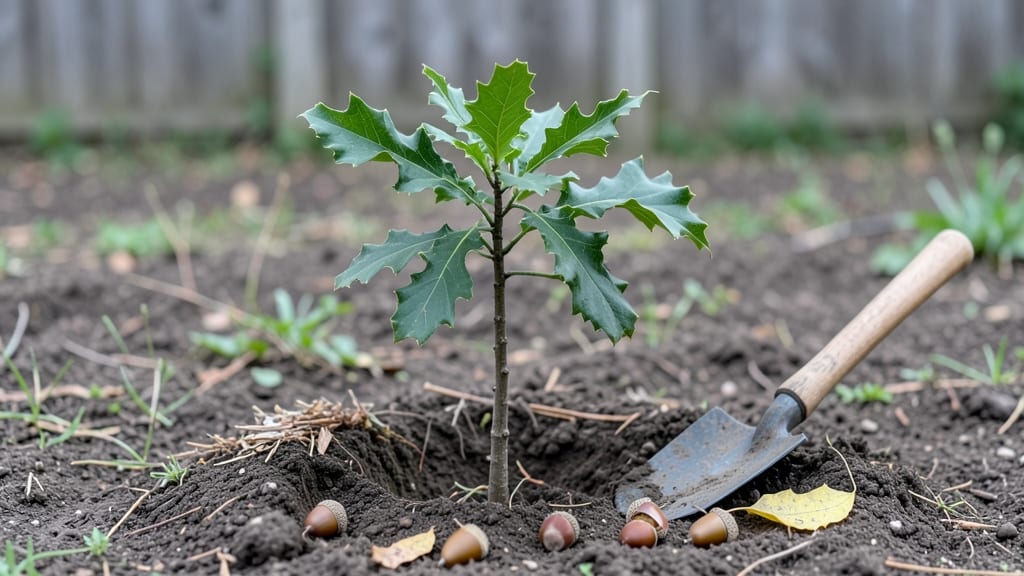
Planting sawtooth oak acorns means you're investing in a tree that could outlive you—if you get the germination right. 🌱 I learned the hard way that these acorns need specific conditions to break dormancy, but once they do, the payoff is a sturdy oak that thrives for centuries.
The secret isn't just burying them; it's mimicking the forest floor they'd grow under naturally.
You'll need fresh acorns (no cracks or mold), a mix of sandy loam and leaf mold, and either a shallow container or a sunny garden spot. Plant them 1 inch deep, spaced 6 inches apart, and keep the soil moist but never soggy.
Patience is key—some acorns sprout in 3-4 weeks, others take months, but don't give up if nothing happens right away.
Once sprouts appear, thin to the strongest seedling and provide bright, indirect light (no harsh afternoon sun). In containers, transplant outdoors after 2-3 years when roots fill the pot. Direct-sown acorns take 3-5 years to reach transplant size, but they develop deeper roots and better resilience.
This works best in zones 5-9, where sawtooth oaks thrive, but even in cooler climates, acorns can germinate if given extra warmth. The biggest mistake? Overwatering or planting too deep—both smother roots. With the right approach, you're not just growing a tree; you're planting a legacy.
📚 In This Guide
- What you need
- Instructions
- Tips and common mistakes
- Wrapping up and next steps
What you need
- ● Fresh sawtooth oak acorns (collect from mature trees in fall; aim for 50+ acorns for better odds of germination).
- ● Well-draining potting mix (50/50 blend of peat moss or coconut coir and perlite or coarse sand; ~2–3 gallons per batch).
- ● Seed-starting trays or small pots (3–4" diameter; 1–2 trays or 12+ pots for 50 acorns).
- ● Plastic wrap or humidity dome (to retain moisture during stratification).
- ● Spray bottle (for gentle watering—avoid soaking).
- ● Refrigerator or cold stratification setup (a sealed container with a damp paper towel; 4–6 weeks at 35–45°F).
- ○ Heat mat (optional) (70–80°F for faster germination post-stratification).
- ● Grow lights or sunny windowsill (12–14 hours of light daily once sprouts emerge).
- ● Timing: Plant acorns immediately after harvest or store them in a cool, dry place (like a paper bag in the fridge) until stratification.
- ● Location: Choose a partially shaded spot for outdoor planting (sawtooth oaks tolerate shade but thrive in sun later).
- ● Soil pH: Ideal range is 5.5–7.0 (test or amend with lime if needed).
- ● Patience: Germination can take 4–12 weeks—stay consistent with moisture checks!
Step-by-Step instructions for planting sawtooth oak acorns
Here's my battle-tested method for coaxing these finicky acorns into sturdy saplings.
🌱 Step 1: Collect and Stratify Acorns for Germination
Harvest mature sawtooth oak acorns in late fall when they've fallen naturally—they'll have thick, intact shells and no visible cracks. Remove any worm-damaged specimens immediately. Place clean acorns in a paper towel-lined container with a 1:1 mix of moist peat moss and perlite (about 2 inches deep).
Refrigerate the container for 90-120 days at 35-40°F—this mimics winter chilling and breaks dormancy. Check moisture weekly; the mix should feel like a wrung-out sponge. After stratification, you'll see tiny root hairs emerging from the bottom of the acorn—this is your cue to proceed.
💧 Step 2: Sow Stratified Acorns in Containers
Fill 4-inch deep pots with sterile seed-starting mix (not garden soil—it compacts too easily). Plant each acorn 1 inch deep, pressing gently but firmly to ensure good soil contact. Use one pot per acorn to avoid overcrowding; sawtooth oaks resent competition from day one.
Water lightly until moisture seeps from the drainage holes, then place pots in a shaded, warm location (around 70°F). Keep the soil consistently moist—never soggy. Germination typically takes 3-6 weeks, but patience is key. You'll know it's working when the radicle (white root) breaks through first, followed by the cotyledons (first true leaves).
☀️ Step 3: Provide Gradual Sun Exposure
Once seedlings emerge with 2-3 true leaves, move them to bright, indirect light for 2 weeks. Sawtooth oaks are shade-tolerant as seedlings but need gradual hardening to prevent leaf scorch. After 14 days, introduce 2-3 hours of morning sun daily, increasing exposure by 1 hour weekly until they tolerate full sun by mid-spring.
Rotate pots weekly to prevent leaning. You'll notice stronger stems and darker green leaves as they acclimate. Avoid fertilizing now—young oaks are sensitive to salts and prefer low-nitrogen soil (use a balanced 10-10-10 at half-strength only after 6 months).
🪴 Step 4: Transplant to Outdoor Nursery Beds
When seedlings reach 12-18 inches tall (usually spring of their second year), transplant to outdoor nursery beds with well-draining soil. Dig holes twice as wide as the root ball but no deeper. Place each seedling at the same depth it grew in the pot—burying too deep suffocates the stem.
Space plants 6 feet apart in rows 8 feet apart to allow airflow and future growth. Water deeply once weekly during dry spells, aiming for 1-2 inches of moisture per week. Mulch with 2 inches of wood chips to retain moisture and suppress weeds. You'll see new growth within 3-4 weeks—this confirms successful establishment.
⏰ Step 5: Monitor and Protect Young Saplings
Watch for oak leaf gall wasps (small bumps on leaves) and deer browsing—both are common threats. Apply organic neem oil spray at the first sign of pests and use deer-resistant fencing if local wildlife is a problem. Prune only to remove dead or crossing branches in late winter when the tree is dormant.
By year 3, your sawtooth oaks should reach 4-6 feet tall with a well-developed root system. This is when they're ready for field planting or sale. The key? Consistency—oaks grow slowly but reward patience with century-long strength.
Tips & tricks for planting sawtooth oak acorns
These battle-tested strategies will help you turn those stubborn acorns into thriving saplings—without the common pitfalls that derail most gardeners.
Stratification Success: The 90-120 day cold treatment at 35-40°F is non-negotiable for sawtooth oaks, but here's the secret: use a double-layered plastic bag with small air holes to create a mini greenhouse effect inside your fridge. This maintains consistent moisture without risking mold. I've found that checking moisture by squeezing the mix—it should feel like a wrung-out sponge—is more reliable than weighing it.
Container Selection: Don't underestimate the importance of drainage in Step 2. I recommend using terracotta pots with drainage holes for your 4-inch containers—they wick moisture away from roots better than plastic. If you're using plastic, drill extra holes in the bottom to prevent waterlogging. And here's what nobody tells you: line the bottom of each pot with 1/4 inch of coarse sand before adding your sterile seed-starting mix. This creates a buffer zone that prevents root rot.
Sunlight Transition: The gradual hardening process in Step 3 is where most failures happen. Start the 2-week indirect light phase in a north-facing window if possible—south-facing windows can be too intense even for indirect light. When you begin introducing morning sun, place pots on a white tray or reflective surface to bounce extra light onto the seedlings. This mimics natural forest conditions where young oaks grow under a canopy before reaching full sun.
Transplant Timing: Waiting until seedlings reach 12-18 inches in their second year might seem like forever, but trust me on this: these young oaks develop taproots that can reach 3 feet deep by then. Transplant on a cool, overcast day to reduce transplant shock. After planting, create a 1-inch deep water well around each seedling and fill it with water—this encourages roots to spread outward rather than circling in the pot.
Pro Tips for Planting Sawtooth Oak Acorns
- These battle-tested strategies will help you turn those stubborn acorns into thriving saplings—without the common pitfalls that derail most gardeners.
- This maintains consistent moisture without risking mold.
- Container Selection: Don't underestimate the importance of drainage in Step 2.
Frequently asked questions
Got questions about growing sawtooth oaks from acorns? You’re not alone! Here are answers to the most common queries to help you succeed with your planting project.
How long does it take for sawtooth oak acorns to germinate?
Sawtooth oak acorns typically take 4–6 weeks to germinate under ideal conditions—moist, well-drained soil at 60–70°F (15–21°C). Cold stratification (40°F/4°C for 60–90 days) speeds this up. Patience is key—some acorns may take up to 3 months.
Can I plant sawtooth oak acorns directly in the ground, or should I start them indoors?
For best results, stratify and sow indoors in fall or early spring (6–8 weeks before last frost). Direct outdoor planting works too, but acorns risk drying out or being eaten by wildlife. If planting outside, bury them 2–3 inches deep in a sheltered spot.
What’s the best way to protect acorns from squirrels and other pests?
Squirrels and rodents love acorns! To deter them:
- Use wire mesh cages (1/4-inch hardware cloth) over planting sites.
- Plant in remote areas or under dense shrubs.
- Apply pet-safe repellents (like cayenne pepper spray) near planting zones.
What if my acorns sprout but the seedlings look weak or leggy?
Leggy seedlings often mean too little light or overwatering. Fix it by:
- Moving seedlings to a sunny window or grow light (12+ hours/day).
- Watering only when the top inch of soil is dry.
- Thinning crowded seedlings to 2–3 inches apart for better airflow.
Are there alternatives to sawtooth oaks if I want fast-growing shade trees?
If sawtooth oaks grow too slowly for your needs, consider these faster-growing shade alternatives:
Tree
Growth Rate
Shade Potential
Silver Maple
Fast (3–4 ft/year)
Moderate (loses leaves early)
Eastern Redbud
Moderate (1–2 ft/year)
Light to moderate
Green Ash
Fast (2–3 ft/year)
Dense (great for privacy)
Note: Sawtooth oaks mature into stunning, drought-resistant trees—worth the wait for long-term benefits!
Wrapping up and next steps
Planting sawtooth oak acorns is a rewarding way to nurture a resilient, long-lived tree—just give them the right conditions! 🌱 With patience, proper stratification, and a well-prepared site, you’ll soon see those first tender shoots breaking through the soil. Now’s your chance to take action: gather those acorns, prep your spot, and start your oak’s journey today!
Ready to dive deeper? Check out local oak conservation resources or join a gardening forum to share your progress—your future sawtooth oak will thank you!