Pruning
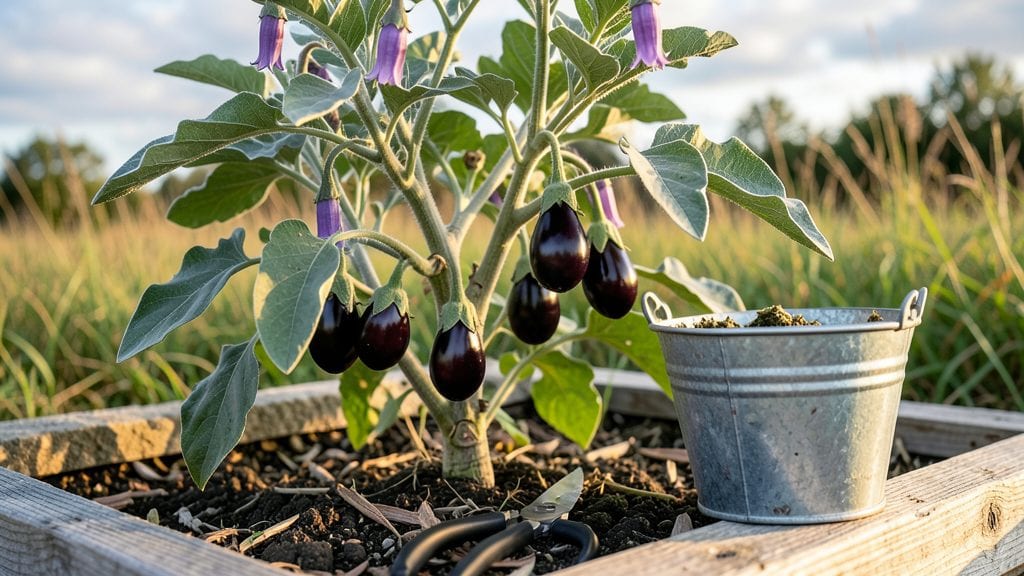
Pruning aubergine plants isn’t just about shaping—it’s about unlocking year-round productivity by directing energy where it counts. 🌱 I learned this the hard way when my first crop bolted after a heatwave, but now I prune strategically to keep plants bearing fruit well into fall.
The difference between a single flush of blooms and a steady harvest comes down to three simple cuts that improve airflow, prevent disease, and encourage bushier growth.
You’ll only need sharp pruners, a clean cutting surface, and about 20 minutes on a warm afternoon. Start by removing any leggy stems that angle outward—these steal energy from fruit production.
Next, trim back any crowded branches to 4-6 inches above a leaf node, and finally, pinch off the tips of new growth to promote branching. The goal is to create an open, airy plant that stays healthy and keeps producing.
What you’ll end up with is a denser, more productive aubergine plant that resists common issues like blossom end rot and powdery mildew. Fruits stay uniform in size, ripen faster, and the plant continues flowering even as summer winds down.
For varieties like ‘Black Beauty’ or ‘Ichiban,’ this method extends harvests by 4-6 weeks, while smaller types like ‘Patio Baby’ benefit from even lighter pruning to stay compact.
Fair warning: over-pruning can stress the plant, so focus on removing no more than 20-30% of the foliage at once. And if your aubergines are still young or struggling, hold off until they’ve established a strong root system—usually after 6-8 weeks of growth.
The key is balance, and once you get the rhythm, your plants will reward you with bigger yields and fewer surprises all season long.
📚 In This Guide
- What you need
- Instructions
- Tips and common mistakes
- Wrapping up and next steps
What you need
- ● Pruning shears or sharp bypass pruners – Choose sterilized, sharp tools to avoid damaging plants or spreading disease. A 5-inch blade works best for most aubergine varieties.
- ● Gloves (gardening or cut-resistant) – Protect your hands from thorns (if present) and dirt. Opt for nitrile-coated gloves for grip and durability.
- ● Disinfectant (rubbing alcohol or 10% bleach solution) – Clean tools before and after each use to prevent bacterial/fungal spread. Mix 1 part bleach to 9 parts water for a safe solution.
- ● Small container or bucket – Collect pruned branches for composting or disposal. A 5-gallon bucket is ideal for medium-sized gardens.
- ● Sharp knife or pruning saw – For thicker stems (over ½-inch diameter), a bypass saw prevents tearing.
- ● Plant growth hormone (rooting powder) – If propagating from cuttings, use a 1% IBA powder to encourage root growth.
- ● Marking twine or labels – Tag pruned sections to track growth stages (especially useful for multi-stemmed varieties like 'Ichiban').
- ● Hose with nozzle – Rinse tools and plants post-pruning to remove debris and reduce disease risk.
- ● Sunscreen & hat – Pruning outdoors? Shield yourself from sun exposure during peak hours!
Instructions for pruning aubergine plants
Here's the method I've used for years to maximize fruit production while keeping plants healthy and vigorous.
✂️ Step 1: Prune Early Growth to Encourage Strong Structure
Start pruning when your aubergine plants reach 12-18 inches tall and have developed 3-4 main stems. Remove the lower leaves and any weak or crossing branches within the first 6 inches of the plant base. This creates a clean, open framework that improves airflow and reduces disease risk.
Use clean, sharp pruning shears to make cuts at a 45-degree angle just above a leaf node. Avoid leaving stubs—this invites rot. I always prune on a dry morning when the plants are at their firmest. Watch for new lateral shoots emerging from the stem junctions; these will become your future fruiting branches.
✂️ Step 2: Thin Fruit Clusters for Maximum Size
Once flowers appear, focus on fruit thinning to prevent overloading the plant. Aubergines naturally produce clusters of 3-5 flowers, but you should leave only 1-2 strongest flowers per cluster. Remove the others by gently twisting them off—never cut, as this can damage the stem.
I prioritize keeping fruits that are closest to the main stem, as these tend to develop more robustly. Remove any malformed or undersized fruits immediately. This step is critical: overloaded plants produce small, bitter fruits and struggle to support their own weight. You'll see a dramatic improvement in fruit quality within 2-3 weeks of consistent thinning.
✂️ Step 3: Prune for Airflow and Disease Prevention
Throughout the growing season, maintain 3-4 main stems per plant by removing any vertical growth that exceeds your desired framework. Cut back any branches that grow inward or cross other stems, as these create dark, humid pockets where fungal diseases thrive.
In late summer, when fruiting slows, give your plants a light rejuvenation prune by trimming back the oldest leaves and any leggy growth. This redirects energy to new growth and prepares the plant for a potential second harvest. Always prune afternoon growth—morning is best as it gives wounds time to callus before evening moisture sets in.
⏰ Step 4: Winter Pruning for Next Season's Growth
After your final harvest, cut back all stems to 6 inches above the soil line using sterilized shears. This dramatic prune encourages fresh, vigorous growth in spring. Remove all remaining foliage and dispose of it away from your garden to prevent disease carryover.
I apply a 2-inch layer of mulch around the base after winter pruning to protect roots from temperature swings. Mark the plant location with stakes so you can identify it early in spring. With proper winter pruning, your aubergines will burst into growth as soon as soil temperatures reach 60°F—typically 4-6 weeks before your last frost date.
Tips & tricks for pruning aubergine plants
These essential techniques will help you maintain healthy, productive aubergine plants throughout the growing season—and beyond.
Timing is Everything: The key to successful pruning lies in the timing of each cut. In Step 1, prune early when plants reach 12-18 inches to establish a strong framework before they become overloaded. For Step 2's fruit thinning, consistency is critical—perform this task weekly once flowers appear, as neglected clusters can quickly become overburdened. Remember, the 2-3 week improvement window mentioned in Step 2 only applies if you maintain regular thinning schedules.
Pruning Technique Matters: When making cuts in Step 1 and Step 3, always use clean, sharp pruning shears to avoid damaging plant tissue. The 45-degree angle just above a leaf node creates a larger wound surface that heals more quickly. I've found that making cuts too close to the stem can actually stunt future growth, while leaving stubs invites rot. For Step 2's fruit removal, always twist flowers off gently—never cut—to preserve the delicate stem structure.
Disease Prevention Strategy: The most common mistake I see is ignoring the airflow principle in Step 3. Those inward-growing branches you're tempted to leave? They create perfect conditions for fungal diseases. I recommend removing any crossing branches immediately—they're not just competing for sunlight, they're creating microclimates that trap moisture. After each pruning session, I like to spray the plants with a diluted neem oil solution (1 tsp per gallon of water) as an extra preventative measure.
Winter Preparation Insight: The 60°F soil temperature threshold in Step 4 is your signal that spring growth is imminent. I've learned the hard way that rushing winter pruning too early can expose tender new growth to late frosts. Mark your plant locations with stakes immediately after winter pruning—trust me, you'll thank yourself in spring when you're trying to locate plants under fresh mulch. The 2-inch mulch layer isn't just decorative; it acts as insulation against temperature swings that can stress roots.
Pro Tips for Pruning Aubergine Plants
- These essential techniques will help you maintain healthy, productive aubergine plants throughout the growing season—and beyond.
- Timing is Everything: The key to successful pruning lies in the timing of each cut.
- Pruning Technique Matters: When making cuts in Step 1 and Step 3, always use clean, sharp pruning shears to avoid damaging plant tissue.
Frequently asked questions
Got questions about pruning aubergine (eggplant) plants? You’re not alone! Here are some of the most common queries—plus quick, actionable answers to keep your plants thriving.
When is the best time to prune aubergine plants?
Prune your aubergines early and often, starting when plants are about 12 inches tall. Focus on removing the first few flowers to encourage bushier growth. After the main stem reaches maturity (around 2–3 feet), trim back any excessive side shoots to redirect energy to fruit production. Avoid heavy pruning late in the season—it can stress plants before harvest.
How much should I trim off an aubergine plant?
For young plants, snip off only the top set of leaves and flowers to promote branching. Once established, remove up to one-third of the plant’s foliage if it’s overgrown or diseased. Never cut more than 25% of the plant at once—this can shock it. Think of it like giving your plant a light haircut, not a buzz cut!
What if I prune too much? Can I fix it?
Over-pruning can stunt growth or reduce fruit yield, but don’t panic! If you’ve gone overboard, stop pruning immediately and focus on care: water consistently, fertilize lightly with a balanced feed (like 10-10-10), and provide shade if your climate is hot. Most plants recover in 2–3 weeks, though they may take longer to produce fruit.
Should I prune aubergine plants in winter?
If you’re growing aubergines in a warm climate year-round, light pruning (removing dead or yellowing leaves) can keep plants healthy. However, in colder regions, aubergines are typically dormant in winter—skip pruning entirely until spring. Focus on protecting the plant from frost and resuming pruning when new growth appears in warmer months.
Does pruning increase eggplant yield?
Yes! Pruning directly boosts productivity by improving air circulation (reducing disease) and channeling energy to fruit development. Studies show pruned aubergine plants produce 20–30% more fruit than unpruned ones. Just remember: Less is more—aggressive pruning can backfire, so aim for strategic cuts rather than heavy trimming.
Wrapping up and next steps
Pruning your aubergine (eggplant) plants isn’t just about shaping—it’s your secret weapon for bigger yields, healthier growth, and year-round productivity! 🌱 With just three strategic cuts—removing suckers, trimming excess foliage, and pruning damaged branches—you’ll encourage stronger stems, better air circulation, and a bounty of plump, flavorful fruits.
Remember, consistency is key: check your plants regularly, especially during peak growing seasons.
Ready to transform your garden? Grab your pruners, roll up your sleeves, and give it a try—your future harvest will thank you! For extra confidence, revisit our pruning tips or explore common questions before diving in. Happy pruning! 🌿✨