Pruning
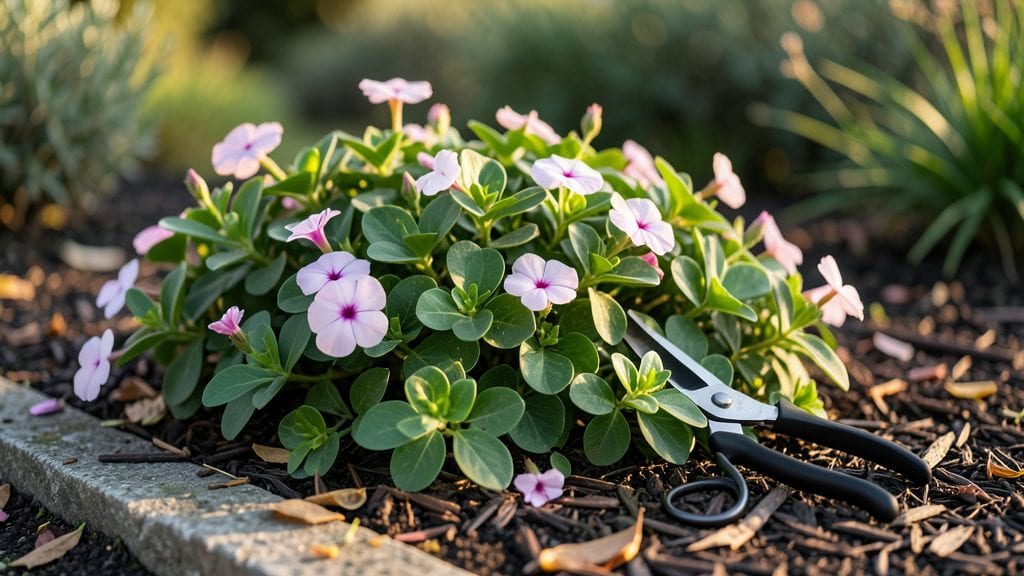
Pruning vinca plants transforms them from straggly survivors into lush, flowering powerhouses—and the secret lies in timing more than technique. I’ve spent years watching vinca recover from neglect, then bloom profusely after just three strategic cuts each season.
The key isn’t aggressive pruning; it’s understanding when to step in to encourage more stems and flowers rather than fewer.
You’ll need only three tools: sharp bypass pruners for clean cuts, gloves to avoid sap irritation, and a bucket for clippings (which make great mulch).
The real magic happens in late winter, mid-summer, and early fall—each trim serves a purpose: winter pruning opens airflow, summer pruning boosts flowering, and fall pruning prepares the plant for dormancy. Most gardeners over-prune in spring, which stunts growth, but vinca forgives mistakes if you act early.
After pruning, your vinca will respond with new growth within weeks, often covered in fresh blooms. The plant’s natural resilience means it rebounds quickly, but avoid cutting back more than one-third of the plant at once—this keeps it from becoming leggy.
Focus on removing dead stems first, then shape by trimming just above leaf nodes to encourage bushier growth.
This method works for both vinca major and vinca minor, whether grown in ground beds or containers. Even in hot climates where vinca thrives year-round, the same timing principles apply. Once you see the difference, you’ll never let vinca grow wild again—it’s that transformative.
📚 In This Guide
- What you need
- Instructions
- Tips and common mistakes
- Wrapping up and next steps
What you need
- ● Bypass pruners – Sharp, clean pruners (size: 5-7 inches) for cutting stems up to ½ inch thick.
- ● Hand pruners or loppers – For thicker stems (½ inch or larger), opt for loppers with a 6-8 inch blade.
- ● Disinfectant (rubbing alcohol or bleach solution) – 1 part bleach to 9 parts water to sterilize tools between cuts.
- ● Garden gloves – A pair of durable, cut-resistant gloves (size: medium or large) to protect your hands.
- ○ Pruning shears (optional but helpful) – For finer trims or reaching delicate spots.
- ● Garden twine or plant ties – To secure branches if needed during recovery.
- ● Compost bin or bag – For collecting pruned debris (1-2 gallon size recommended).
- ● Watering can or hose – To hydrate plants post-pruning.
- ● Pruning saw – For stubborn, woody stems that pruners can’t handle.
- ● Plant food or fertilizer – A balanced 10-10-10 or slow-release formula to boost post-pruning growth.
- ● Mulch – Organic mulch (2-3 inches) to retain moisture and protect roots.
- ● Plant markers – To label sections if you’re experimenting with different pruning techniques.
- ● Safety glasses – If working with thorny or overgrown Vinca varieties.
How to prune vinca plants for continuous flowering
Here's the precise method I use to keep vinca plants blooming abundantly through all four seasons.
First Spring Trim to Encourage New Growth
Start pruning vinca in early spring as soon as new growth appears—usually within 2-3 weeks after the last frost. This first cut removes any dead or damaged stems and stimulates fresh, vigorous growth. I always use clean, sharp pruning shears to make clean cuts just above a leaf node or set of leaves. Avoid cutting into old, woody stems, as vinca can regenerate from these points.
Remove about one-third of the plant's height at this stage. Look for stems that are leggy or have lost their compact shape—these are your targets. The goal is to shape the plant while maintaining its natural bushy form. After pruning, vinca typically responds within 2-3 weeks with new shoots and a fresh flush of flowers.
Mid-Season Deadheading and Light Pruning
Once the first wave of blooms appears, typically in late spring to early summer, switch to a maintenance pruning routine. Deadhead spent flowers by cutting back to the nearest leaf node or bud. This encourages the plant to produce more blooms instead of setting seed. I prune every 2-3 weeks during the growing season to keep the plant compact and flowering continuously.
If any stems become overly leggy or crowded, trim them back by one-third of their length. Focus on the outer edges of the plant to maintain an open, airy structure. Vinca thrives on airflow, so avoid overcrowding the center. After each pruning, water the plant deeply to help it recover and reduce stress.
Late Summer to Early Fall Renewal Cut
In late summer, vinca often slows down its flowering and growth. This is the perfect time for a renewal pruning to rejuvenate the plant before fall. Cut back about half of the plant’s height, focusing on older, woody stems. This drastic trim forces the plant to produce fresh, younger growth that will bloom more vigorously in early spring.
Remove any stems that are completely bare or have lost their vitality. Vinca is remarkably resilient, so don’t hesitate to prune aggressively. After this cut, the plant may look sparse, but it will bounce back quickly with new shoots. Water thoroughly after pruning to support recovery, and avoid fertilizing until new growth appears.
Minimal Winter Pruning for Spring Readiness
In colder climates, vinca may go dormant in winter. If your plant looks completely spent or has died back to the ground, wait until early spring before pruning. In milder climates, a light trim in late winter can remove any frost-damaged growth. The key is to avoid heavy pruning in winter, as vinca relies on stored energy to regrow in spring.
If you notice any dead or diseased stems, remove them immediately, even in winter. Disinfect your pruning tools with rubbing alcohol between cuts to prevent the spread of pathogens. Once spring arrives, vinca will reward your patience with a burst of fresh growth and blooms.
Tips & tricks for perfect vinca pruning
These targeted strategies will help you maximize your vinca's blooming potential while avoiding common pruning pitfalls that can stress your plants.
Timing is Everything: The 2-3 week intervals mentioned in the instructions are non-negotiable for vinca's growth cycle. In Step 1, wait until you see those first tender spring shoots—this is your cue to begin. I've learned the hard way that pruning too early can damage dormant buds, while waiting too long allows leggy growth that's harder to correct. Mark your calendar based on your last frost date, which typically occurs around early March in most climates.
Precision Cutting Technique: When making those one-third reductions in Steps 1 and 2, always cut at a 45-degree angle just above a leaf node or bud. This angled cut prevents water from pooling on the stem, which could lead to rot. I use my pruning shears to make clean cuts about 1/4 inch above the node—this small detail makes all the difference in how quickly your vinca recovers. For the renewal cut in Step 3, you can be more aggressive with your cuts since you're targeting older, woody stems that won't regenerate anyway.
Seasonal Maintenance Strategy: The late summer renewal cut in Step 3 is your plant's reset button. I've found that vinca responds best when you remove about half the plant's height at this stage—this might seem drastic, but it's what forces those vigorous new shoots that will carry you through winter. After this cut, I always apply a balanced fertilizer (10-10-10) two weeks later once new growth appears, which gives the plant the nutrients it needs to recover and store energy for spring.
Tool Care and Safety: The instructions mention disinfecting tools with rubbing alcohol, but I take this a step further by keeping a small bottle of 70% isopropyl alcohol in my gardening toolkit. Sterilize your shears between every 3-4 cuts, especially when dealing with diseased stems. I also sharpen my blades every spring before pruning season begins—dull tools cause more damage than clean cuts, and vinca is particularly sensitive to jagged cuts that can invite infection.
Pro Tips for Pruning Vinca Plants
- These targeted strategies will help you maximize your vinca's blooming potential while avoiding common pruning pitfalls that can stress your plants.
- Timing is Everything: The 2-3 week intervals mentioned in the instructions are non-negotiable for vinca's growth cycle.
- Precision Cutting Technique: When making those one-third reductions in Steps 1 and 2, always cut at a 45-degree angle just above a leaf node or bud.
Frequently asked questions
Got questions about keeping your vinca plants lush and blooming? You’re not alone! Here are answers to the most common queries about pruning these hardy perennials—so you can trim with confidence and enjoy year-round color.
When is the best time to prune vinca plants for maximum blooms?
Prune vinca twice a year for best results: early spring (just as new growth emerges) to shape the plant and remove dead wood, and late summer or early fall (after the first flush of blooms) to encourage a second wave of flowers. Avoid pruning in extreme heat or cold—aim for mild temperatures (50–75°F).
Do I need to sterilize my pruning tools before cutting vinca?
Sterilizing tools with rubbing alcohol or a 10% bleach solution prevents spreading disease (like powdery mildew) between plants. Wipe blades before and after pruning, especially if you’re working with multiple vinca varieties or other garden plants. A quick clean keeps your garden healthy!
What should I do if my vinca looks leggy after pruning?
Leggy vinca is a sign it needs more light or a harder prune. Cut back 1/3 of the plant in early spring, focusing on long, bare stems. After pruning, move the plant to a sunnier spot (vinca thrives in full sun) and fertilize lightly with a balanced, water-soluble fertilizer. New growth should fill out within 4–6 weeks!
Can I propagate vinca from pruned cuttings?
Yes! Vinca cuttings root easily—just dip 4–6 inch stems in rooting hormone, plant in a mix of perlite and peat moss, and keep moist. Place in bright, indirect light (no direct sun) and mist daily. Roots typically form in 2–4 weeks. Perfect for expanding your garden or sharing with fellow plant lovers!
What’s the difference between pruning vinca and other perennials?
Vinca is tougher than most—it blooms on new wood, so you can prune harder (even down to the ground in early spring) without sacrificing flowers. Unlike hydrangeas or lavender, vinca won’t sulk if you trim it back aggressively. Just avoid over-pruning in fall, as it needs time to harden off for winter.
Wrapping up and next steps
Pruning your vinca plants doesn’t have to be intimidating—with just three strategic trims a year, you’ll enjoy lush, vibrant blooms that keep giving! 🌸 By following the right timing, techniques, and tools, you’ll encourage healthier growth, prevent legginess, and even extend your plant’s lifespan. Now’s the perfect time to grab those shears and give your vincas the TLC they deserve!
Ready to take the next step? Mark your calendar for your first pruning session—whether it’s a spring refresh, a midseason boost, or a fall cleanup. Your vincas (and your garden!) will thank you with nonstop color all season long.