
Companion Plants
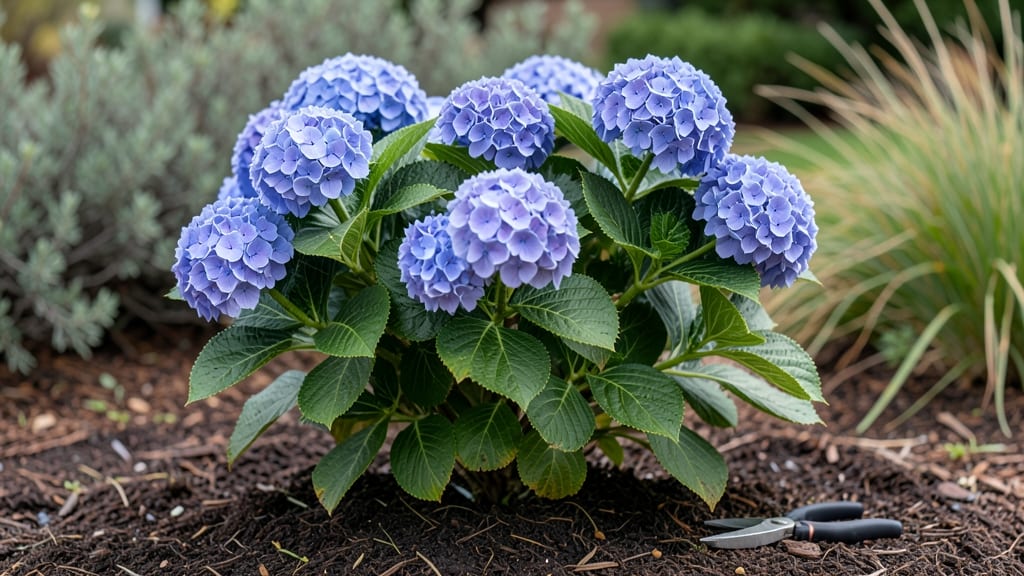
Rare hydrangea plants demand precise care to flourish, combining acidic, well-draining soil, partial shade exposure, and steady hydration. Cultivars like Hydrangea macrophylla 'Nikko Blue' and Hydrangea quercifolia 'Snow Queen' reward patience with vibrant foliage and distinctive blooms when pruned strategically and adapted to seasonal shifts.
These prized varieties often stand out for their color-changing blooms or unusual leaf shapes, but their quirks also mean they're more sensitive than common hydrangeas. 🌿 For example, oakleaf types like 'Snow Queen' can handle slightly drier conditions, while mopheads like 'Nikko Blue' may need extra humidity.
I've found that adjusting soil pH with sulfur or lime can transform bloom colors—something gardeners love experimenting with! The key is balancing their needs with your local climate, since rare hydrangeas often thrive in USDA zones 5-9 but may need winter protection in colder areas.
💡 In This Article
- Identifying and Selecting Rare Hydrangea Varieties
- Soil and Light Requirements for Exotic Hydrangeas
Identifying and selecting rare Hydrangea varieties
Rare hydrangea varieties stand out because of their distinctive botanical traits that set them apart from common garden types.
Mophead varieties like Hydrangea macrophylla 'Nikko Blue' feature large, rounded flower clusters that resemble pom-poms, while lacecap types like Hydrangea macrophylla 'Vanille Fraise' showcase delicate, flat blooms with a single fertile flower center surrounded by sterile, showy florets.
Oakleaf hydrangeas, such as Hydrangea quercifolia 'Snow Queen', are prized for their lobed leaves resembling oak foliage and their exfoliating bark that adds winter interest.
The color mutations in rare hydrangeas are particularly fascinating.
For example, Hydrangea macrophylla 'All Summer Beauty' displays blue-to-pink transitions within the same cluster, depending on soil pH. This happens because the flower color is determined by anthocyanin pigments that react to aluminum availability in the soil—lower pH (4.5-5.5) produces blue hues, while higher pH (6.0+) yields pink.
The leaf texture also varies: oakleaf types have sandpaper-like foliage** when young that softens as it matures, while smoothleaf varieties like Hydrangea arborescens 'Annabelle' maintain a velvety finish.
Climate zones play a crucial role in selecting the right rare hydrangea. Most thrive in USDA zones 5-9, but their specific needs differ. Mophead varieties prefer humid environments and may struggle in dry climates unless given extra water, while oakleaf types are more drought-tolerant once established.
For instance, Hydrangea paniculata 'Limelight' handles full sun exposure** better than its macrophylla cousins, making it ideal for warmer zones (7-9). In colder regions (5-6), varieties like Hydrangea macrophylla 'Endless Summer' are better choices because they bloom on both old and new wood**, ensuring flowers even if winter pruning occurs.
Here's what to look for when selecting rare hydrangeas:
- Bloom shape: Mophead (globular), lacecap (flat with center florets), or panicle (cone-shaped)
- Leaf texture: Lobed (oakleaf), smooth (macrophylla), or serrated (arborescens)
- Color potential: Blue/pink shifts (macrophylla) or consistent hues (paniculata)
- Climate match: Humidity needs (mopheads) vs. drought tolerance (oakleaf)
The key factor is matching the plant's native growing conditions to your garden. For example, Hydrangea serrata 'Bluebird' thrives in shady, wooded gardens** common in USDA zone 6, while Hydrangea petiolaris (climbing hydrangea) needs trellises and partial sun for its aerial roots to attach.
Most rare hydrangeas reward patience with long bloom seasons (June-September for macrophylla) and seasonal interest beyond flowers—whether it's oakleaf's fall foliage or paniculata's winter seed heads.
What most gardeners don't realize is how pruning habits differ by type. Mophead varieties bloom on old wood, so prune after flowering, while paniculata types bloom on new wood, allowing for spring pruning.
Oakleaf hydrangeas benefit from minimal pruning** to preserve their natural shape and winter interest. 🌸 This attention to detail is what transforms a rare hydrangea from a delicate specimen into a garden showstopper.