
Diseases
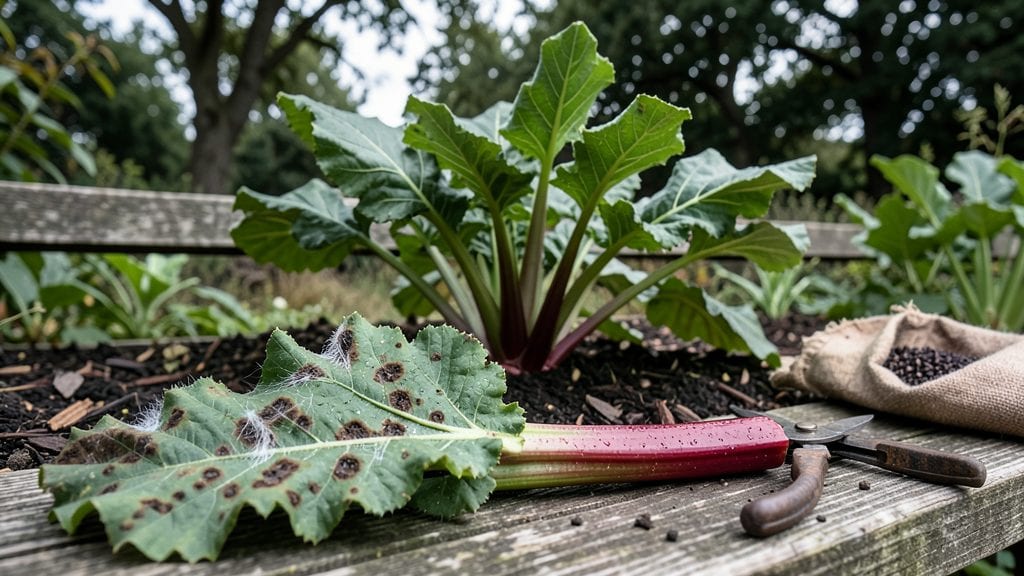
Rhubarb plant diseases can turn your lush harvest into a sad, spotted mess—until you know how to spot and stop them early. 🌱 I’ve seen crown rot and leaf spot ruin entire beds, but the right preventative care keeps rhubarb thriving.
The key isn’t just treating problems; it’s creating conditions where diseases never get a foothold.
Start with proper spacing—rhubarb needs 3 feet between plants to circulate air and dry leaves fast. Water at the base, never overhead, and avoid soggy soil, which invites fungal infections. Healthy soil with compost also builds natural resistance, so feed your plants in early spring with balanced organic fertilizer.
📚 In This Guide
- What you need
- Instructions
- Tips and common mistakes
- Wrapping up and next steps
What you need
- ● Diagnostic Tools: Hand lens (10x magnification) – for close-up inspection of leaves and stems.
- ● pH testing kit – to check soil acidity (ideal range: 5.5–6.5).
- ● Moisture meter – to monitor soil dampness (avoid waterlogged conditions!).
- ● Protective Gear: Gloves (nitrile or rubber) – for handling infected plants.
- ○ Face mask (optional) – if working with heavily diseased foliage.
- ● Cleaning & Sanitation: Disinfectant (70% isopropyl alcohol or bleach solution) – for sterilizing pruners and tools.
- ● Old towels or paper towels – for wiping down tools between uses.
- ● Treatment Supplies: Copper fungicide (e.g., Copper Sulfate) – for fungal diseases like powdery mildew.
- ● Neem oil (1–2%) – a natural fungicide and insect repellent.
- ● Baking soda spray (1 tsp baking soda + 1 quart water + few drops of soap) – for early fungal signs.
- ● Systemic fungicide (e.g., Myclobutanil) – for severe infections (follow label instructions!).
- ● Compost or well-aged manure – to boost soil health and plant resilience.
- ● Mulch (straw or wood chips) – to improve drainage and suppress weeds.
- ● Plant tags or journal – to track disease progression and treatment responses.
- ● UV flashlight – for detecting early signs of pests or fungal spores in low light.
Step-by-step preventative care for rhubarb plant diseases
Here’s how I keep my rhubarb thriving year after year—no chemical interventions needed.
🌱 Step 1: Start with Disease-Free Crowns and Soil
Always buy certified disease-free rhubarb crowns from reputable nurseries. Inspect them for soft, discolored spots or slimy stems—those are signs of crown rot or bacterial infections. I soak new crowns in a 10% bleach solution (1 part bleach to 9 parts water) for 10 minutes before planting to kill any lurking pathogens.
Your soil must have excellent drainage. Amend heavy clay with 2-3 inches of compost and mix in 1 part perlite or coarse sand to prevent waterlogging, which invites crown rot. Test your soil pH—rhubarb thrives in 6.0-6.8. If yours is too acidic, add dolomitic lime before planting.
☀️ Step 2: Position for Optimal Airflow and Sunlight
Plant rhubarb in a location with full sun (6-8 hours daily) but avoid hot afternoon sun in southern climates—it stresses plants and weakens their natural defenses. I place mine where they get morning sun and afternoon shade from nearby trees. This balance prevents the leaf scorch that makes plants more susceptible to fungal infections.
Space crowns 3-4 feet apart in rows 4 feet apart to ensure proper airflow. Crowded plants trap moisture, creating the perfect conditions for leaf spot diseases. Mulch with 3-4 inches of straw or wood chips to keep soilborne pathogens away from the crowns while retaining moisture.
💧 Step 3: Water Deeply and Strategically
Rhubarb roots need consistent moisture but hate soggy soil. Water deeply 1-2 times per week, delivering 1-1.5 inches of water per session. The key is to water at the base, avoiding wetting the leaves—this prevents fungal spores from splashing onto foliage. I use a soaker hose or drip irrigation to keep moisture where it belongs.
Never let rhubarb sit in wet soil. If your area gets heavy rain, ensure proper drainage by mounding soil slightly around the crown. Yellowing leaves or wilting are your first signs of overwatering or poor drainage—both open the door to root rot and bacterial infections.
✂️ Step 4: Prune for Health and Disease Prevention
Remove any leaves showing signs of disease—yellow spots, brown edges, or blackened veins—as soon as you spot them. Don’t compost these; bag them and dispose of them in the trash to prevent reinfection. I also cut out any flower stalks that appear in the first year—they sap energy from the crown and weaken the plant’s defenses.
In early spring, trim back any dead or damaged leaves with clean, sharp shears. Sterilize your tools between cuts by wiping them with 70% rubbing alcohol. This prevents cross-contamination if you’re working with multiple plants. Healthy foliage means stronger roots and better resistance to diseases like rust and powdery mildew.
🌿 Step 5: Monitor and Act Early
Inspect your rhubarb plants weekly, especially after rain or high humidity. Look for early signs of trouble: tiny yellow spots on leaves (leaf spot), white powdery coatings (powdery mildew), or orange pustules (rust). Catching these early means you can treat them with a simple baking soda spray (1 tbsp baking soda + 1 quart water + a drop of dish soap) instead of resorting to harsh chemicals.
I also rotate my crops—if I’ve grown rhubarb in a spot for 5 years, I move it to fresh ground. This breaks the cycle of soilborne diseases like crown rot. Healthy, well-cared-for rhubarb rarely gets sick, but when it does, acting fast keeps the whole patch thriving.
Tips & tricks for healthy rhubarb plant care
Keeping your rhubarb robust and disease-free takes just a few strategic moves—here's what I've learned after years of trial and error.
Bleach Solution Precision: When soaking new crowns in that 10% bleach solution for 10 minutes, I use a clean plastic bucket with fresh solution for each batch. The bleach needs to be properly diluted—too strong and you risk damaging the crown, too weak and pathogens survive. After soaking, rinse thoroughly with clean water to remove any residual bleach before planting. This step is non-negotiable for preventing crown rot from day one.
Soil Testing Strategy: Don't guess about your soil pH—get a proper test kit. Rhubarb thrives in that 6.0-6.8 range, but many garden soils run acidic. I test my soil every spring before planting, and if it's below 6.0, I add dolomitic lime according to package instructions. The key is to amend the soil 2-3 months before planting to allow the pH adjustment to fully take effect.
Watering Technique: That 1-2 times per week watering schedule assumes normal rainfall. In my dry climate, I actually water every other day during summer heatwaves, delivering exactly 1.5 inches each time. The secret is using a rain gauge or measuring cup to track your watering—most people overestimate how much they're actually delivering. Water at the base only, never overhead, to prevent fungal spores from splashing onto leaves.
Pruning Timing: I've learned the hard way that timing matters when removing diseased leaves. Always prune in the morning when humidity is lowest and temperatures are cooler. This gives any cut surfaces time to dry before evening dew forms. I also avoid pruning when rain is forecasted, as wet conditions create perfect conditions for bacterial infections to enter through fresh cuts.
Pro Tips for Rhubarb Plant Diseases
- Keeping your rhubarb robust and disease-free takes just a few strategic moves—here's what I've learned after years of trial and error.
- Bleach Solution Precision: When soaking new crowns in that 10% bleach solution for 10 minutes, I use a clean plastic bucket with fresh solution for each batch.
- Soil Testing Strategy: Don't guess about your soil pH—get a proper test kit.
Frequently asked questions
Got questions about keeping your rhubarb plants thriving? Here are some of the most common concerns—plus quick fixes to tackle them head-on!
What are the most common diseases that affect rhubarb plants?
The top culprits are Botrytis blight (gray mold), powdery mildew, and crown rot. Botrytis thrives in damp conditions, while powdery mildew appears as white, dusty patches. Crown rot, often caused by Phytophthora, attacks the base and can be fatal if ignored. Early detection is key—remove infected leaves immediately and improve airflow.
When is the best time to treat rhubarb diseases?
Act fast! Treat at the first sign of symptoms—don’t wait for widespread damage. For powdery mildew, apply fungicides in early spring (before leaves emerge) or after rain. If you spot Botrytis, prune infected stems in the morning when humidity is lower. Always follow up with a copper-based spray for prevention.
Can I still harvest rhubarb if it has a disease?
Not safely! If leaves or stalks show signs of disease (spots, mold, or discoloration), discard them immediately. Harvesting infected plant parts spreads spores to healthy areas. Focus on removing only mature stalks from disease-free plants, and avoid touching diseased foliage with your hands or tools.
Are there natural remedies to prevent rhubarb diseases?
Yes! Try these DIY fixes:
- Neem oil spray: Mix 1 tbsp neem oil + 1 tsp mild soap in 1 quart water. Spray leaves weekly to deter mildew.
- Baking soda solution: 1 tsp baking soda + 1 quart water + a drop of oil. Spray on powdery mildew (test on a small area first).
- Improve spacing: Thin crowded plants to boost airflow—diseases hate dry conditions!
For severe cases, switch to fungicidal sprays (like copper fungicide) labeled for edible plants.
What should I do if my entire rhubarb plant looks diseased?
Unfortunately, it may need to be removed and destroyed (don’t compost it!). Dig up the plant, bag it, and dispose of it in the trash. Do not replant rhubarb in the same spot for at least 2 years—diseases linger in the soil. Rotate crops with non-host plants (like beans or lettuce) to break the cycle.
Wrapping up and next steps
Taking care of your rhubarb plants doesn’t have to be overwhelming—with the right knowledge, you can keep them thriving and disease-free! 🌱 Remember: early detection, proper hygiene, and preventive measures are your best tools for a bountiful harvest.
Stay vigilant, act quickly, and your rhubarb patch will reward you with vibrant, healthy stalks for years to come.
Next steps? Start by inspecting your plants regularly and implementing the tips you’ve learned. Happy gardening!