
Companion Plants
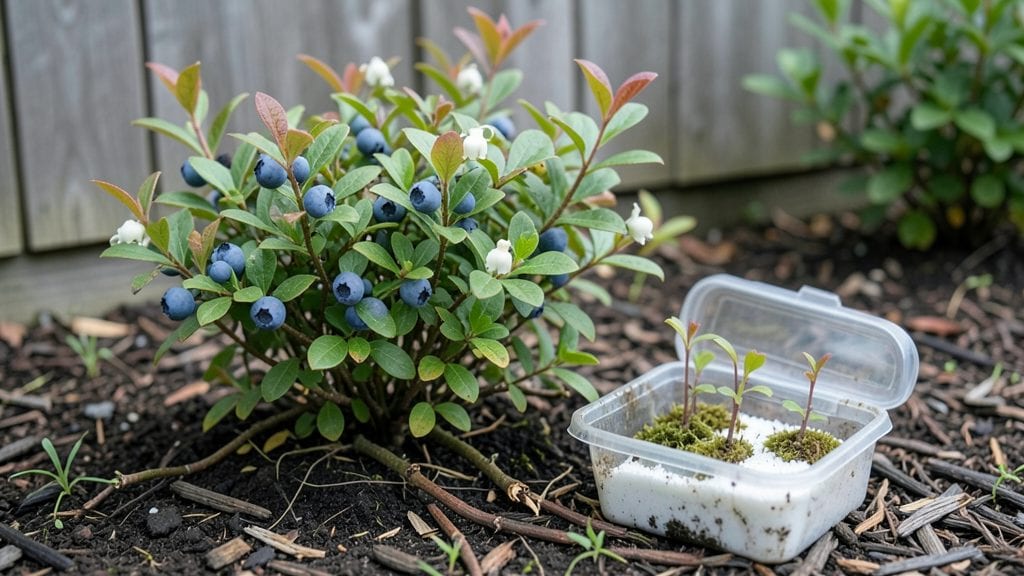
Rooting blueberry plants from cuttings is the fastest way to multiply your bushes without waiting years for seeds to mature. I’ve rooted dozens this way—some in water, others in soil—and the results come in just 4-6 weeks if you nail the basics.
The key isn’t luck; it’s matching the right cuttings to the right conditions, and I’ll show you exactly how to do it without guesswork.
You’ll need sharp pruners for clean cuts, a clear glass or a well-draining soil mix, and a humid environment—whether that’s a plastic bag or a propagator. My first attempt failed because I used soft, new growth instead of semi-hardwood stems from last year’s wood.
Those pencil-thick cuttings with a few leaf buds are your best bet, and they root reliably if you take them at the right time.
Once rooted, you’ll have sturdy little plants ready for transplanting by early spring. The berries won’t appear for another year or two, but the foundation you build now means faster growth and bigger harvests down the road.
The best part? You avoid the cost and limited variety of nursery plants while keeping your blueberries exactly how you like them.
This method works for both highbush and rabbiteye varieties, though dwarf types root especially fast. Whether you’re expanding an existing patch or starting fresh, the process scales easily. Let’s get those cuttings growing!
📚 In This Guide
- What you need
- Instructions
- Tips and common mistakes
- Wrapping up and next steps
What you need
- ● Blueberry plant cuttings: 4–6 healthy, semi-hardwood stems (4–6 inches long) from a mature blueberry bush (preferably in late summer or early fall).
- ● Sharp pruning shears or knife: Sterilized to avoid disease (rubbing alcohol wipe recommended).
- ○ Rooting hormone (optional but recommended): A powder or gel (e.g., Rootone or Clonex) to boost root growth.
- ● Water: Room-temperature, filtered or distilled (for water rooting method).
- ● Clear glass or jar: Large enough to submerge 1–2 inches of the cutting (e.g., a mason jar).
- ● Well-draining potting mix: A blend of 50% peat moss or coco coir and 50% perlite or sand (for soil rooting).
- ● Small pots or trays: 4–6 inch diameter with drainage holes (or a seedling tray with cells).
- ● Plastic wrap or humidity dome: To retain moisture (e.g., a clear plastic bag with holes).
- ● Spray bottle: For misting cuttings and maintaining humidity.
- ● Labels & marker: To track cuttings by date and variety.
- ● Fertilizer: Diluted seaweed extract or fish emulsion (1/4 strength) for post-rooting growth.
- ● Grow lights or sunny windowsill: 6+ hours of indirect light daily (south-facing window or LED grow lights).
- ○ Heating mat (optional): For soil rooting in cooler climates (70–75°F ideal).
- ● Hydrogen peroxide (3%): To sterilize water or cutting sites (1 tsp per gallon of water).
- ● Charcoal tablets (for water rooting): 1–2 tablets to prevent bacterial growth in the jar.
Step-by-step instructions for rooting blueberry plants
Here’s how to quickly propagate blueberry plants using either water or soil—both methods work fast with minimal fuss.
Select and Prepare Healthy Cuttings
Choose 4-6 inch long, pencil-thick stems from current year’s growth. Look for healthy, flexible branches with 3-4 leaf nodes—these are the spots where roots will form. Use clean, sharp pruners to cut just below a node at a 45-degree angle for maximum surface area. Remove all but the top 2-3 leaves to reduce moisture loss.
Strip the lower 1 inch of leaves from the stem. This bare section will sit in water or soil, so no leaves should touch the medium. If you’re using water, place the cuttings in a clear glass filled with room-temperature water—this lets you watch roots develop. For soil propagation, prepare a moistened mix of 50% perlite and 50% peat moss in small pots.
Root in Water or Soil
For water rooting, submerge only the bare stem section (no leaves) about 1 inch deep. Change the water every 3-4 days to prevent bacteria buildup. Place the glass in bright, indirect light—direct sun causes algae growth. You’ll see tiny white root hairs within 10-14 days, and roots should reach 1-2 inches in 3-4 weeks.
For soil rooting, dip the cut end in rooting hormone (optional but speeds growth) and insert the stem 1 inch deep into the moist mix. Cover the pot with a plastic bag to retain humidity, but leave it slightly open for airflow. Keep the soil evenly moist—not soggy—by misting daily. Roots will form in 4-6 weeks, but the plant will need stronger light to avoid legginess.
Transition to Soil and Harden Off
Once roots reach 1-2 inches in water, transfer the cuttings to small pots filled with acidic potting mix (blueberries thrive in pH 4.5-5.5). Gently rinse off any algae from the roots and plant 1 inch deep, firming soil around the stem. Water lightly and place in partial shade for 3-5 days to reduce transplant shock.
If rooting in soil, once new growth appears (usually 4-6 weeks), gradually introduce the plant to outdoor conditions over 10-14 days. Start with 2 hours of morning sun, then increase daily. Avoid full sun until the plant shows new leaf growth—this ensures it’s strong enough to handle direct light.
Maintain and Encourage Growth
Keep the soil consistently moist but not waterlogged—blueberry roots rot easily. Use a rain gauge to track moisture; aim for 1 inch of water per week. After 3 months, fertilize with an acid-loving plant formula to support growth. You’ll know it’s thriving when it produces new shoots and dark green leaves.
Here’s the thing—blueberries grow slowly at first, but patience pays off. In 1-2 years, your rooted cuttings will produce fruit-bearing plants. Prune any weak stems now to encourage a bushier shape later. Mulch with pine needles (if available) to maintain soil acidity naturally.
Tips & tricks for fast blueberry plant propagation
These simple tricks will help you root blueberry cuttings successfully—without the guesswork.
Timing is Everything: When you see those first white root hairs in water after 10-14 days, resist the urge to rush the process. The roots need time to establish before transplanting. I've seen cuttings fail when moved too soon—wait until they reach 1-2 inches for the best survival rate. This patience ensures stronger plants that thrive long-term.
Light Matters Most: Place your water-rooting cuttings in bright, indirect light—think east-facing windows or under fluorescent grow lights. Direct sunlight causes algae buildup in the water, which can smother developing roots. For soil-rooted cuttings, gradually increase light exposure after the first 4-6 weeks to avoid leggy growth. A simple grow light bulb can make all the difference if natural light is limited.
Preventing Common Pitfalls: In Step 2, when you're changing water every 3-4 days, use filtered or bottled water if possible. Tap water often contains chlorine or fluoride that can inhibit root growth. Also, avoid overcrowding cuttings in your glass—leave at least 1 inch of space between stems to prevent competition for nutrients.
Soil Mix Secrets: The 50% perlite and 50% peat moss mix is key for soil rooting. Perlite provides aeration while peat moss retains moisture. If you don't have peat moss, coconut coir works as a sustainable alternative. Just ensure the mix stays consistently moist but never soggy—blueberry roots rot quickly in waterlogged conditions.
Pro Tips for Rooting Blueberry Plants
- These simple tricks will help you root blueberry cuttings successfully—without the guesswork.
- Timing is Everything: When you see those first white root hairs in water after 10-14 days, resist the urge to rush the process.
- Light Matters Most: Place your water-rooting cuttings in bright, indirect light—think east-facing windows or under fluorescent grow lights.
Frequently asked questions
Got questions about rooting blueberry plants? You’re not alone! Here are some of the most common concerns—and clear answers—to help you succeed.
Can I root blueberry plants in water like I would with pothos or mint?
While blueberries can root in water, it’s not ideal. Their cuttings prefer soil or a moist medium (like perlite) to mimic their natural acidic, well-draining environment. Water rooting risks rot or weak roots. If you try it, change the water every 2–3 days and move to soil once roots appear (after 3–4 weeks).
How long does it take for blueberry cuttings to root?
Patience is key! Most blueberry cuttings take 4–8 weeks to root, depending on variety, humidity, and care. Keep them in a warm, shaded spot with consistent moisture. Check for roots by gently tugging—if resistance meets your fingers, you’re in the clear!
What’s the best temperature for rooting blueberry cuttings?
Blueberries thrive in warmth but avoid extremes. Aim for 65–75°F (18–24°C) during the day and slightly cooler at night. Use a heat mat (70°F/21°C) for faster rooting in cooler climates. Avoid drafts or direct sun, which can stress delicate cuttings.
Can I reuse the same blueberry plant for multiple cuttings?
Yes! Mature blueberry bushes (3+ years old) produce new growth yearly, making them great for repeat cuttings. Just avoid over-pruning—take no more than 1/3 of the plant’s new growth per season. Healthy mother plants = stronger cuttings!
My cuttings are turning yellow or mushy—what’s wrong?
Yellowing or mushy stems signal overwatering or fungal issues. Ensure your medium drains well (add perlite or sand) and avoid soggy conditions. Trim affected areas immediately, dust with cinnamon (natural antifungal), and reduce watering. Boost airflow with a small fan to speed drying.
Are there any blueberry varieties that root easier than others?
Southern highbush varieties (like ‘Rabbiteye’ or ‘Sharpblue’)
root more reliably than some northern types. Dwarf varieties (e.g., ‘Top Hat’) also propagate well. Ask your local nursery for easy-to-root recommendations if you’re new to blueberry propagation!
Wrapping up and next steps
Rooting blueberry plants is a rewarding way to expand your garden without breaking the bank! Whether you choose water or soil propagation, patience and care will yield strong, healthy roots ready for transplanting. Now that you’re armed with the right techniques, grab those cuttings and get growing! 🌱
Your next step? Experiment with different methods—try rooting in both water and soil to see which works best for your climate. Once your cuttings thrive, share your new plants with fellow gardeners or plant them in your own backyard for a bountiful harvest ahead!