Blooming
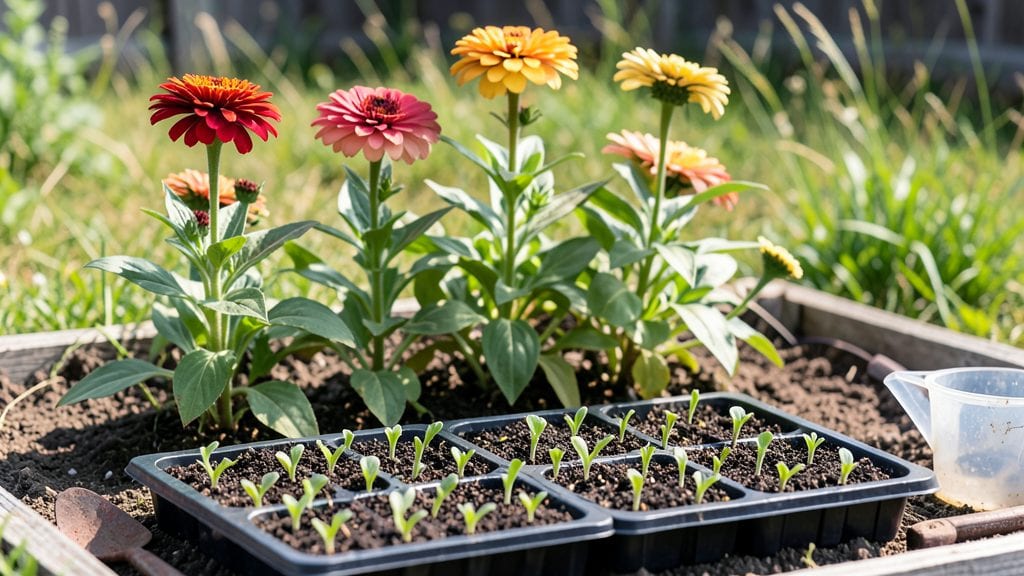
This succession planting of zinnias—every three weeks—turns a single season of blooms into a nonstop parade of color. ✨ I learned this trick after my first garden season left me with bare stems by August—now my zinnias thrive from mid-summer. through frost, drawing pollinators and turning heads.
The secret isn't complicated: it's about timing, spacing, and knowing when to pull the old to make room for the new.
You'll need a sunny spot with well-draining soil, zinnia seeds or young plants, and a simple schedule. Start your first batch 4-6 weeks before your last frost, then repeat plantings every 21-28 days until 8 weeks before fall frost.
Spacing matters too—give each plant 12-18 inches of room to prevent crowding that weakens blooms. A 5-foot-tall trellis near your planting area lets tall varieties climb and extends their display.
By late summer, you'll have a garden that never skips a beat—no gaps, no wilted stalks, just bold reds, oranges, and purples that keep coming. The key is watching for spent blooms: when the first flowers fade, pull those plants and replace them with fresh seedlings.
This keeps the pollinators fed and your garden looking fresh until the first frost.
Works in zones 3-10, though timing shifts slightly—cool climates start earlier, warm ones can extend into October. Pair zinnias with basil or marigolds to deter pests and boost bloom power. Ready to turn your garden into a year-round showstopper?
📚 In This Guide
- What you need
- Instructions
- Tips and common mistakes
- Wrapping up and next steps
What you need
- ● Zinnia seeds: 2–3 packets (choose heat-tolerant varieties like Benary’s Giant or Profusion for best results).
- ● Well-draining potting mix: 10–15 lbs (sterilized for disease prevention).
- ● Garden beds or containers: For in-ground: 12–18" deep beds, amended with compost.
- ● For containers: 5–7" deep pots with drainage holes (1–2 plants per 6" pot).
- ● Organic fertilizer: Balanced 10-10-10 or slow-release granules (1 lb per 100 sq ft).
- ● Watering can or hose with nozzle: Fine mist setting for seedlings.
- ● Hand trowel: For transplanting seedlings (small, 6" size).
- ● Garden gloves: 1 pair (nitrile-coated for grip).
- ● Measuring tape: To space plants 12–18" apart.
- ● Pruning shears: For deadheading (sharp, bypass-style).
- ○ Row cover or shade cloth (optional): 30–50% shade for seedlings if temps exceed 85°F.
- ● Sunlight: Full sun (6+ hours daily).
- ● Soil temp: Minimum 60°F for germination (use a soil thermometer if unsure).
- ● Last frost date: Know your zone—zinnias thrive after all frost risks pass!
- ● Water source: Consistent access (zinnias wilt fast in dry spells).
Step-by-step instructions for succession planting zinnias
Here's how to keep your garden bursting with zinnias from spring until frost.
🌱 Step 1: Prepare the Planting Area
Choose a location with full sun—zinnias need at least 6-8 hours of direct sunlight daily to produce their boldest blooms. Work the soil to a depth of 12 inches, removing any weeds or debris. Zinnias thrive in well-draining soil, so if your garden soil is heavy clay, mix in 2-3 inches of compost to improve texture and fertility.
I like to add a 1-inch layer of coarse sand if drainage is a concern—this prevents waterlogging, which can rot delicate roots. Test the soil moisture by squeezing a handful; it should hold together loosely but not feel soggy. If it sticks together like clay, add more compost or sand before planting.
🌿 Step 2: Plant Seeds in Successive Waves
Zinnias germinate best in warm soil, so wait until the soil temperature reaches 60°F before planting. For a continuous bloom, sow seeds in two-week intervals starting 4-6 weeks before your last frost date. Plant seeds ¼ inch deep and 1 inch apart in rows spaced 12-18 inches apart—this gives them room to grow without overcrowding.
I like to mark each planting date on a small stake near the row so I remember when to expect blooms. Water gently after planting to settle the soil, but avoid soaking it—zinnias need consistent moisture but hate soggy conditions. Keep the soil evenly moist until germination, which typically takes 7-14 days depending on temperature.
☀️ Step 3: Thin Seedlings for Stronger Plants
Once seedlings reach 2 inches tall, thin them to 6 inches apart in rows. Use scissors to snip unwanted seedlings at the base—this prevents disturbing the roots of nearby plants. Strong, well-spaced zinnias produce more blooms and resist disease better than crowded ones.
You’ll know you’ve thinned correctly when each plant has plenty of airflow around it. If leaves touch between plants, thin further. After thinning, water deeply at the base to help roots establish. Zinnias are drought-tolerant once established, but young plants need 1 inch of water per week to thrive.
✂️ Step 4: Deadhead and Encourage Regrowth
To keep zinnias blooming nonstop, deadhead spent flowers by pinching off faded blooms with your fingers or small pruners. This redirects the plant’s energy into producing new flowers instead of seeds. I do this every 2-3 days during peak bloom—it’s a quick task that pays off with weeks of fresh blooms.
If you notice leggy stems or sparse foliage, trim back the plant by one-third to encourage bushier growth. Zinnias respond well to pruning, and you’ll often see new blooms within 7-10 days. Avoid cutting into woody stems, though—focus on soft, green growth for best results.
🌱 Step 5: Extend the Season with Late Plantings
For a fall display, make a final planting 8-10 weeks before your first frost. Choose heat-tolerant varieties like ‘Benary’s Giant’ or ‘Profusion’—they handle cooler temperatures better than others. Water deeply once a week to help roots establish before cooler weather sets in.
Mulch around plants with 1-2 inches of straw to protect roots from temperature swings. In colder climates, consider using a frost cloth on late-season zinnias to extend blooms by 2-3 weeks. Watch for signs of stress, like wilting or yellowing leaves—these are cues to adjust watering or provide extra protection.
Tips & tricks for perfect succession planting of zinnias
Here's what I've learned after years of growing zinnias—these tricks make all the difference between a few blooms and a nonstop floral display.
The Soil Temperature Secret: That 60°F soil temperature is non-negotiable for zinnias. I use a soil thermometer to check in the morning—if it's cooler, wait. Cold soil slows germination dramatically, and you might end up with patchy, uneven growth. For faster results in cooler climates, consider using a black plastic mulch to warm the soil 2-3°F faster.
Planting Date Strategy: The two-week intervals between plantings might seem arbitrary, but they're based on zinnias' natural bloom cycle. Each new batch should bloom just as the previous one starts fading. I create a simple chart marking each planting date and expected bloom time—it's like having a built-in calendar for color! This ensures you never have a gap in your floral display.
Thinning Technique: When thinning those 2-inch seedlings to 6 inches apart, I always use clean scissors instead of pulling plants by hand. This prevents disturbing the roots of nearby plants and gives you cleaner cuts. The key is to thin gradually—don't try to do it all at once. I find it's easier to do this on a cloudy day when seedlings are less stressed from direct sun.
Deadheading Discipline: Those 2-3 day deadheading intervals might seem frequent, but they're what keep zinnias producing nonstop. I set a reminder on my phone for every other morning during peak bloom season. For large gardens, consider using small pruning shears instead of fingers—it's faster and less tiring. The secret is to cut just above a set of leaves or buds to encourage new growth from that point.
Pro Tips for Succession Planting Zinnias
- Here's what I've learned after years of growing zinnias—these tricks make all the difference between a few blooms and a nonstop floral display.
- The Soil Temperature Secret: That 60°F soil temperature is non-negotiable for zinnias.
- Planting Date Strategy: The two-week intervals between plantings might seem arbitrary, but they're based on zinnias' natural bloom cycle.
Frequently asked questions
What’s the best spacing for zinnias in succession planting?
Start seeds or transplants 12–18 inches apart in rows spaced 18–24 inches apart. If sowing in blocks, leave 6–12 inches between plants to allow airflow and easy thinning. Overcrowding leads to leggy stems and fewer blooms—so don’t skimp on space!
How often should I plant new zinnia seeds for continuous blooms?
Sow new seeds every 2–3 weeks until 6–8 weeks before your first frost. For heat-loving zinnias, stop around mid-summer in hot climates to avoid bolting. Staggered plantings ensure a nonstop parade of color from early summer to fall!
Can I use zinnias in containers for succession planting?
Choose compact varieties like ‘Thumbelina’ or ‘Crystal’ and plant 3–5 seeds per 12-inch container. Succession plant every 3 weeks in well-draining soil. Containers dry out faster, so water consistently—drought-stressed zinnias wilt fast!
Why aren’t my zinnias blooming after succession planting?
Check these fixes:
- Deadhead spent blooms to encourage new flowers.
- Ensure they get 6+ hours of sun daily—zinnias are sun-hungry!
- Fertilize lightly with low-nitrogen feed (like 5-10-10) every 3–4 weeks.
- Watch for aphids or spider mites—spray with neem oil if pests strike.
What’s a low-maintenance alternative to zinnias for succession planting?
Try cosmos, marigolds, or sunflowers—they’re just as easy! Cosmos self-seed prolifically, while marigolds deter pests. Sunflowers add height and drama. All three thrive with minimal fuss and reward you with season-long color.
Wrapping up and next steps
Succession planting zinnias is your secret weapon for nonstop color—no gaps, no regrets, just bold blooms from spring to frost! 🌸 By staggering your sowing and staying proactive with deadheading, you’ll turn your garden into a vibrant, ever-changing showstopper.
The best part? This method is beginner-friendly and rewards patience with months of effortless beauty.
Ready to level up your garden game? Start small—try one bed or container this season—and track your progress. Next, explore companion planting with zinnias to boost pollinators and deter pests. Your future self (and bees!) will thank you. 🐝✨