
Planting
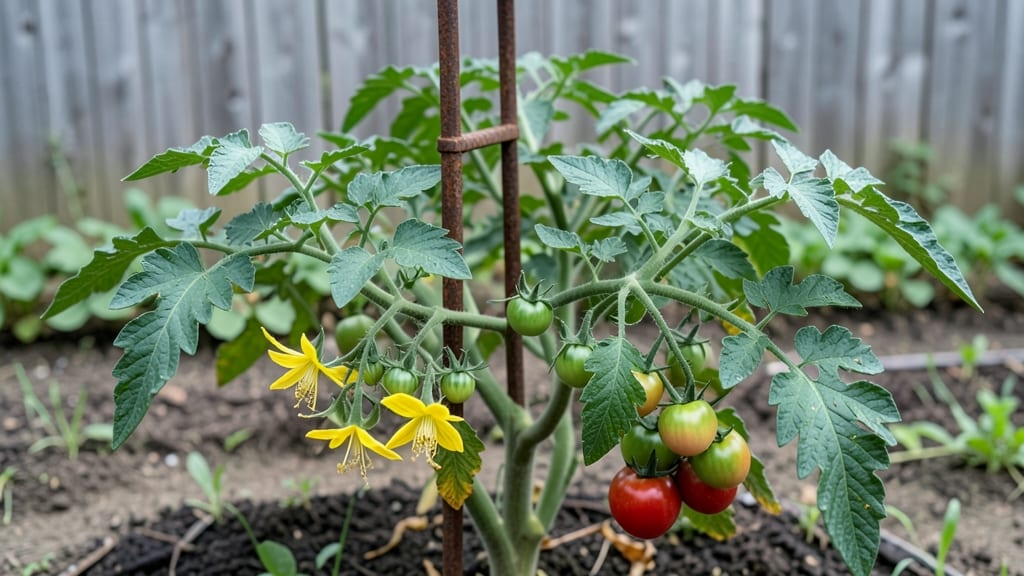
To grow a large tomato plant, choose vigorous indeterminate varieties that keep producing all season, give them at least 6-8 hours of direct sunlight, and prune regularly to direct energy upward. Use sturdy supports like cages or stakes from the start, feed with a balanced 5-5-5 fertilizer, and water deeply at the base to avoid stress-related issues like blossom end rot.
Indeterminate varieties like 'Cherokee Purple' or 'Brandywine' are bred to grow continuously, often reaching 10-12 feet tall with proper care. 🌱 The key to their massive size lies in their genetic ability to produce new leaves and flowers indefinitely, unlike their determinate cousins that stop growing after a set period.
Pruning isn't just about shaping—it forces the plant to focus its energy on fewer, larger fruits by removing competing suckers and encouraging vertical growth through the trellis.
Sunlight is non-negotiable for photosynthesis, but consistent moisture and nutrient balance are just as critical. I've found that mulching with compost not only retains soil moisture but also adds organic matter that improves root development over time.
The 5-5-5 fertilizer ratio supports both foliage growth and fruit production equally, while deep watering prevents the calcium deficiencies that cause those dreaded cracked tomatoes.
💡 In This Article
- Science Behind Growing Giant Tomato Plants
- Step-by-Step Guide to Maximizing Tomato Plant Size
Science behind growing giant tomato plants
Here's what's actually happening at the biological level when you grow massive tomato plants: indeterminate varieties like 'Beefsteak' or 'Sungold' produce a hormone called gibberellin that promotes continuous vertical growth.
Unlike determinate types that stop at 3-5 feet, these giants can reach 10-12 feet because their apical meristems (growth tips) remain active year-round. This genetic trait means they'll keep producing new leaves, flowers, and fruits until frost—if you give them the right conditions.
The photosynthesis magic happens in those broad leaves, which can capture up to 20% more sunlight than smaller varieties due to their larger surface area. Each leaf contains 300,000-500,000 chloroplasts per square inch, tiny solar panels that convert sunlight into energy for fruit development.
But here's the catch: temperatures above 85°F reduce photosynthesis efficiency by 30-50%, which is why afternoon shade cloth becomes crucial in hot climates. The roots play their part too—deep taproots can extend 3-5 feet underground, accessing water and nutrients that support those massive fruits.
When you prune, you're actually manipulating the plant's natural growth hormones. Removing suckers (those little shoots in the leaf axils) reduces competition for resources, allowing the plant to focus energy on fewer, larger fruits.
This triggers a cascade of hormonal responses: less auxin (the growth hormone that suppresses fruit development) means more gibberellins and cytokinins (which promote cell division in fruits). The result? Fewer but significantly larger tomatoes—sometimes 2-3 pounds each instead of the standard ½ pound.
Humidity levels matter more than most gardeners realize. Fruit expansion relies on proper water balance—too little causes blossom end rot, while too much leads to cracked skins. The ideal humidity range for maximum fruit growth is 50-60%.
At this level, the plant's stomata (pores) can efficiently exchange gases while maintaining turgor pressure in the fruit. When humidity drops below 40%, transpiration rates spike, forcing the plant to close stomata and slow photosynthesis.
That's why mulching isn't just about moisture—it creates a microclimate that maintains these optimal conditions.
What most people don't realize is how temperature affects fruit set. Tomatoes need daytime temps between 70-85°F for proper pollination—below 55°F and pollen won't germinate, while above 90°F pollen production stops entirely. This is why early morning hand-pollination with a small brush can double your yield in hot climates.
The fruit's expansion phase is equally temperature-sensitive: nights below 60°F slow growth, while consistent warmth above 75°F accelerates it, sometimes causing fruits to outgrow their stems and crack.
The root system's architecture is another hidden factor. Vigorous varieties develop a fibrous root system that spreads 2-3 feet wide while maintaining that deep taproot. This dual system gives them access to both surface moisture and deep nutrients.
When you fertilize with 5-5-5, you're providing nitrogen for leaf growth, phosphorus for root development, and potassium for fruit expansion—all in perfect balance. Too much nitrogen (like 10-0-0) will give you lush foliage but tiny fruits, while too much phosphorus (0-10-0) can lead to stunted growth.
Here's the pro tip: The largest tomatoes come from plants that experience consistent but not excessive moisture. Deep watering 1-2 inches per week (measured at soil level) maintains steady growth without causing the rapid expansion that leads to cracks.
The science shows that fruits grow fastest when watered in the morning—this gives them all day to absorb moisture before evening transpiration begins. 🌿