
Pruning
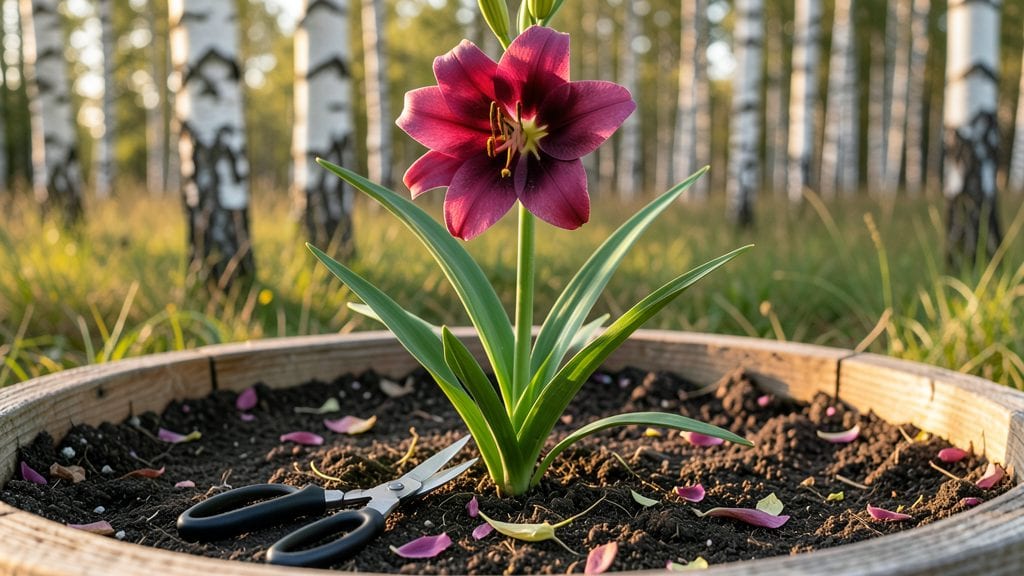
Trimming your lily plant isn’t just about keeping it tidy—it’s the secret to year-round blooms that’ll make your neighbors green with envy. I learned this the hard way after my daylilies turned into sad, leggy sticks after one season.
The right cuts at the right time mean more flowers, stronger stems, and plants that bounce back like they’re made of rubber.
You only need three basic tools: sharp pruners, gloves (trust me, lily leaves are tough), and a small trowel for cleanup. The real trick is timing—cut back spent blooms right after they fade, trim foliage in late fall, and give winter a light touch.
Daylilies are forgiving, but true lilies need gentler hands. I’ve seen blooms triple just by following these three simple cuts each season.
After trimming, your lilies will reward you with fresh growth within weeks. The foliage stays vibrant, the stems stay sturdy, and next year’s blooms start forming right away.
Just add a light layer of mulch and a slow-release fertilizer, and you’re set. It’s not rocket science—just a little attention at the right moments.
Works for both daylilies and true lilies, in gardens or containers. The key is consistency—don’t skip a season, and your plants will thank you with blooms that last. Here’s exactly how to do it without a single guess.
📚 In This Guide
- What you need
- Instructions
- Tips and common mistakes
- Wrapping up and next steps
What you need
- ● Pruning shears or sharp bypass pruners – Choose sterilized, clean tools (1 pair) to prevent disease. Look for bypass blades (not anvil) for precision cuts.
- ● Garden gloves – A pair of nitrile-coated or heavy-duty leather gloves to protect against thorns and sap.
- ● Disinfectant (rubbing alcohol or 10% bleach solution) – To sterilize tools between cuts (small spray bottle or wipe).
- ● Compost bin or trash bag – For disposing of trimmed stems and leaves (1-2 bags/bin).
- ○ Hand lens or magnifying glass – For spotting pests or inspecting cuts closely (optional but handy!).
- ○ Pruning sealant (optional) – A small tube of tree wound pruning paste to seal large cuts if needed.
- ● Labeling tags or markers – If you’re propagating from cuttings, label them to track varieties.
- ● Knee pad or stool – For comfort if your lily plant is tall or ground-level.
- ● Know your lily type – Research whether your plant is Asiatic, Oriental, Trumpet, or Daylily (each has slight trimming variations).
- ● Choose the right time – Trim after blooms fade (deadheading) or in early spring (renewal trim).
- ● Check the weather – Avoid trimming in extreme heat or rain to reduce stress on the plant.
Instructions for trimming lily plants to encourage lush, repeat blooms
Keep your lilies flowering season after season with these simple, science-backed trimming steps.
Deadhead Spent Blooms Immediately After Flowering
As soon as your lily blooms begin to fade and droop—usually within 2-3 weeks after opening—snip the entire spent flower stalk 2-3 inches below the bloom. This prevents the plant from wasting energy on seed production, redirecting it instead to next year's growth. Use clean, sharp pruners to avoid crushing stems, which can introduce disease.
I always check my lilies every 2-3 days during peak bloom season. The moment a bloom's petals start curling inward or its center darkens, that's your cue. If you wait too long, the stalk may develop seed pods, and your plant will put all its energy into making seeds rather than storing nutrients for future blooms.
Cut Back Foliage After It Yellows Naturally
Once the foliage turns completely yellow and begins to wither—typically 6-8 weeks after flowering—it's time for the second trim. Using your pruners, cut the leaves back to 1-2 inches above the ground. This mimics the plant's natural dormancy cycle and signals it to rest before next season's growth.
Don't rush this step. If you cut too early while leaves are still green, you'll remove the plant's food factory—those leaves are busy converting sunlight into stored energy. I wait until 90% of the foliage has yellowed before trimming, and I always do it in late summer or early fall when temperatures begin to cool.
Prune Weak or Damaged Growth Throughout the Growing Season
Throughout the year, inspect your lily plants regularly for any stems that are yellowing, mushy, or showing signs of disease. These should be removed immediately to prevent the spread of rot or fungal infections. Cut these stems at the base with your pruners, making a clean cut at a 45-degree angle to reduce water pooling.
I also trim any stems that are growing in odd directions or crowding the center of the plant. Lilies need good airflow to stay healthy, and removing these wayward shoots encourages stronger, more upright growth. If you notice any bulbs pushing up through the soil, gently cover them with 1-2 inches of fresh mulch—this protects them from temperature swings while allowing them to grow.
Divide and Trim Overcrowded Clumps Every 3-4 Years
Every 3-4 years, your lily clumps will need dividing to maintain vigor. In early spring, just as new shoots emerge but before leaves unfurl, dig up the entire clump. Using a sharp spade, separate the bulbs, ensuring each division has 2-3 healthy bulbs attached. Trim any damaged or rotting sections from the bulbs with your pruners, cutting cleanly to expose fresh tissue.
Here's the thing—don't rush this process. I like to let the clump sit in a shady spot for 24 hours after digging to let any cuts dry slightly before replanting. When you replant, space the divisions 12-18 inches apart and water deeply. This gives your lilies room to establish strong root systems and prevents competition for nutrients, which leads to weaker blooms.
Tips & tricks for perfect lily plant trimming
These simple strategies will help you keep your lilies thriving and blooming beautifully year after year.
Timing is Everything: In Step 1, those 2-3 weeks after flowering are critical for catching spent blooms at the perfect moment. I've learned the hard way that even a day or two delay can mean the difference between a plant that stores energy for next year's blooms and one that wastes it on seed production. Mark your calendar or set a reminder to check your lilies every 2-3 days during peak bloom season.
The 90% Rule for Foliage: When you reach Step 2, wait until 90% of the foliage has yellowed before cutting back. This might seem like a long time, but those remaining green leaves are still working hard to convert sunlight into stored energy for next season. I always do this trim in late summer or early fall when temperatures begin to cool naturally, which helps the plant transition into dormancy more smoothly.
Tool Maintenance Matters: Your pruners are your most important tool for all these steps. Keep them sharp and clean to prevent crushing stems or spreading disease. I like to wipe them down with rubbing alcohol between cuts, especially when dealing with diseased stems in Step 3. A dull blade makes jagged cuts that heal poorly, so take a minute to sharpen them if you notice they're not cutting cleanly anymore.
Division Strategy: When you reach the 3-4 year mark for dividing clumps in Step 4, don't be tempted to rush this process. Letting the clump sit for 24 hours after digging allows any cuts to dry slightly, which helps prevent rot when you replant. I also make it a point to space the divisions 12-18 inches apart—this might seem like a lot, but it gives each plant room to establish strong roots without competing for nutrients.
Pro Tips for Trim Lily Plant
- These simple strategies will help you keep your lilies thriving and blooming beautifully year after year.
- Timing is Everything: In Step 1, those 2-3 weeks after flowering are critical for catching spent blooms at the perfect moment.
- The 90% Rule for Foliage: When you reach Step 2, wait until 90% of the foliage has yellowed before cutting back.
Frequently asked questions
Got questions about trimming your lily plant for those stunning year-round blooms? You’re not alone! Here are some of the most common concerns—and their straightforward answers—to keep your lilies thriving.
When is the best time to trim lily plants for maximum blooms?
The ideal times are after flowering (late spring/early summer) and early spring before new growth appears. Avoid trimming in fall or winter, as lilies need their foliage to store energy for next year’s blooms. Think of it like giving your plant a haircut—timing is everything!
How much can I trim back my lily plant without harming it?
Trim back dead or yellowed leaves to the base, but leave healthy green foliage intact—especially in the first year. For established plants, you can cut back up to 1/3 of the foliage after flowering. Never remove more than 50% of the plant at once, or you risk stressing it.
What should I do if my lily plant looks sad after trimming?
If your lily seems wilted or weak post-trim, it’s likely conserving energy. Water deeply and avoid fertilizing for 2–3 weeks. Keep it in bright, indirect light and monitor for new growth. Over-trimming is the usual culprit—next time, be gentler!
Can I trim lilies to encourage more blooms, or will it reduce flowers?
Done correctly, trimming promotes more blooms! Pruning dead flowers (deadheading) redirects energy to bulb growth, leading to bigger, healthier blooms next season. Just avoid cutting back foliage too early—wait until after the blooms fade completely.
Are there alternatives to trimming if I don’t want to cut my lilies?
If you prefer a hands-off approach, mulch heavily around the base to protect bulbs and reduce stress. You can also divide and transplant overcrowded lilies every 3–4 years to refresh growth naturally. Just skip the shears—your lilies will still thrive!
Wrapping up and next steps
Trimming your lily plant isn’t just about keeping it tidy—it’s the secret to vibrant, year-round blooms! 🌸 By mastering the three strategic trims (post-bloom, seasonal cleanup, and winter prep), you’ll encourage healthier growth, stronger stems, and even bigger flowers.
Remember, patience and consistency are key, so don’t rush the process.
Ready to transform your garden? Grab your pruners, follow the steps, and watch your lilies thrive! Next, put your new skills to the test—start with one plant and observe the difference in just a few months. Happy pruning! 🌿✨