Pruning
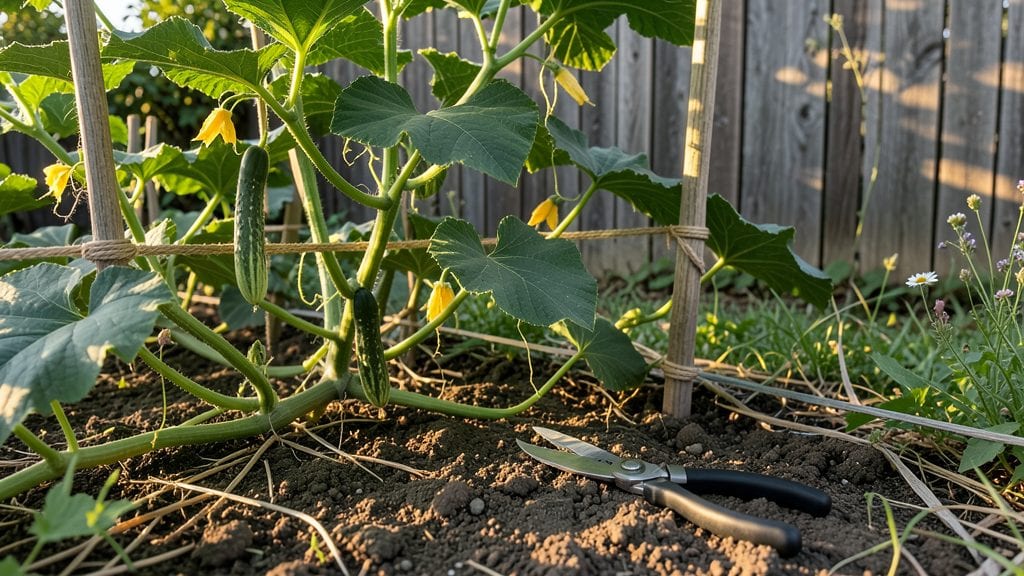
Trimming cucumber plants isn't just about keeping them tidy—it's the secret to doubling your harvest when done right. 🌱 I learned this the hard way after my first season of tangled vines and bitter cucumbers, but now I trim strategically to encourage bushier growth and more productive flowers.
The right cuts redirect energy where it matters most: into fruit production instead of endless runners.
You only need three tools: sharp pruning shears, a small hand pruner, and a pair of gardening gloves. The process takes about 15 minutes per plant once you get the hang of it, and the payoff comes in bigger, sweeter cucumbers that ripen faster.
Focus on removing suckers (those small shoots between the main stem and branches) and any yellow or diseased leaves—this improves airflow and prevents pests.
Start trimming when plants hit 12–18 inches tall, then repeat every 2–3 weeks through the growing season. The key is precision: cut just above a leaf node, never leaving stubs.
You'll see new side branches sprout within days, each one a potential new vine loaded with flowers. By midseason, your plants will look fuller, produce more consistently, and stay healthier longer.
This method works for both bush and vining cucumbers, though bush types need less aggressive trimming. Avoid over-pruning—too many cuts stress the plant—and never trim more than one-third of the foliage at once. With practice, you'll turn a wild tangle into a high-yielding, manageable machine that keeps producing until frost.
📚 In This Guide
- What you need
- Instructions
- Tips and common mistakes
- Wrapping up and next steps
What you need
- ● Sharp pruning shears or scissors – Choose bypass pruners (5-7 inches long) for clean cuts without crushing stems.
- ● Gloves – Heavy-duty gardening gloves (nitrile or leather) to protect against thorns and blisters.
- ● Disinfectant (rubbing alcohol or bleach solution) – 1 part bleach to 9 parts water to sterilize tools between cuts and prevent disease spread.
- ○ Garden twine or plant ties (optional but helpful) – For securing vines to trellises or stakes after trimming.
- ● Watering can or hose with a gentle spray nozzle – To hydrate plants post-trimming (especially in hot weather).
- ● Label markers & tags – If you’re experimenting with different trimming techniques, label plants to track progress!
- ● Hand lens or magnifying glass – For spotting pests or diseases on leaves/stems before trimming.
- ● Compost bin or bucket – To collect trimmed foliage for nutrient-rich compost.
- ● Sun hat & sunscreen – Because even cucumber trimming can be a sunny outdoor adventure! ☀️
- ● Knee pads or a small stool – For comfort if your plants are tall or sprawling.
- ● Wait until plants are 3–4 weeks old and have 5–7 true leaves before the first trim.
- ● Choose a mild, overcast day to reduce plant stress from heat or direct sunlight.
- ● Water plants 1–2 hours before trimming to ensure they’re hydrated and cuts heal faster.
Step-by-Step guide to trimming cucumber plants for maximum yield
Here’s how to shape your cucumbers like a pro—three strategic cuts that transform wild vines into productive powerhouses.
✂️ Step 1: Remove Suckers for Stronger Growth
Cucumbers produce suckers—those small shoots that grow where the main stem meets a leaf. These energy vampires drain your plant instead of fueling fruit production. Use clean, sharp pruning shears to snip suckers when they’re no bigger than a pencil (about 2-3 inches long). You’ll usually find them in the leaf axils—the V-shaped junction where stems meet leaves.
Start trimming 2-3 weeks after planting, when vines reach 12-18 inches tall. Remove suckers below the first 3-4 leaves to encourage upward growth. Here’s the thing—if you wait too long, suckers grow into thick, woody stems that are harder to remove. I always check for new suckers every 5-7 days during peak growing season.
🌿 Step 2: Prune Lower Leaves to Improve Airflow
Cucumber leaves love shade, but your plant’s bottom 12-18 inches should stay mostly bare. Use your fingers or shears to pinch off yellowed or crowded lower leaves—these block sunlight and trap moisture, creating ideal conditions for powdery mildew. Focus on leaves touching the soil or hanging below the first fruit cluster.
Leave 3-4 leaves above each fruit to support photosynthesis. If you see leaves with brown edges or spots, remove them immediately—they’re already compromised. This step isn’t just about looks; it’s about preventing disease and letting sunlight reach developing fruits. I prune lower leaves weekly during humid weather to keep airflow strong.
⏰ Step 3: Thin Fruits for Larger Harvests
Overcrowded cucumbers compete for nutrients, resulting in small, bitter fruit. When clusters form, leave only 1-2 cucumbers per stem, removing the rest with a gentle twist. Prioritize keeping the youngest, healthiest-looking fruits—they’ll grow faster. If your plant is small, reduce to 1 cucumber per stem; larger vines can handle 2-3.
Timing matters: thin fruits when they’re 3-4 inches long, before they start competing for space. I check my plants every 3-4 days during peak production. Pro tip—if you see tiny cucumbers withering, they’re already losing the nutrient race. Remove them early to redirect energy to stronger fruit.
💧 Bonus: Post-Trim Care for Recovery
After trimming, cucumbers need extra water and nutrients to bounce back. Water deeply at the base immediately after pruning to reduce stress. I also add a balanced liquid fertilizer (like 10-10-10) diluted to half strength. Avoid overhead watering for 24 hours—wet foliage slows healing and invites fungal issues.
Watch for new growth within 3-5 days. If you see yellowing leaves or wilting, you’ve pruned too aggressively. Cucumbers are resilient, but they need consistent moisture and sunlight to recover. This is the moment that matters—proper post-trim care determines whether your plant rebounds or declines.
Tips & tricks for perfect cucumber plant trimming
Mastering these three precision cuts takes your cucumber harvest from decent to exceptional—and I’ll show you exactly how to do it right.
The Timing Secret: The 2-3 week mark after planting is critical for Step 1 because that’s when cucumber vines establish their main energy channels. Waiting longer means suckers develop thicker stems that resist clean removal, forcing you to tear tissue instead of making precise cuts. I’ve learned this the hard way—once those suckers get woody, you’re basically pruning a mini-tree rather than a tender shoot.
Leaf Axil Inspection: For Step 1, focus on the leaf axils—the V-shaped junctions where stems meet leaves. These are the hotspots where 80% of suckers appear. I use my thumb to gently part the leaves and check for tiny shoots no bigger than a pencil. Pro tip: Morning light makes these inspection points easier to see, so schedule your trimming sessions for early afternoon after dew has dried.
Post-Trim Recovery: The 24-hour no-overhead-watering rule in the bonus step is non-negotiable. Wet foliage creates the perfect conditions for powdery mildew, and cucumbers are particularly susceptible. Instead, water deeply at the base immediately after pruning to encourage root uptake. I’ve seen plants recover beautifully within 3-5 days when given this proper care—it’s the difference between a plant that bounces back and one that declines.
Fruit Selection Strategy: In Step 3, prioritize keeping the youngest cucumbers that show healthy green color and firm texture. Older cucumbers that already show signs of yellowing or soft spots are already diverting energy from new growth. I use the "twist test"—healthy cucumbers come off cleanly with a gentle twist, while struggling ones resist or break. This simple technique helps you identify which fruits to keep for maximum yield.
Pro Tips for Trimming Cucumber Plants
- Mastering these three precision cuts takes your cucumber harvest from decent to exceptional—and I’ll show you exactly how to do it right.
- The Timing Secret: The 2-3 week mark after planting is critical for Step 1 because that’s when cucumber vines establish their main energy channels.
- Leaf Axil Inspection: For Step 1, focus on the leaf axils—the V-shaped junctions where stems meet leaves.
Frequently asked questions
Got questions about trimming cucumber plants? You’re not alone—this step can feel tricky at first! Below, we’ve tackled the most common concerns to help you prune like a pro and maximize your harvest.
When is the best time to trim cucumber plants?
Trim cucumber plants early in the morning when the vines are still cool and turgid (full of moisture). This reduces stress on the plant and makes cutting cleaner. Avoid trimming during extreme heat or after heavy rain, as the wounds may take longer to heal. Consistency is key—aim for weekly checks during peak growing season (late spring to summer).
How do I know which leaves or vines to remove?
Focus on removing yellow or diseased leaves, overcrowded foliage (especially near the base), and vines with no fruit (unless they’re part of a bush variety). For vining cucumbers, prioritize trimming suckers (small shoots growing between the main stem and branches) to redirect energy to fruit production. Leave 2-3 leaves above each fruit to ensure photosynthesis continues.
Will trimming cucumber plants reduce my harvest?
Not if done correctly! Trimming actually boosts yields by improving air circulation (reducing fungal diseases like powdery mildew) and directing the plant’s energy toward fruit production. However, over-trimming can stress the plant—never remove more than 20-30% of the foliage at once. Think of it like pruning a bush: balance is everything!
Can I trim cucumber plants in hot or humid weather?
Trimming in hot or humid conditions can shock the plant and increase the risk of disease. If you must trim during these times, do so lightly and avoid cutting during peak sun hours (10 AM–4 PM). Opt for cooler mornings or cloudy days. If humidity is high, consider trimming only diseased leaves and leave healthy foliage intact to protect the plant.
What’s the difference between trimming and pruning cucumbers?
While often used interchangeably, pruning typically refers to removing suckers and shaping the plant (common in vining varieties like ‘Straight Eight’), and trimming is broader—it includes cutting back dead, yellow, or overgrown leaves and vines. Bush cucumbers (like ‘Bush Champion’) usually don’t need pruning—just remove diseased leaves. Vining types benefit most from both techniques.
Pro Tip:
Use sterilized shears or pruners (wipe blades with rubbing alcohol) to prevent spreading disease. If you’re unsure about a cut, snip smaller—you can always trim more later, but you can’t undo an over-cut!
Wrapping up and next steps
Trimming your cucumber plants isn’t just about keeping them tidy—it’s a game-changer for bigger, healthier harvests! 🌱 By mastering the three precision trims (removing suckers, pruning vines, and thinning leaves), you’ll encourage stronger growth, better airflow, and fewer pests.
With the right tools and timing, even beginners can transform their garden into a cucumber powerhouse.
Ready to put your new skills to work? Start small—pick one section of your garden this week and practice your trimming technique. Before you know it, you’ll be reaping the rewards of lush, productive plants! 🌟