Watering
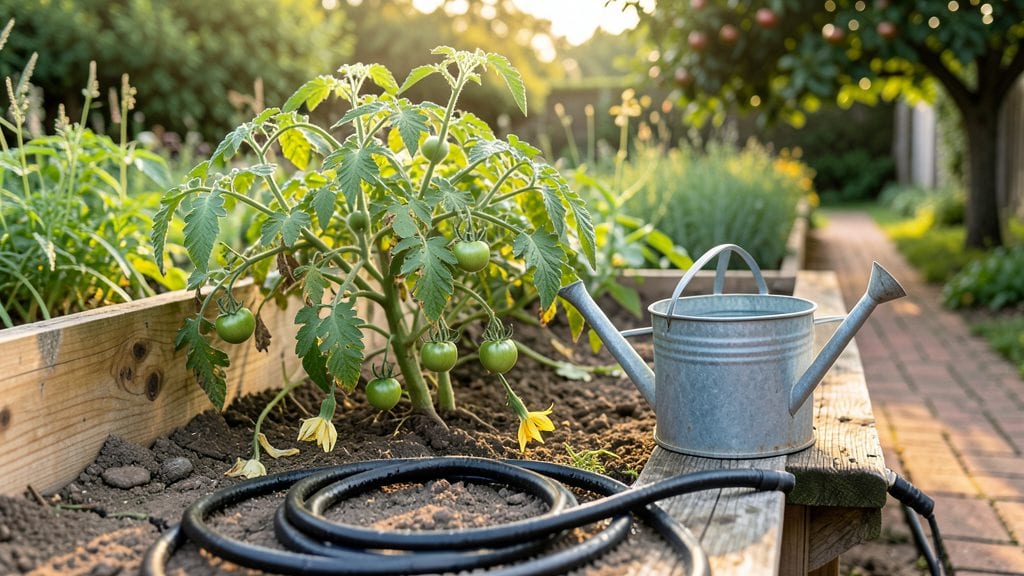
Your tomato plant’s drooping leaves are screaming for water—but fixing them is simpler than you think. 🌱 I’ve nursed back more underwatered tomatoes than I can count, and the secret isn’t complicated: it’s about checking soil moisture before the plant begs for help, watering deeply, and keeping roots happy.
The good news? Most plants bounce back in 3-5 days if you catch it early.
The first step is always the hardest: admitting the plant needs more water than you’ve been giving. Stick your finger 1-2 inches into the soil—if it’s dry, that’s your cue.
Then water until it runs out the bottom of the pot (or until the top 6 inches of soil are soaked). Tomato roots hate soggy feet but love consistent moisture, so aim for 1-2 inches of water per week, adjusting for heat.
Mulch helps too—it keeps moisture in and weeds out.
Within days, you’ll see those limp leaves perk up like they’ve had a nap. The real win? Your plant will start producing firm, flavorful fruit instead of bitter, stressed tomatoes.
Just keep an eye on the soil—once you’ve got the rhythm, underwatering becomes a thing of the past. Let’s get those roots drinking up!
Works for both container-grown and in-ground tomatoes, no matter if you’re dealing with cherry, beefsteak, or heirloom varieties. The same rules apply—just adjust the water volume for bigger plants. Here’s how to make it happen without stressing your plants (or yourself).
Why it happens
When your tomato plants start looking thirsty, it’s rarely just a simple oversight—it’s usually a mix of environmental, soil, and management factors working against them. Understanding these root causes is the first step to fixing the issue before it’s too late.
Let’s break down the science behind why your tomato plants might be underwatered, even if the soil feels damp to the touch.
🌡️ Inconsistent Watering Patterns
Tomatoes thrive on consistency. Their deep root systems (often extending 12–18 inches down) need a steady supply of moisture to avoid stress. Here’s why erratic watering backfires:
- Shallow Root Development: Frequent light watering encourages roots to stay near the surface, where they dry out faster. Deep watering (1–2 inches per week, depending on climate) trains roots to seek moisture below.
- Osmotic Imbalance: When soil dries unevenly, roots struggle to absorb water efficiently. This triggers wilting even if the topsoil feels slightly moist.
- Fungal Invitation: Alternating between soggy and dry soil creates pockets where Fusarium or Verticillium wilt pathogens thrive—both of which mimic underwatering symptoms.
Pro Tip: Use a moisture meter or the "squeeze test" (grab a handful of soil—if it crumbles, it’s dry; if it sticks, it’s overwatered). Aim for soil that feels like a wrung-out sponge.
🏜️ Poor Soil Structure Or Drainage
Not all soil is created equal. Compacted, sandy, or clay-heavy soils can trap or repel water, leaving roots high and dry. Here’s how it happens:
| Soil Type | Problem | Fix |
|---|---|---|
| Clay | Holds water but suffocates roots, preventing absorption. | Amend with compost or perlite to improve aeration. |
| Sandy | Drains too quickly, like a sieve, leaving roots parched. | Mix in organic matter (peat moss, coconut coir) to retain moisture. |
| Compacted | Blocks root growth and water penetration, even if you water heavily. | Loosen soil with a broadfork or add gypsum to break up clay. |
Key Insight: Tomatoes need soil that breathes—aim for a mix that holds moisture but drains within 24 hours to avoid root rot.
🌞 Environmental Stressors
Heat, wind, and humidity levels can turn your watering routine into a losing battle. Here’s how the weather conspires against your plants:
- High Temperatures: Soil loses moisture 3x faster on a 90°F (32°C) day than a 70°F (21°C) one. Evaporation outpaces absorption.
- Low Humidity: Dry air pulls moisture from leaves faster, causing transpirational stress—even if roots are hydrated.
- Strong Winds: Act like giant fans, accelerating moisture loss from soil and foliage.
Actionable Fix:
- Water early morning (before 8 AM) to reduce evaporation.
- Use mulch (straw, wood chips) to lock in moisture and cool roots.
- Group plants together to create a microclimate that retains humidity.
🌱 Overcrowded Or Improper Planting
Tomatoes need space to stretch their legs—literally. When plants compete for water, the weakest (usually the youngest or outer leaves) suffer first. Here’s why:
- Root Competition: Overcrowding forces roots to share limited water sources, leading to uneven distribution.
- Fungal Spread: Dense foliage traps moisture, creating ideal conditions for blight or powdery mildew, which mask true underwatering.
- Poor Airflow: Stagnant air increases humidity around leaves, tricking you into thinking the plant is hydrated when it’s not.
Solution: Space tomato plants 18–24 inches apart (or 36 inches for indeterminate varieties). Prune suckers regularly to improve airflow and direct energy to root growth.
💧 Irrigation System Failures
Even the most reliable systems can betray you. Drip lines, sprinklers, or soaker hoses might seem like a set-it-and-forget-it solution, but they often fail in subtle ways:
- Clogged Emitters: Mineral buildup or debris can reduce flow by 50%, leaving plants thirsty despite "running water."
- Uneven Coverage: Sprinklers may miss the base of plants, watering leaves instead—leading to sunscald and wasted H₂O.
- Timer Malfunctions: A 10-minute cycle might only deliver 5 minutes if the pump struggles or the line leaks.
Quick Check: Lift mulch occasionally to inspect soil moisture near the drip zone. If the top 2 inches are dry, your system’s underperforming.
Quick Fixes for Reviving Wilted Tomatoes
If your tomato plants are looking thirsty and droopy, don’t panic—reviving them is often as simple as giving them the right care. The key is diagnosing the root cause (literally!) and acting fast.
Below, we’ll map out the most common issues and the easiest fixes to get your plants back to their vibrant, fruit-bearing selves. Plus, we’ll share prevention tips to keep your tomatoes thriving long-term.
Problem: Shallow watering leads to dry soil and stressed roots, causing wilting even if the topsoil looks moist.
How to Fix It: 🔥 Step 1: Check Soil Moisture
- Stick your finger 2–3 inches deep into the soil. If it’s dry, it’s time to water. If it’s damp, wait another day before checking again.
🍳 Step 2: Water Slowly and Deeply
- Use a soaker hose, drip irrigation, or a watering can with a narrow spout to deliver water directly to the base of the plant.
- Water until the soil is moistened 6–8 inches deep—this encourages roots to grow downward where moisture is consistent.
👨🍳 Step 3: Mulch to Retain Moisture
- Spread 2–3 inches of organic mulch (straw, wood chips, or grass clippings) around the base (but not touching the stem) to lock in moisture and cool the roots.
🥘 Step 4: Water in the Morning
- Early watering (before 10 AM) reduces evaporation and gives plants a full day to absorb moisture before evening heat sets in.
💡 Pro Tip: If your plant is severely wilted, give it a deep soak for 15–20 minutes, then repeat every 2–3 days until leaves perk up.
Problem: Overwatering or underwatering can both cause wilting—too much leads to root suffocation, while too little starves the plant.
How to Fix It: 🔥 Step 1: Determine Your Soil Type
- Sandy soil? Drains fast—water daily or every other day in hot weather.
- Clay soil? Holds moisture well—water every 2–3 days unless the top inch is dry.
- Loamy soil? The gold standard—water every 2–4 days, depending on heat.
🍳 Step 2: Use the "Finger Test"
- Before watering, check moisture 1 inch below the surface. If dry, water; if damp, wait.
👨🍳 Step 3: Avoid "Pulse Watering"
- Light, frequent watering encourages shallow roots. Instead, water deeply but less often to force roots to grow deeper.
🥘 Step 4: Adjust for Weather
- Hot/dry days? Increase frequency but keep sessions short to prevent runoff.
- Rainy days? Reduce watering by half to avoid soggy soil.
✨ Prevention Tip: Install a rain gauge near your garden to track natural water input and adjust accordingly.
Problem: Heat stress (especially in containers or greenhouses) accelerates wilting by increasing water loss through leaves.
How to Fix It: 🔥 Step 1: Provide Shade
- Use shade cloth (30–50%) or move potted plants to a partially shaded spot during peak sun (11 AM–3 PM).
🍳 Step 2: Increase Humidity
- Place a tray of water near the plant or mist leaves early in the morning (avoid evening misting to prevent fungal issues).
👨🍳 Step 3: Use Reflective Mulch
- Swap dark mulch for white or silver plastic mulch to reflect sunlight and reduce soil temperature by 10–15°F.
🥘 Step 4: Prune Strategically
- Trim lower leaves to improve airflow and reduce water loss. Focus on yellow or diseased leaves first.
💡 Pro Tip: If your tomatoes are in containers, switch to a larger pot (at least 5 gallons) to give roots more space to access moisture.
Problem: Compacted or poorly draining soil prevents roots from absorbing water, even when you water.
How to Fix It: 🔥 Step 1: Loosen Compacted Soil
- Gently rake or fork the top 6 inches of soil around the plant to improve aeration. Avoid damaging roots!
🍳 Step 2: Amend the Soil
- Mix in compost or aged manure (1 part compost to 3 parts soil) to improve water retention and nutrient availability.
👨🍳 Step 3: Improve Drainage
- If planting in containers, ensure pots have drainage holes. Add a layer of perlite or gravel at the bottom to prevent soggy roots.
- For in-ground plants, create a slight mound when planting to encourage runoff away from the base.
🥘 Step 4: Test Your Soil
- Use a soil moisture meter or DIY test (squeeze a handful—if it crumbles easily, it’s too dry; if it stays clumped, it’s too wet).
🎯 Prevention Tip: Before planting, test your soil’s drainage by digging a hole, filling it with water, and timing how long it takes to drain. Ideal? 4–6 hours.
To keep your tomato plants happy and hydrated, follow these habits:
- Water at the base—never the leaves—to prevent disease and evaporation.
- Use drip irrigation for consistent, deep watering.
- Monitor weather forecasts and adjust watering before heatwaves.
- Rotate crops annually to prevent soil depletion and disease buildup.
- Choose drought-resistant varieties like ‘Solar Fire’ or ‘Heatmaster’ if you struggle with watering.
With these fixes, your tomato plants should perk up within 24–48 hours—and with consistent care, you’ll be back to harvesting juicy, sun-ripened tomatoes in no time! 🍅✨
Frequently asked questions
How do I tell if my tomato plant is truly underwatered?
Check the soil 1-2 inches deep—if it's bone dry, that's your first clue. Look for crispy lower leaves, wilting that doesn't bounce back after watering, and a dull, grayish-green color. The plant may also feel light when lifted (healthy roots weigh more). Pro tip: Press your finger into the soil—if it crumbles like sand, it's thirsty!
Can I revive a tomato plant that's been underwatered for a week?
Yes, but act fast! Give it a deep soak (15-20 minutes) until water runs from the drainage holes, then repeat every 2-3 days while monitoring soil moisture. Trim any severely damaged leaves to redirect energy to recovery. Most plants show improvement in 3-5 days if roots aren't permanently damaged.
Why do my tomato leaves wilt even after I water them?
This often means your watering isn't reaching the roots deep enough. Tomatoes need moisture 6-8 inches down—try using a soaker hose or watering can with a narrow spout. Also check for root issues: if the wilt persists after deep watering, you might have root rot from overwatering or Fusarium wilt (a fungal disease).
What's the best time of day to water tomato plants?
Early morning (before 8 AM) is ideal—it gives roots time to absorb moisture before the heat of the day. Avoid evening watering, as wet foliage overnight encourages fungal diseases. For container-grown tomatoes, water whenever the top 1 inch of soil feels dry, but always in the morning.
How much water should I give my tomato plants weekly?
Most tomatoes need 1-2 inches of water per week, but adjust based on your climate. In hot weather, they may need daily watering (especially in containers), while cooler seasons might only require 2-3 times weekly. Use a rain gauge to track natural water input—this helps maintain consistent moisture without overdoing it.