Flowers
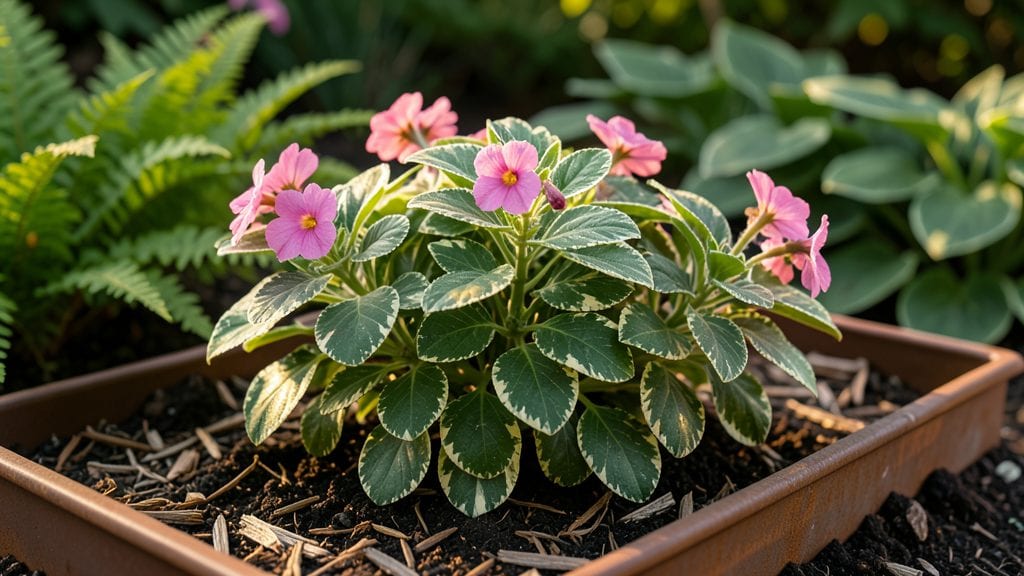
Variegated impatiens plants bring a shockingly lush mix of pink, white, and cream blooms that thrive where most flowers refuse to play—deep shade gardens and shady patios. I’ve grown them for years, and honestly, they’re the secret weapon for adding bold color where sunlight barely reaches.
The variegated foliage alone makes them stand out, but the nonstop blooms from spring through frost? That’s the real magic.
These shade lovers demand moist, well-draining soil and regular watering—think of them as the divas of the garden who reward you with vibrant displays when you meet their needs.
You’ll want to plant them in partial to full shade, protect them from strong winds, and feed them lightly every few weeks. The payoff? A neighbor-jealousy level of color that lasts all season, even in the toughest shade spots.
Once established, variegated impatiens practically grow themselves—just keep the soil consistently damp and trim back leggy stems to encourage bushier growth. They’re perfect for containers, hanging baskets, or mass planting under trees.
The key is starting with healthy plants and giving them the right conditions from day one, so they don’t struggle to put on their best show.
They’re not fussy about soil pH but do best in rich, organic mixes, and they’ll bloom even more prolifically if you deadhead spent flowers. In colder climates, treat them as annuals—they’ll give you months of color before winter arrives.
For container growers, just remember: these plants love humidity, so misting on hot days keeps them thriving.
📚 In This Guide
- What you need
- Instructions
- Tips and common mistakes
- Wrapping up and next steps
What you need
- ● Variegated Impatiens Plants: 3–5 plants (depending on desired density; choose healthy seedlings with vibrant foliage and blooms).
- ● Well-Draining Potting Mix: 5–10 gallons (for containers) or 2–3 cubic feet (for garden beds). Opt for a lightweight, peat-based mix (e.g., 60% peat moss, 20% perlite, 20% compost).
- ● Containers or Garden Space: Containers: 8–12" diameter pots (with drainage holes) for 1–2 plants each.
- ● Garden Beds: Partial to full shade areas with moist, humus-rich soil (amend with compost if needed).
- ● Slow-Release Fertilizer: Balanced 10-10-10 or shade-tolerant formula (e.g., Osmocote). Apply 1 tbsp per plant at planting.
- ● Gloves & Trowel: For handling soil and planting.
- ○ Mulch: 1–2" layer of pine bark or shredded leaves to retain moisture (optional but highly recommended!).
- ● Spray Bottle: For misting leaves if humidity is low.
- ● Stakes or Trellis: Lightweight supports (e.g., bamboo stakes) for trailing varieties.
- ● Watering Can or Hose: With a gentle spray nozzle for even hydration.
Step-by-Step instructions for cultivating thriving variegated impatiens
Here’s how to coax vibrant, lush variegated impatiens from seedlings to showstopping shade displays.
🌱 Step 1: Select and Prepare the Perfect Planting Site
Variegated impatiens crave partial to full shade, with morning sun at most—direct afternoon rays bleach their stunning foliage patterns. Scout your yard for spots under tall trees, north-facing walls, or beneath eaves where light filters gently. The ideal location receives 3-6 hours of dappled sunlight daily. Amend the soil with 2-3 inches of compost to loosen heavy clay or sandy soil, ensuring roots can spread easily without suffocating.
Test soil moisture by pressing your finger 1 inch deep—it should feel damp but not soggy. If your soil drains poorly, mix in 1 part perlite per 3 parts native soil to create air pockets. Overly compacted soil strangles roots, while waterlogged conditions trigger root rot. This plant’s secret? Consistently moist but never waterlogged soil—once established, they’ll thrive with minimal fuss.
🪴 Step 2: Plant with Care to Preserve Delicate Roots
Dig holes twice as wide as the root ball but only as deep as the container’s base—variegated impatiens resent being buried too deep, which suffocates stems. Gently tease apart roots if they’re circling tightly, then place the plant so the top of the root ball sits level with the surrounding soil. Fill gaps with the amended soil mix, pressing lightly to eliminate air pockets but avoiding compaction.
Water immediately after planting to settle the soil and eliminate gaps. Use a slow, deep watering (about 1 gallon per plant) to encourage roots to spread outward rather than staying clustered. Mulch with 2-3 inches of shredded bark or pine needles, keeping it 3 inches away from stems to prevent rot. This mulch layer locks in moisture, suppresses weeds, and regulates soil temperature—critical for variegated impatiens, which despise stress.
☀️ Step 3: Master Watering and Light Balance for Stunning Foliage
Variegated impatiens demand consistent moisture—let the top ½ inch of soil dry between waterings, but never allow the root zone to bone-dry. In containers, water every 2-3 days (daily in extreme heat), while in-ground plants may need watering every 4-5 days depending on rainfall. Use a soaker hose or drip irrigation to deliver water at the base; overhead watering on leaves promotes fungal diseases like powdery mildew.
Monitor light exposure weekly—if leaves lose their variegation and turn solid green, they’re getting too much sun. Conversely, if growth stalls and foliage yellows, they need bright, indirect light. Rotate containers quarter-turns every 2 weeks to ensure even exposure. This adjustment prevents lopsided growth and keeps those creamy-white or pink-edged leaves popping against deep greens.
✂️ Step 4: Prune and Maintain for Continuous Blooms
Pinch back tips of new growth when plants reach 6 inches tall to encourage bushier, fuller plants. This simple step prevents leggy stems and redirects energy into producing more showy, ruffled blooms in shades of pink, purple, or white. Deadhead spent flowers weekly by snipping stems just above a set of leaves—this prevents seed formation and prolongs the blooming season by 4-6 weeks.
Fertilize every 4-6 weeks during the growing season with a balanced, water-soluble fertilizer (10-10-10) diluted to half-strength. Over-fertilizing burns delicate roots, while under-fertilizing yields weak stems and sparse blooms. In late summer, reduce feeding to every 8 weeks to prepare plants for dormancy. Variegated impatiens are tender perennials—they’ll die back in frost but often resprout from roots if protected with mulch or a frost cloth in mild climates.
⏰ Step 5: Overwinter and Propagate for Next Season
Before the first frost, cut back stems to 2 inches above the soil and move container-grown plants to a cool, bright indoor spot (50-60°F). Reduce watering to every 10-14 days, letting the top 1 inch of soil dry completely between sessions. In-ground plants can be left in place if mulched heavily, but they’ll likely die back entirely. Dig up any remaining roots in spring and pot them up for propagation.
To propagate, take 4-inch stem cuttings in early spring, dipping the base in rooting hormone, then place in a moistened perlite-sand mix. Cover with a clear plastic bag to retain humidity and set under grow lights (12-14 hours daily). Roots form in 3-4 weeks—transplant to pots when new growth appears. This method ensures you’ll have identical variegated plants every year, saving money and guaranteeing vibrant displays.
Tips & tricks for perfect variegated impatiens cultivation
Transforming delicate seedlings into thriving variegated impatiens requires precision—these game-changing insights will help you avoid common pitfalls and create a showstopping shade garden.
Location Strategy: The 3-6 hours of dappled sunlight mentioned in Step 1 is non-negotiable for preserving those stunning variegated patterns. I recommend testing potential spots during late afternoon—if you see harsh shadows, move further from the sun's path. Northern exposures under mature trees often provide the perfect balance, while southern exposures can scorch leaves even with partial shade. For containers, place them where they receive morning light but are shielded by a sheer curtain or lattice in the afternoon.
Soil Science: That 1-inch deep moisture check in Step 1 is your golden rule for soil management. I've found that mixing in perlite isn't just about drainage—it creates micro-aeration pockets that prevent the compacted soil syndrome I saw ruin three batches of plants. For heavy clay soils, consider adding coconut coir to the perlite mix for better moisture retention. And here's what nobody tells you: the ideal soil pH for variegated impatiens is between 6.0-6.5—test your soil before planting, as alkaline conditions can cause nutrient deficiencies that manifest as yellowing between leaf veins.
Watering Wisdom: The every-2-3-days guideline in Step 3 works for average conditions, but real talk: your watering schedule should adapt to your microclimate. In my humid zone, I water every 3 days, while a friend in a dry valley waters daily. The key is consistency—never let the soil dry completely between waterings, but avoid soggy conditions that trigger root rot. For container plants, I weigh them before watering: when a 5-gallon pot loses 10% of its weight, it's time to water again. This method eliminates guesswork and prevents both underwatering and overwatering.
Pruning Precision: That 6-inch pinch point in Step 4 might seem arbitrary, but it's actually about hormonal balance. When you pinch back at this height, you're stimulating lateral bud growth while maintaining the plant's natural growth hormones. For continuous blooms, I deadhead weekly but only remove flowers that have completely faded—leaving some spent blooms on the plant actually encourages new flower formation in some varieties. And here's my breakthrough: if your plants start looking leggy before reaching 6 inches, give them a light trim at 4 inches instead. This sacrifices some initial height for bushier growth that produces more blooms overall.
Pro Tips for Variegated Impatiens Plants
- Transforming delicate seedlings into thriving variegated impatiens requires precision—these game-changing insights will help you avoid common pitfalls and create a showstopping shade garden.
- Location Strategy: The 3-6 hours of dappled sunlight mentioned in Step 1 is non-negotiable for preserving those stunning variegated patterns.
- Soil Science: That 1-inch deep moisture check in Step 1 is your golden rule for soil management.
Frequently asked questions
Got questions about keeping your variegated impatiens thriving? You’re not alone—these stunning shade-lovers are full of surprises! Here are answers to the most common queries to help you grow with confidence.
Are variegated impatiens annuals or perennials?
Variegated impatiens are typically treated as tender annuals in most climates (zones 10–11). While they can survive mild winters in frost-free areas, they’re often replanted yearly for best results. In colder regions, treat them as seasonal stars—enjoy their blooms from spring to frost!
How long does it take for variegated impatiens to flower?
With proper care, these beauties often bloom 6–8 weeks after planting. Start seeds indoors 8–10 weeks before your last frost, or buy transplants for faster color. Patience pays off—once they flower, they’ll keep you smiling until fall!
Why are my variegated impatiens’ leaves turning yellow?
Yellowing leaves usually signal overwatering or poor drainage. Ensure pots have drainage holes and soil stays consistently moist but not soggy. Check for root rot if leaves also feel mushy. Adjust watering and trim affected foliage to encourage new growth.
Can variegated impatiens handle morning sun?
While they love shade (2–6 hours of indirect light daily), they can tolerate brief morning sun in cooler climates. Avoid harsh afternoon rays, which can scorch their delicate leaves. If leaves fade or crisp, move them to deeper shade ASAP!
What’s a good alternative if variegated impatiens don’t thrive?
Try these shade-loving pals for similar drama:
- Caladiums – Stunning foliage (great for containers!)
- Ferns (e.g., maidenhair) – Lush texture and low-light tolerance
- Begonias (Wax or Rex) – Bold leaves + blooms in shade
- Heuchera (Coral Bells) – Colorful foliage for year-round interest
Wrapping up and next steps
Variegated impatiens plants bring vibrant, low-maintenance color to shady spots, making them a dream for gardeners and balcony growers alike. Whether you’re a beginner or a seasoned plant parent, their easy care and striking foliage prove that beauty thrives even in the shade—no green thumb required! 🌿✨
Ready to add a splash of life to your space? Start by picking your favorite variegated variety, grab your supplies, and dive in—your garden’s new star is just a few steps away!